

Tan Hoa, a flood-prone area in Quang Binh province, is the only Vietnamese locality selected among 260 tourist villages from 60 countries participating in the award, recognized by the UNWTO on October 19th.
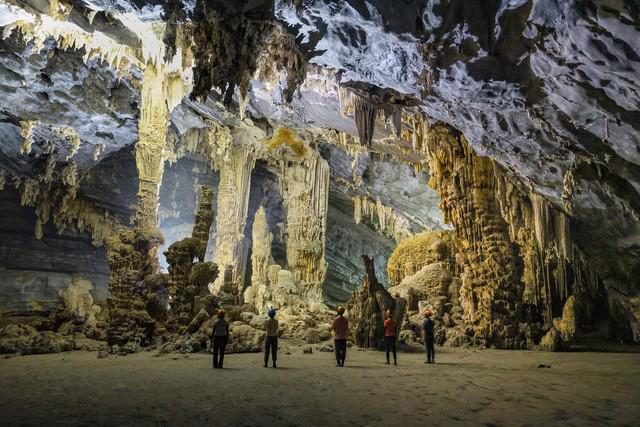
The magnificent Tu Lan cave system attracts many domestic and international tourists. (Image: Internet)
In addition, the mountains and forests of Tan Hoa also contain many valuable types of wood and medicinal herbs such as: night-blooming jasmine, lily, ironwood, ebony, teak, and various types of bamboo, rattan, etc., cardamom, Polygonum multiflorum, five-leafed ginseng, ginseng, honey and other traditional Vietnamese medicinal plants.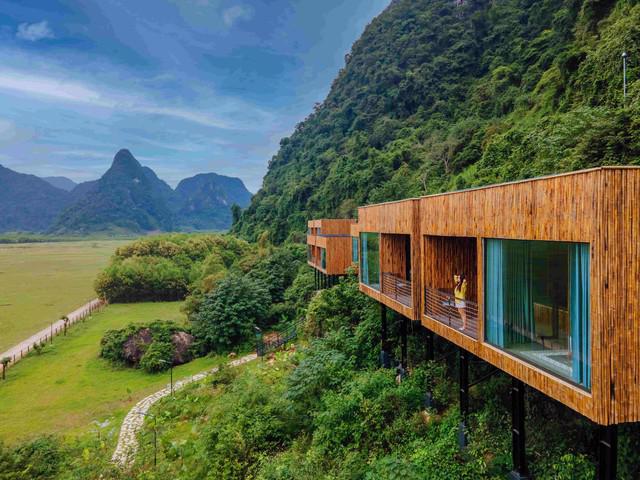
Tu Lan Lodge - a unique weather-adaptive accommodation model in Tan Hoa village. (Image: Internet)
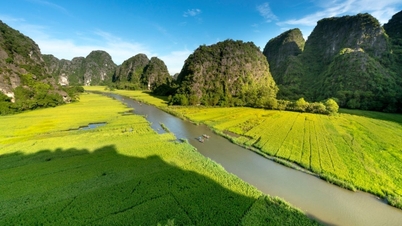
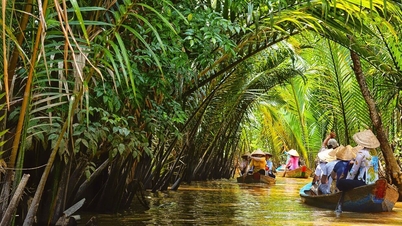
Due to its geographical location and unique topography, Tan Hoa is situated west of the Hoanh Son mountain range and surrounded by limestone mountains, resulting in a distinctly subtropical climate with four distinct seasons: spring, summer, autumn, and winter. The climate is hot, humid, and rainy year-round, with periods of intense cold. This diverse weather greatly facilitates the development of various crops in agriculture. However, Tan Hoa commune experiences annual flooding, particularly from June to September (lunar calendar). The presence of numerous caves hinders drainage during floods, causing significant difficulties in agricultural production, economic development, and the daily lives of the people. Boating across the Rao Nan River, passing through villages, corn fields, and the beautiful mountain scenery of Tan Hoa, is a popular activity. Culturally, Tan Hoa commune is primarily inhabited by the Nguon people, a community belonging to the Viet-Muong ethnic group. According to accounts from elders and genealogical records of the families in the village, the ancestors of the Nguồn people in Tân Hoá have been living in this area for about 300-320 years. The Nguồn people have their own unique language, distinctive cultural practices, and folk art values. Regarding housing, in the past, the Nguồn people built houses with buried pillars, beams, and thatched roofs; the wealthier ones built houses in the shape of a "đinh" (a type of Vietnamese character) with palm leaf roofs. Nowadays, they build houses with tiled floors and cement-paved drying yards; infrastructure such as electricity, roads, schools, and village lanes are basically built with concrete.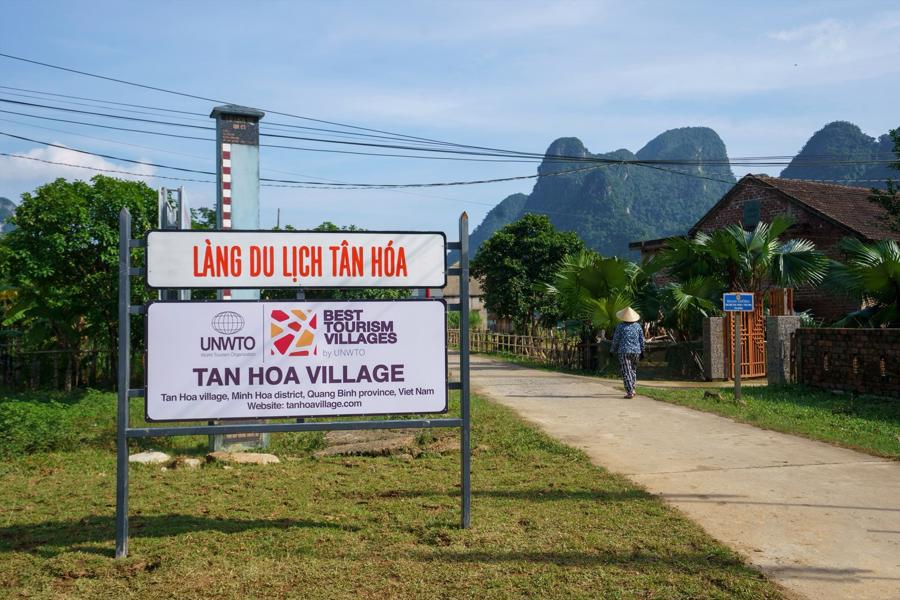
Tan Hoa Village is developing into a "Weather-Adaptive Tourism Village". (Image: Internet)
In Tan Hoa, visitors can not only admire the pristine beauty of a peaceful countryside but also explore the Tu Lan cave system, which includes 10 different caves with stunning and mystical stalactite formations.
Because of its unique beauty, on the afternoon of October 19th in Samarkand, Uzbekistan, the World Tourism Organization (UNWTO) honored Tan Hoa (Tan Hoa commune, Minh Hoa district, Quang Binh province) as the best tourist village in the world.
Tan Hoa is the only Vietnamese locality selected among 260 tourism villages from 60 countries participating in the award, recognized by the UNWTO. The award is a global initiative of the UNWTO aimed at highlighting villages where tourism preserves and promotes community-based and rural values, products, and lifestyles, while fostering innovation and sustainability.
Diem Giang



![[Photo] Prime Minister Pham Minh Chinh receives the Chinese Ambassador to Vietnam](https://vphoto.vietnam.vn/thumb/1200x675/vietnam/resource/IMAGE/2026/04/05/1775397481797_ndo_br_dsc-5512-jpg.webp)

















































































Comment (0)