Europe has just established an Open Quantum Institute with the goal of leveraging the emerging power of quantum computing for the common good. This move has received much positive feedback as the continent accelerates its race in developing quantum technology.
The launch took place at the European Organization for Nuclear Research (CERN) in Geneva, Switzerland. The Open Quantum Institute will also be based at CERN for a three-year pilot period. The institute is expected to develop technological applications that could help make achieving the United Nations Sustainable Development Goals (SDGs) easier. For example, quantum computing simulations and calculations could help determine how to reduce atmospheric CO2 emissions to prevent climate change. Quantum computing could also predict antibiotic resistance or identify new chemical compounds that are more effective against deadly bacteria.
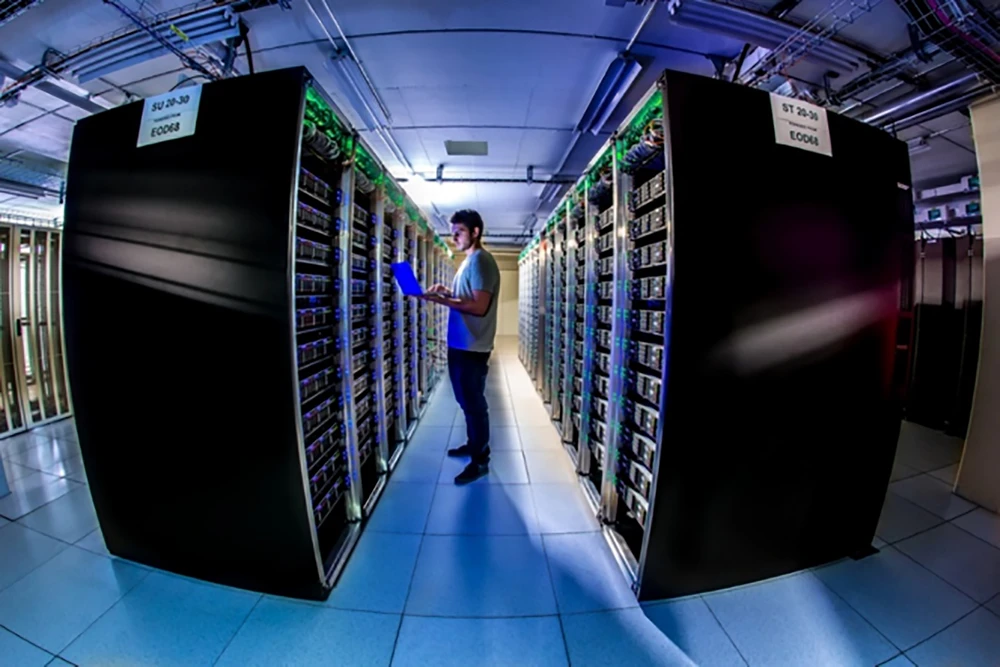
It is estimated that the first commercial quantum computers will not be available for another decade, and the technology is not expected to be fully developed before 2050.



Peter Brabeck-Latmathe, President of the Geneva Foundation for Science and Diplomacy Forecasting (GESDA), the organization that founded the Open Quantum Institute project, predicts that future quantum technology will be 1,000 to 10,000 times more powerful than today's computing technology. To accelerate the search for the best applications, GESDA has partnered with Google and the non-profit technology group Xprize to launch a competition for proposals from researchers worldwide. The competition lasts three years, with a prize of $5 million for the best project.
CERN Director Fabiola Gianotti also stated that this nuclear research organization is an ideal base for the Open Quantum Institute to leverage its long experience in using scientific and technological advancements for the benefit of society. Meanwhile, expert Ozge Aydogan, from the UN's SDG laboratory, emphasized the importance of assessing the dual nature of technology, which can be an asset for the future but also a significant risk.
According to observers, Europe's acceleration in the race to develop quantum technology is inevitable, especially given the crucial role science and technology play in shaping economic structures and shifting the balance of national power. With this new step, Europe demonstrates its continued transformation in the era of strategic competition, determined to consolidate and enhance the region's strength. To date, more than 20 countries have national initiatives or strategies related to quantum technology. The European Union, the United States, China, Russia, India, Japan, and Australia have all launched numerous research and development programs in quantum science and technology to stay ahead of the trend.
Along with continuous advancements in fields such as artificial intelligence (AI), robotics, the Internet of Things (IoT), and nanotechnology, quantum technology is predicted to further accelerate the Fourth Industrial Revolution. Whether in military or civilian applications, quantum technology has shown significant potential. For leading nations in this field, the impact will be far-reaching and substantial, potentially stimulating industrial production, creating jobs, and contributing to economic and national security benefits.



SOUTHERN
Source