

 |
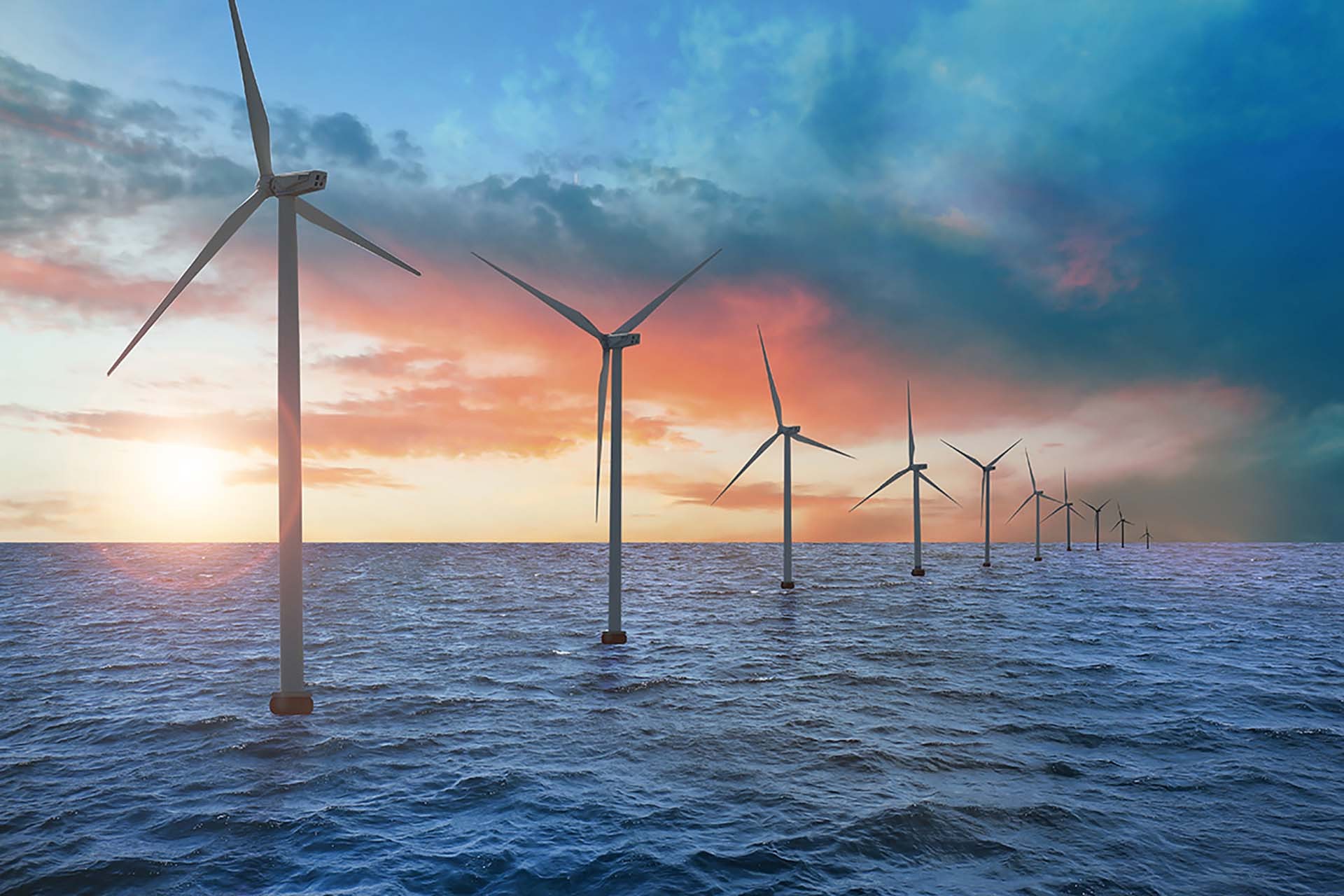
| Offshore wind power is one of the important clean energy sources in Australia's future energy plan. (Source: blueeconomycrc) |
In fact, green growth has been identified as a central focus in the national development policies of many countries around the world in an effort to achieve sustainable development. Australia recognizes the need to participate in the clean energy trend and transition to Net Zero, otherwise it will be left behind. From the outset, Canberra has set a clear goal: "Let's go from being a laggard to a leader!"
From backward to leader
Since the end of 2021, the Australian government has officially announced a model to achieve net-zero emissions by 2050, with technology playing a central role.
In its 100-page development model document outlining measures to achieve net-zero emissions by 2050 and the economic implications, Australia has set out four targets to be met.
Firstly , it involves reducing the total amount and intensity of emissions in economic production and consumption. Coal mining is projected to decrease by 50% by 2050, while coal and gas exports are expected to decline in the future.
Secondly , it involves increasing carbon absorption through reforestation, planting more trees on farms, and improving the efficiency of forestry management.
Thirdly , increase the trading of emission quotas with countries in the region.
Finally, it involves promoting technologies for carbon capture and storage.
In this context, developing emission reduction technologies is a top priority. Specifically, the technologies that Australia will prioritize for development in the coming period include green hydrogen, low-cost solar energy, energy storage, low-emission steel, low-emission aluminum, carbon capture and storage technologies, and soil carbon.
Currently, Australia plans to invest AUD 21 billion (approximately USD 13.69 billion) by 2030 to help develop these technologies. By capitalizing on the global trend toward net-zero emissions, Australian industry could boost national income by an additional USD 40 billion by 2050.
According to the model above, developing and applying new technologies not only helps reduce emissions but also limits the negative impact of these activities on the economy.
Specifically, the model predicts that the development of new technologies will create approximately 100,000 new jobs in these sectors in Australia. Of these, 62,000 new jobs will be created in mining and heavy industry. In addition, possessing low-emission technologies will contribute to a threefold increase in the country's exports by 2050.
Australian leaders have repeatedly stated that, due to its unique characteristics, the country will not use taxes but will instead achieve net emissions of zero by 2050 through its own methods. Accordingly, focusing on promoting the development and adoption of emission reduction technologies is hoped to be a multi-pronged approach, helping Canberra cut emissions while creating jobs in a new energy economy.
Efforts to become a green hydrogen superpower.
Commenting on Canberra's strategy to become a leader, Dr. Steve Hatfield-Dodds, head of research at the EY Net Zero Centre (Australia), said that by leveraging its strengths, Canberra is well-positioned to achieve renewable energy superpower status while meeting its goal of net-zero emissions by 2050.
“The world is moving away from fossil fuels and towards clean energy. Australia has many low-cost, renewable energy sources such as wind and solar. Australia is also rich in minerals such as iron ore, copper, and lithium… It will be the combination of both strengths that has the potential to put us in a leading position,” Dr. Hatfield-Dodds believes.
Taking steady steps toward its stated goals, Prime Minister Anthony Albanese's government has committed AUD 2 billion to investing in a program supporting large-scale hydrogen projects between 2026 and 2027 and accelerating the country's renewable energy transition.
Green hydrogen has long been touted as the key to reducing emissions. As Energy and Climate Change Minister Chris Bowen noted, this is an investment in one of Australia's key industries of the future because green hydrogen plays a vital role and offers great opportunities for the "land of kangaroos".
In addition, the government will provide households with low-interest loans totaling AUD 1.3 billion to help them use energy more efficiently and implement improvements such as installing double-glazed windows and solar panels on their roofs.
According to Dr. Steve Hatfield-Dodds, despite possessing a modern and well-developed energy infrastructure capable of competing globally, a long-term vision is essential for Australia to achieve "superpower status." One of these new visions is "developing and strengthening the ability to supply energy when the sun is not shining and the wind is not blowing."
Furthermore, according to Patrick Viljoen, a senior ESG manager at CPA Australia, if Australia wants to become a true leader in the field of clean green energy, Canberra must bring its "neighbors" along on the journey.
Economic development goes hand in hand with environmental protection.
According to Dr. Michael Parsons, of the Australian Volunteers for International Development (AVID) program and policy advisor to the Vietnamese Minister of Natural Resources and Environment, green growth begins with abandoning the outdated notion that economic development and environmental protection cannot go hand in hand, and instead aims to maximize the synergy between these two aspects.
Australia addressed the challenge of balancing economic growth and environmental sustainability by enacting relatively strict regulations early on.
Accordingly, some plans and projects require approval or permits from public authorities that regulate environmental issues. Most states and territories have specialized agencies that approve implementation conditions and investigate alleged environmental damage.
Experience in Australia shows that when dealing with any violation, two aspects must be considered: whether the company intentionally discharged waste or it was merely an unfortunate "accident" that occurred during the environmental treatment process.
Another point that needs special attention is the need for strict control over related issues right from the licensing stage of new investment projects; short-term economic benefits should not overshadow the environment.
Source


























































































Comment (0)