

Developing and encouraging students' self-learning abilities; changing the way exam and test questions are designed so that learners can confidently develop their abilities without needing extra tutoring or supplementary classes – these are the measures proposed by experts and representatives of the Ministry of Education and Training to address the widespread problem of extra tutoring and supplementary classes.
DON'T WAIT FOR A NEW TUTOR TO STUDY "FOR EXTRA CLASSES"
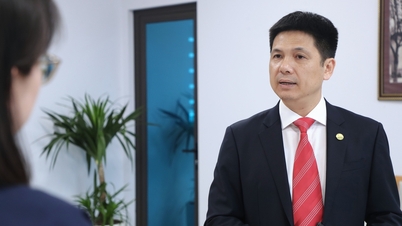
Dr. Nguyen Tung Lam, Vice President of the Vietnam Association of Educational Psychology, and Chairman of the Board of Directors of Dinh Tien Hoang High School (Hanoi), believes that the previous examination system led to a situation where students could not pass the exams, which were often tricky and very difficult, without extra tutoring. However, the current guidelines for testing and evaluation under the 2018 General Education Program now require students to independently develop and discover knowledge, thereby transforming that knowledge into their own personal abilities. This is the path to a healthy, positive, and high-quality educational development.
Educator Tung Lam believes that parents shouldn't be too impatient; instead, they should work alongside teachers and schools to develop their children's self-learning abilities, helping them understand that relying solely on others will hinder their development. "Assessment is necessary, but it still needs improvement to meet requirements. Exam questions should not encourage rote memorization or simply allow students to rely on textbooks, but rather transform textbook knowledge into their own understanding to answer real-world questions. That's what's essential and represents long-term development," said Dr. Nguyen Tung Lam.
Mr. Pham Quoc Toan, Deputy Director of the Hanoi Department of Education and Training, also stated that the Department has drafted a proposal on regulations regarding supplementary teaching and learning, advising the Hanoi People's Committee to issue it so that educational institutions have a basis for implementation. The Department also requested that general education institutions innovate their testing and evaluation methods to align with the required learning outcomes of the 2018 General Education Program, without putting undue pressure on students. In particular, it emphasized that schools must absolutely not relax their preparation for final exams and graduation exams, recognizing this as a responsibility of the schools.
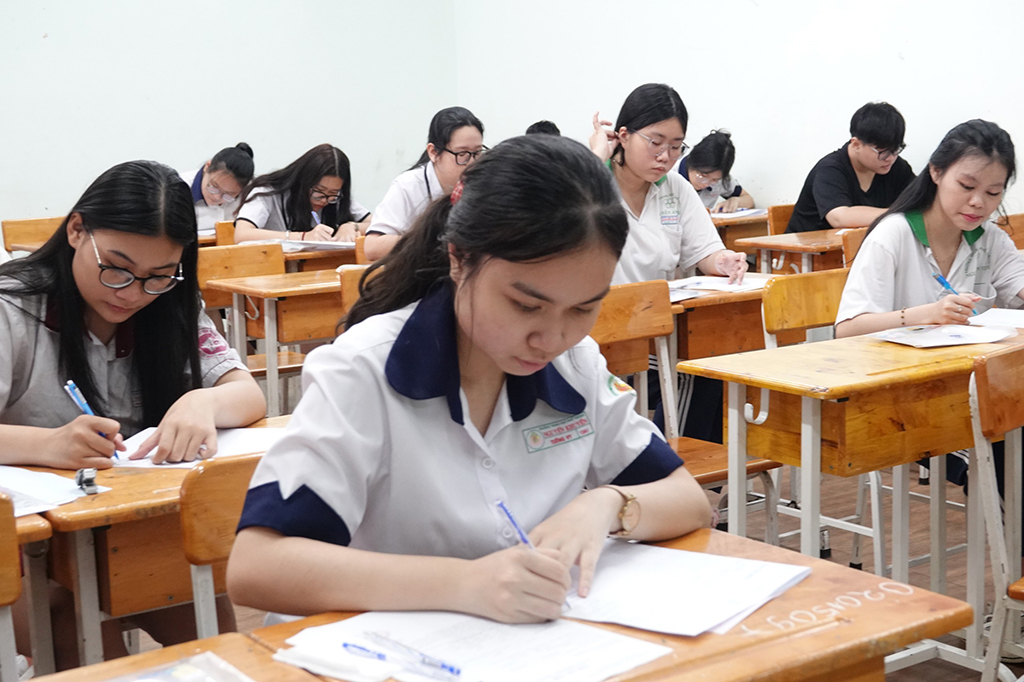
According to the Ministry of Education and Training, the method of designing high school graduation exam questions from 2025 onwards will change in a positive direction, ensuring that students study according to the curriculum and can pass tests and entrance exams without needing extra tutoring.
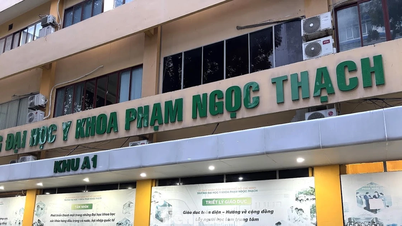
PHOTO: DAO NGOC THACH
Associate Professor Nguyen Xuan Thanh, Director of the Secondary Education Department (Ministry of Education and Training), believes that more investment should be made in supplementary learning instead of private tutoring. However, it's important to understand that supplementary learning means self-study, not that students only learn when they have a tutor. Guided self-study activities with teachers at school should be encouraged. Schools should open their doors and allocate classrooms and libraries for students to study independently. Currently, according to Mr. Thanh, due to the widespread and prolonged nature of private tutoring, students have limited self-study abilities and are heavily dependent on "tutoring." Some teachers only focus on teaching and haven't truly paid attention to guiding students in self-study, assigning homework for students to study, work on, and practice at home. With the new regulations on supplementary tutoring, teaching and learning methods must gradually change.
"There are two issues: legal regulations and public awareness. The governing body has specific regulations, but public awareness is crucial. Admittedly, there is still some pressure regarding entrance exams and university admissions. Everyone wants their children to get into a good school, and that's a legitimate desire. However, parents today have a clearer understanding of the value of human development. We need to focus on learning methods instead of trying to learn a lot without practical results. There have been cases where parents and students, during a certain period, cram for exams to the point of exhaustion, then relax. Or, in reality, many young people, when they grow up and enter life, have sufficient knowledge but are at a disadvantage due to a lack of many skills," Mr. Thanh said.
"To say that schools don't organize exam preparation courses, leading to a decline in quality, or that not organizing mass exam preparation for all students/classes is the only way to achieve good scores is not entirely accurate. Moreover, since it's a nationwide regulation, localities should implement it equally and fairly, without excessive worry or overemphasis on scheduling classes for students to prepare for exams morning, noon, afternoon, and evening," Mr. Thanh stated.
THE EXAM FOCUSES MORE ON PRACTICAL APPLICATION
Professor Do Duc Thai, the chief editor of the mathematics curriculum, believes that in order to properly develop the viewpoints, objectives, methods, and procedures for recognizing high school graduation for students, it is necessary to unify the principles outlined in the Resolutions of the Central Committee and the National Assembly . These principles include reforming the methods of high school graduation examinations and recognition towards a streamlined approach, reducing pressure and costs for society while still ensuring reliability, honesty, and accurate assessment of students' abilities; and providing data for vocational and higher education enrollment… Thus, the methods of high school graduation examinations and recognition must directly contribute to the successful implementation of the directives of Resolution 29 on career orientation for high school students, "aiming to best develop the potential of each student."
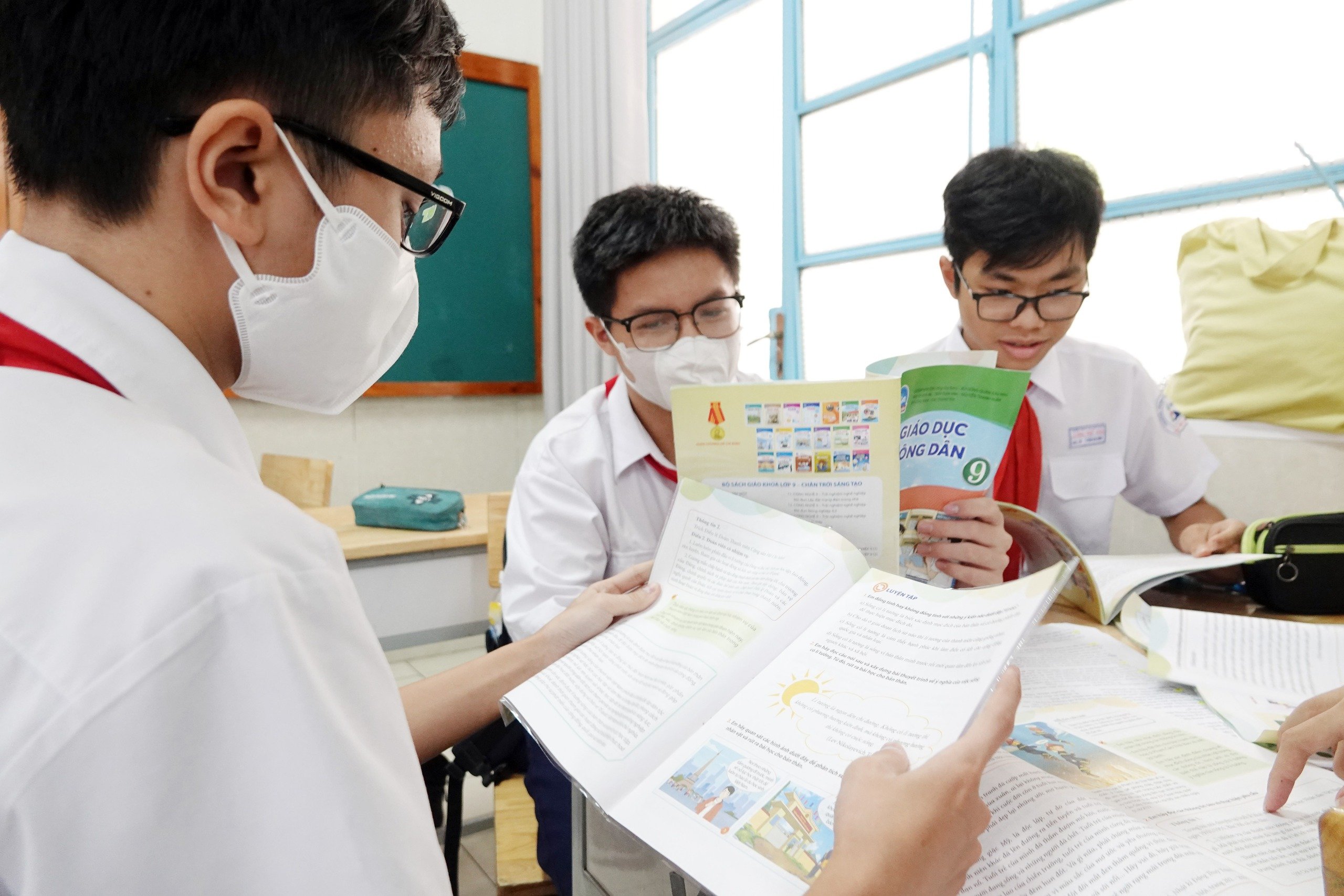
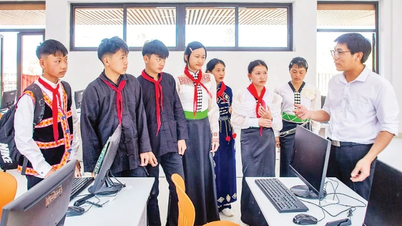
Students are good learners when they understand the meaning of learning, are interested in and enjoy learning, and are responsible for their studies.
Photo: Dao Ngoc Thach
According to Professor Thai, educational assessment must adhere to the principle of "what is taught is what is tested." It is unacceptable for educational assessment to regulate or control educational goals; that is, it is unacceptable for students to simply study what is tested. For each subject in the 2018 General Education Program, it is necessary to build confidence among students and their parents regarding the value that the knowledge gained from that subject will bring to the students' future lives, thereby motivating and engaging them in the subject. To achieve this, the content and teaching methods of each subject must be reformed; administrative measures such as mandatory exams to force students to study a particular subject cannot be used.
Speaking to Thanh Nien newspaper, Professor Huynh Van Chuong, Director of the Quality Management Department (Ministry of Education and Training), repeatedly emphasized that the method of setting high school graduation exam questions from 2025 onwards will change in a positive direction, in line with the spirit directed by the Ministry of Education and Training leadership: ensuring that students study according to the curriculum and can pass exams and entrance exams without needing extra tutoring.
Specifically, the exam will not only test knowledge but will focus more on assessing the ability to apply knowledge to practice. Accordingly, many questions will be based on real-life situations in science and society, helping candidates see the connection between learned knowledge and the world around them. The literature exam may use materials outside of textbooks, helping to assess students' reading comprehension and understanding of texts in real-life situations, avoiding rote learning and memorization.
Professor Huynh Van Chuong also affirmed that the exam questions from 2025 onwards will be more differentiated, but this does not mean increasing the difficulty in a way that is overly challenging. The questions will aim to assess students' abilities and their capacity to apply knowledge to solve practical problems. This knowledge will be linked to the curriculum and the required learning outcomes.
Good academic results are a consequence of effective learning methods and self-study.
According to Associate Professor Chu Cam Tho (Vietnam Institute of Educational Sciences), students learn well when they understand the meaning of learning, are interested in and enjoy learning, and are responsible for their studies. Good academic results are the consequence of effective learning methods, self-study; guidance and support to broaden their horizons and identify learning goals, and to strive for self-improvement. To support students in learning effectively, teachers need to conduct assessments of the learning process accurately, seriously, and with quality, rather than focusing solely on exam preparation and encouraging diligence.
Numerous studies on the relationship between academic achievement during school years and later success, or between academic achievement and life satisfaction, have shown that many high-achieving students who won awards in competitions do not succeed. For example, in Vietnam, many students are admitted directly to universities thanks to high scores in their high school graduation exams and the title of all-around excellent student, but they do not perform well in university. The reason is believed to be a lack of self-learning ability and a lack of motivation to study and research.
Source: https://thanhnien.vn/giam-day-them-hoc-them-tang-tu-hoc-thay-doi-cach-ra-de-thi-185250227214827917.htm
![[Photo] Prime Minister Pham Minh Chinh meets with representatives of female leaders and managers of central agencies and presents the Kovalevskaia Award 2025.](https://vphoto.vietnam.vn/thumb/1200x675/vietnam/resource/IMAGE/2026/03/06/1772789429283_ndo_br_dsc-1149-jpg.webp)


























![[Photo] People in Ho Chi Minh City experience the green space at Ly Thai To Park No. 1.](https://vphoto.vietnam.vn/thumb/1200x675/vietnam/resource/IMAGE/2026/03/06/1772783731988_01-9003-png.webp)





















































Comment (0)