


Smart urban governance
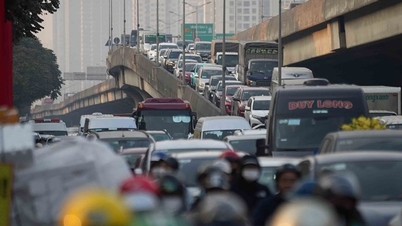
In the context of rapid urbanization, Vietnam's major cities are facing numerous challenges such as traffic congestion, localized flooding, environmental pollution, and pressure on infrastructure and public services. These issues cause significant economic losses, directly impacting the quality of life of citizens and the effectiveness of urban governance.
The application of digital technology, especially 5G, is considered one of the key solutions for transitioning from a traditional management model to smart urban governance, based on real-time data and automation. According to Mr. Nguyen Tuan Huy, Deputy Head of Technology at MobiFone , modern urban management challenges require low-latency connectivity infrastructure and the ability to connect a large number of devices. Only with 5G can sensor systems, AI cameras, and real-time operating platforms truly be effective.
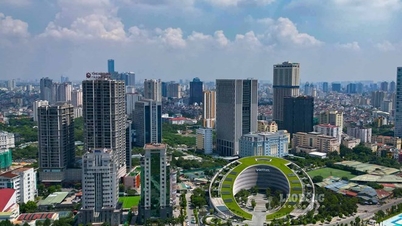
Practical implementation in Hanoi shows that smart traffic management, environmental monitoring, and flood prevention models are gradually taking shape. AI camera systems combined with 5G networks allow for the collection, processing, and analysis of data directly on-site, thereby supporting authorities in making faster and more accurate decisions. In the long term, these models help reduce traffic congestion, save time and social costs, and contribute to increased transparency and efficiency in urban management – an increasingly urgent requirement in the process of sustainable development.
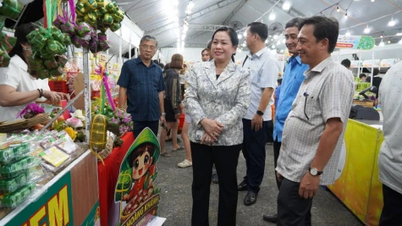
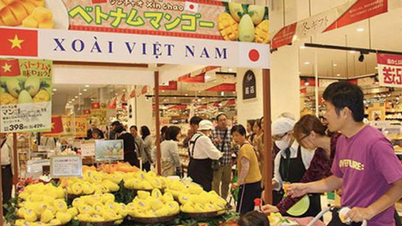
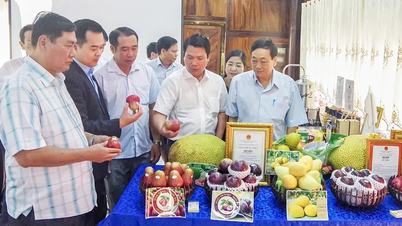
Opening a "highway" for agricultural products to access the digital environment.
A notable aspect of 5G deployment in Vietnam is its impact, which extends beyond urban areas to rural, mountainous, and remote regions – areas previously hampered by limited connectivity infrastructure and market access. Widespread 5G coverage has helped bridge the digital divide, opening up new development opportunities for rural areas.
Mr. Nguyen Lam Thanh, General Director of TikTok Vietnam, assessed that 5G has helped farmers directly enter the digital economy. With the widespread deployment of 5G, Vietnamese agricultural products will have more opportunities to reach further thanks to new sales and marketing channels in the digital environment. “Farmers can tell their stories to over 70 million users on the TikTok Shop platform. From there, they can improve their lives and the gap between rural and urban areas will be narrowed,” Mr. Thanh affirmed.
In many localities, people have leveraged digital platforms and 5G infrastructure to livestream the sale of agricultural products directly from their fields and orchards. This approach shortens the intermediary stages and creates transparency regarding the origin and quality of products, thereby building trust with consumers. More importantly, bringing agricultural products to the digital environment has opened up opportunities to increase the added value of agricultural products, contributing to improving the lives of farmers in remote areas by combining 5G infrastructure with digital sales methods and logistics. Beyond supporting consumption, 5G is also creating fundamental changes in the agricultural value chain, from production and distribution to consumption.
Mr. Dinh Thanh Son, Deputy General Director of Viettel Post, stated: “Combining 5G infrastructure with the logistics system has opened up a new approach to the livelihood challenges of farmers. For farmers, 5G is like a digital highway, bringing agricultural products from villages to the dinner tables of city dwellers.”
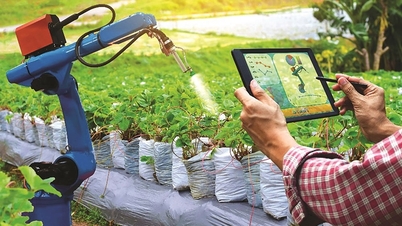
Through support programs, farmers not only sell their products but also gradually access digital business skills, build personal brands, and promote local products. This is a crucial factor in creating sustainable livelihoods, instead of relying on short-term harvests or intermediaries. Furthermore, 5G opens up the possibility of transforming traditional agricultural production methods into smart production methods through the application of IoT (Internet of Things) devices to monitor growing areas, weather conditions, humidity, and soil nutrients. Agricultural production will thus gradually shift towards data-driven approaches, improving productivity, quality, and sustainability.
Strong digital infrastructure
Vietnam's telecommunications development over the past few decades has made significant strides, approaching global standards in technology and pricing, thereby creating a convenient connectivity platform for the people and the economy. As the internet and broadband technology become more widespread, the greatest opportunity no longer lies in simply "having a connection," but in the ability to transform that connection into value for production, business, and social life. Therefore, the contribution of telecommunications providers is also recognized as a driving force for the economy in the digital age.
Vietnam possesses numerous advantages, including a robust online service sector and a large, active user community. This foundation creates a vibrant supply-demand cycle, driving business model innovation and increasing value in the digital environment. The widespread user base and open market allow 5G to open up opportunities for in-depth development, with a focus on IoT – the core foundation for creating smart environments in factories, businesses, and cities.
In the next phase, 5G commercialization needs a more comprehensive approach, expanding the focus to key industrial pillars: devices, solutions, platforms, and application ecosystems, aiming for technological mastery and gradually bringing products to the international market. Simultaneously, the challenge of standards, from connectivity standards to protocol and interoperability standards, must be addressed to keep pace with the world, creating opportunities for breakthroughs and contributing to the formation and acceleration of the national digital technology industry.
Source: https://nhandan.vn/tao-dong-luc-phat-trien-kinh-te-so-post945881.html


![[Photo] Prime Minister Pham Minh Chinh receives the Chinese Ambassador to Vietnam](https://vphoto.vietnam.vn/thumb/1200x675/vietnam/resource/IMAGE/2026/04/05/1775397481797_ndo_br_dsc-5512-jpg.webp)






![[Photo] Prime Minister Pham Minh Chinh receives the Chinese Ambassador to Vietnam](https://vphoto.vietnam.vn/thumb/402x226/vietnam/resource/IMAGE/2026/04/05/1775397481797_ndo_br_dsc-5512-jpg.webp)














































Comment (0)