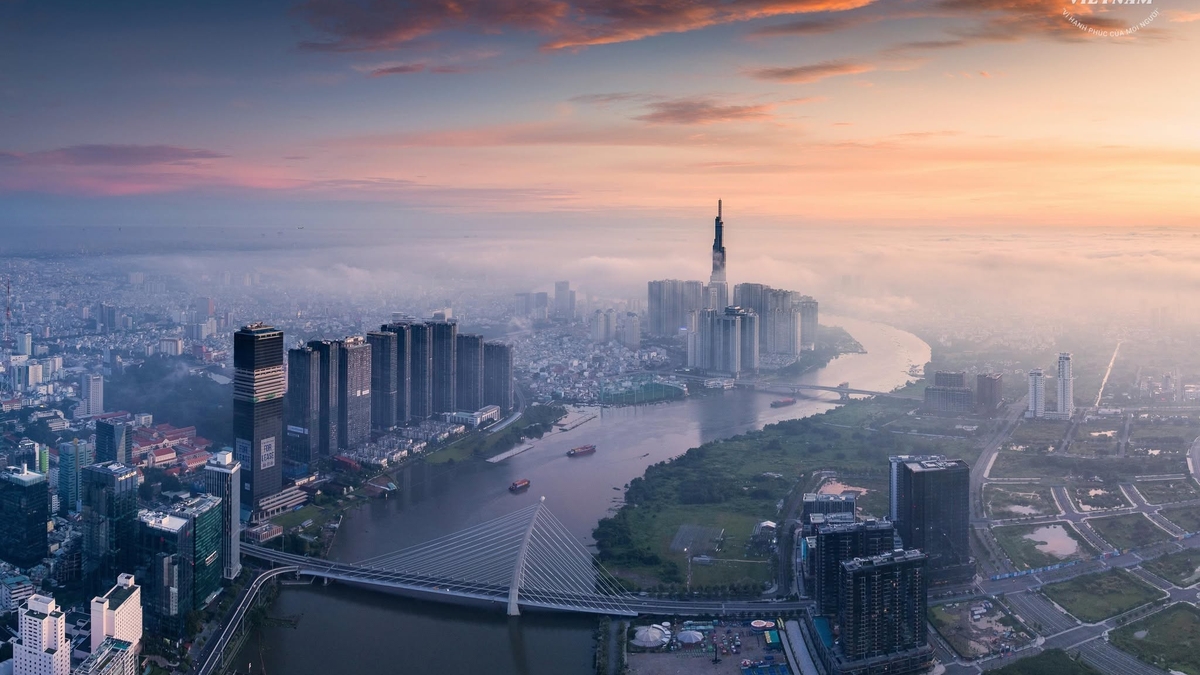
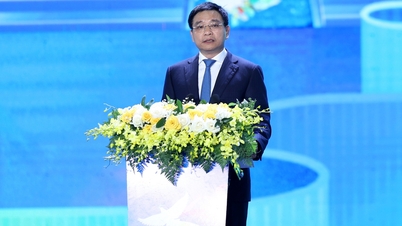
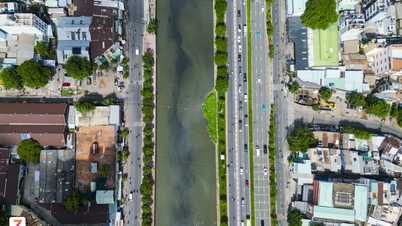
During numerous meetings with various sectors and localities within the province, Chairman of the Provincial People's Committee Pham Anh Tuan affirmed: "Inter-regional transportation connectivity is a crucial foundation and driving force for the province's rapid and sustainable development, enabling it to become a relatively prosperous province nationwide." This message is not only a strategic direction but also a call to action for a new phase of development – a phase where infrastructure comes first, followed by opportunities.
Opening the East-West axis, clearing the "lifeline" of logistics.
In the province's transportation infrastructure landscape, the Quy Nhon - Pleiku expressway project stands out as a symbolic highlight. More than just a key transportation project, this expressway is considered the "backbone" of the East-West logistics corridor, connecting the South Central Coast with the Central Highlands, facilitating the flow of goods from the sea to the highlands and extending to the Vietnam- Laos -Cambodia development triangle.
Currently, National Highway 19 remains the main connecting route between Quy Nhon and Pleiku, but its mountainous terrain, numerous sharp curves, and narrow road surface result in travel times of 3.5 to 4 hours. High logistics costs have become a major obstacle for businesses in the Central Highlands, especially in the context of increasingly fierce competition.
When the Quy Nhon - Pleiku expressway is completed, the landscape will fundamentally change. Travel time will be reduced to 1.5 - 2 hours, and transportation costs will decrease by approximately 40 - 50%. Spanning 125 km, with 4 lanes, a design speed of 100 km/h, and a total investment of over 43,700 billion VND, the expressway is expected to restructure the entire flow of goods, especially agricultural products, processed goods, and minerals, from Gia Lai and other Central Highlands provinces to seaports.
According to Vice Chairman of the Provincial People's Committee Nguyen Tu Cong Hoang, the expressway will not only make crossing the An Khe and Mang Yang passes easier, but also expand the development space for industry, urban areas, and logistics at key transit points, and enhance cross-border trade with Southern Laos and Northeastern Cambodia through the Le Thanh International Border Gate.
Along with the expressway, Gia Lai is simultaneously implementing projects connecting the North-South Expressway and National Highway 1 to the Phu My Industrial Park, Phu My Port, and De Gi Port. The nearly 16.4 km long road from the North-South Expressway to the Phu My Industrial Park, with its wide cross-section and four lanes for motorized vehicles, is facilitating the transportation of containers and large volumes of goods.

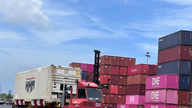
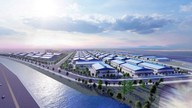
In addition, the road connecting National Highway 1 to the coastal road (Provincial Road 639), linking to De Gi Port, is opening up new development directions for coastal logistics, reducing the burden on Quy Nhon Port and gradually forming a network of satellite ports to serve import and export for the entire region.
Once the entire 121 km coastal road is completed, Gia Lai will have another important driving force, closely linking seaports - industrial parks - urban areas - services, forming a closed logistics chain from production to export.
Infrastructure comes first - Trust spreads
A major advantage of Gia Lai is its convergence of all three major modes of transport, creating a foundation for the development of multimodal logistics. On land, the system of National Highways 14, 19, and 25 directly connects to the Southeast region, the Central Highlands, and major seaports, helping businesses shorten journeys and reduce transshipment costs.
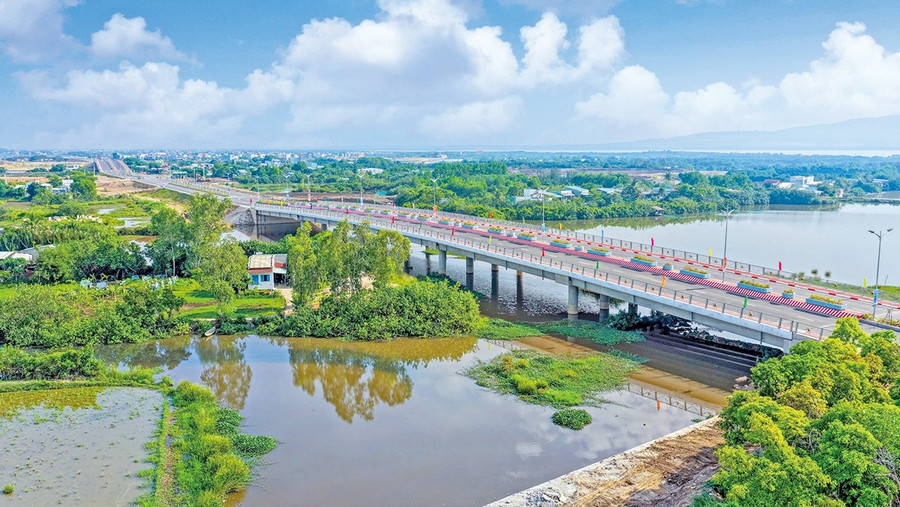
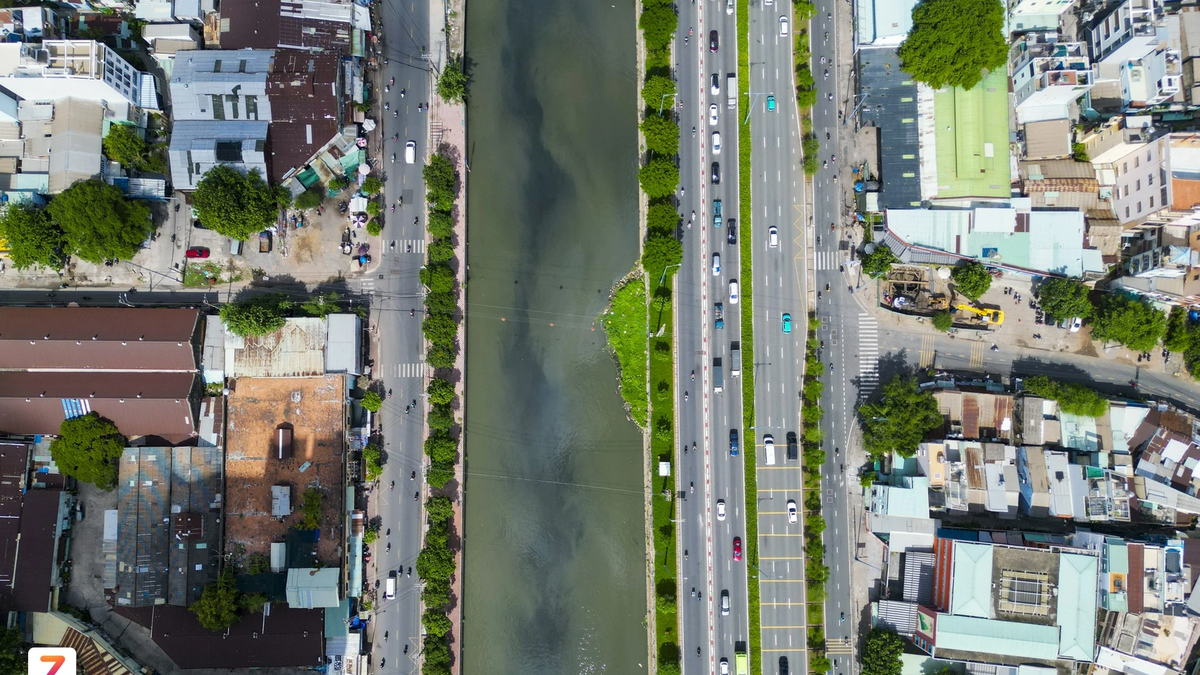
- In the photo: Dien Bien Phu road (Quy Nhon Dong ward) extended to Diem Van urban and eco-tourism area (Tuy Phuoc commune). Photo: Nguyen Dung
In the air, Pleiku Airport, classified as a 4C airport, is planned to increase its cargo capacity to 12,000 tons per year by 2050, opening up opportunities for the development of air logistics for agricultural products, medicinal herbs, and high-value goods. Meanwhile, Phu Cat Airport – the air gateway to the coastal region – is planned to serve 27,000 tons of cargo per year by 2050, capable of accommodating wide-body aircraft, facilitating international cargo transportation.
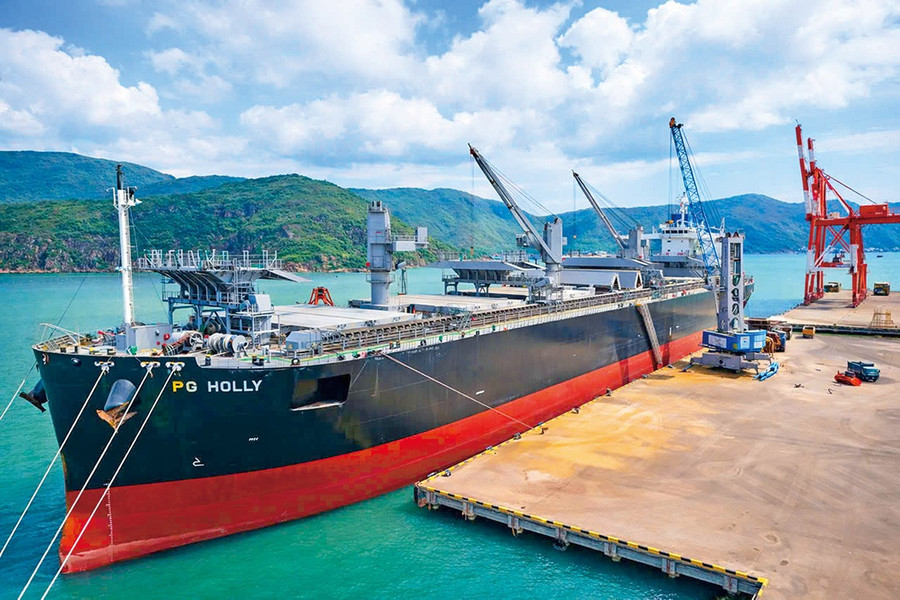
On the seaward side, the Quy Nhon port complex continues to play the role of the largest import and export gateway in the South Central and Central Highlands regions. In 2025, amidst a challenging market, the unit achieved certain results in meeting its BSC - KPI financial targets, reflecting efforts to maintain stable production and business operations.
Specifically, cargo throughput is estimated at 10.8 million tons, equivalent to 82% of the annual plan (13.22 million tons) and 92% compared to 2024. Container throughput alone reached approximately 185,000 TEUs, completing 97% of the plan and increasing by 6% compared to 2024.
Mr. Dang Van Hoa, Deputy Director of Quy Nhon Port Joint Stock Company, said: “The consolidated revenue of the unit in 2025 is estimated to reach VND 1,178.9 billion, achieving 85% of the annual plan (plan of VND 1,390 billion) and equivalent to that of 2024. The commissioning of berth No. 1 along with container ship routes to Europe, America, and Northeast Asia has enhanced the logistics competitiveness of Gia Lai and the entire region.”

Beyond the domestic market, Gia Lai also possesses a significant advantage in cross-border logistics. Located directly connected to Southern Laos and Northeastern Cambodia via the Le Thanh International Border Gate, the system of warehouses, logistics centers, and industrial clusters within the border economic zone is being developed comprehensively, gradually transforming Gia Lai into an important goods transshipment hub in the region.
Based on practical experience in production and business operations, Mr. Tran Viet Anh - Chairman of the Board of Directors of Saigon - Nhon Hoi Industrial Park Joint Stock Company - believes that public investment in transportation infrastructure is a key factor in building long-term confidence for investors. When infrastructure is developed ahead of time, businesses are willing to invest heavily, expand production, and attract private capital and FDI.
Entering the 2026-2030 period, Gia Lai identifies port and logistics services as one of its five growth pillars, linked to the development of processing industries, high-tech agriculture, tourism, and urban areas. At the start of the new year, the roads being opened and projects taking shape are a strong commitment to a Gia Lai that will break through in infrastructure, reap rewards from logistics, and rise to become a strategic connection point between the Central Highlands and the sea and the international region.
Source: https://baogialai.com.vn/tao-dot-pha-tu-logistics-post579629.html