


Visitors inspect the fish sauce drying area of Hati Production - Trade and Service Co., Ltd., Phuoc Hai commune, Ho Chi Minh City. Photo: Hoang Nhi/TTXVN
As Tet (Vietnamese New Year) approaches, the northeast monsoon winds blow along the rivers of the Mekong Delta, bringing a gentle chill to the northern mountain slopes, carrying the faint aroma of freshly cooked sticky rice, candied ginger, and the scent of sun-dried produce on bamboo trays overflowing with local produce. At this time, a group of people quietly enter the busiest season of the year to sell the flavors of their homeland. They sell not just a product, but memories, the scent of the earth, the smell of the sun, and long stories connected to their traditional crafts and farming practices, shaped by the calloused hands of the farmers.
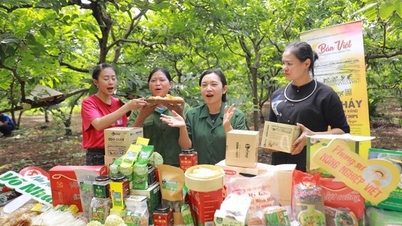
Carefully packaged goods include traditional fish sauce made from anchovies and sea salt, herbal tea harvested from hillside gardens, dried mangoes, dried bananas, roasted cashews, and forest honey… These OCOP (One Commune One Product) products are no longer confined to rural markets or Tet (Lunar New Year) fairs in remote areas, but have traveled by plane and train to the world .
Ms. Nguyen Thi Truc Ly, owner of Duy Minh Food Factory ( Dong Thap ), shared: "In the days leading up to Tet, the factory is almost always lit up. Many Vietnamese people living abroad place orders. They buy not only to eat but also to give as gifts, to have a taste of home on their tea table during Tet. Some foreign customers have tried it and loved it, saying the taste is very different and authentic. Therefore, each order sent out not only brings in revenue but also a feeling of pride when our hometown products are well-received in a new market."
Therefore, Tet is not only a season of family reunions but also a season for showcasing Vietnamese specialties. From small craft villages, OCOP products carry the story of their birthplace. A bottle of fish sauce tells the story of the sea, the fishing season, and the fermentation process. A packet of tea is associated with the morning dew, tea hills, and the hands of the tea pickers. Or a jar of honey evokes images of mountains, forests, flowers, and long journeys with the bees. And, when they reach the world, these stories are what make them unique.
In the journey of bringing OCOP products to the international market, the Le Gia Fish Sauce brand is a vivid example of the unwavering spirit of those who sell the flavors of their homeland. Mr. Le Anh, Director of Le Gia Food & Trade Service Co., Ltd., emphasized that for small-scale OCOP businesses, exporting cannot be viewed purely through the lens of profit or short-term cash flow.
For Le Gia, exporting is first and foremost a journey to bring traditional Vietnamese culinary culture to the world, a way to transform products imbued with the essence of our ancestors' craft into culinary passports representing regional identity and national pride. Recognizing this mission, Le Gia began with the most systematic steps, investing seriously and long-term in infrastructure, production processes, and necessary international standards and certifications, despite limited initial resources and significant cost pressures.
Based on his 8 years of experience in exporting, including 6 years supported by the OCOP program, Mr. Le Anh concluded that: For Vietnam's OCOP program to go far, businesses need to recognize that exporting is a serious, systematic, and persistent investment; build a strong brand image in the domestic market as a foundation; proactively understand the technical standards, labeling regulations, and packaging requirements of each target market; and simultaneously utilize support resources from state management agencies in trade promotion and logistics connectivity.
For Le Gia, exporting is not just about selling a product, but about making the homeland more beautiful, preserving the traditional crafts of our ancestors with dedication and creativity, so that every bottle, every drop of traditional fish sauce, when it reaches foreign lands, becomes a "culinary passport" that tells the story of Vietnam in the most enduring and proud way.
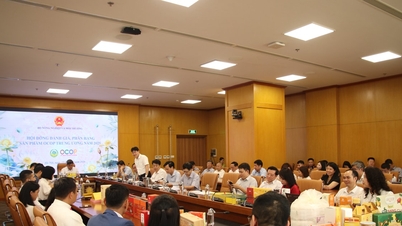
Representatives from the Ministry of Industry and Trade acknowledge that Vietnamese OCOP products are facing a great opportunity as global consumer trends increasingly favor natural, sustainable foods with clear origins and local cultural values. International consumers are not just buying products; they are buying the story behind them. This is a significant advantage for Vietnamese OCOP products if properly exploited. Furthermore, new-generation free trade agreements are opening wider doors, giving many specialty products the opportunity to access international markets with preferential tax rates.
However, the path to bringing the flavors of the countryside to the world has never been easy, because behind the export shipments lie significant challenges for OCOP producers who are accustomed to small-scale production. Some products are very delicious and distinctive, but cannot go far simply because they have not yet obtained the necessary international certification.
The reason is that Vietnam's OCOP (One Commune One Product) program has great potential but lacks coordination and a long-term strategy when entering the international market. Many products are produced independently, lacking regional connections and a common brand. Therefore, with better support in trade promotion, branding, and logistics, OCOP could absolutely become a cultural ambassador of Vietnam in the global market.
Perhaps that's why Tet is both a time filled with hope and also with many anxieties. In the final days of the year, before the fireworks light up the sky, those selling local specialties are still diligently completing each order and checking each box of products. They understand that each item sent out not only represents their business but also carries the image of their homeland and country.
Amidst the hustle and bustle of the days leading up to Tet (Vietnamese Lunar New Year), the image of people selling traditional local delicacies suddenly becomes incredibly gentle. They bring Tet ahead, sending spring to distant lands. And in each gift package, each OCOP product, Vietnamese Tet is not only present on the feast table but also quietly spreads, enduring and warm like the very soul of the homeland.
Source: https://baotintuc.vn/kinh-te/tet-cua-nguoi-di-ban-vi-que-20260218103706344.htm













































































Comment (0)