

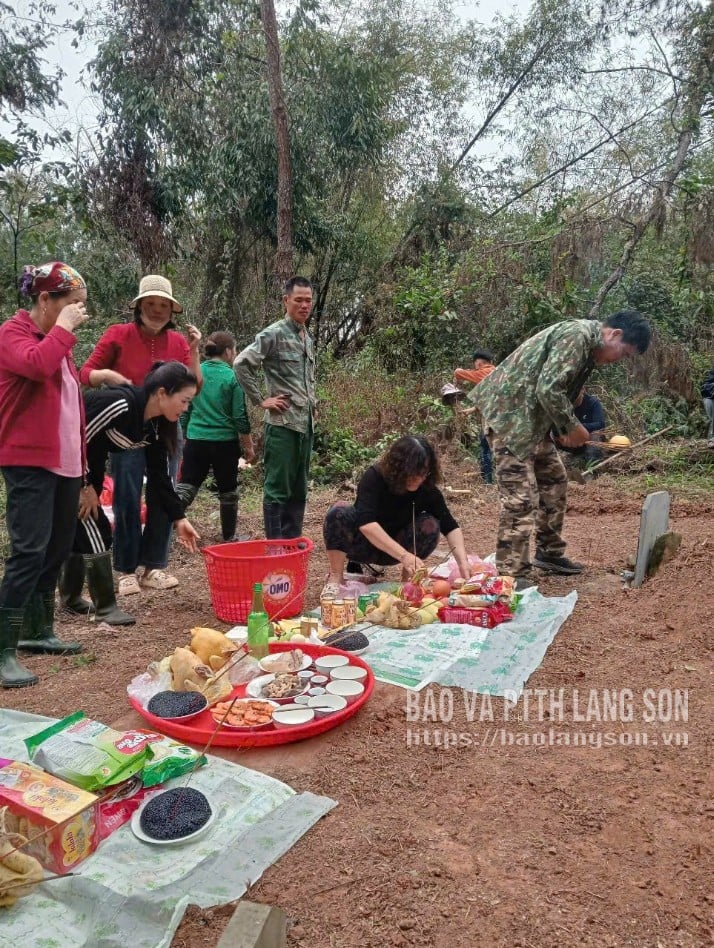
The Qingming Festival is a popular custom among the ethnic groups residing in the province, but it is most representative of the Tay and Nung people – the two most populous ethnic groups in Lang Son. Nowadays, the Qingming Festival is usually celebrated on a day in March chosen by each family, according to their circumstances. Previously, it was mostly fixed on the 3rd day of the 3rd lunar month each year, with very few places celebrating on other days. Some places, such as Nhuong Ban commune in Van Mong district and Tu Mac commune in Khuat Xa district (Loc Binh district), celebrate on the 16th. According to ancient customs, the focus of the Qingming Festival in the past was the ritual of offering sacrifices to the gods at the local shrines or village communal houses, praying for favorable weather, for sunshine and rain at the right time for a bountiful harvest. Only after that did the families perform the ritual of visiting and tending to their graves.
To prepare for this important festival, the village elders, including the village chief, headman, and deputy headman, would meet beforehand to discuss how to collect money or goods: rice, sticky rice, etc. Usually, this was done from household to household or from male descendants (18 years of age and older). The custom of Xuan Tinh commune, Van Mong district, Loc Binh province states: "According to custom, the village headman is assigned to collect from all households in the commune: one hào and two xu of Indochinese silver, half a pound of white sticky rice..." In some places, funds from the village budget are used for this ceremony, with the remainder collected during the harvest season. The custom of Huu Thu commune, Huu Thu district, Thoat Lang province states: "The amount of offerings for that day and the offerings for the Upper and Middle Nguyên festivals are all entrusted to the shaman. At the harvest in October, the shaman collects 15 pounds of rice from each family in the commune to supplement those expenses." In some places, the preparation and offering of sacrifices are entrusted to the shaman or temple caretaker (the person in charge of the communal house, temple, or shrine), while in others, it is entrusted to the village headman or village leader. The types and quantities of offerings are determined by each village according to its conditions and population situation. Common offerings include chicken (boiled or roasted), roasted pig, pork, sticky rice and white wine, vegetarian cakes (rice cakes, honey cakes, flower cakes, etc.), incense, betel nuts, and firecrackers.
On the day of the Qingming Festival, following the signal, the people and village officials, including the village chief, deputy chief, village elder, and headman, dressed in formal attire, gathered to perform the ritual of offering sacrifices to the gods. After the offerings were prepared, the shaman entered to pray for peace, favorable weather, and prosperity for the people and the land. Firecrackers were lit, and in a solemn atmosphere, everyone entered in order of rank to pay their respects. Similar to the Lunar New Year, in some places, families brought trays of vegetarian or sticky rice with chicken, sweets, money, gold, and incense to offer. Usually, after the ceremony, the communal offerings were divided among everyone or shared among the deities, while each family took their individual offerings home. Afterwards, they all went to visit the graves of their ancestors.
The custom of visiting ancestral graves in Lang Son is highly standardized, basically the same everywhere and quite strictly regulated. After performing ancestral worship ceremonies at home, people bring hoes and shovels to the ancestral graves to sprinkle water, clean, remove weeds, and mound the graves to make them high, neat, and round… Then they arrange the prepared offerings (sticky rice, chicken, fruits, white wine, incense…) at the graves. Throughout the grave-visiting process, no one is allowed to wear a hat, and they are only allowed to return home when the sun has set. According to researcher Hoang Giap (Institute of Han Nom Studies), “March 3rd is the day to pray for sunshine. Sunlight will dispel gloomy clouds, drive away dampness, and kill insects that destroy crops.” Folk belief holds that wearing a hat or returning home while the sun is still shining is contrary to the community's wish for sunshine. Therefore, even when it is sunny, no one is allowed to wear a hat. After the ceremony, everyone eats, drinks, and enjoys themselves in the mountains and forests to welcome the sunshine. In the evening, when the sun had set and the light faded, everyone returned home together. If anyone violated the custom, believing that the ritual would no longer be effective, the villages would impose penalties to uphold the tradition. The custom of Chinh Lu village, Trinh Nu district, Cao Loc province (recorded on July 1st, 4th year of Khai Dinh - 1919) described the penalty as follows: "If anyone is caught wearing a hat on that day, they will be fined 3 Indochinese silver coins, 10 kilograms of pork, and 10 bottles of wine…" Many other villages also imposed quite heavy fines compared to the contributions, so few dared to violate the rules. The confiscated items were either added to the public treasury or used for a communal meal. During the tomb sweeping process, everyone had to adhere to several other strict regulations such as: not laughing, talking loudly, lighting fires, or cutting rice… to maintain the solemnity of the sacred space, reverence for ancestors, and the sacredness of the belief.
With the development of society, many conventions in the ancient Qingming Festival have disappeared. Today, even the elderly know little about the existence of these customs in their homeland. Turning the pages of ancient customs, we not only deeply appreciate the unique and distinctive features of the Qingming Festival in Lang Son that have been passed down to this day, but also immerse ourselves in the cultural space of the villages of Lang Son in the past. Although there are still some cumbersome and sometimes strict procedures, they are warm with the spirit of community and always focused on the roots and beautiful morals of the nation.
Source: https://baolangson.vn/tet-thanh-minh-cua-lang-son-qua-cac-tuc-le-co-5086711.html

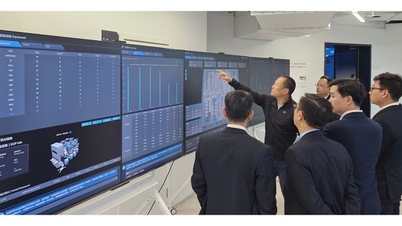
![[Photo] General Secretary and President visit the China-ASEAN AI Application Cooperation Center](https://vphoto.vietnam.vn/thumb/1200x675/vietnam/resource/IMAGE/2026/04/17/1776404277677_vna-potal-tong-bi-thu-chu-tich-nuoc-tham-trung-tam-hop-tac-ung-dung-ai-trung-quoc-asean-8706616-2286-jpg.webp)












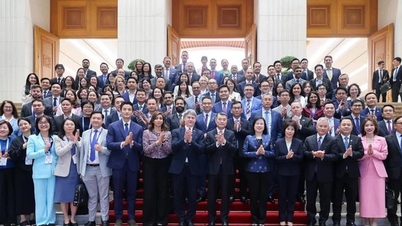
![[Photo] National Assembly Chairman Tran Thanh Man attends the policy seminar to promote Vietnam-Türkiye cooperation.](https://vphoto.vietnam.vn/thumb/1200x675/vietnam/resource/IMAGE/2026/04/16/1776351415367_vna-potal-chu-tich-quoc-hoi-tran-thanh-man-du-toa-dam-chinh-sach-thuc-day-hop-tac-viet-nam-tho-nhi-ky-8705791-jpg.webp)





































Comment (0)