

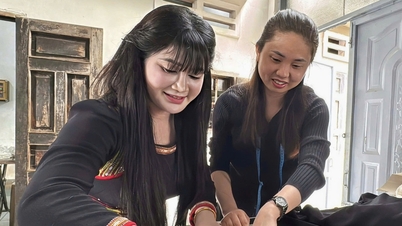
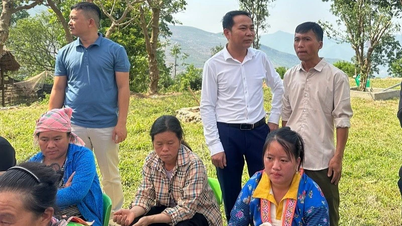
 "We are determined to bring the traditional embroidery and weaving products of the Nung Phan Slinh ethnic group to the international market." The cooperative group originated from the Phan Slinh Nung Ethnic Embroidery and Brocade Weaving Club; in April 2025, this club officially transformed into a cooperative group with 33 members. Since then, the members have maintained the exchange of experiences, supported each other in improving their skills, and gradually improved product quality. Starting with initial products like clothing, hats, scarves, and bags, the members continued to research and create many new designs such as pillowcases, tablecloths, and wall art to increase value and meet market demands. The cooperative also promoted the use of social media platforms to introduce products, the crafting process, and the cultural stories behind each pattern, thereby bringing the products closer to consumers. On average, the cooperative produces 100-200 products per month, which can double during peak seasons such as festivals. In addition, to preserve and promote the products, from 2023 to the present, the cooperative has coordinated and organized 3 traditional costume fashion shows; opened one sewing class with 30 students; and encouraged members to open 8 clothing stores in the commune, creating a stable income of about 5-6 million VND/household/month… At the same time, we also mobilized over 10 million VND from social contributions to build a production-related exhibition area to promote the products. Over the past period, the cooperative's products have been showcased at numerous cultural, sports , and tourism events in the province, contributing to expanding the consumer market. Currently, the cooperative has partnered with Song Chau Construction, Trade and Tourism Joint Stock Company (Lang Son) to gradually introduce its products to the international market. |
.
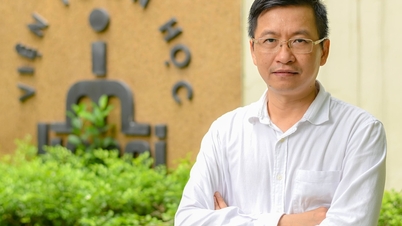
 "Efforts to pass on to the younger generation the preservation of the Tay ethnic group's language and then melodies." For over 20 years, I have been dedicated to Vu Lang Primary School No. 1. Besides teaching, I have always been concerned about the potential decline of the Tay ethnic group's language and identity. Driven by this worry, I spent many nights researching and composing music, while also seeking out artisans to collect and record the melodies of sli, then, and luon, hoping to apply my knowledge to preserve and promote these traditional values in modern life. That journey began with very simple things like teaching folk songs to villagers during festivals and holidays, then gradually incorporating Then melodies into music lessons at school. To make it more accessible to students, I proactively modernized some familiar songs like "Going to School" and "My Love, the Diligent Girl" using the Tinh lute. In 2020, the Ban Chang Then Singing and Tinh Lute Club was established, marking a significant step forward in the preservation of folk songs in the locality. From a few initial members, the club has now attracted more than 70 people of various ages. In recent years, the club's activities have become increasingly widespread. The sounds of the zither and the folk songs not only resonate within the villages but are also featured on national television and in many localities. I continue to teach for free because my greatest desire is to help students understand, love, and be proud of their ethnic culture. For me, preserving cultural identity is not something far-fetched, but begins with concrete actions in daily life. |
.
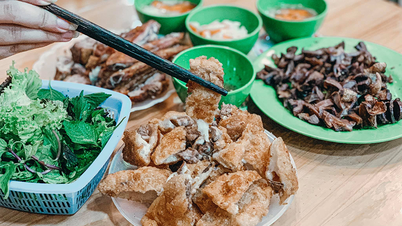
 "Traditional dishes help tourists understand more about the unique cultural characteristics, creating an unforgettable impression." Having been connected to the kitchen since childhood, I've always believed that cuisine is not just about daily eating, but also a repository of memories, customs, and the way of life of the people. Each traditional dish of the Tay ethnic group in my hometown, such as braised pork belly, black sticky rice cake, roasted pork, or herbal rice wine, has its own unique preparation method, associated with specific festivals, holidays, weddings, and other celebrations. Previously, cooking traditional dishes was mainly for family gatherings or special occasions. In recent years, as the commune has developed community-based tourism and attracted more visitors, I've started paying more attention to preparing dishes while preserving their traditional flavors for tourists, and also learning how to present and introduce dishes in a more appealing way. I also utilize social media to post images and videos of the cooking process, thereby helping more people learn about it. Some dishes seem familiar, but when I share the origin, meaning, and preparation methods, the online community becomes very interested. Many people, after watching, seek out the recipes, order the dishes, or ask for instructions. This makes me realize that cuisine is not just a product, but also a part of culture that can be spread if we know how to introduce it. Currently, I also work as a tour guide, providing cultural and tourism experiences for visitors in the commune, and serving food to tour groups, including tourists from other provinces and international visitors. Traditional dishes contribute to helping tourists understand more about the unique cultural characteristics, creating unforgettable impressions. I hope that in the direction of tourism development, especially in connection with the UNESCO Global Geopark of Lang Son, traditional cuisine will receive more attention, contributing to enriching the experience for tourists. |
.
 "May the lion-cat dance remain a source of pride for the people of Lang Son." The worry about the erosion of our national cultural identity motivated me in 1986 to establish the Hop Tan Village Lion Dance Team. Currently, the team still maintains over 20 members of all ages, becoming one of the key figures in preserving the community's culture. For me, the lion dance of the Nung Phan Slinh people is not simply a performance, but a culmination of art and working life. Every movement, every rhythm is connected to familiar tools such as tridents, sticks, knives, etc., vividly reflecting the productive life and spirit of the people. Every December, when the sounds of drums, gongs, and cymbals resound throughout the villages, it is also the time when we enter the peak training period, perfecting the six characteristic dances to perform at major festivals such as the Bac Nga Pagoda, the Dong Dang Mother Goddess Temple, and the Ky Cung - Ta Phu Temple festival. Not content with just performing locally, I've always been concerned about finding ways to spread this art form more widely, especially among the younger generation. For many years, I've been involved in teaching it in many localities throughout the province; since the end of 2024, together with the club members, we officially introduced the lion dance into schools. The students' enthusiasm in embracing each drum beat and each step not only energizes the movement but also reinforces the belief that this heritage is still being continued. In the future, I will continue to focus on discovering and nurturing talented and dedicated young people, gradually building a strong successor force, so that the sound of the lion dance drums will not only resonate during festivals but also become a familiar sound in the lives of people in the province. |
Source: https://baolangson.vn/suc-song-van-hoa-tu-co-so-5087813.html



![[Photo] National Assembly Chairman Tran Thanh Man attends the policy seminar to promote Vietnam-Türkiye cooperation.](https://vphoto.vietnam.vn/thumb/1200x675/vietnam/resource/IMAGE/2026/04/16/1776351415367_vna-potal-chu-tich-quoc-hoi-tran-thanh-man-du-toa-dam-chinh-sach-thuc-day-hop-tac-viet-nam-tho-nhi-ky-8705791-jpg.webp)


















































Comment (0)