

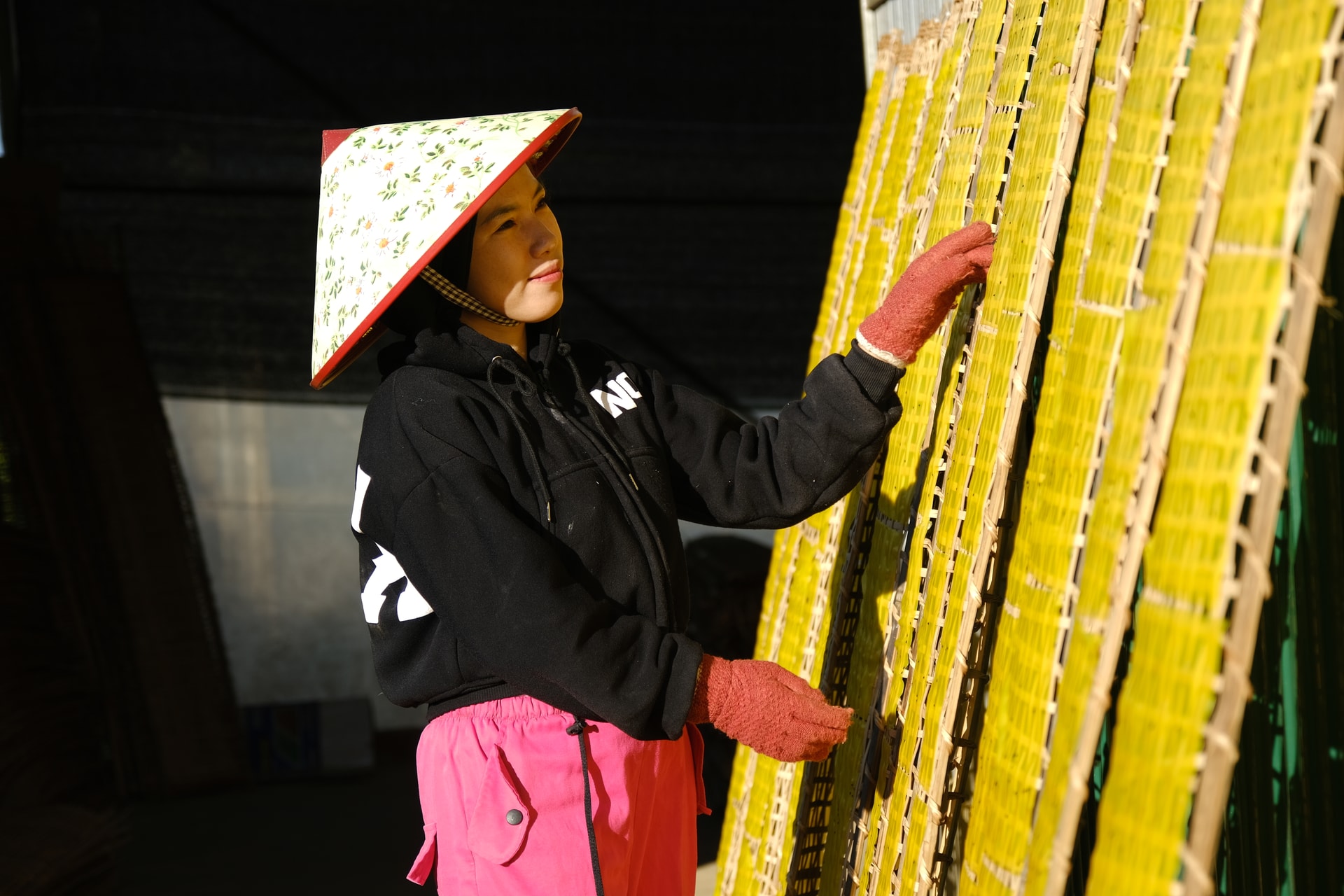
Currently, Thanh Binh has about 10 rice paper production facilities in operation. Each facility isn't large in scale, but they create a bustling work environment, especially on sunny days. The rice paper making profession in Thanh Binh isn't new, but it has only truly flourished in recent years, with stable demand and many households boldly investing in machinery.
Amidst the rows of rice paper sheets, the production facility of Ms. To Thi Hien (35 years old) is one of the busiest workplaces. Having been involved in the rice paper making profession for nearly 8 years, Ms. Hien started production in the village in March 2022. With an investment of approximately 300 million VND in machinery and a production area of about 100 m², her facility is bustling with activity from early morning every day.
On average, the facility produces about 10,000 rice paper sheets per day. During peak periods, especially leading up to Tet (Lunar New Year), this number increases further to meet orders from traders in Da Lat and neighboring areas.
Ms. To Thi Hien, Thanh Binh village, Dam Rong 1 commune
Ms. Hien shared that the facility starts work at 5 a.m. every day and finishes around 5 p.m. From mixing the batter, making the pancakes, drying them, to stacking them neatly, every step follows the next continuously.
Rice paper in Thanh Binh village is made from familiar ingredients such as rice, salt, and sesame seeds, without the use of additives. The rice is soaked thoroughly, ground finely, and mixed just right so that the rice paper is easy to spread, retains its elasticity, and doesn't stick to the mold. A little turmeric is added to the batter, creating a warm yellow color that has become a familiar hallmark of the rice paper from this area.
The production space of the rice paper making facility also provides employment for 7-8 seasonal workers, mainly villagers. For many older people, this is a suitable occupation because they can work right at home, without having to travel far or do heavy labor, especially after the coffee harvest when their free time increases.
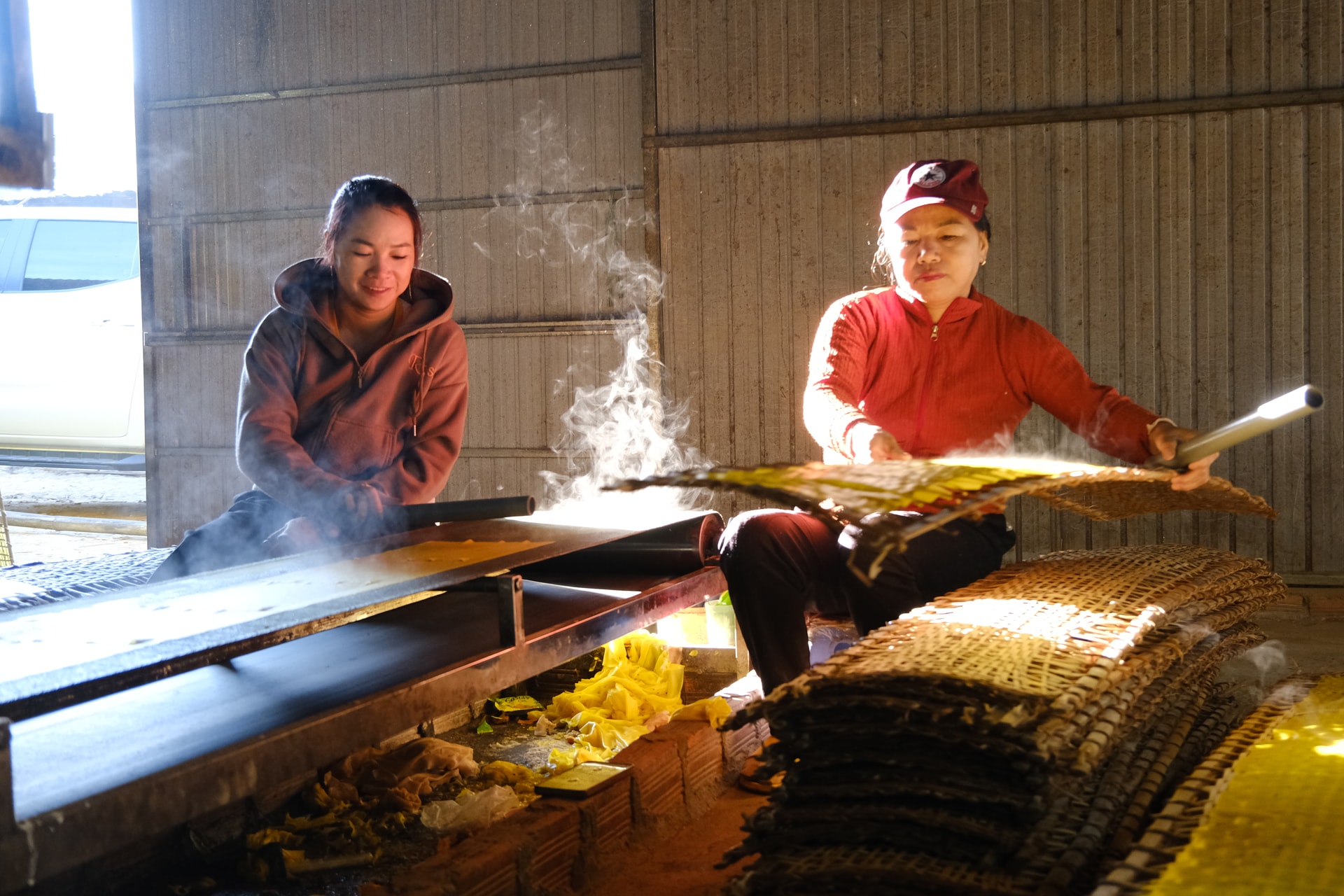
In a corner of the drying yard, Mrs. Lo Thi Bong (55 years old) carefully adjusts each rice cake to make them even. Having been involved in this profession for 4 years, she considers this work a part of her daily life.
For younger workers, the job offers both income and long-term commitment. Ms. Hoang Thi Nhung (26 years old) has been making rice paper for two years. Each day, she can complete about 1,000 sheets of rice paper. During peak season at the end of the year, this number increases to nearly 2,000 sheets. "Wages are calculated based on seniority; the longer you work, the better your income," Ms. Nhung shared.
Making rice paper requires patience and meticulousness, from mixing the batter to the right consistency and maintaining a steady heat, to every small movement, because only with practice can the rice paper be thin, chewy, and not tear.
Ms. Lo Thi Bong, Thanh Binh village, Dam Rong 1 commune
Ms. Hien said that rice paper production depends heavily on the weather. During the rainy season, from around June to October, the facilities usually temporarily close because the rice paper is difficult to dry and the quality is not guaranteed. Conversely, during the dry season, especially at the end of the year, everyone works continuously to meet market demand. The wholesale price is currently around 850,000 VND per piece. On average, the facility ships a batch of rice paper every three days, with each batch containing about 30,000 pieces.
Thanks to favorable market demand, the rice paper making profession in Thanh Binh village provides a stable source of income for many households. The products are sold locally, with traders actively seeking them out for purchase. For the locals, rice paper making is linked to their daily income and the preservation of a familiar traditional craft of their village.
During the spring days, golden sheets of rice paper dry along the village paths under the sun, carrying the familiar scent of rice flour and the diligent rhythm of life of the people of Thanh Binh. Amidst the hustle and bustle of the market, the rice paper making craft quietly remains a part of rural life, where each batch of crispy rice paper contributes to income and preserves the flavor of Tet (Vietnamese New Year) from the hands of the artisans.
Source: https://baolamdong.vn/tet-vang-tren-nhung-phen-tre-423118.html





























































































Comment (0)