

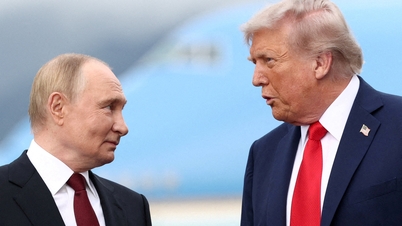
US President Donald Trump and Russian President Vladimir Putin held a telephone conversation late on March 18 (Vietnam time) to discuss peace in the Ukraine conflict.
A "small victory" for both the US and Russia.
According to Reuters, during the 90-minute conversation, the Kremlin leader agreed to temporarily halt attacks on Ukrainian energy facilities. However, Putin rejected President Trump's proposal for a comprehensive 30-day ceasefire.
Nevertheless, both sides hope this will be the first step toward a lasting peace agreement. According to a White House statement, Putin ordered the Russian military to cease attacks on Ukraine's energy infrastructure. The White House also stated that the two leaders agreed to hold talks to achieve a ceasefire at sea and, further, a comprehensive ceasefire to bring about lasting peace.
However, in order to achieve a comprehensive ceasefire and lasting peace, the Kremlin demanded an end to Ukraine's troop mobilization and rearmament, the cessation of all military aid and intelligence sharing by other countries, and the establishment of a ceasefire monitoring mechanism.
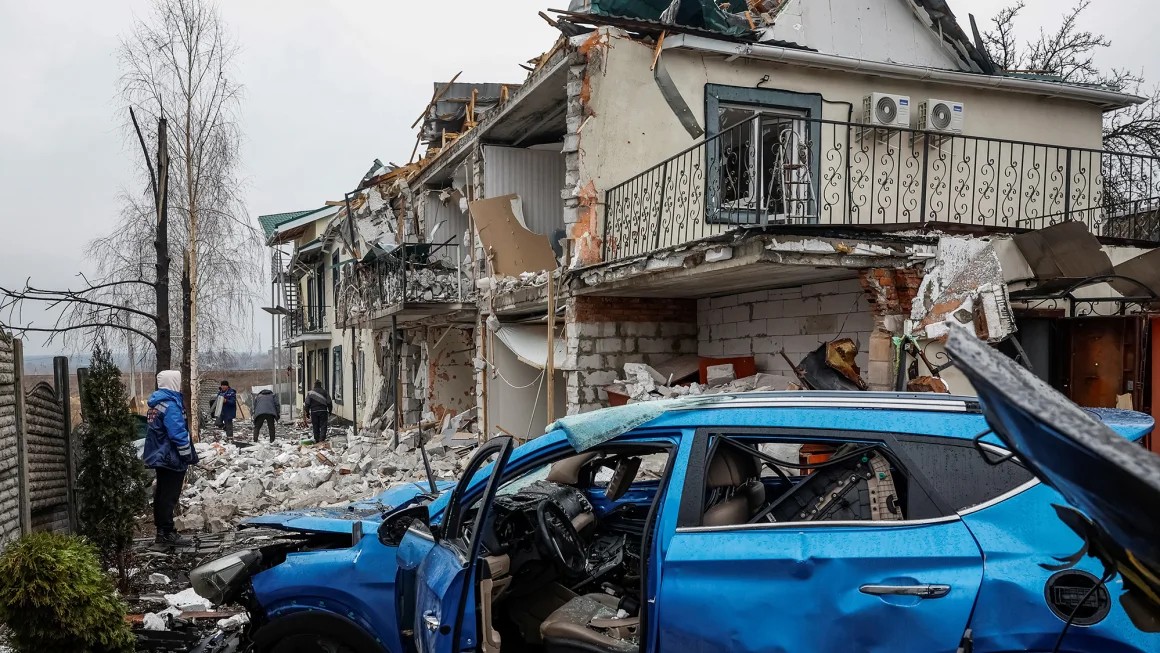
An area in Kyiv (Ukraine) was attacked by Russia on March 19.
In an analysis sent to Thanh Nien newspaper yesterday (March 19), Eurasia Group (USA) - a leading global political risk research and consulting firm - assessed the outcome of the talks between Presidents Trump and Putin as a "small victory" for both sides because there was some progress: Russia agreed to stop attacking Ukrainian energy facilities. Thus, President Putin has "passed the ball" back to the US, Ukraine, and the West to handle the upcoming peace talks.
But the challenge remains the same.
However, looking at the conditions for permanent peace that Russia has set, the "cornerstone" remains virtually unchanged. Before his conversation with Mr. Trump, in interviews with the media, President Putin demanded that Ukraine abandon its ambitions to join NATO, that Russia control all four regions of Ukraine that Moscow has annexed, and that the size of the Ukrainian army be limited. In addition, Moscow maintains several other demands which, combined with the aforementioned conditions, are difficult for both NATO and Ukraine to accept.
Dr. Ian Bremmer, President of the Eurasia Group, analyzed that Putin's request for countries not to provide military aid or share intelligence with Ukraine makes it difficult for Kyiv to ensure its own security. "That's something that might be difficult for Europe to accept. President Trump might be willing to negotiate that, and he and President Putin could shift the blame to Ukraine and Europe. So, President Putin has 'given away a little' in the short term to gain more in the long term."
According to Dr. Bremmer, in the short term, under pressure from Washington, Kyiv may agree to a 30-day ceasefire, but in the long term, there are no convincing signs to guarantee the maintenance of the ceasefire.
"What's happening with Ukraine is somewhat similar to what happened around the ceasefire in the Gaza Strip. The agreement was reached relatively easily, but the parties didn't really give up on key issues. So when it came to the next stage, both sides felt the benefits weren't being achieved. That's why we saw the ceasefire collapse in the Gaza Strip, with Israel resuming attacks in the area. And that's why I'm concerned that ultimately, peace may not be achieved despite a temporary ceasefire in Ukraine," Dr. Bremmer stated.
In fact, according to CNN, just hours after the results of the phone call between President Trump and his counterpart Putin were announced, Ukraine and Russia resumed attacking each other.
Is the US about to relinquish its leadership role in NATO?
NBC, citing two Pentagon officials, reported that the agency is undertaking a significant restructuring of U.S. military commands. This includes considering abandoning the role of Supreme Allied Commander in Europe (SACEUR) of NATO. For the past 70 years, the U.S. has always assigned a general to the SACEUR position. The current SACEUR also heads the U.S. European Command and is currently the primary commander overseeing support for Ukraine in the ongoing conflict.
Recently, President Trump and US Defense Secretary Pete Hegseth have repeatedly emphasized that European allies must take greater responsibility for the continent's defense. It is unclear when this restructuring plan will officially take place. However, if it does happen, it could face obstacles from the US Congress .
Source: https://thanhnien.vn/thach-thuc-cho-hoa-binh-ukraine-185250319231528664.htm


![[Photo] National Assembly Chairman Tran Thanh Man working with the Standing Committee of the Law and Justice Committee](https://vphoto.vietnam.vn/thumb/1200x675/vietnam/resource/IMAGE/2026/05/21/1779378929214_ndo_br_1-4610-jpg.webp)
![[Photo] General Secretary and President To Lam presides over a working session with the Central Policy and Strategy Committee on the development of the materials industry.](https://vphoto.vietnam.vn/thumb/1200x675/vietnam/resource/IMAGE/2026/05/21/1779359935432_a3-bnd-3129-1412-jpg.webp)




























































Comment (0)