SGGP
With billions of dollars poured into reforestation strategies, green hydrogen, carbon capture and mitigation, Saudi Arabia's green transition is progressing strongly across all sectors.
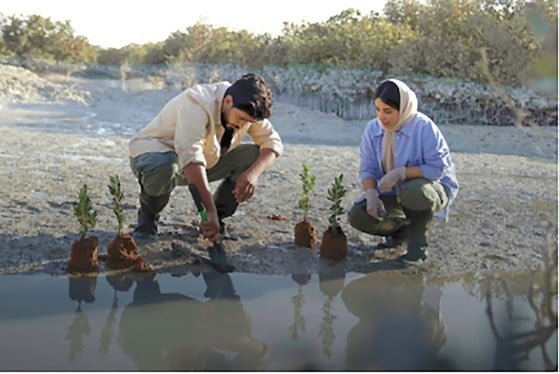 |
| Saudi Arabia is undertaking a massive, ambitious project to plant 10 billion trees. |

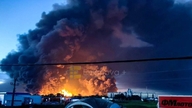

According to SCMP, the Saudi Arabia Green Initiative (SGI), the brainchild of Crown Prince Mohammed bin Salman, was announced by Saudi Arabia last November on the sidelines of the COP27 climate conference in Sharm el-Sheikh, Egypt. The SGI's goals are bold and almost impossible: planting 10 billion trees, pushing the kingdom's energy mix to 50% renewable energy by 2030, cutting 278 million tonnes of carbon emissions by the end of the decade, preserving 30% of Saudi Arabia's land as protected nature reserves, and achieving net zero by 2060.
Furthermore, Saudi Arabia has also launched the Middle East Green Initiative (MGI) across the region. The MGI aims to plant 50 billion trees throughout the Middle East, reduce 670 million tons of carbon dioxide across the region, help neighboring countries achieve zero carbon emissions, provide clean cooking fuel for 730 million people, and transform Saudi Arabia into a regional hub for green hydrogen and carbon capture technology.
Saudi Arabia aims to reduce its reliance on fossil fuel energy production, with plans to bring 58.7 gigawatts of solar and wind power projects online over the next seven years. Another area of Saudi Arabian investment is green hydrogen, specifically the Neom Green Hydrogen Project – a green hydrogen hub near the future city of Neom, which will power the city, transportation, and industry, and potentially contribute to energy exports. The fully renewable energy plants will utilize solar and wind power to produce green hydrogen through electrolysis, with four such plants already announced. The first plant, expected to be operational in 2026, will produce 600 tonnes of clean hydrogen per day and 1.2 million tonnes of green ammonia annually.
Perhaps the biggest pillar of Saudi Arabia's green efforts is carbon capture and storage. These technologies include capturing carbon directly from the atmosphere, sequestering carbon deep underground, and reducing CO2 emissions from industry, transportation, and hydrocarbon production. To achieve that goal, Saudi Arabia and its oil giant Aramco announced late last year a carbon sequestration center in Jubail, eastern Saudi Arabia. By capturing and pumping carbon deep underground, the facility will store 9 million tonnes of CO2 annually by 2027 – a figure Aramco projects to increase to 44 million by 2035, the combined capacity of the world's 35 largest carbon capture facilities.



The kingdom is also planning a carbon reduction center in the western provinces that will link with industry, with the overall goal of reducing carbon emissions by using renewable energy, energy-efficient processes and green hydrogen; reusing hydrocarbons and recycling them into new, low-carbon materials such as fertilizers or synthetic fuels; and then removing CO2 emissions during the process through direct air capture or sequestering and nature-based solutions such as tree planting.
Source


![[Photo] National Assembly Chairman Tran Thanh Man attends the Conference to announce the Master Plan for Hanoi Capital City with a 100-year vision.](https://vphoto.vietnam.vn/thumb/1200x675/vietnam/resource/IMAGE/2026/06/29/1782709639728_ndo_br_1-jpg.webp)














![[GALLERY] What's so hot about the iPhone 18 Pro? 4 upgrades that iFans can't resist.](https://vphoto.vietnam.vn/thumb/402x226/vietnam/resource/IMAGE/2026/06/29/1782700036414_ip-1-png.webp)
















































![[Infographics] Results of implementing some socio-economic indicators in the first 6 months of 2026 according to the resolution of the City People's Council](https://vphoto.vietnam.vn/thumb/402x226/vietnam/resource/IMAGE/2026/06/29/1782710246981_1782710015.webp)