

The program aims to build 100 internationally standardized STEM classrooms in 34 provinces/cities. After 100 days of rapid construction, the 100 STEM classrooms are expected to be handed over to schools in 34 provinces and cities by December 31st.
Three key elements for running a successful STEM lab.
Mr. Tran Quang Dung, Permanent Deputy Secretary of the Party Committee of the Vietnam National Energy and Industry Group, said that the program to build 100 STEM classrooms was launched by Petrovietnam on September 21st, with the goal of completion within 100 days, before December 31st, 2025.
According to the plan, in each of the 34 beneficiary provinces and cities, the Group will invest in 3 STEM classrooms built to international standards, including 2 for high schools and 1 for middle schools.
The STEM labs are designed according to the "rapid - standardized - sustainable" model, fully equipped with modern equipment such as interactive whiteboards, AI-IoT systems, VEX Robotics, 3D printers, CNC cutting machines, and energy-environment experiment kits, ensuring they meet the requirements of next-generation STEM education .
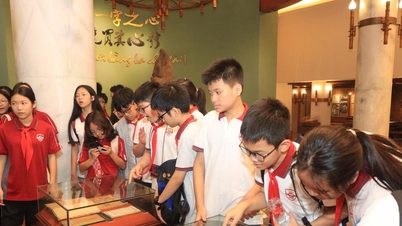
In May 2025, General Secretary To Lam visited and donated a STEM classroom to Cau Giay Secondary School ( Hanoi ). According to Ms. Nguyen Thi Nhan, Head of the Professional Department, the school has developed a detailed plan to effectively operate the new classroom according to the program's roadmap. In-depth training courses have helped teachers gain a more comprehensive and systematic understanding of STEM education.
Ms. Nhan stated that previously, STEM activities in schools were mainly integrated into existing programs and lacked a systematic approach. Since the Petrovietnam STEM Innovation program became available, teaching has received clearer guidance and yielded practical results.
According to her, to successfully operate a STEM lab, three key elements are necessary: Firstly, the school administration must have a long-term vision, provide close guidance, and make serious investments. The school should regularly invite experts to provide training to raise awareness and improve teachers' capacity to implement STEM, considering this a strategic task rather than a short-term trend.
Secondly, the teaching staff must be truly enthusiastic, willing to learn, and innovative. When the program was implemented, the school's teachers quickly embraced the technology, dedicated significant time to researching and designing lessons, and boldly incorporated STEM into each lesson.
Thirdly, students must be proactive, creative, and enthusiastic. With a consistent quality of incoming students, Cau Giay Secondary School students quickly master the STEM field; especially in robotics competitions, they always demonstrate enthusiasm. Last November, the school had 5 teams advance to the national round – a testament to the effectiveness of this new approach.
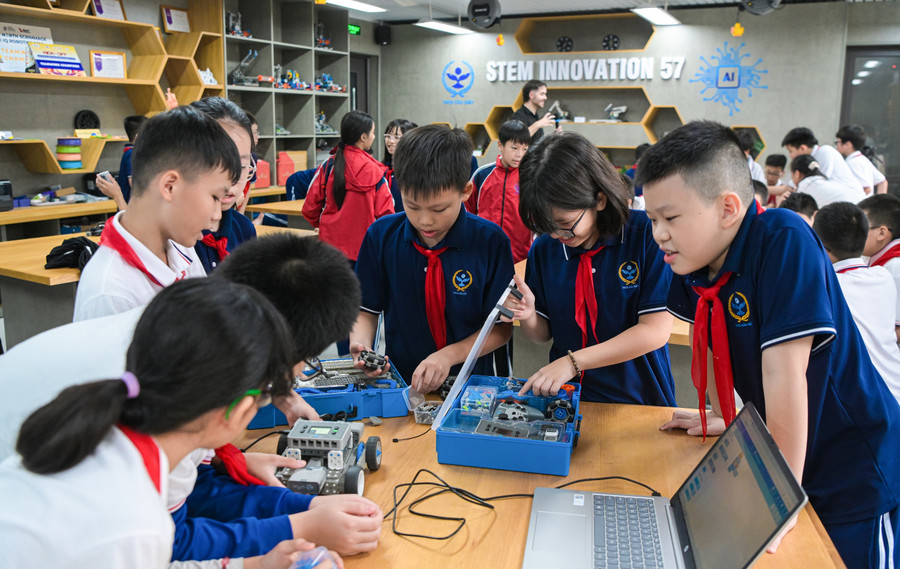
Teachers must study and implement this seriously.
STEM education has been established in the 2018 General Education Program. According to expert Do Hoang Son – a member of the Vietnam STEM Alliance, this is an important step forward, bringing education closer to the global trend of integrating science, technology, engineering, and mathematics.
When participating in the design consultation for the first STEM room at Hanoi – Amsterdam High School for Gifted Students, Mr. Son set the requirement that the space must clearly demonstrate the goal of innovation and create a lasting ripple effect. The name "STEM Innovation Petrovietnam" was therefore chosen, reflecting the spirit of adhering closely to Resolutions 57-NQ/TW and 71-NQ/TW.
Regarding teacher training, the program is implemented in two phases: first, technical training to enable schools to receive and operate STEM rooms; followed by a series of advanced training sessions, held at 5 locations in December, attracting thousands of teachers. This is a large-scale, systematic training model aimed at standardizing the teaching staff.
Petrovietnam not only provides financial resources but also creates a change in mindset. Students, especially in rural and mountainous areas, gain access to modern learning environments and become more confident in international exchanges. The comprehensively invested STEM classrooms help bridge the regional gap, creating a minimum learning infrastructure foundation so that all students have the opportunity to access STEM education in a meaningful way.
Mr. Son argued that, in the current context, schools without STEM rooms can be considered "temporary schools" in the era of educational reform. Just as society previously worked together to eliminate temporary housing for citizens, education now needs to aim at "eliminating temporary schools"—that is, eliminating the lack of space for practical science learning.
Investing in modern STEM classrooms is a strategic step that contributes to building a foundation for future human resources, ensuring that Vietnamese students – whether in urban or mountainous areas – learn through experience, practice, and creative thinking.
The goal of the 2018 General Education Program is to cultivate in students the core qualities and competencies of 21st-century citizens. Mr. Thai Van Tai, Director of the Department of General Education (Ministry of Education and Training), emphasized that among the ten competencies, science and technology competency is essential. Therefore, teachers must promote integrated teaching and create conditions for students to develop this competency.
According to the 2018 General Education Program, STEM education is a mandatory requirement, demanding that all teachers seriously research and implement it. However, Mr. Tai believes that investing in facilities is not enough, because without someone to operate them, classrooms will be "closed," causing waste.
Based on that reality, the Director of the Department of General Education proposed that training should not only be provided to teachers in beneficiary schools, but also expanded to other regions to spread STEM thinking. He suggested that Petrovietnam cooperate with the Ministry of Education and Training to develop a standardized training module linked to the 100 classrooms that will be funded.
The Ministry of Education and Training will develop content and materials and mobilize a team of experts to provide training to ensure that STEM labs operate effectively, becoming the core of the STEM education ecosystem and contributing to creating a modern learning environment for students.
Mr. Thai Van Tai noted that STEM classrooms should not be the "exclusive privilege" of a single school but should be expanded to serve the entire region, avoiding waste and increasing investment efficiency. He hoped that close cooperation between the Ministry, Petrovietnam, and media agencies would help the project spread widely, bringing real value to general education.
Source: https://giaoducthoidai.vn/than-toc-hoan-thien-100-phong-hoc-stem-post760649.html
![[Photo] Secretary of the National Assembly Party Committee, Chairman of the National Assembly presides over the meeting of the Standing Committee and Executive Committee of the National Assembly Party Committee.](https://vphoto.vietnam.vn/thumb/1200x675/vietnam/resource/IMAGE/2026/06/03/1780480353201_ndo_br_bnd-2585-jpg.webp)
![[Photo] General Secretary and President To Lam presides over a meeting with the Central Organizing Committee.](https://vphoto.vietnam.vn/thumb/1200x675/vietnam/resource/IMAGE/2026/06/03/1780482764658_a1-bnd-4741-3342-jpg.webp)

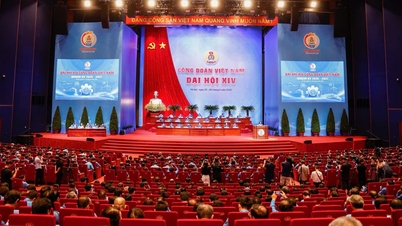
![[Photo] First session of the 14th Congress of the Vietnam Trade Union](https://vphoto.vietnam.vn/thumb/1200x675/vietnam/resource/IMAGE/2026/06/03/1780465947883_ndo_br_img-3852-jpg.webp)




























![[Video] Sunset at Lap An Lagoon – Where the sun sets over the fishing nets](https://vphoto.vietnam.vn/thumb/1200x675/vietnam/resource/IMAGE/2026/05/31/1780192137701_beach-landscape-sea-water-nature-grass-745871-pxhere-com.jpeg)
























Comment (0)