The first fruits on the tea plantations
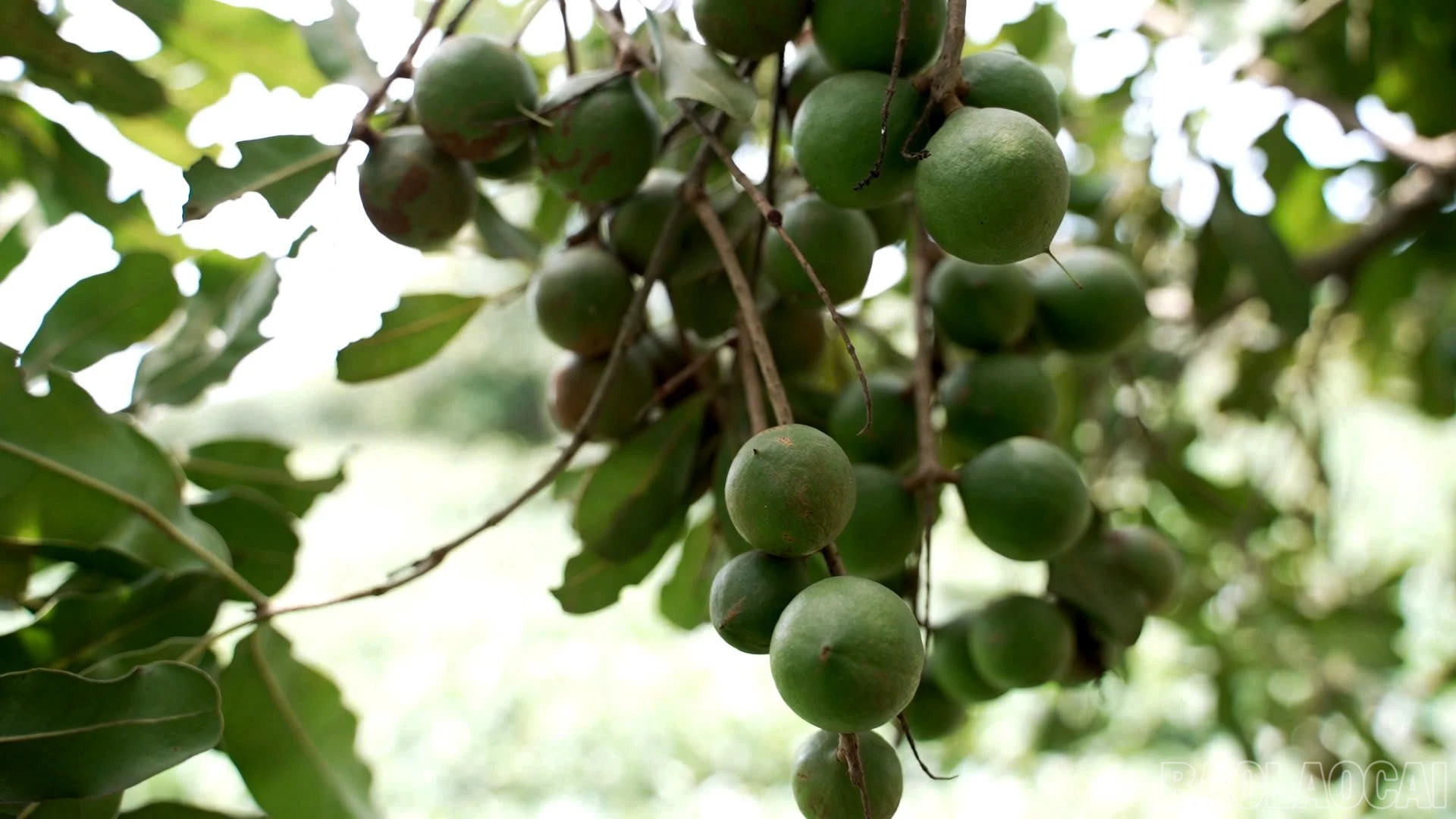
After five years of care, the macadamia trees in the tea plantation of Ms. Le Thi Chuot's family in Hamlet 1, Lien Son Commune, have begun to yield fruit. Last year, her family harvested over 200 kg of nuts. Although the yield is not yet substantial, she sells them locally at a price of around 20,000 - 30,000 VND/kg. For a household that has been involved with tea cultivation for many years, this income, while not large, is enough to give people hope for the macadamia crop.
According to Ms. Chuot, macadamia nuts could become an additional source of income alongside tea if the trees bear fruit consistently. But her concern isn't about the first few hundred kilograms of fruit, but rather the story of the coming years when the planted area enters its commercial production phase.
"Currently, the macadamia nut yield is low, and we can sell it all to local people. But if the yield increases to a few tons in the future, we hope that businesses will step forward to buy it, because the people cannot sell it themselves," Ms. Chuot shared.
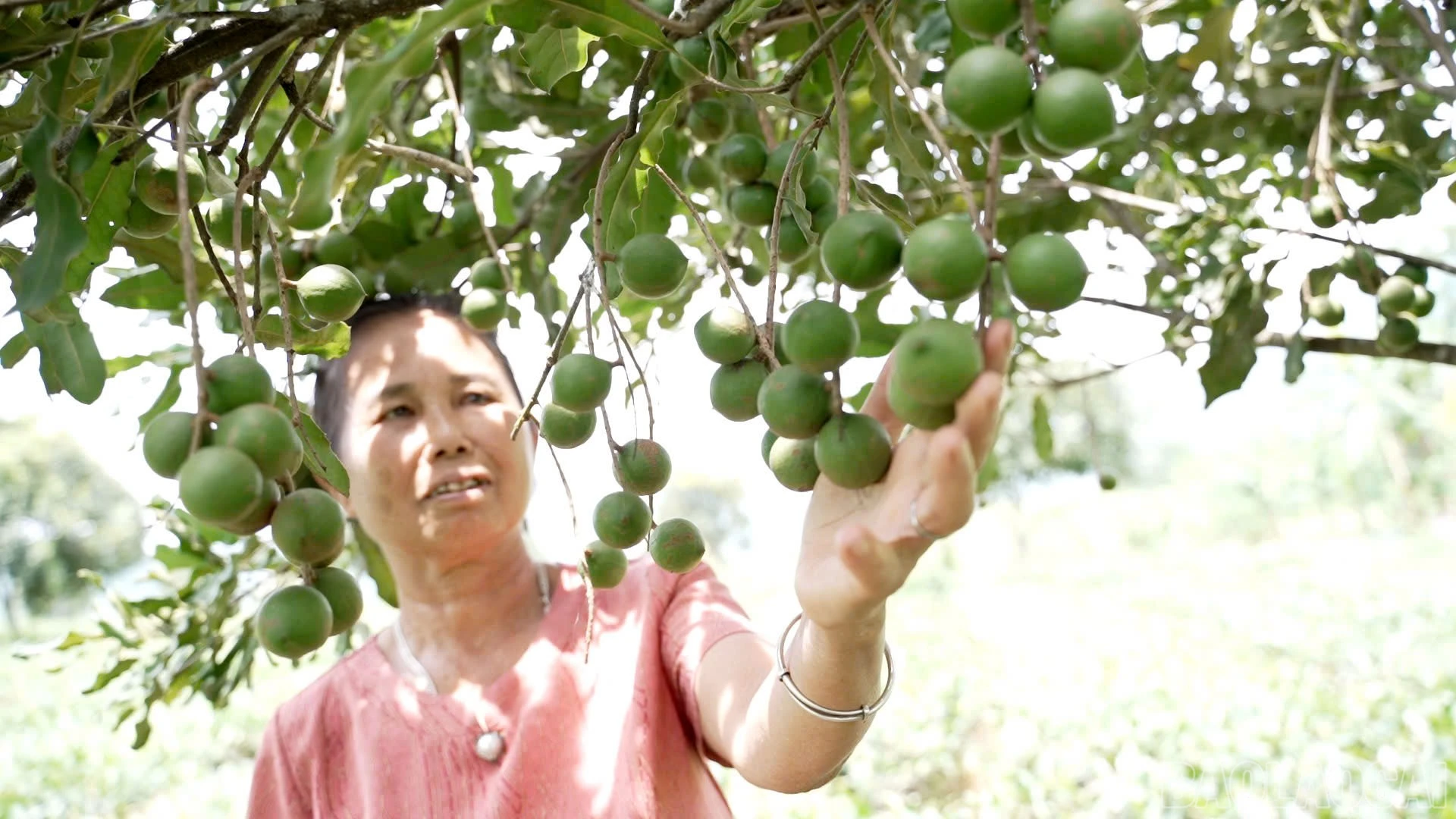
According to Mr. Tran Quoc Chat, head of Hamlet 1, Lien Son commune, the hamlet currently has 92.9 hectares of tea plantations in operation. Thanks to a previous macadamia and tea intercropping project in Van Chan district, the villagers have planted 33.8 hectares of macadamia trees; of which 1 hectare is planted exclusively with macadamia, and the remaining 32.8 hectares are intercropped within the tea plantations.
According to Mr. Chat, about 30% of the macadamia trees in their third year have flowered and borne fruit, with an average yield of about 2 kg per tree; the flowering and fruiting rate has increased significantly each year. This year, about 80-90% of the macadamia trees have flowered and borne fruit, with an estimated average yield of 5-7 kg per tree.
Notably, intercropping macadamia trees has not initially reduced tea yields. Village monitoring shows that tea yields remain at around 17 tons/ha/year. Macadamia trees also provide shade on the fields, making it easier for people to work. For households that have persevered in caring for the trees, this model offers the prospect of "one area, two sources of income": tea continues to provide regular income, while macadamia becomes a supplementary source of income once the trees reach a stable stage.
Currently, fresh macadamia nuts in the village sometimes sell for around 40,000 VND/kg, selling out as soon as they're harvested. However, that was when production was low. When the area is ready for harvest simultaneously, the product will no longer be just a few hundred kilograms or bags sold around the neighborhood, but could reach tons. At that point, the market, processing, preservation, and manufacturing will determine the true profitability of macadamia cultivation.
When the output becomes the test.
In implementing the Prime Minister's "Sustainable Macadamia Development Plan for the period 2021-2030, with a vision to 2050," the agricultural sector of Lao Cai province has reviewed the current situation and oriented planting areas to suit local conditions, aiming to limit uncontrolled and spontaneous development.
During the period 2021-2025, the area of newly planted macadamia trees in the province reached 432.37 hectares. To date, the total area of macadamia trees has reached 459.92 hectares. Of this, the area planted as a monoculture is 83.65 hectares (accounting for 18.2%); the area planted as an intercrop is 376.27 hectares (accounting for 81.8%).
These figures show that macadamia trees in Lao Cai have not yet developed into large-scale monoculture, but are mainly integrated into existing crop areas such as tea, pineapple, cassava, and some other perennial crops. Gia Hoi currently has the largest macadamia tree planting area with 251.09 hectares, followed by Lien Son with 70.6 hectares, Dong Cuong with 30 hectares, Nam Co with 24 hectares, Van Chan with 22.46 hectares, Ban Lau with 19.96 hectares, and Che Tao with 16.50 hectares.
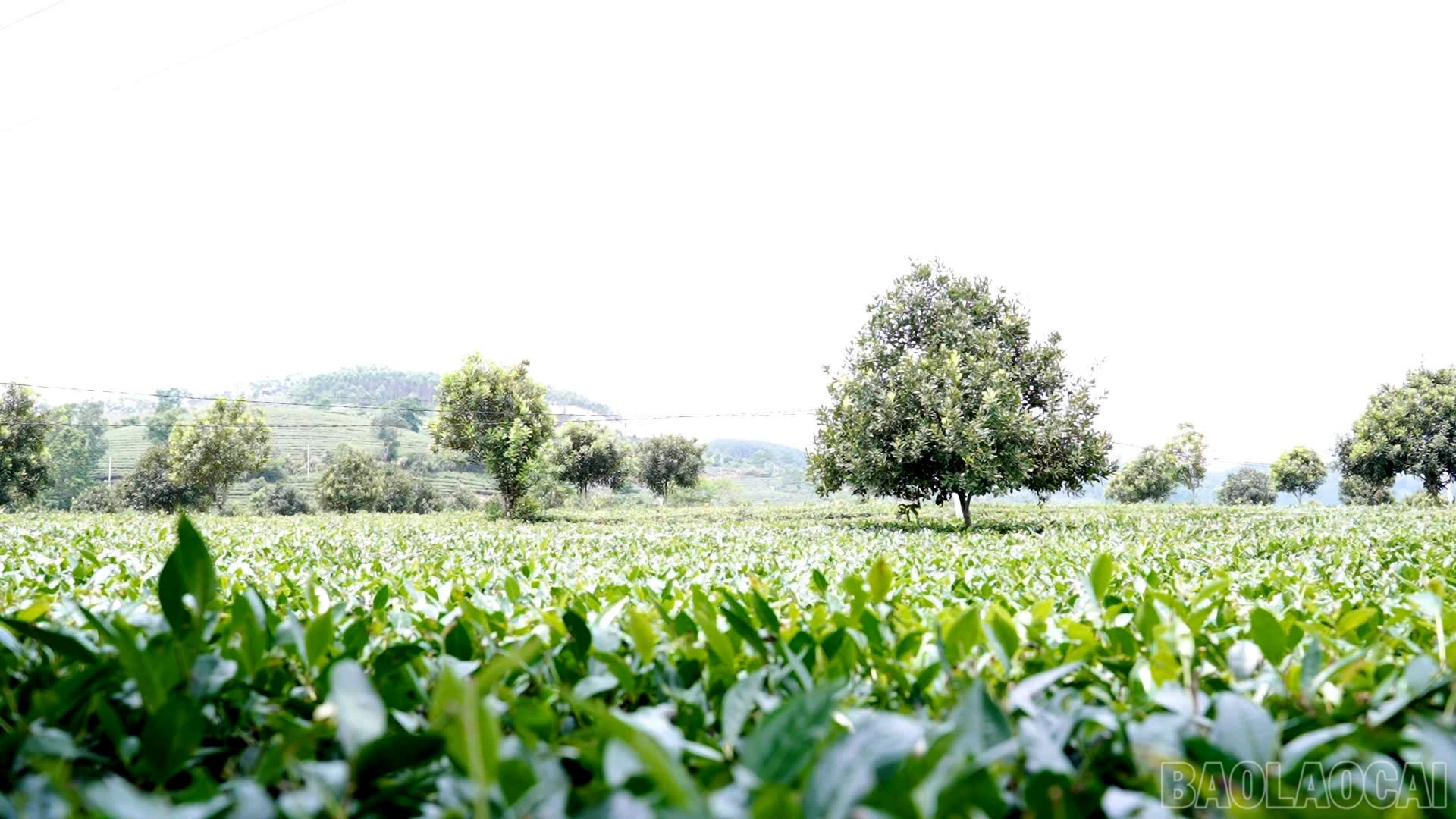
Based on local production practices, the Lien Son commune authorities recognize macadamia as a promising crop in the intercropping model with tea. According to commune leaders, the entire commune currently has about 70 hectares of macadamia trees, with many areas entering the harvesting period. Initial inspections and surveys show that macadamia trees have the potential to bring economic benefits.
However, local authorities also believe that a more thorough survey and assessment by provincial-level specialized agencies is needed regarding the adaptability, economic value, and development conditions of each region. For the time being, the commune is focusing on encouraging people to properly care for the existing crops; and simultaneously seeking and connecting with businesses to participate in purchasing and processing when production increases.
That perspective is quite realistic, because macadamia trees bearing fruit is just the beginning; the sustainable value of this crop is only truly confirmed when the product forms a deep processing chain and has a stable market outlet.
Risks to anticipate
Macadamia is not a short-term crop. While a single crop of corn or cassava might yield a profit or loss within a year, macadamia growers have to wait many years to see the results. If the wrong variety is planted, in the wrong region, or with the wrong techniques, the losses will also extend throughout the plant's growth cycle.
With its diverse topography and climate, Lao Cai has areas where trees thrive, but also highland regions heavily affected by frost, drought, and water scarcity. For macadamia trees, weather conditions during the flowering and fruiting stages significantly impact yield; extreme fluctuations in temperature and humidity can reduce fruit set rates, directly affecting production and investment efficiency.
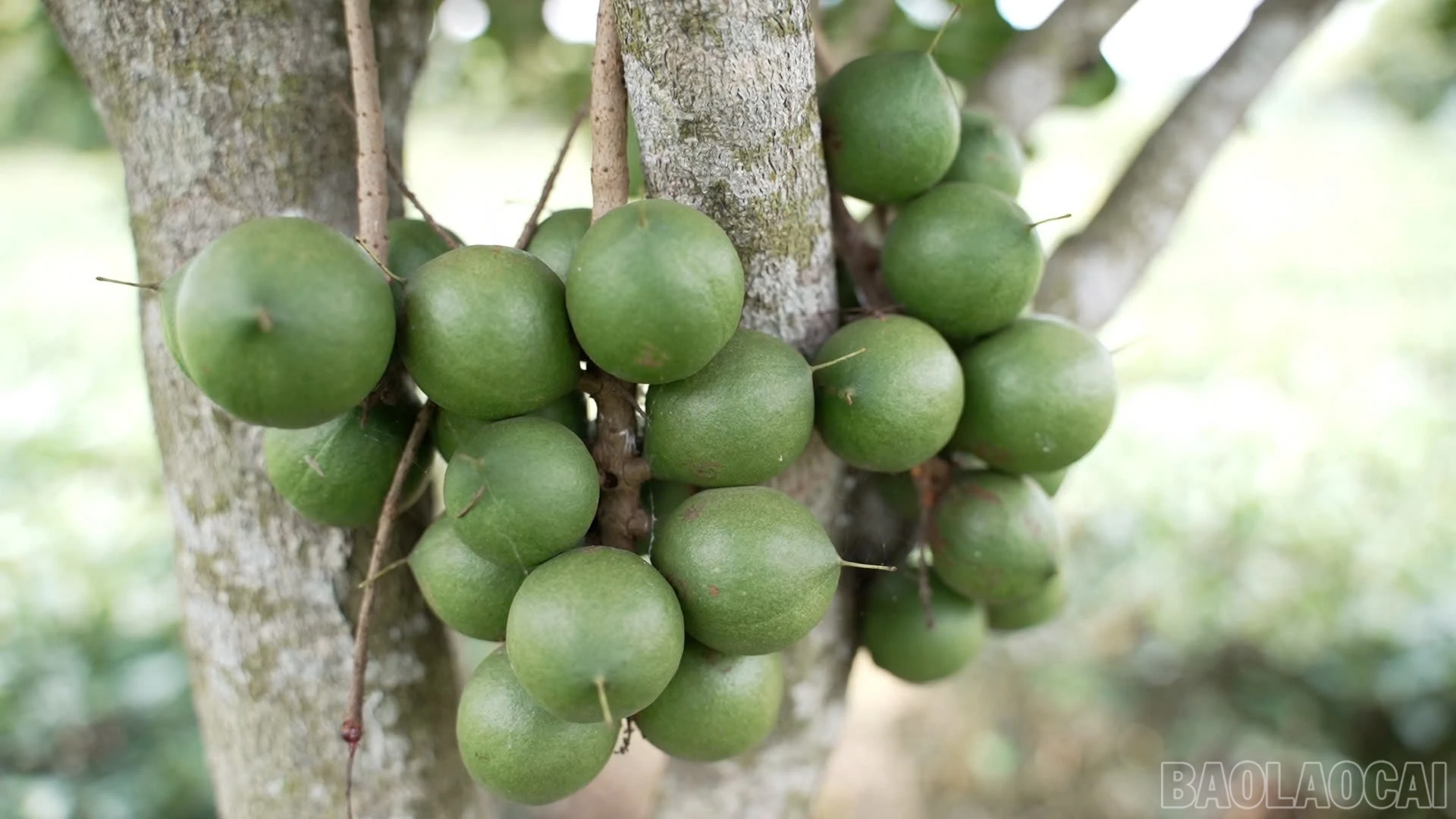
Variety selection and cultivation techniques are also crucial factors. According to agricultural reports, with macadamia seedlings costing around 50,000 VND each, growers still have to spend a significant amount on fertilizers and regular care over many years. If unsuitable varieties are chosen or care is not followed correctly, farmers may only realize after many years that the trees yield low productivity, resulting in lower-than-expected economic returns.
The current scattered and small-scale farming practices also make it difficult to provide technical guidance, manage quality, compile production statistics, and establish raw material areas. Without a sufficiently stable raw material supply, businesses are also hesitant to invest in preliminary processing and further processing.
To date, the province has established and recognized one mother tree nursery since 2021, covering 1.02 hectares, capable of supplying an average of approximately 21,800 cuttings per year. This is an important foundation for gradually controlling seed quality and reducing risks from unreliable seed sources on the market. However, for macadamia cultivation to reach further markets, in addition to good seeds, it also requires proper techniques, suitable growing areas, a market, and the support of businesses.
Don't chase after area.
Based on the results of the 2021-2025 period and the actual local conditions, the Lao Cai agricultural sector has determined that large-scale macadamia cultivation will not be proposed in the province during the 2026-2030 period. The immediate priority is to protect and care for the existing 459.92 hectares of macadamia trees; and to continue monitoring and evaluating the effectiveness of pilot models, scientific projects, and macadamia development plans in the area.
That's a necessary choice. With perennial crops, a rapid increase in acreage doesn't necessarily mean a rapid increase in efficiency. Without core elements like output, preliminary processing, deep processing, and value chain linkages, increased production could immediately put significant pressure back on the producers themselves.
Any expansion of cultivation area, if necessary, should be considered only after the model has proven sustainable and involves businesses involved in deep processing. Macadamia nuts cannot simply be sold as fresh fruit locally. To become a commercial crop, the product must go through harvesting, preliminary processing, preservation, processing, branding, and stable consumption.
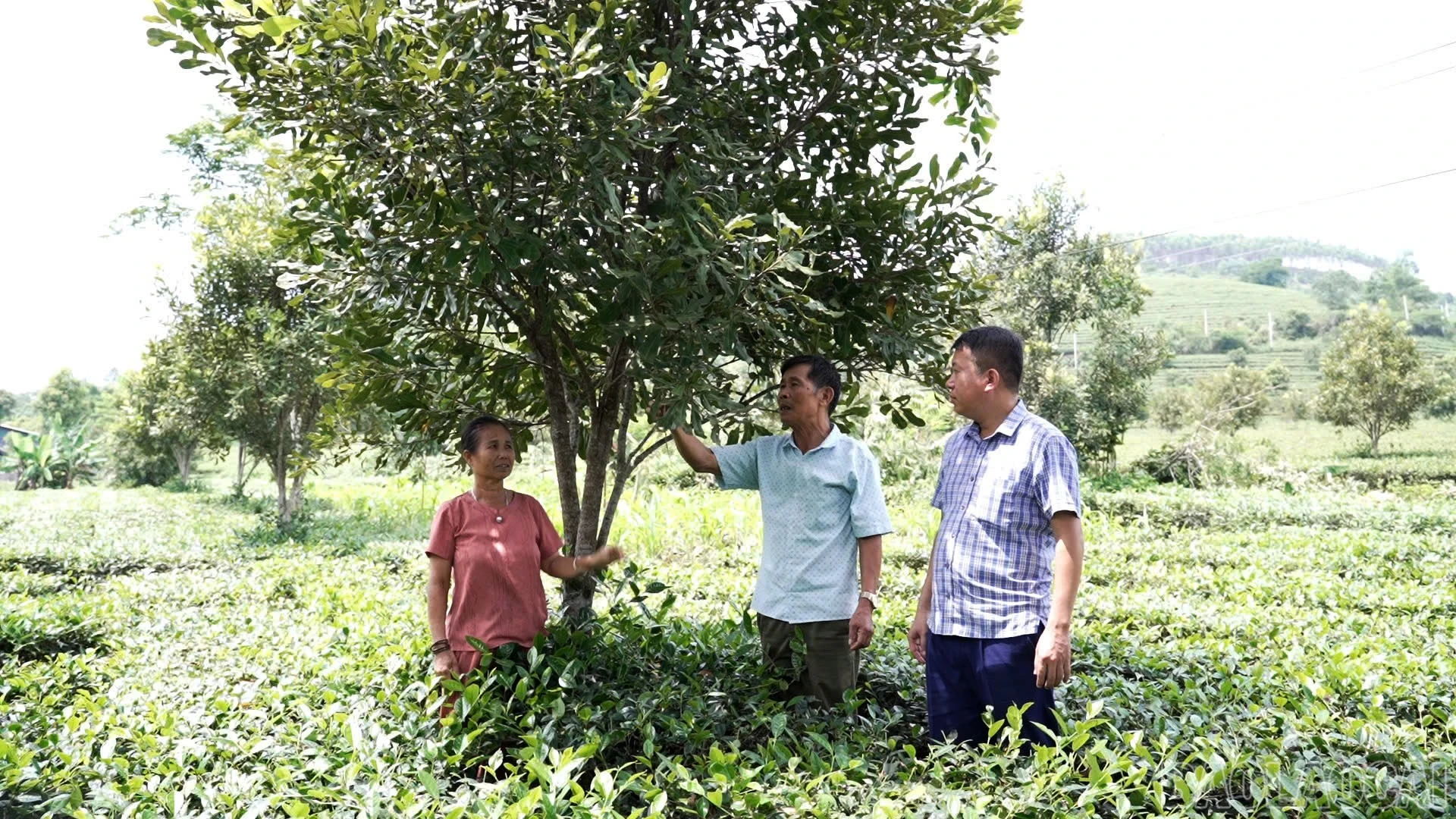
Macadamia is a long-term crop requiring capital, technical expertise, time, and market access. In Lao Cai, the measure of success for macadamia cultivation at this time lies not in the rate of acreage expansion, but in the level of livelihood security, market stability, and actual economic efficiency on each tea plantation and plot of land owned by the people.
Caution doesn't mean missing opportunities. With a crop that has a long investment cycle like macadamia, it's a way to minimize risks and protect people's livelihoods. Only when developed scientifically, in accordance with ecological conditions, and linked to the value chain from production to consumption, can macadamia become a sustainable direction, making a practical contribution to the agricultural restructuring process of Lao Cai.
Source: https://baolaocai.vn/than-trong-de-ben-vung-post901682.html
![[Photo] General Secretary and President To Lam attends the Central Public Security Party Committee Conference](https://vphoto.vietnam.vn/thumb/1200x675/vietnam/resource/IMAGE/2026/06/24/1782302063612_a1-bnd-9302-9166-jpg.webp)
![[Photo] Opening Ceremony of the 13th National Congress of the Ho Chi Minh Communist Youth Union](https://vphoto.vietnam.vn/thumb/1200x675/vietnam/resource/IMAGE/2026/06/24/1782286753905_ndo_br_1-8510-jpg.webp)
![[Photo] The 13th National Congress of the Youth Union conducts personnel work.](https://vphoto.vietnam.vn/thumb/1200x675/vietnam/resource/IMAGE/2026/06/24/1782299943080_ndo_br_1-6868-jpg.webp)