

Off-season dragon fruit fetches high prices.
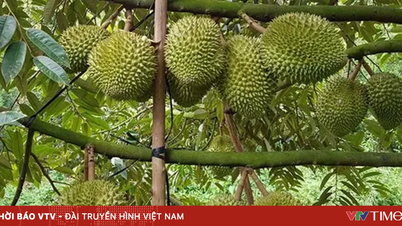
The price of off-season dragon fruit is rising sharply in many localities, in some places nearly four times higher than it was more than two months ago. In particular, in some key growing areas in the Mekong Delta, prices are at their highest level in many months.
In Dong Thap province, especially in off-season dragon fruit growing areas such as Tan Thuan Binh commune and surrounding areas, the current purchase price of dragon fruit ranges from 20,000 to 37,000 VND/kg, with grade 1 fetching the highest price.
According to the local agricultural sector, the main reasons are the low yield of off-season dragon fruit, unfavorable weather conditions reducing the flowering rate, and increased market demand at the end of the year. Authorities advise growers to proactively calculate the costs of artificial lighting, pest control, and organize production accordingly to ensure long-term efficiency.
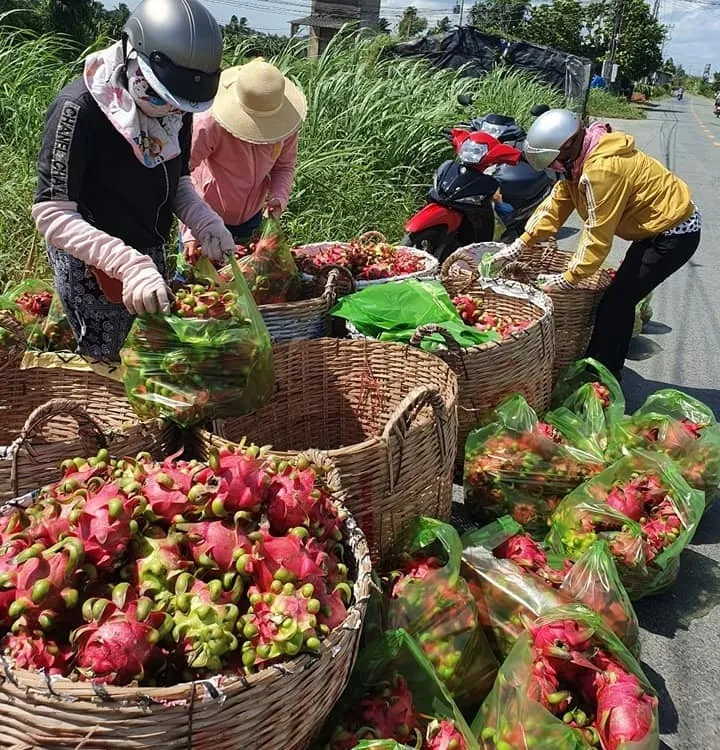
Dragon fruit is currently one of Vietnam's key export fruits.
Maintaining a sustainable market with organic dragon fruit.
Dragon fruit is currently one of Vietnam's key export fruits, with an annual production of hundreds of thousands of tons and a market spanning from China and India to the Middle East and Europe. However, along with opportunities, these markets also impose increasingly stringent requirements. In this context, in Lam Dong – a key dragon fruit growing region in the country – many farmers are proactively switching to organic production and forming value chains. This is considered a fundamental approach to maintaining a sustainable export market.
Three years of pursuing a VietGAP-integrated organic farming model has helped Bui Minh Cong's yellow dragon fruit orchard in Ham Thuan commune produce uniform, attractive, and high-quality fruit. As a result, the selling price is about 20% higher than conventional farming.
To expand the raw material area and ensure consistent standards, many households have joined cooperatives. The cultivation process is standardized from seeds, fertilizers, and care to harvesting. This approach helps improve fruit quality, while also creating conditions for businesses to sign long-term contracts and increasing competitiveness in exports.
Ms. Doan Thi Lieu, owner of Anh Nhu Y dragon fruit farm, said: "Using organic fertilizer is safer, and the fruit can withstand shipments to distant countries like Dubai and India."
Mr. Le Quoc Thanh, Director of the National Agricultural Extension Center, stated: "When there are solutions regarding technological processes and the reorganization of production in the form of cooperatives, farmers participate in building large raw material areas, which then attracts businesses and the market, thus creating a very stable output."
Currently, Lam Dong province maintains over 26,000 hectares of dragon fruit cultivation, of which nearly 10,000 hectares meet VietGAP and GlobalGAP standards, with a stable production of approximately 580,000 tons per year. Export value is projected to increase by over 20% during the 2024-2025 period. However, to reduce costs and expand markets, the local authorities believe that infrastructure and promotional activities remain crucial.
Mr. Nguyen Ngoc Phuc, Vice Chairman of the Lam Dong Provincial People's Committee, stated: "To minimize logistics costs, we must invest in the transportation system. Secondly, to promote agricultural products abroad, in addition to domestic trade fairs and promotional conferences, in 2026 we will participate in investment promotion conferences, including overseas ones, to boost the consumption of agricultural products."
With synchronized investment in packing centers, storage facilities, and logistics services, the quality of dragon fruit after harvest will be maintained, and the time to market will be shortened. This will be the foundation for Vietnamese dragon fruit to maintain its competitiveness and expand into more export markets in the future.
Fruit and vegetable exports are expected to reach $8.5 billion.
Looking ahead to 2025, Vietnam's fruit and vegetable industry is entering a challenging phase, as major export markets are simultaneously raising technical barriers, while international tariff policies are subject to significant changes. However, market pressures are also becoming a driving force, compelling businesses and producers to quickly adapt and restructure their export operations.
According to the Vietnam Fruit and Vegetable Association, in December – the last month of the year – fruit and vegetable exports are expected to continue accelerating, potentially reaching a record high of approximately US$8.5 billion, exceeding the target of US$8 billion. Fresh fruit and processed products will continue to play a leading role, with key markets including China, the US, the EU, Japan, South Korea, India, and the Middle East.
Notably, the proportion of products meeting VietGAP, GlobalGAP, and organic standards is increasing, contributing to higher export value and reducing the risk of dependence on a single market. Building on this growth, the agricultural sector aims to achieve approximately US$10 billion in fruit and vegetable exports by 2026.
Source: https://vtv.vn/thanh-long-nghich-vu-gia-cao-100251217095324228.htm

































































































Comment (0)