With its thick, succulent stem and small, thorny edges, it stands as a testament to the enduring vitality of the land and people of Nẫu region. Few would imagine that from this parched plant, the people of my hometown would create a refreshing soup that nourishes countless memories of home.
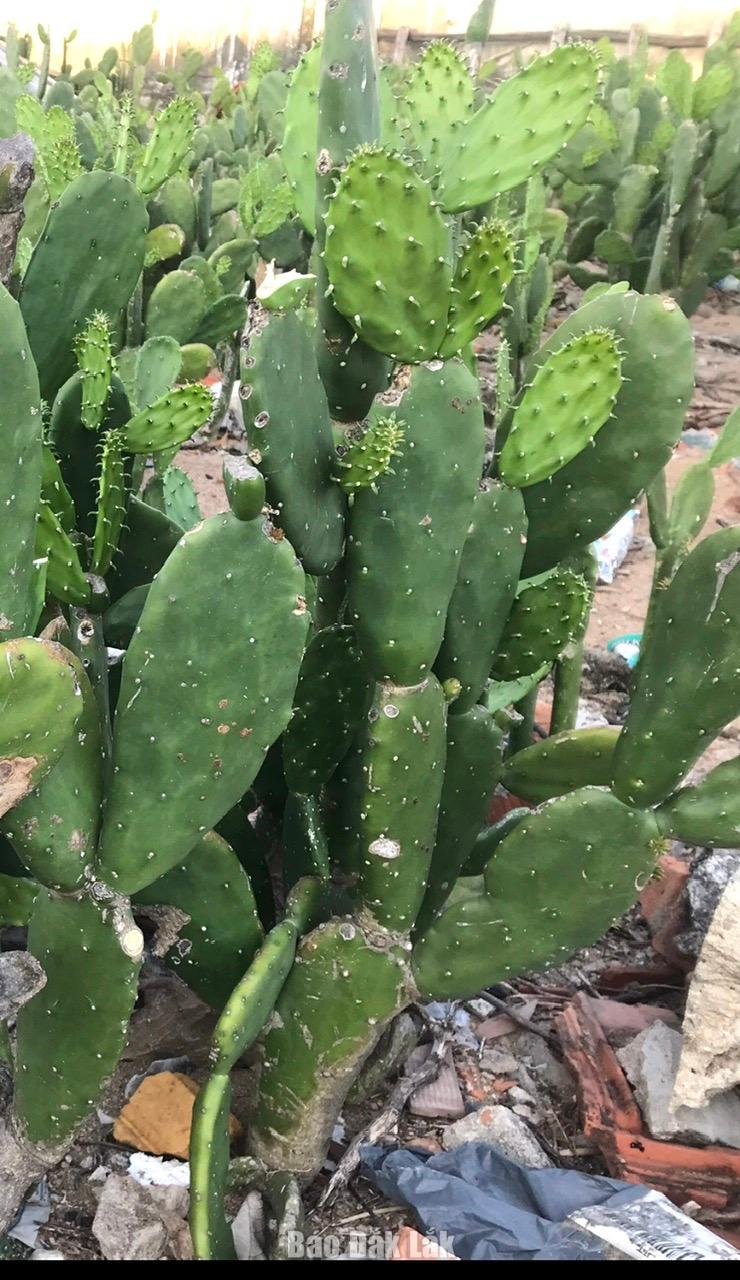 |
| Dragon's tongue plants grow in the sandy plains of the Nẫu region – lush green leaves, silently accumulating the coolness of the sun and wind of their homeland. |
Dragon's Tongue Soup is a rustic and familiar dish in the sandy regions. It's easy to find, doesn't require complicated preparation, yet possesses a unique flavor – a flavor distilled from the sun, wind, and salty taste of the sea. Especially in the summer , when the Central Vietnamese sun blazes down and the dragon's tongue plant thrives, this soup appears more frequently in the meals of the locals.
I grew up with summers like that. Every few days, my mother would cook a pot of dragon's tongue soup with sea fish: anchovies, sometimes mackerel, sometimes scad... My mother said that only during the dry season, when dragon's tongue is harvested and cooked in soup, does it taste good. At that time, the dragon's tongue is "solid," less slimy, has a refreshing taste, and isn't sour. My mother spoke about this plant in a gentle voice: "It has thorns, but that's just to remind us that we're related to cacti..."
Choosing the right pieces of dragon's tongue is also a pleasure. They have to be tender, just the right size for the soup to be crispy and sweet. People in the countryside even have a habit of picking them at specific times: morning for a slightly sour taste, and afternoon for a milder, cooler flavor. When I was little, I asked why, and my mother just smiled: "As evening falls, the dragon's tongue becomes milder." That simple saying has stayed with me throughout my life.



What I remember most are those summer afternoons, my mother sitting by a basket of sea cucumbers, meticulously cleaning each tiny thorn. After washing, the sea cucumbers were sliced into strips and air-dried until slightly firm. Anchovies bought from the early morning market were marinated in a little fish sauce. Once the water boiled and the fish were cooked, my mother would add the sea cucumbers. The soup would boil vigorously, turning a milky white color and slightly thickening – that meant it was perfectly cooked. She would ladle the soup into a bowl, add some water spinach, and that was it.
Dragon's Tongue Soup has a flavor that's hard to describe. The dragon's tongue strands are crunchy, with a slight sliminess, blended with the sweetness of the sea fish, creating a sensation that is both strange and familiar. The refreshing coolness spreads gradually on the tongue, as if soothing the dryness of the wind and sand. With that soup, a meal doesn't need any other delicious dishes; just a bowl of fish sauce with green chili peppers is enough to make it complete.
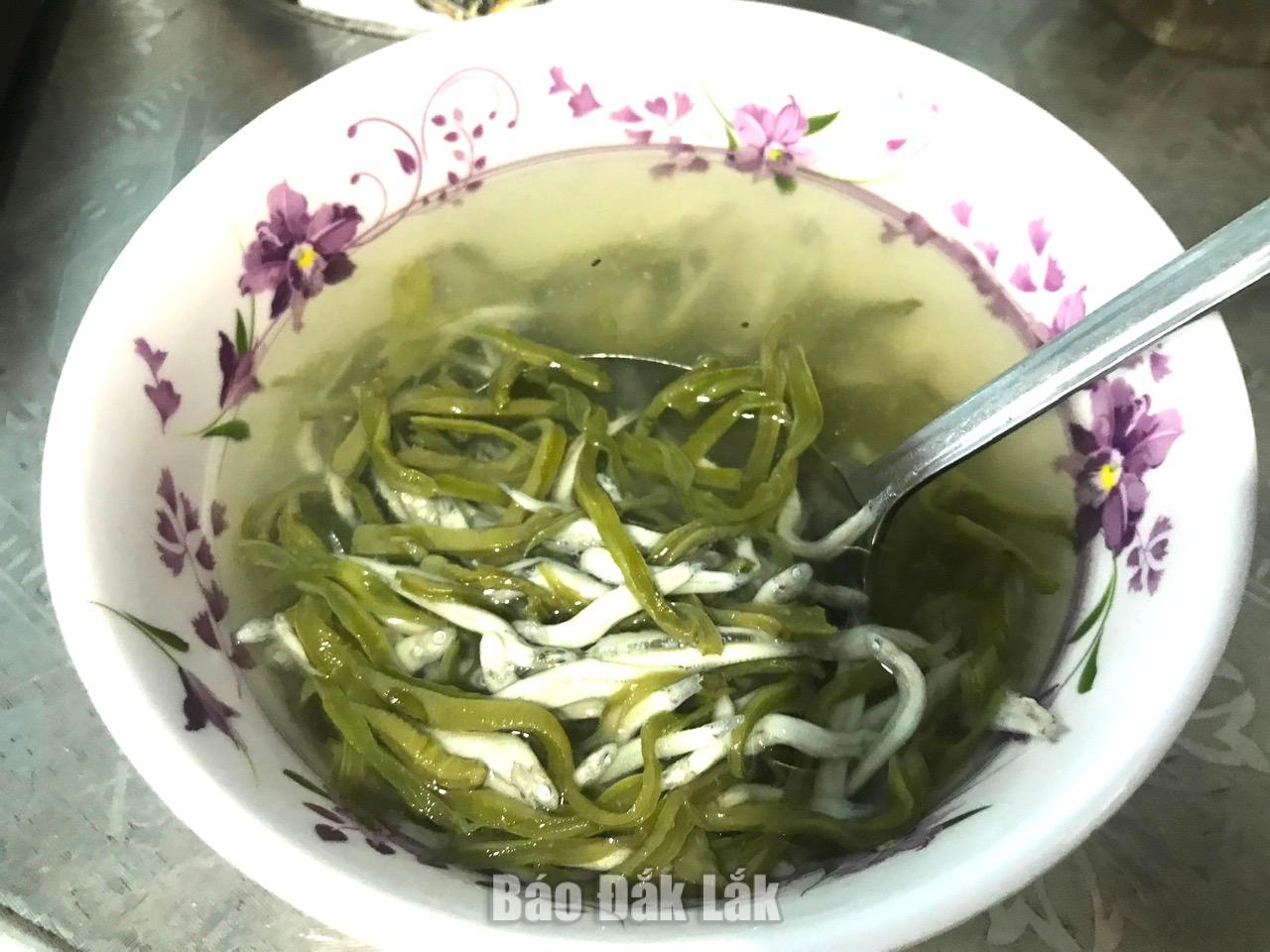 |
| A refreshing bowl of dragon's tongue soup. |
Perhaps that's why dragon's tongue soup has accompanied the people of the sandy region for generations. Even though life has changed and meals now include many new dishes, that simple soup still holds a special place in their memories. For those far from home, just mentioning it is enough to stir up a sense of nostalgia, as if touching upon a land of cherished memories.
Nowadays, dragon tongue soup is no longer confined to home kitchens. In my hometown, this dish has become a specialty sought after by many tourists. From small eateries to restaurants, dragon tongue soup appears as a rustic introduction to local culinary culture. People eat it not only to taste it, but also to feel a part of the soul of the land.



Hoang Ha The
Source: https://baodaklak.vn/van-hoa-xa-hoi/202606/thanh-mat-canh-luoi-rong-8d61078/