


The problem of misuse of agricultural land.
In recent years, land management, planning, and urban construction order in Hanoi have received special attention from all levels of government and have seen many positive changes. However, violations in the use of agricultural land, especially public agricultural land, continue to occur with increasing complexity and unpredictability, particularly in suburban districts.
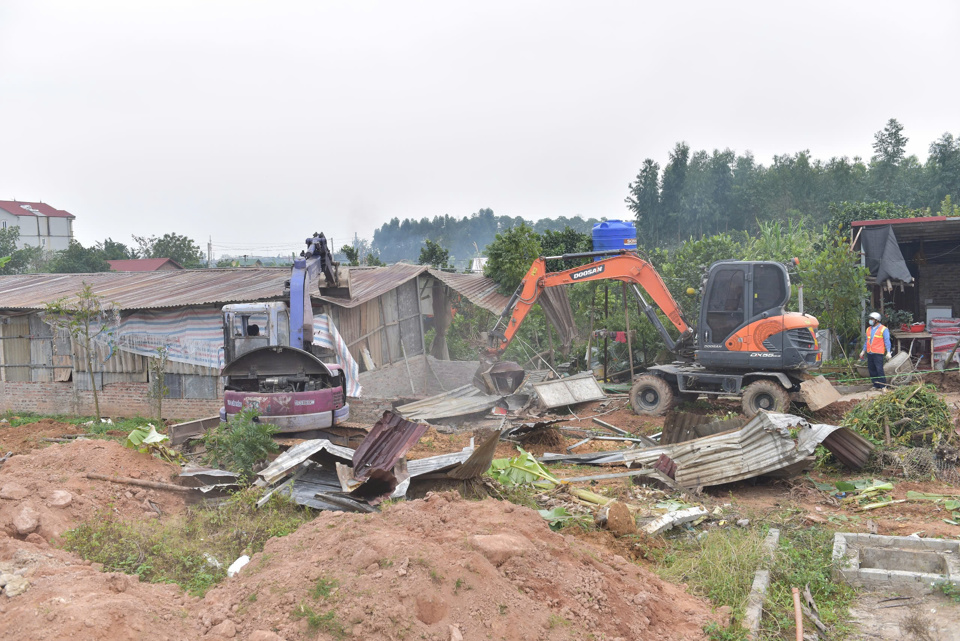
According to compiled data reported by the Hanoi Department of Natural Resources and Environment at the explanatory session of the Standing Committee of the Hanoi People's Council held at the end of December 2024, the number of violations in the field of land (agricultural land and public land, public land in districts and communes) in the city remains very high. Specifically, from January 1, 2023 to December 31, 2023 alone, 2,596 cases of violations in the management and use of agricultural land were processed and rectified, covering an area of 74.2579 hectares; bringing the total number of cases processed to 38,524 with a rectified area of 1,294.24 hectares, but only reaching 61.52% of the violations that needed to be processed and rectified according to the inspection conclusions.
In addition, some areas of encroached land are being illegally occupied and used without permission, causing difficulties for relevant units in management and coordination. The monitoring results of the City People's Council's Monitoring Team also show that violations of construction regulations and encroachment on public land in riverside and dike areas remain numerous, but the handling of these violations has not been thorough. A total of 390 cases (including violations of land management, construction regulations, dikes, and flood drainage corridors) were reported by the districts and counties, of which 252 have been resolved, leaving 148 cases outstanding.
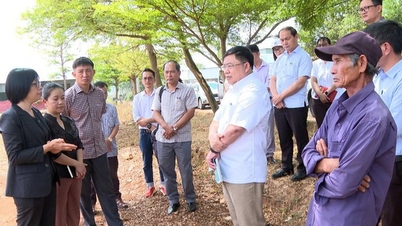
According to a field survey conducted by reporters from the Economic & Urban Newspaper in Dong Anh district in 2024, the district directed specialized departments to record the current status of all land violations, especially in public agricultural land areas and alluvial land along the river; and directed communes to continue reviewing public agricultural land plots in their areas. The district also organized the handling of land violations and the recovery of land for use in projects such as community centers, green spaces, parking lots, football fields, pond embankments, etc.
During the year, the entire district handled violations and recovered approximately 60.7 hectares of public agricultural land; approved investment policies for 24 projects to build community centers. In some areas with prominent violations such as Hai Boi, Dong Hoi, Nam Hong, Van Ha, Tien Duong communes, and Dong Anh town, 633 cases were resolved; 30 penalty decisions, 212 decisions on remediation, and 127 decisions on enforcement of violations were issued. In addition, the district also fined 10 individuals a total of 512 million VND, confiscated 1,699 cubic meters of sand, one steel ship hull, and watercraft for violations in the use of mineral and construction waste storage areas.
“Land management, construction order, and urban order and civility in the district still have some shortcomings. Violations are not detected promptly, and the dumping of waste and construction materials in violation of regulations still occurs. The district frankly acknowledges that this is due to the low level of responsibility in the performance of duties by some officials and civil servants, and their lack of close monitoring of the area. The sense of responsibility in preserving the space, landscape, and environmental hygiene of a segment of the population is still limited,” said Hoang Hai Dang, Vice Chairman of the Dong Anh District People's Committee.
Most importantly, we need to change our approach to land.
According to representatives from the Department of Natural Resources and Environment, in recent times, districts and counties have actively developed implementation schedules with the principle of preventing new violations related to land and construction in suburban areas, riverbanks, and areas outside the dike. However, due to obstacles related to some legal regulations, localities are still hesitant and slow in handling violations. “For example, public agricultural land is leased by local authorities to organizations and individuals for agricultural production and livestock farming for a limited period. However, after the lease expires, identifying assets on the land becomes very difficult because, according to regulations, these assets are not sufficient grounds for compensation when the land is reclaimed…” – said Le Thanh Nam, Director of the Department of Natural Resources and Environment.
Regarding this issue, according to lawyer Hoang Van Dao (Vietnam Lawyers Association), violations in the management and use of agricultural land in recent years are due to the lack of synchronization between the 2013 Land Law and related laws such as the Bidding Law, Investment Law, Construction Law, Housing Law, Real Estate Business Law, and the Law on Management and Use of Public Assets... which have directly affected land allocation and leasing in localities. This is also one of the main reasons why localities in general and Hanoi in particular have not effectively exploited land resources to become an important internal resource for socio-economic development.
“The most important issue is changing the approach to land access. Difficulties in accessing land have slowed down the process of agricultural land accumulation and concentration, becoming a ‘barrier’ to improving the investment and business environment and enhancing competitiveness. This leads to many projects being allocated or leased land but being slow to be put into use, causing resource waste, low efficiency, and numerous complex complaints and accusations,” said lawyer Hoang Van Dao.
Sharing the same view, urban planning expert and architect Tran Tuan Anh believes that, in order to improve the efficiency of managing and using agricultural land, in addition to complying with the regulations of the amended land law (Land Law 2024), state management agencies need to tighten enforcement. At the same time, they should promote public awareness campaigns to improve the understanding of individuals and organizations regarding compliance with land use laws in general and agricultural land laws in particular.
Experts agree that the violations in the management and use of agricultural land in Hanoi's suburban districts stem from two main causes: firstly, the implementation of legal regulations; and secondly, weak land management in some localities. Wasting land resources not only causes losses to the state budget but can also have consequences comparable to corruption. Therefore, state management agencies need to take decisive and serious action, leaving no room for exceptions, against any violations related to the misuse of land.
To prevent this situation, the Hanoi city government needs to strengthen decentralization of authority to districts, counties, and towns to enhance inspection, supervision, and handling of violations in the management and use of agricultural land; and definitively resolve outstanding violations. This includes clearly defining violations such as: illegal conversion of land use (building houses or factories on agricultural land); encroachment, misuse of land contrary to planning, or leaving land fallow... to provide a basis for issuing violation reports and applying appropriate penalties. In addition, citizens need to thoroughly understand and comply with legal regulations before converting or using agricultural land.
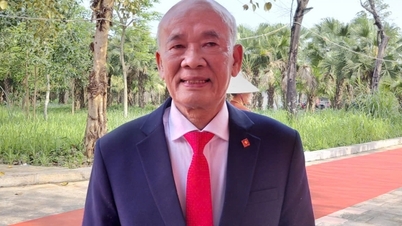
Urban planning expert - Architect Tran Tuan Anh
Source: https://kinhtedothi.vn/thay-doi-co-che-va-siet-chat-quan-ly.html























































































Comment (0)