

Concerns about rising fertilizer prices and supply disruptions.
At this time, many fertilizer businesses and farmers are concerned that fertilizer prices could rise sharply if the Middle East conflict continues, disrupting global supply chains. The risk of shortages and escalating production costs is real. In this context, proactively monitoring the market, diversifying supply sources, and preparing contingency plans become crucial to ensure agricultural production and food security.

Dr. Phung Ha, President of the Vietnam Fertilizer Association. Photo: FAV
Speaking with a reporter from the Industry and Trade Newspaper, Dr. Phung Ha, Chairman of the Vietnam Fertilizer Association, said that since the armed conflicts between the US, Israel, and Iran began, the Vietnam Fertilizer Association has not received any news from the International Fertilizer Association (IFA) regarding the events.
Based on various sources and assessments, it appears that the supply and price of fertilizers will be affected by this conflict, but the extent of the impact depends on many factors, the most important of which are the duration and intensity of the conflict. The US and Israeli attacks on Iran, and Iran's retaliatory attacks, have created instability in commodity markets, including fertilizers, as investors shift to risk-averse positions.
Dr. Phung Ha pointed out that the biggest risk relates to the supply chain, specifically disruptions in the Strait of Hormuz, which is the main reason for the increase in fertilizer prices, as Hormuz is a crucial route for fertilizer transportation. If Iran closes the Strait of Hormuz, the supply of sulfur and urea will be affected, decreasing by 44% and 33% respectively annually. Monthly shipments from this region amount to approximately 3 to 3.9 million tons of fertilizer, including about 1.5 to 1.8 million tons of sulfur, about 1.2 to 1.5 million tons of urea, and about 400,000 to 500,000 tons each of ammonia and phosphate.
In that case, supply would be affected and access to the global market would be difficult. There are no viable alternatives to large vessels: Most supertankers carrying ammonia and bulk carriers for sulfur cannot be easily diverted. There are no sea routes for transporting goods out of the Gulf that do not pass through Hormuz. The consequence would be a surge in logistics costs, specifically container prices, insurance surcharges, fuel costs, labor costs, etc.
Further analyzing the situation related to this industry, Dr. Phung Ha stated that the outbreak of war forced Iranian fertilizer producers to halt urea and ammonia production. Egyptian urea plants ceased operations due to disruptions in gas supplies from Israel. Similarly, gas supplies to Jordan were also affected.
Dr. Phung Ha further explained that the price of oil and natural gas is a core input factor for the fertilizer industry. Nitrogen fertilizers such as urea and ammonia are mainly produced from natural gas. When oil prices rise, gas prices usually increase accordingly, driving up fertilizer production costs. Producing one ton of urea requires a large amount of natural gas, serving both as a raw material and as fuel for plant operation. In addition, fertilizer production consumes a lot of electricity and steam, so increased energy costs will directly push up production costs.
Notably, the Middle East is the world's largest exporter of urea, approximately 20 million tons per year. Iran produces around 5-6.5 million tons of urea annually, with major producers including Pardis Petrochemical, Kermanshah, and Shiraz, exporting to India and several Asian and African countries. Egypt exports approximately 4 million tons of urea annually, primarily to Europe. Iran is one of the world's leading producers of ammonia (ranking 6th, due to its second-largest natural gas reserves). Ammonia is a raw material for the production of nitrogen-containing fertilizers such as urea, MAP, and DAP. Sulfur is a raw material for the production of sulfuric acid, which in turn produces DAP, SSP, and SOP.
Major fertilizer-producing countries in the Middle East, where US forces are stationed, including Saudi Arabia (over 19 million tons of fertilizer/year), Qatar (5.5-6 million tons of urea/year), the UAE, Bahrain, and Oman (2 million tons/year), were all affected by Iran's retaliatory attacks. Because the global fertilizer market is open, any fluctuations in price and supply have a significant impact on Vietnam.
Maintain stable production and proactively secure supply.
Given the risk of escalating production costs due to the aforementioned war, fertilizer industry experts also advise proactively monitoring the market, diversifying supply sources, and preparing contingency plans to ensure agricultural production and food security.
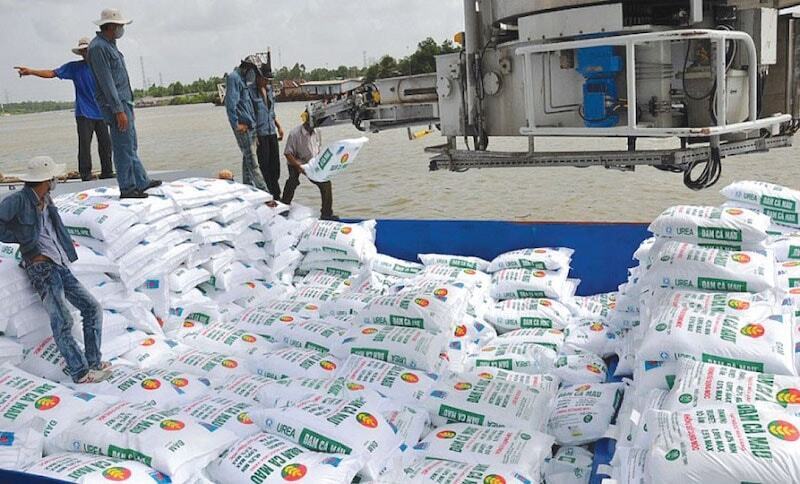
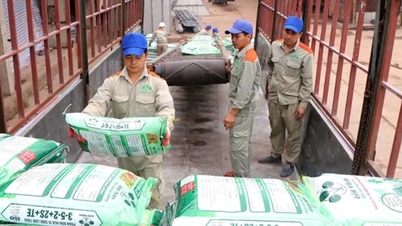
The fertilizer industry needs to proactively diversify its supply sources, maintain inventory, and develop contingency plans to ensure stable production. Photo: HA
For major domestic fertilizer companies such as Phu My Fertilizer and Ca Mau Fertilizer, they are also responding to high price fluctuations and supply risks due to the Middle East conflict by cautiously setting profit targets for 2026, proactively monitoring the market, diversifying import sources, and optimizing production costs to ensure domestic supply.
Sharing further insights, Dr. Phung Ha stated that the global fertilizer market operates on an open mechanism, therefore any fluctuations in global supply and prices will impact Vietnam to a certain extent. Currently, businesses and customers are closely monitoring the conflict in the Middle East. “ Fertilizer businesses need to diversify their supply sources and seek other markets with similar demand to choose alternative options, minimizing the impact when exports to Israel, Iran, and the Middle East face difficulties. In the long term, businesses need to proactively prepare for similar incidents in the future, ” Dr. Phung Ha recommended.
Furthermore, fertilizer import and export businesses need to proactively analyze and coordinate information exchange with relevant ministries and agencies regarding import and export data; geopolitical fluctuations affecting the production, business, import, export, and transportation activities of Vietnamese enterprises; and the situation of goods transportation, freight rates, costs, surcharges, etc., in order to promptly agree on response plans.
Dr. Phung Ha, President of the Vietnam Fertilizer Association: The global fertilizer market operates on an open mechanism, therefore any fluctuations in global supply and prices affect Vietnam to a certain extent. Currently, businesses and customers are closely monitoring the developments of the conflict in the Middle East.
Source: https://congthuong.vn/chu-dong-nguon-cung-phan-bon-truc-xung-dot-trung-dong-445079.html
![[Photo] National Assembly Chairman Tran Thanh Man attends the groundbreaking ceremony for the National Highway 1A spatial axis project.](https://vphoto.vietnam.vn/thumb/1200x675/vietnam/resource/IMAGE/2026/05/19/1779161360398_ndo_br_bnd-1412-jpg.webp)
![[Photo] Capturing the moment the tide recedes at Yen Binh Son rapids - a million-year-old scenic spot in Quang Ngai.](https://vphoto.vietnam.vn/thumb/1200x675/vietnam/resource/IMAGE/2026/05/19/1779175463885_yen9-1199-jpg.webp)



![[Photo] General Secretary and President To Lam presides over a meeting on the implementation of Directive No. 34-CT/TW of the Party Central Committee.](https://vphoto.vietnam.vn/thumb/1200x675/vietnam/resource/IMAGE/2026/05/19/1779187768672_a1-bnd-2350-631-jpg.webp)
















































![[Photo] General Secretary and President To Lam receives Indian Defense Minister Rajnath Singh](https://vphoto.vietnam.vn/thumb/402x226/vietnam/resource/IMAGE/2026/05/19/1779184046302_anh-man-hinh-2026-05-19-luc-16-46-58.png)
























Comment (0)