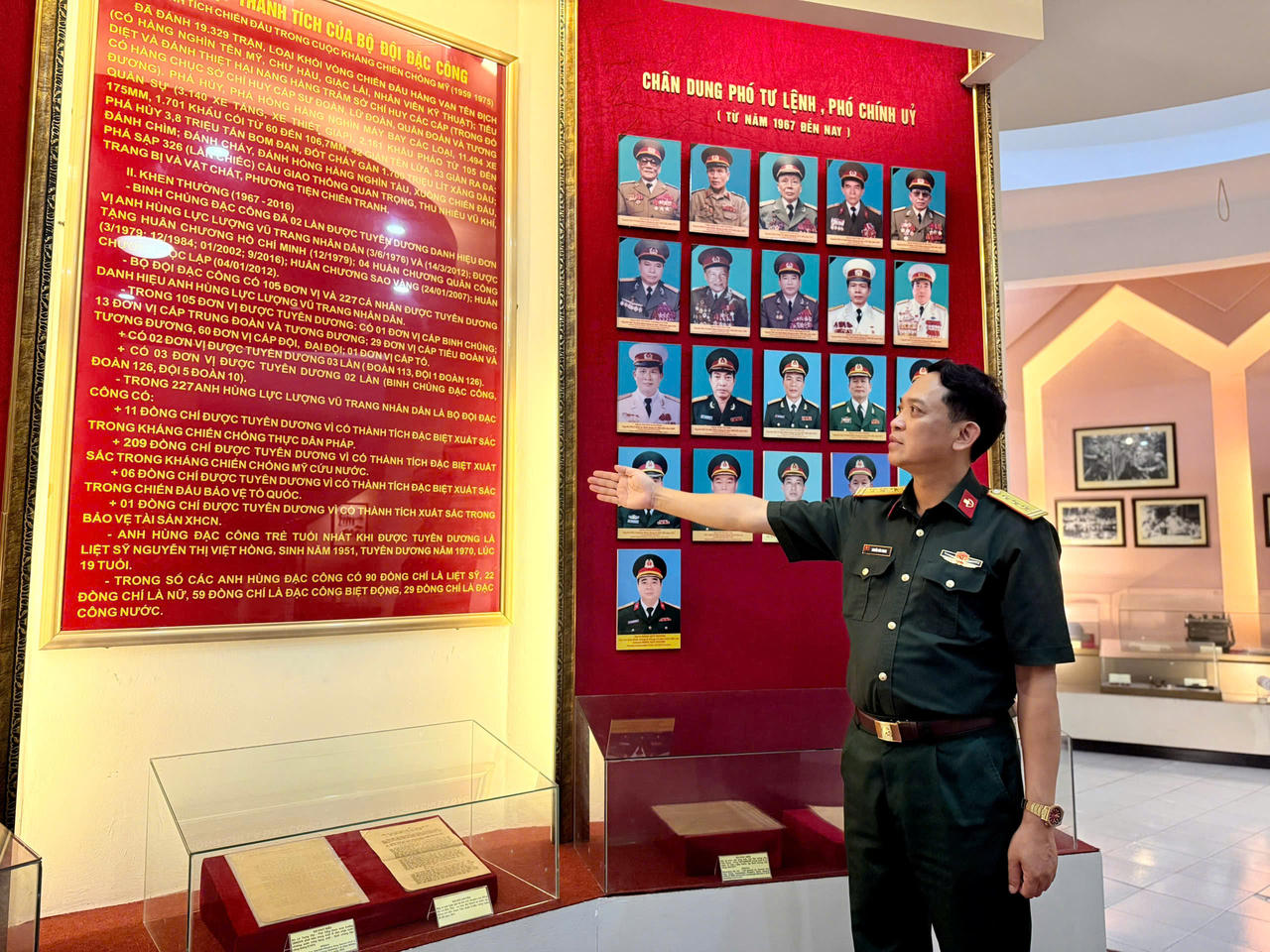
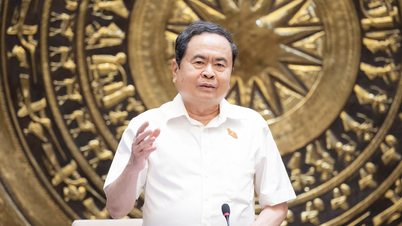
Lieutenant Colonel Nguyen Van Chinh - Director of the Special Forces Museum - introduced the combat achievements of the Special Forces during the resistance war against the US.
One midday in mid-May, the Special Forces Museum was so quiet that we unconsciously slowed our pace and spoke more softly, feeling as if we were touching a realm of historical memory. Half a century has passed since the reunification of the country; many historical witnesses are no longer with us, but the artifacts and relics in the museum still resonate with the memories of war, the yearning for peace, and the sacrifices of generations of Ho Chi Minh's soldiers.
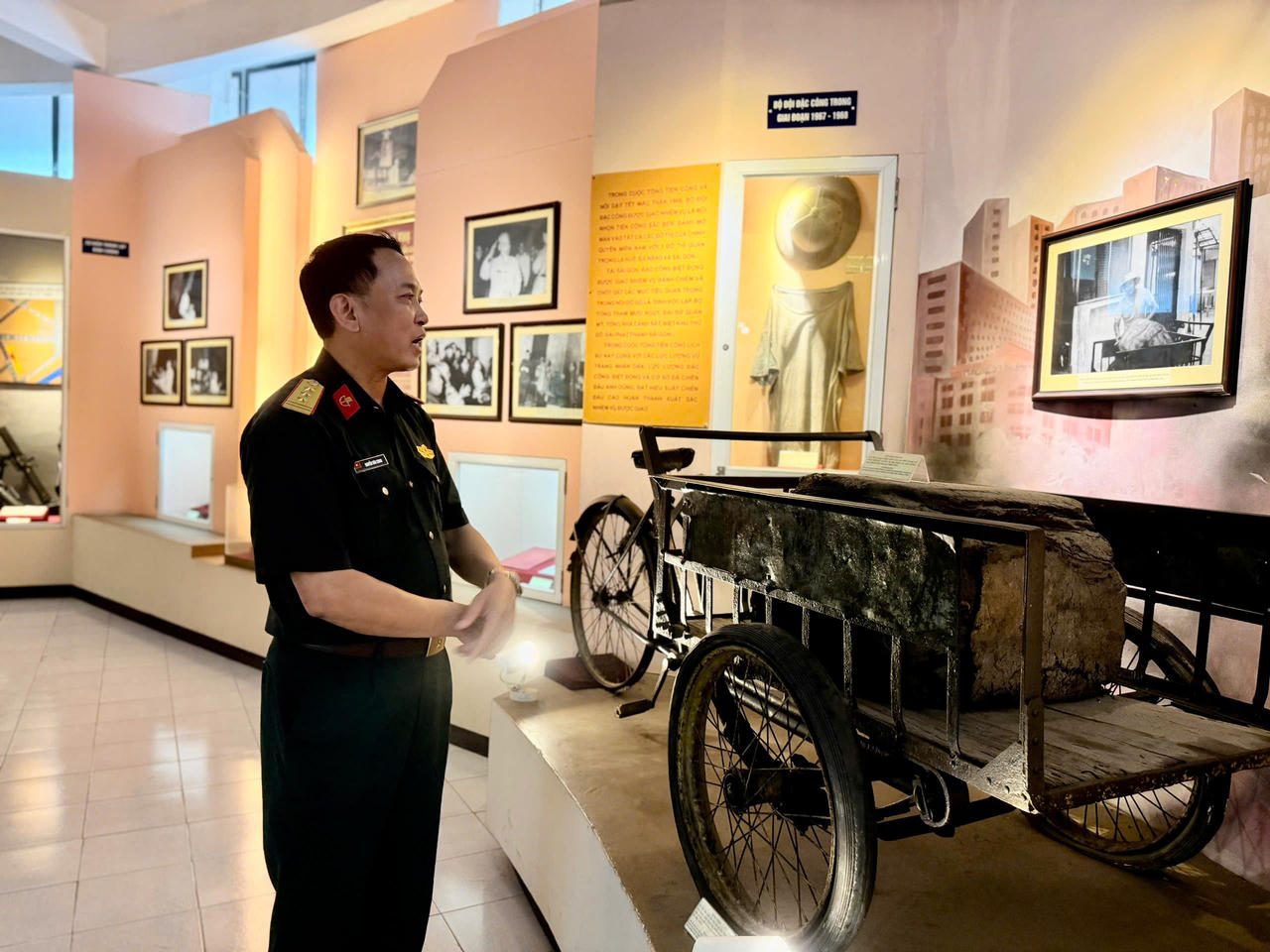
Lieutenant Colonel Nguyen Van Chinh introduces artifacts and documents related to Comrade Do Van Can (Ba Mu) at the museum's exhibition space.
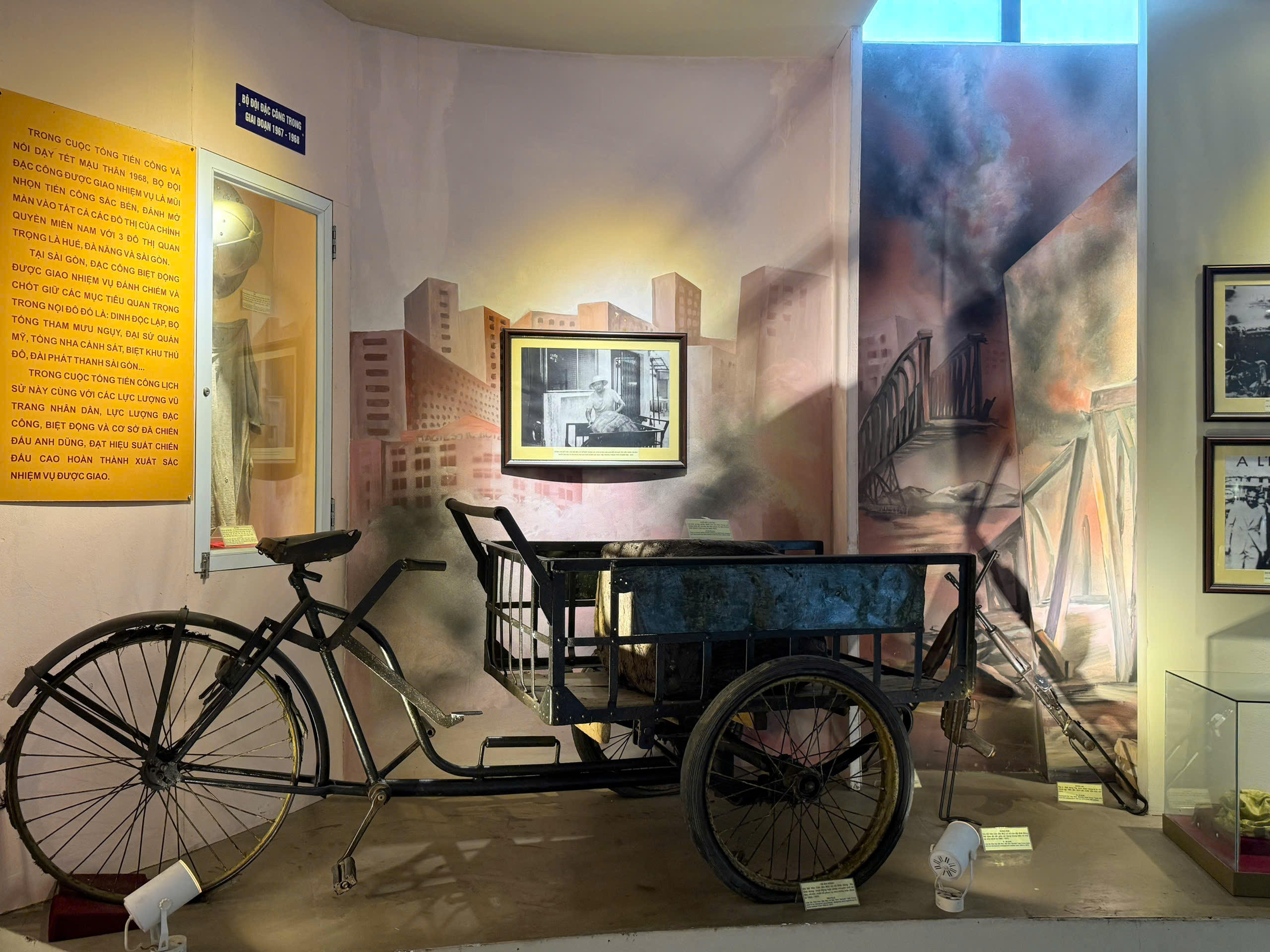
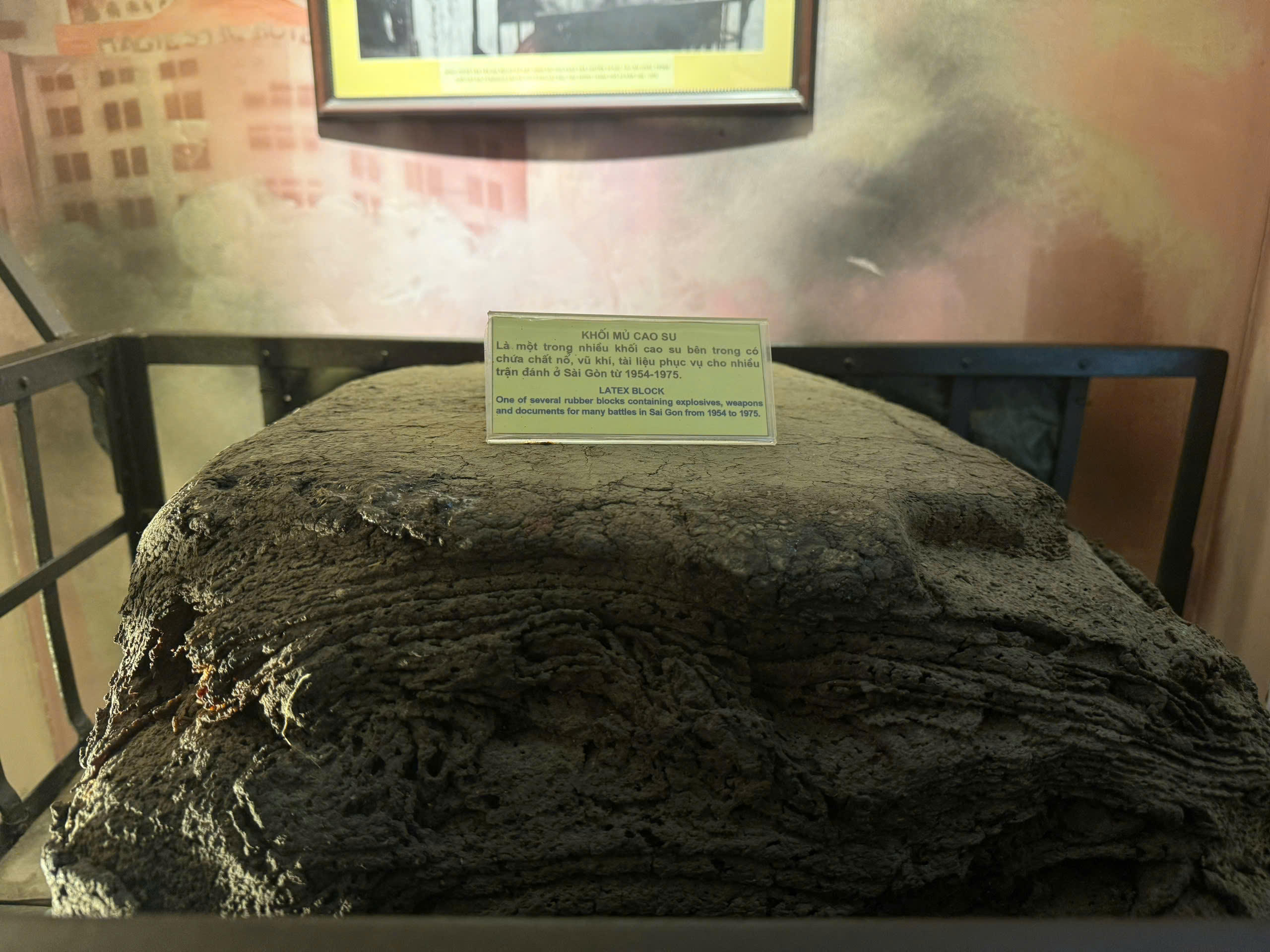
Leading us through the exhibition area on the first floor, Lieutenant Colonel Nguyen Van Chinh - Director of the Special Forces Museum - stopped in front of an artifact related to Comrade Do Van Can (aka Ba Mu). Before us was a three-wheeled vehicle and a block of rubber latex, seemingly ordinary at first glance, but within those blocks of latex lay many weapons that were secretly transported and hidden for our soldiers.
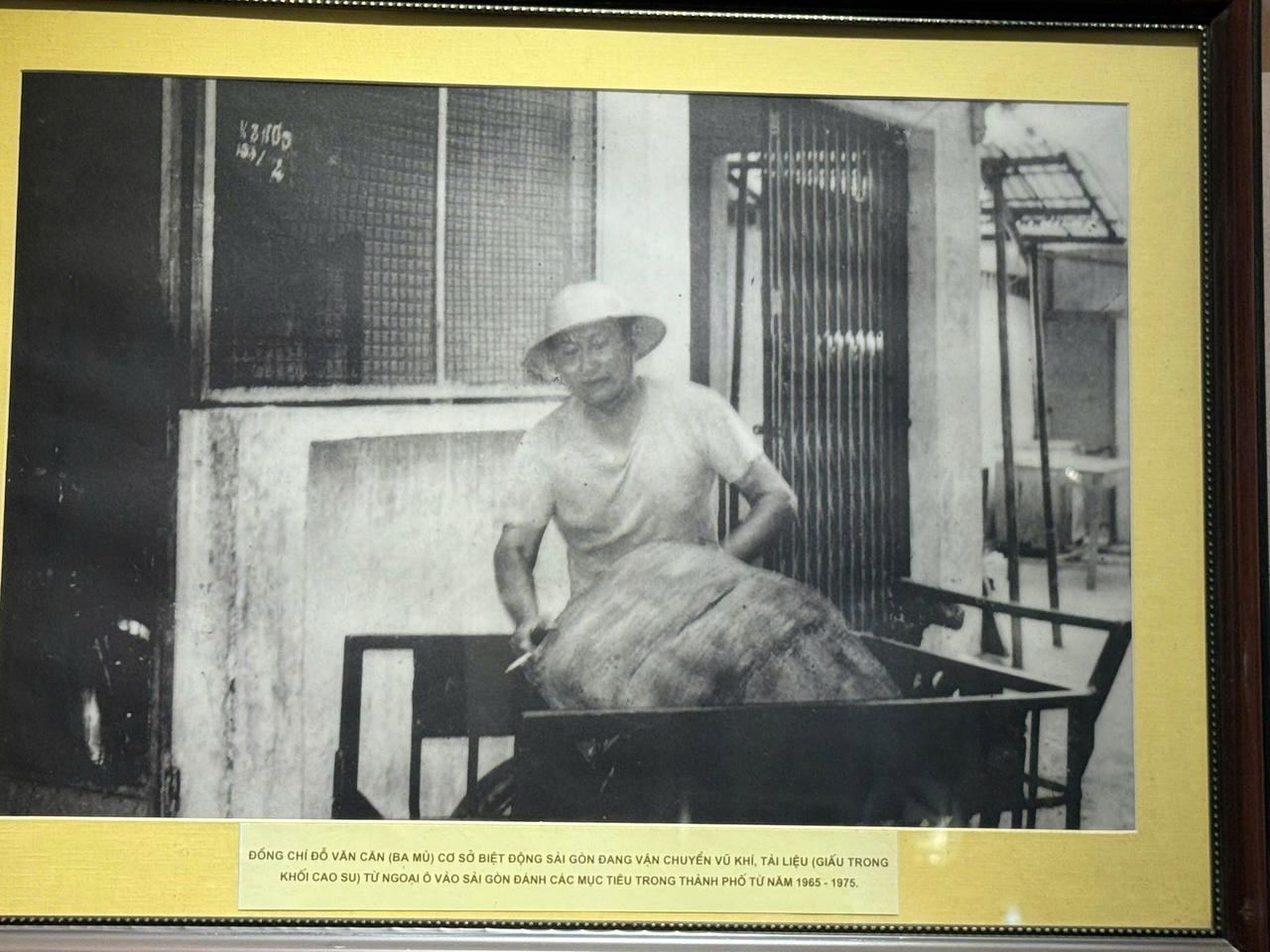
Archival images of Comrade Do Van Can (Ba Mu) are on display at the Museum.
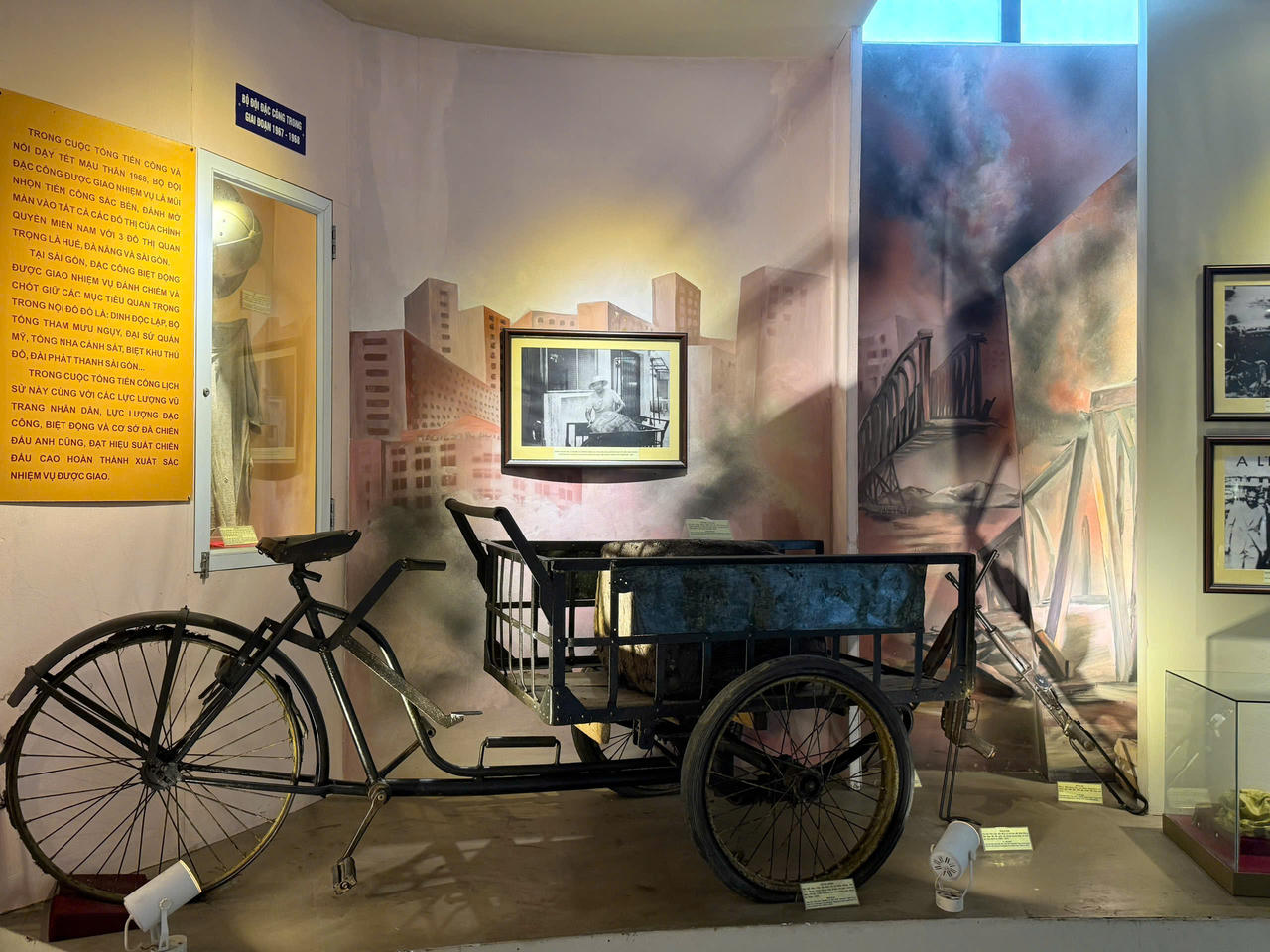
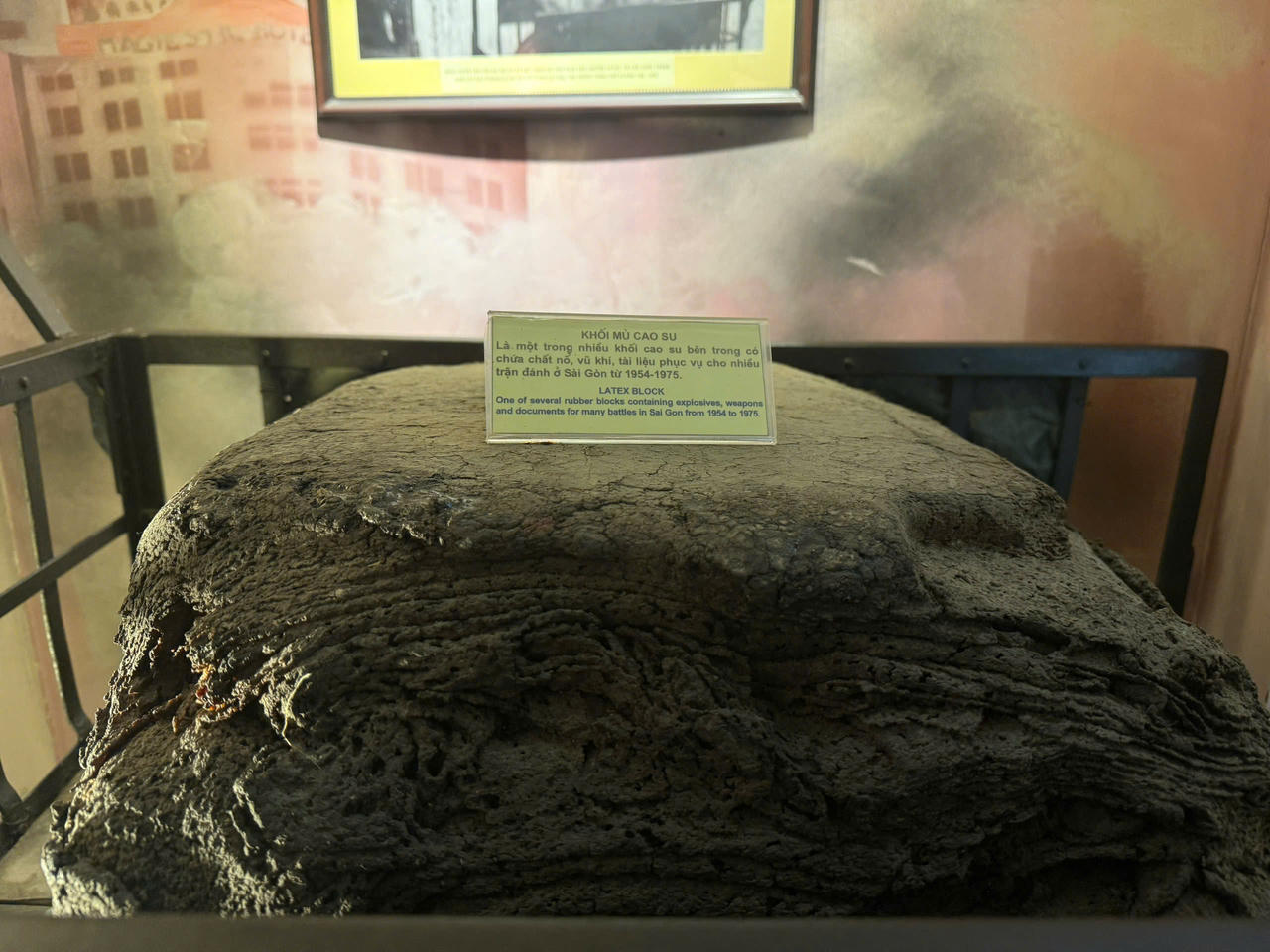
The three-wheeled vehicle and the rubber bale, with registration number BTĐC 10/K3-5, C-1, were used by Comrade Do Van Can to operate legally behind enemy lines and to transport weapons in preparation for battles of the Saigon Special Forces from 1954-1975.
Colonel Chinh looked at the artifacts and slowly said, "They may look simple, but these very items were used by Comrade Ba Mu to transport weapons for the battles of Spring 1968 and to prepare for the strategic opportunities that followed. There are things that, if we don't see the artifacts with our own eyes or hear the historical stories, we can hardly imagine the sacrifices of our elders, the previous generations..."
Each artifact tells a "heroic" story of the nation.
Through artifacts associated with Comrade Ba Mủ – a member of the Special Forces – the story of the war years gradually unfolds as Lieutenant Colonel Nguyễn Văn Chinh shares his experiences. Through his narrative, the relics behind the glass are no longer mere exhibits, but reveal stories of the bravery, resourcefulness, and silent sacrifices of previous generations.
He mentioned artifacts and mementos associated with commando soldiers such as Nam Lai, Doan Thi Anh Tuyet…; or the story of the K61 submachine gun that was once associated with Hero of the People's Armed Forces Le Ba Uoc - former Commander and Political Commissar of the 10th Special Forces Regiment of Rung Sac, which was later donated to the museum by Hero Le Ba Uoc as a historical artifact… Among those mementos, the diary "The Way Home" of martyr Pham Thiet Ke particularly moved Lieutenant Colonel Nguyen Van Chinh. Martyr Pham Thiet Ke was from Hoa Vang, Da Nang, and enlisted in 1953. In 1967, he went to the Southern battlefield, fighting in the 429th Special Forces Regiment, holding the position of Political Commissar of Company 7, Battalion 3. In 1970, he died on the Central Highlands Front while serving as Chief Political Commissar of Battalion 3.
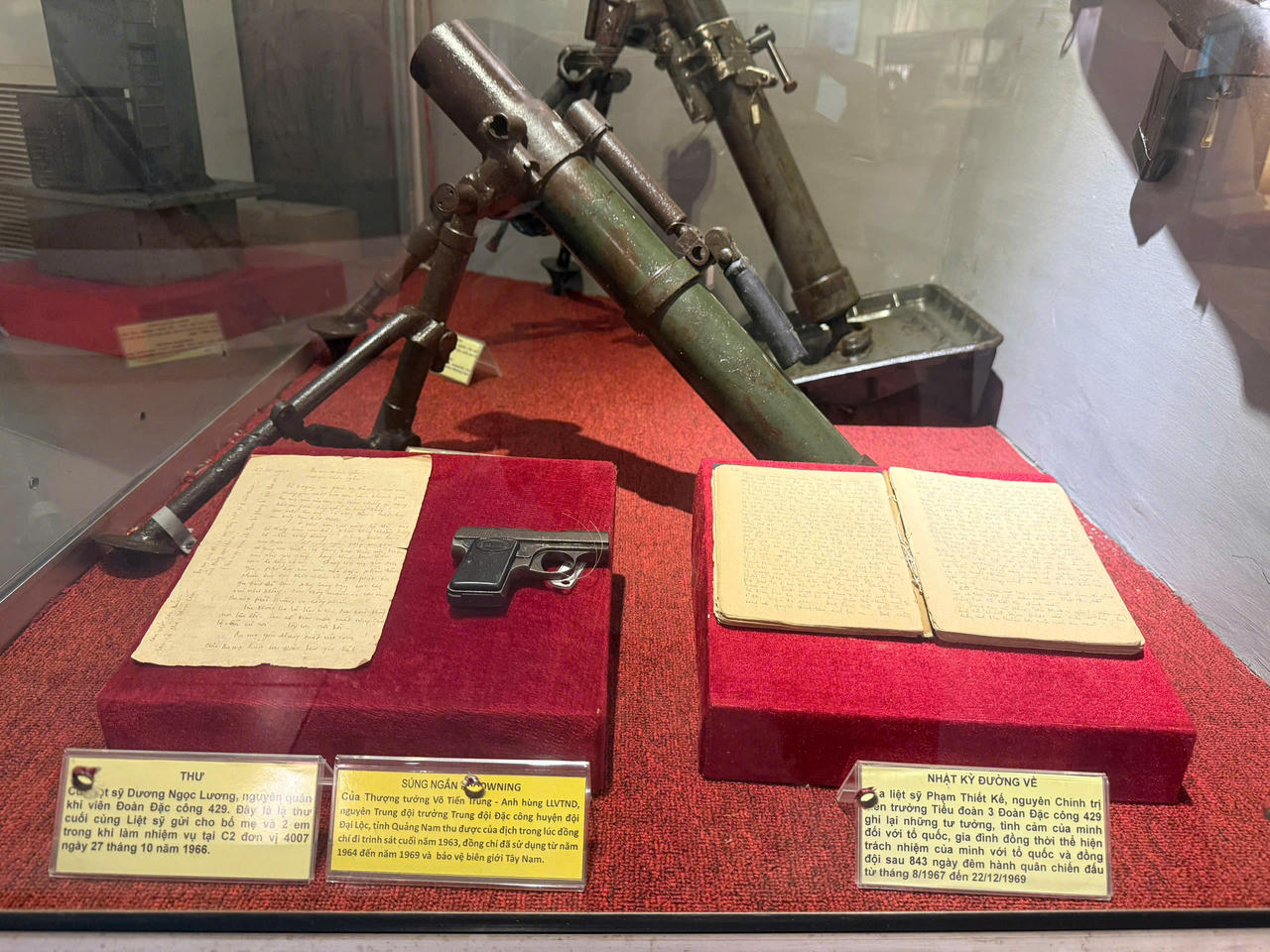
The diary "The Way Home" by martyr Pham Thiet Ke is currently preserved at the Special Forces Museum.
This nearly 200-page diary records over 840 days and nights of marching and fighting by martyr Pham Thiet Ke and his comrades, from August 29, 1967, to December 22, 1969. The pages contain images of blistered feet after long journeys, the sounds of airplanes and flares, hardships and losses... but above all, the unwavering belief of the special forces soldier: "Only advance, never retreat."
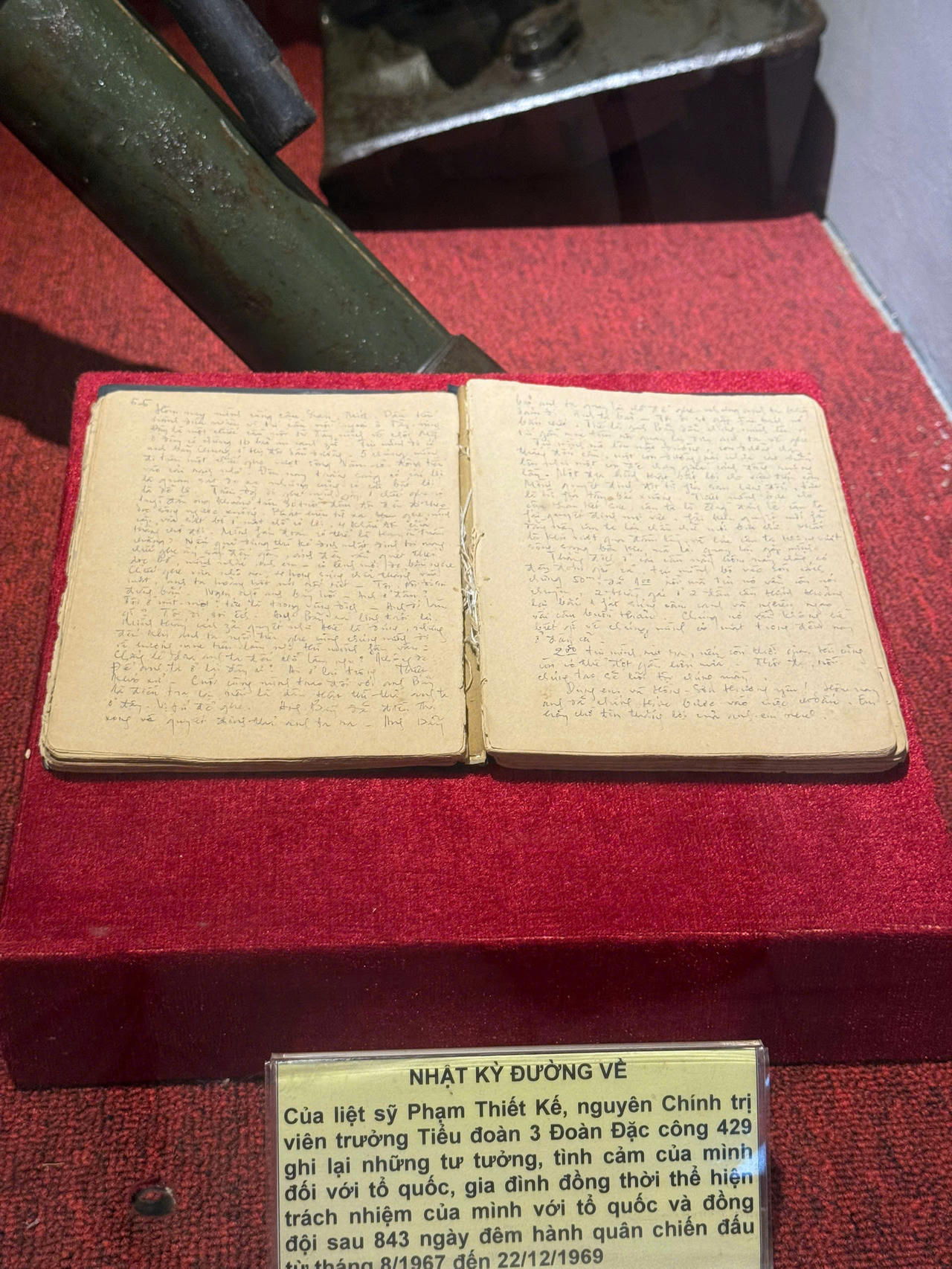
These pages, faded with time, not only preserve the memories of over 840 days and nights of marching and fighting, but also record the thoughts, feelings, and responsibilities of martyr Pham Thiet Ke towards his country and his comrades.
Looking back at the diary, Lieutenant Colonel Chinh confided: “Every time I read these diary entries, I feel a greater sense of responsibility towards the work I am doing today. Some artifacts may seem ordinary at first glance, but behind them lies a story of courage, resourcefulness, and the sacrifices of previous generations. Museum staff like us must preserve that spirit, so that the tradition of 'special forces' is not just behind glass displays but continues to be remembered and passed on.”
The Special Forces Museum was established in 1977. A new building was constructed in 1995. On March 16, 2000, the museum opened with a display area of 1,400 square meters. Currently, it has three floors showcasing over 2,000 representative artifacts out of a total of more than 6,000 original artifacts currently preserved.
The way Lieutenant Colonel Nguyen Van Chinh paused before each exhibit, meticulously explaining every small detail, gave us the feeling that his work at the museum was not just about managing or preserving artifacts, but also about preserving the memories of generations of soldiers in the branch of the military where he had spent almost his entire life.
Lieutenant Colonel Nguyen Van Chinh, originally from Luong Tai, Bac Ninh , is a soldier who rose through the ranks of the Special Forces. From 1994 to 1998, he studied at the Special Forces Officer School, specializing in special forces officer training. One year after graduation, he underwent political training. After holding various positions in different units, he worked in the Propaganda Department, in charge of culture and arts. In 2023, he transferred to the Special Forces Museum and assumed the position of Director.
Recalling his early days working at the museum, Lieutenant Colonel Nguyen Van Chinh said that although he had risen through the ranks of the Special Forces and understood the traditions of the branch, he still felt a sense of bewilderment when approaching a new field. “Working in a museum is not just about displaying artifacts or protecting them from damage. More importantly, it’s about how to help viewers understand the story and meaning behind those artifacts… The more involved I become and the deeper I learn about military heritage, the more proud and passionate I feel about this work,” he said.
To help young people understand that behind the "16 golden words" lies blood and sacrifice.
Lieutenant Colonel Chinh believes that a museum cannot simply be a place to display artifacts behind glass. If viewers enter, look at the artifacts, and leave without feeling anything, then the museum has not fulfilled its role. Therefore, museum staff must always find ways to make images, artifacts, and war relics become "living symbols," conveying historical significance to today's generation.
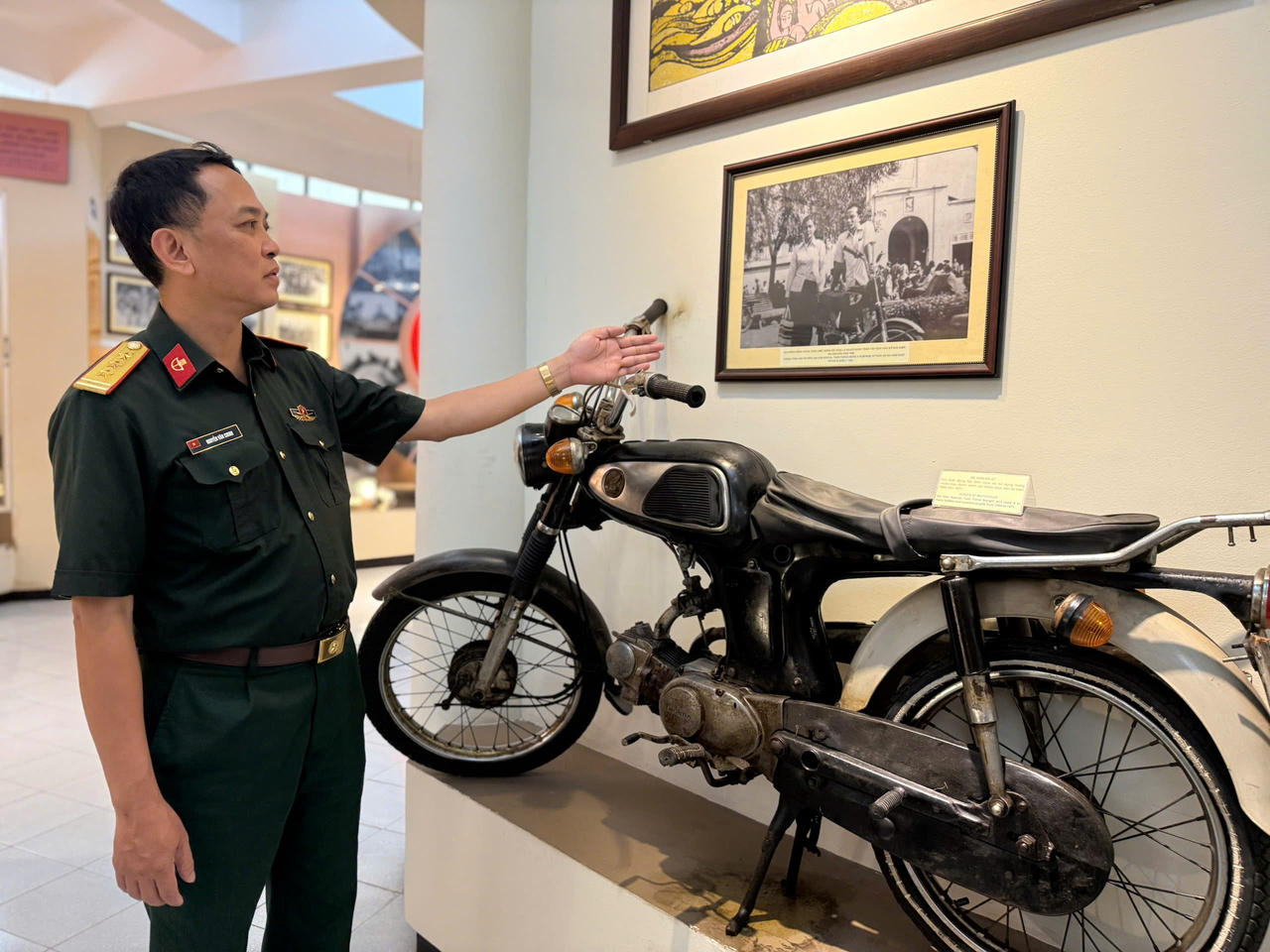
Lieutenant Colonel Nguyen Van Chinh believes that what makes viewers linger the longest is not just the artifacts behind the glass, but the true value and genuine emotions in the stories about the courage and sacrifice of generations of special forces.
According to Lieutenant Colonel Chinh, the job is even more difficult because the Special Forces Museum was built in 1995, and many of the display and preservation conditions no longer fully meet current requirements. The humid climate of Northern Vietnam also makes artifacts made of paper, fabric, and metal easily damaged if not properly stored and preserved. Therefore, museum staff must regularly check the display cases, review artifact records, monitor the preservation status, and revise the explanatory content. These tasks may sound simple, but they require meticulousness, patience, and responsibility from the museum staff.
Currently, the museum primarily uses traditional methods of explanation, relying on images, real artifacts, and original exhibits to tell the story of history. However, the Special Forces Command is also implementing a project to renovate the museum towards a digital museum, applying information technology to make the presentation of traditions more vivid and accessible to viewers. Nevertheless, according to Lieutenant Colonel Chinh, technology is only a supporting tool. What keeps viewers lingering the longest is still the true value of the artifacts and the genuine emotions in the stories told about the courage and sacrifice of generations of special forces.
Like many other military museums, the Special Forces Museum annually welcomes delegations of officers and soldiers from the Special Forces to visit and learn as part of the unit's traditional education plan. Students from the Special Forces Officer School are organized to visit the museum to study and learn about the history and traditions of the Special Forces. During their basic training, new recruits are also brought here to hear presentations about the traditions of the Special Forces and the entire army's special forces.
Besides being a traditional educational site for officers and soldiers, the Special Forces Museum also welcomes many groups of students and citizens to visit.
“For many people hearing about special forces for the first time, the most impressive thing is the seemingly impossible stories that became reality on the battlefield, such as: the attack on Warehouse 53 of the Long Binh General Depot, a major strategic logistics base of the US in the South at that time. This area was heavily guarded by many layers of barricades, guard posts, and patrols, seemingly inaccessible. However, through secret and daring attacks, the special forces still overcame the defense system, planted timed mines, and destroyed a large quantity of enemy bombs and ammunition; or the raid on the Nha Be fuel depot in 1973 by the 10th Special Forces Unit of Rung Sac. This was a crucial fuel depot, protected by multiple layers of defense, both on land, underwater, and in the air. After a long period of reconnaissance and preparation, eight special forces soldiers secretly infiltrated and planted explosives on the target. At dawn on December 3, 1973, the Nha Be fuel depot exploded, the fire burning for many days, shaking the ground.” "They disrupted the fuel supply system of the US and the Saigon government," Lieutenant Colonel Chinh recounted.
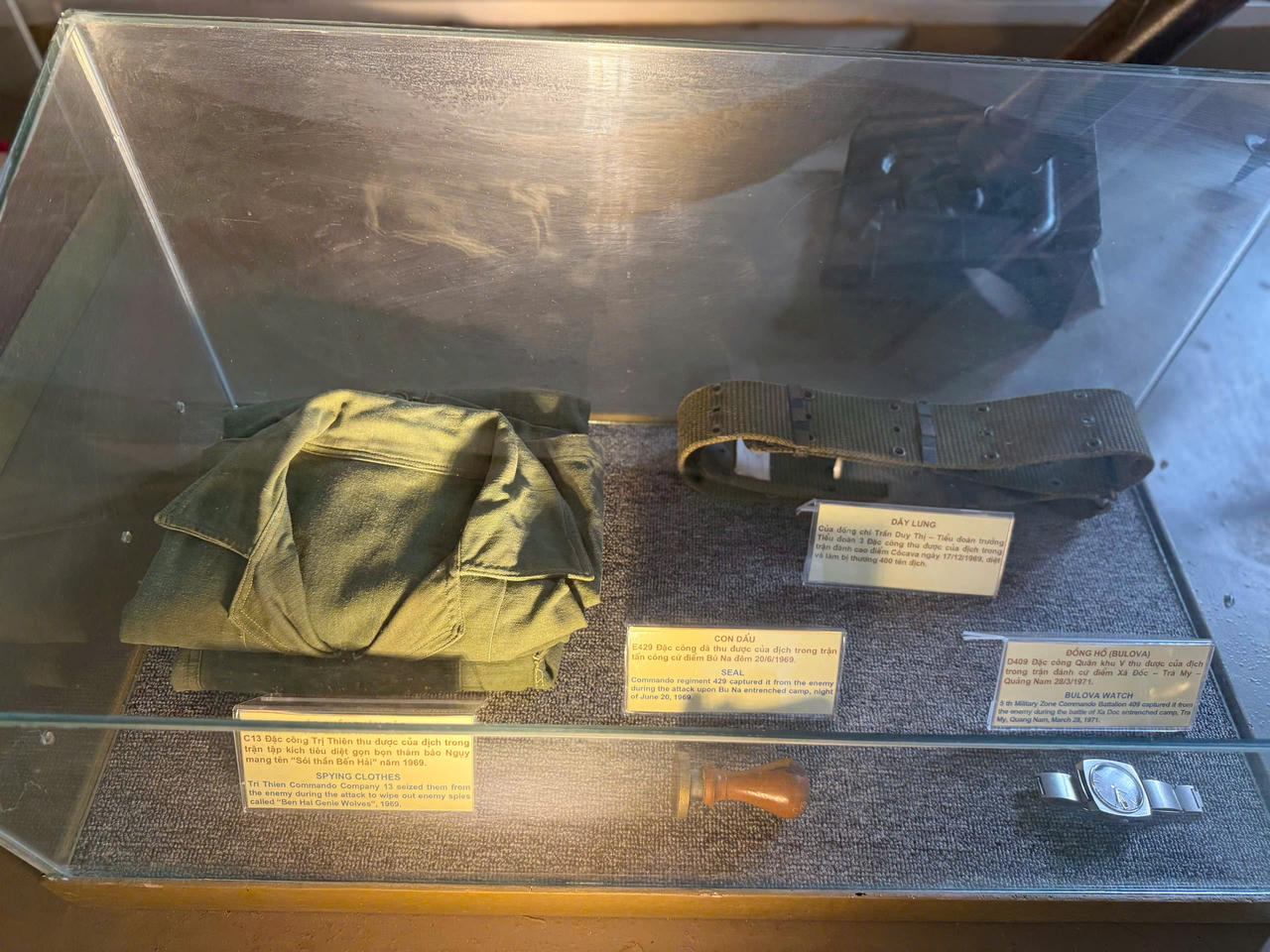
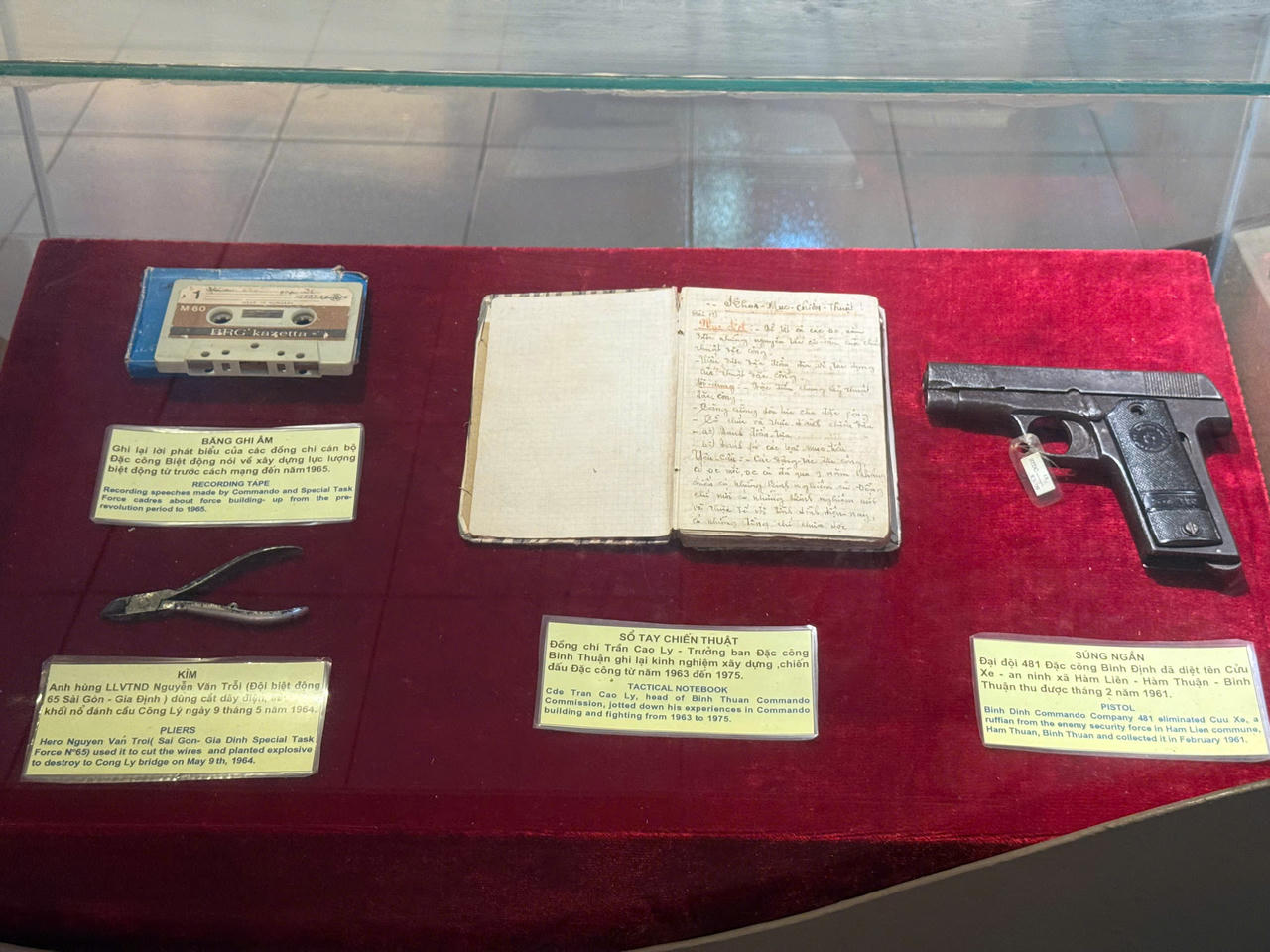
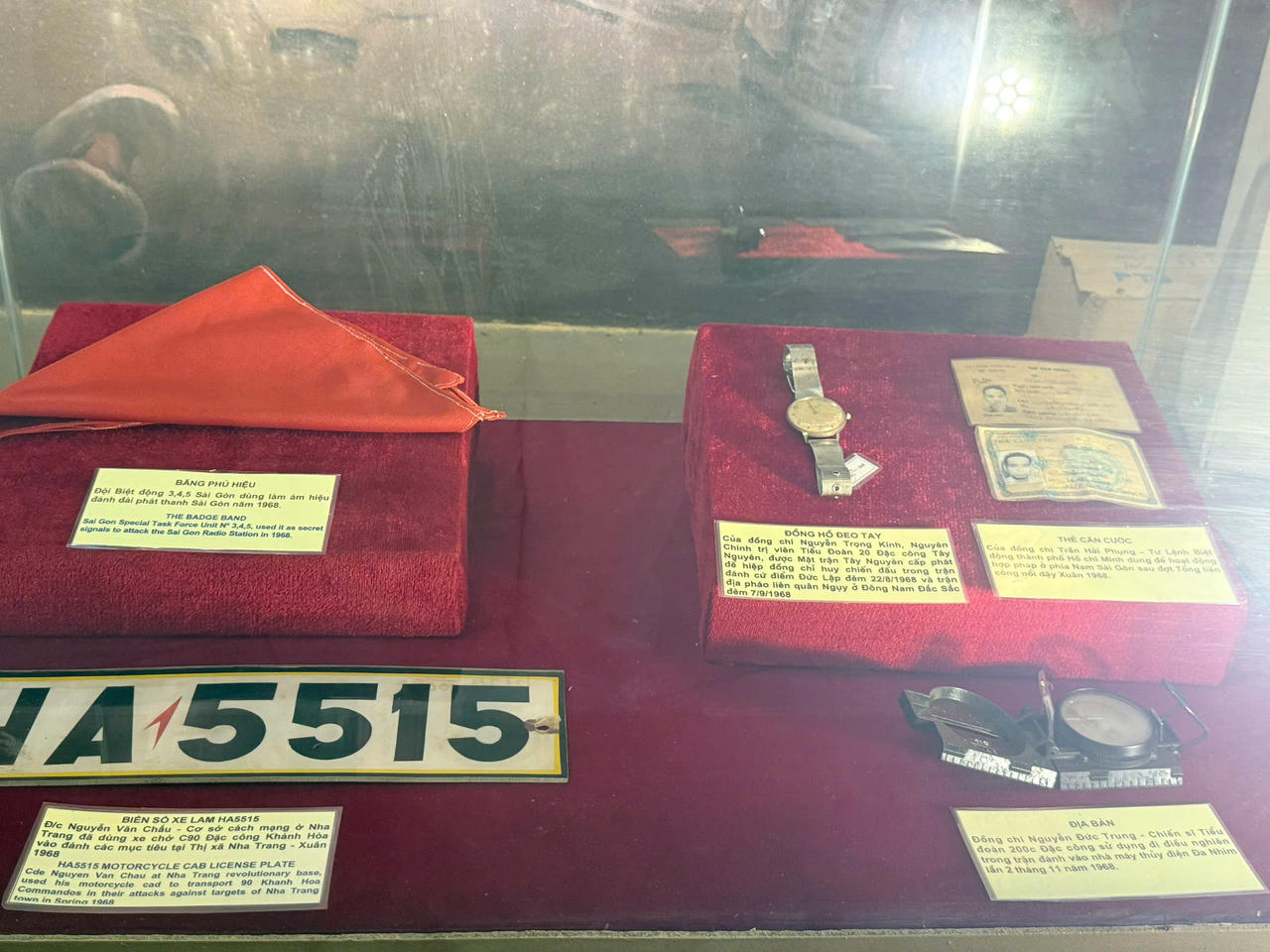
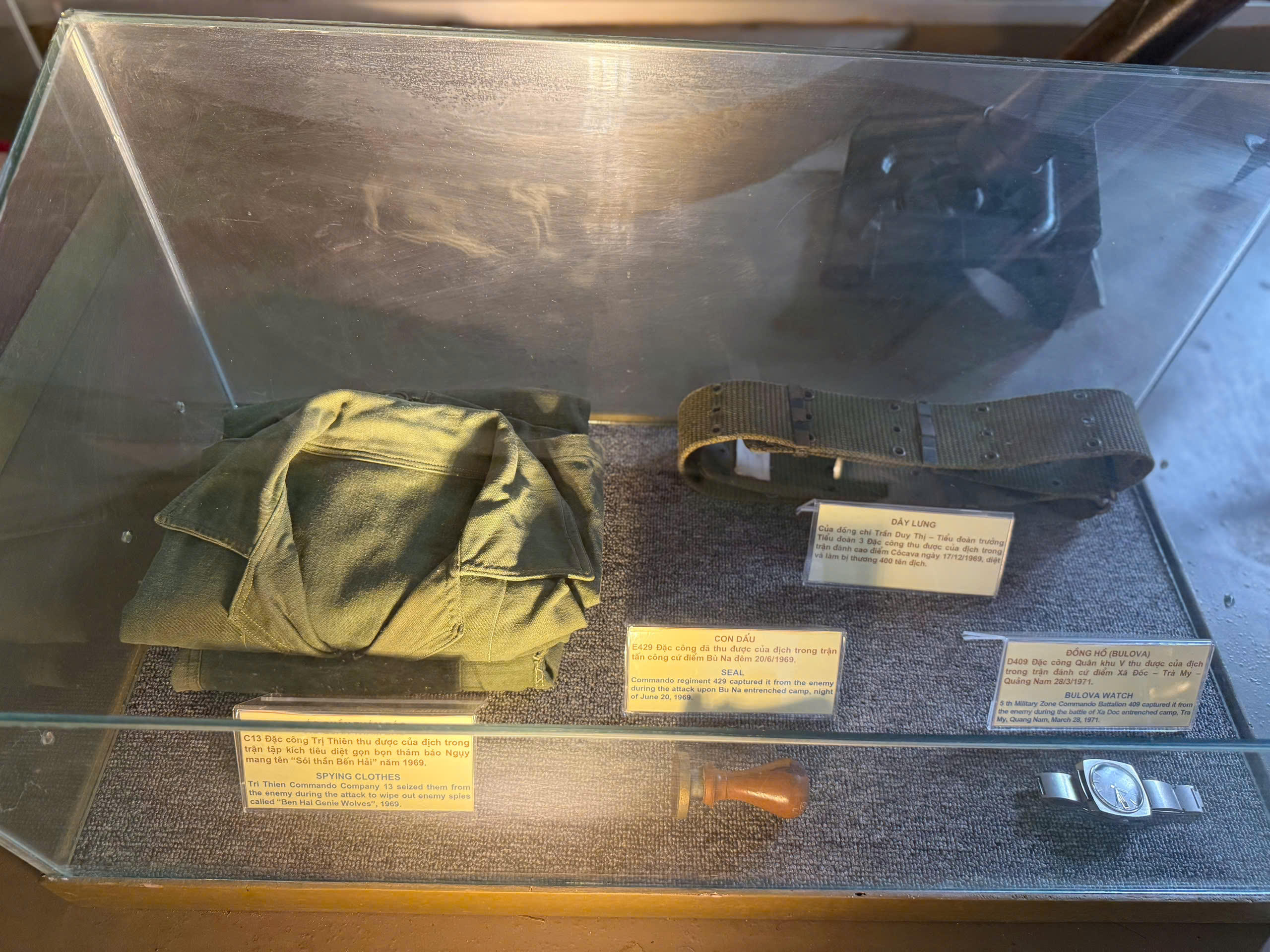
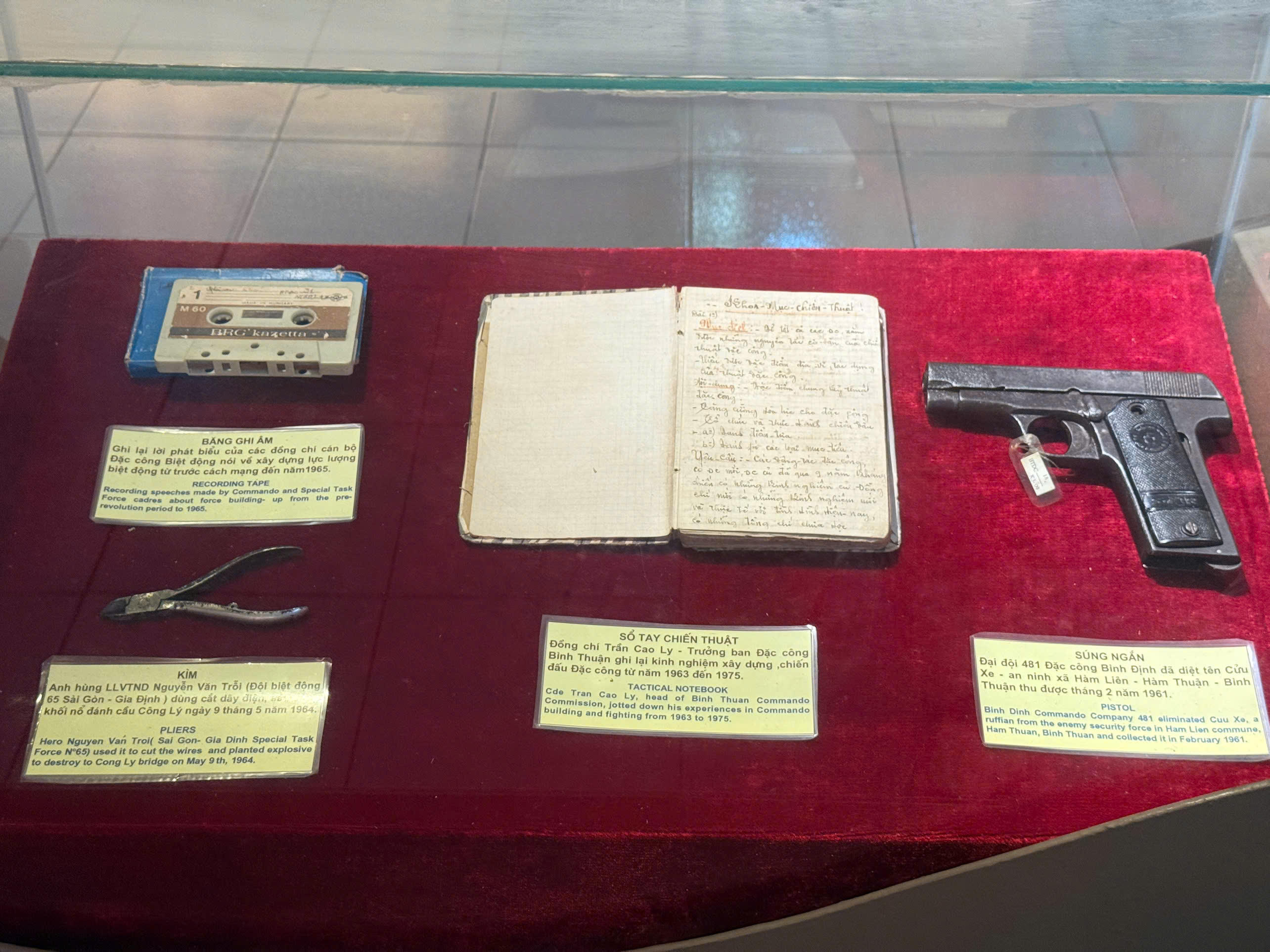
Artifacts related to the special forces are displayed at the Special Forces Museum. Behind the glass display cases are memories of secret, daring battles and the spirit of "exceptionally elite - incredibly brave - resourceful and audacious - striking hard and winning big".
According to him, these stories, for today's young people, are not just about learning about a battle or a victory. More importantly, they are about helping them understand that the sixteen golden words of the Special Forces' tradition did not come about by chance. "Behind the words 'exceptionally elite,' 'extraordinarily brave,' 'resourceful and daring,' 'strategic strikes and great victories' are soldiers who silently went into the most dangerous places, undertook the most difficult missions; some returned, some perished forever."
"Therefore, every time we give a presentation to young officers and soldiers or the general public, museum staff don't just recount the victories. We try to clarify the price behind those victories: the sweat, blood, intelligence, courage, and silent sacrifices of many generations of special forces. Only when they understand that will the sixteen golden words cease to be just slogans hanging on the wall, and become a source of pride and responsibility passed on to today's generation," the Lieutenant Colonel said.
The war is long over, but its memory cannot be forgotten. Preserving and displaying war artifacts at the museum is not simply a matter of archiving; it is a historical responsibility, a link connecting the past with the present and the future.
Source: https://baophapluat.vn/nguoi-giu-lua-truyen-thong-trong-bao-tang-binh-chung-dac-cong.html
































































Comment (0)