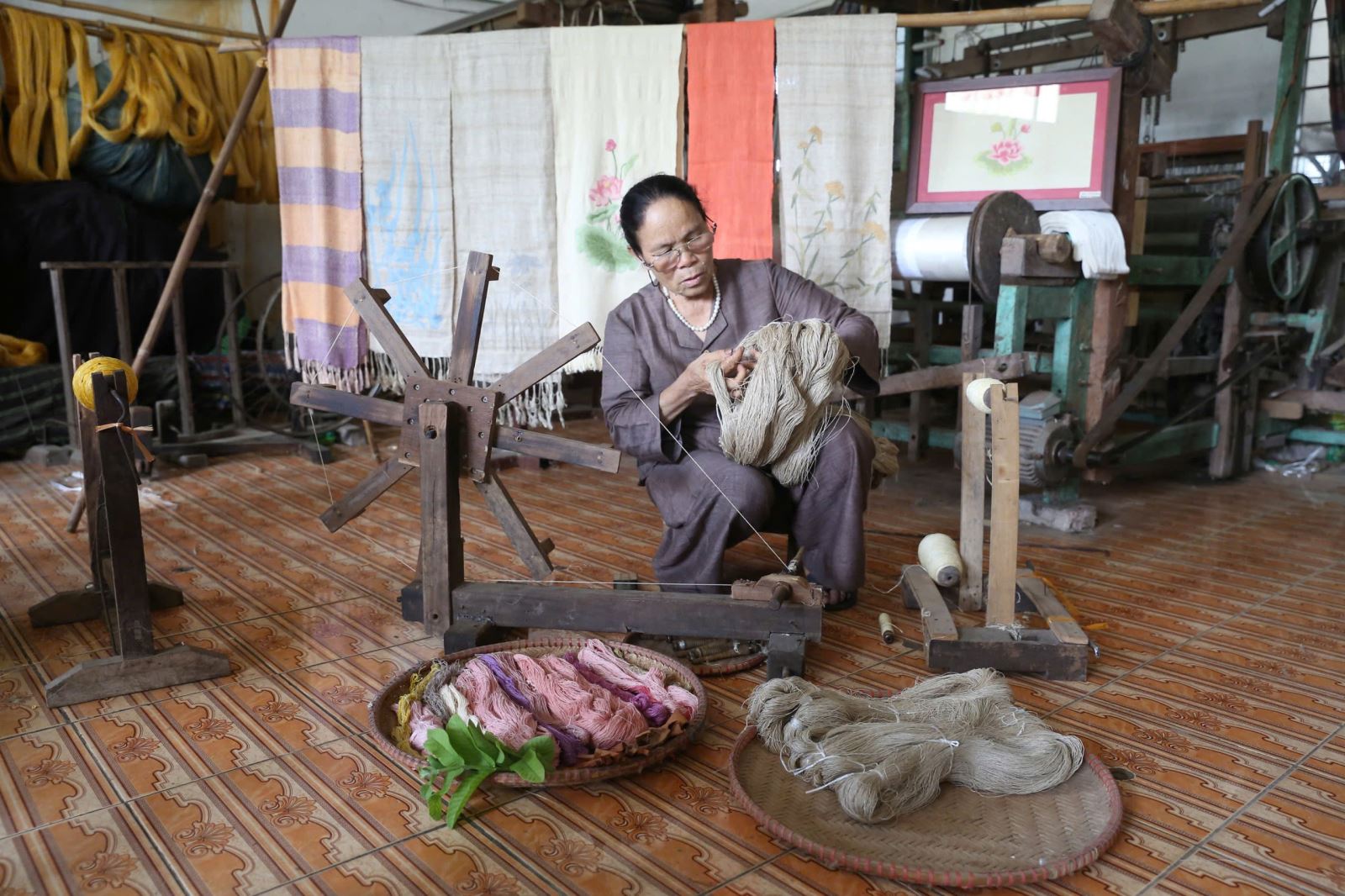
These silk threads are hand-spun by the skilled hands of artisan Phan Thi Thuan, preserving the essence of traditional weaving.
"Using silkworms as workers": An idea that opens up a new direction for the silk industry.
In traditional silkworm farming, when silkworms mature, farmers catch each silkworm and place it in a straw nest so the silkworms can naturally spin their cocoons. Afterward, the weavers go through many stages such as collecting the cocoons, reeling the silk, spinning the yarn, setting up the loom, and finally weaving it into silk.
Artisan Phan Thi Thuan chose a different approach: Instead of letting the silkworms form individual cocoons, she allowed them to spin their silk directly on a flat surface, weaving large, naturally interconnected layers of silk.
The idea came from years of observing the silkworm's silk-spinning process. According to Ms. Thuan, the most remarkable thing is that silkworms know how to arrange each layer of silk in a very specific order. Each silk thread is continuously spun from the silkworm's mouth, interwoven according to natural laws, almost without any human intervention.
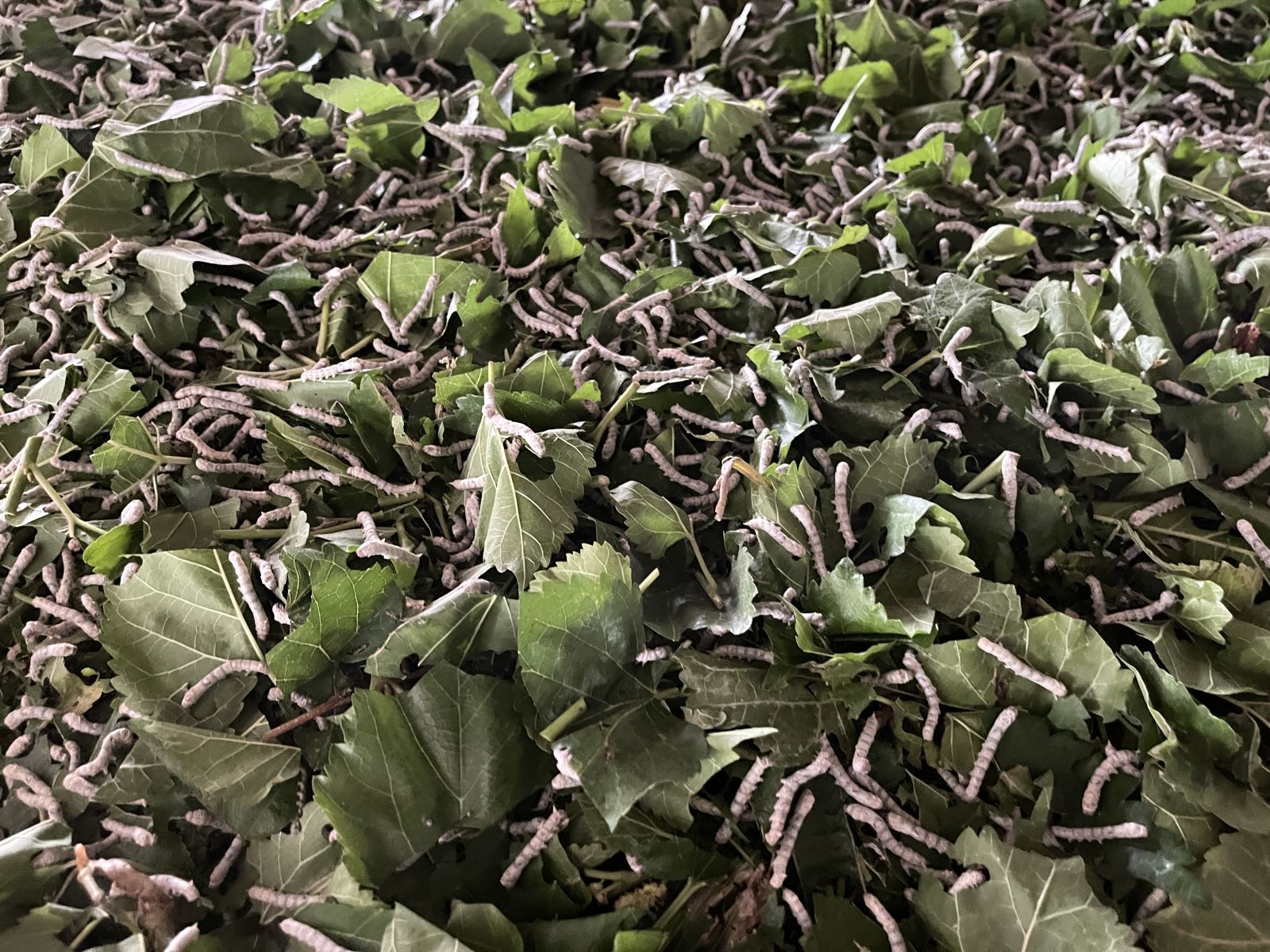
Silkworms are fed mulberry leaves before they begin spinning their silk.
In the weaving workshop in Phung Xa village, layers of white silk cover the bamboo frames, creating a scene quite different from the familiar image of silkworm farming. No longer are the cocoons individually removed from trays; here, the silkworms are "guided" to cover the surface of the bamboo frames with silk, which were later replaced with wooden frames to further reduce manual labor.
To change the way silkworms spin their silk, Ms. Thuan had to start by changing their living environment. Previously, straw nests were used as a support for silkworms to curl into cocoons; now, flat surfaces become the place where silkworms weave their own large layers of silk. This is what makes the product different. The spacing between the silk threads is arranged by the silkworms themselves during the spinning process, creating a structure that machines or human hands can hardly replicate.
.jpg)
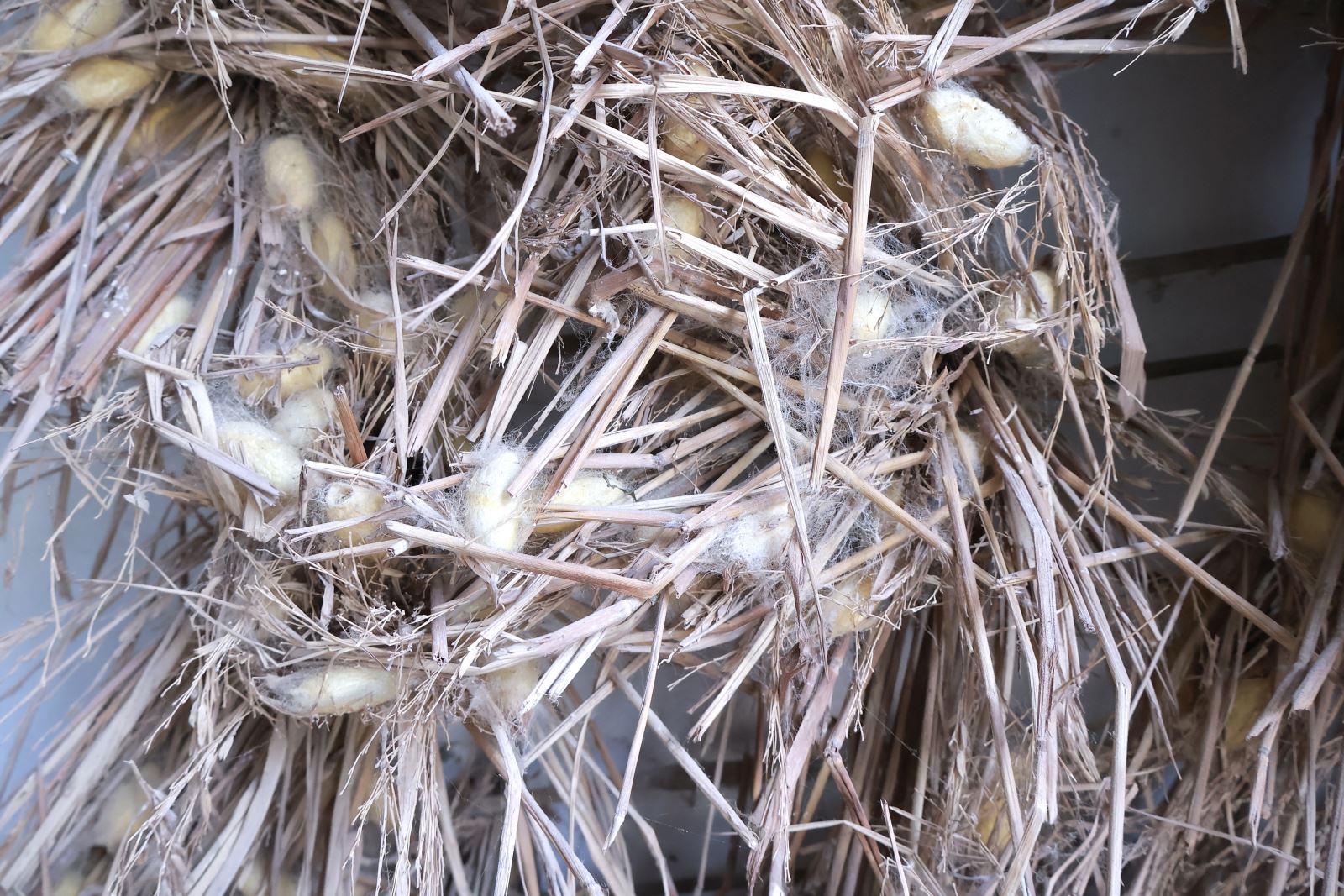
After feeding on mulberry leaves, silkworms begin spinning silk and weaving their own cocoons instead of creating them in the traditional way.
From her initial experiments with bamboo frames, she continued to switch to wooden frames to reduce the manual weaving effort and create a more stable surface for silkworms to spin their silk. But that journey was not easy. When she began experimenting, many people thought she was deviating from the traditional craft that had existed for generations.
Ms. Thuan shared: "No one had ever done this before, so no one supported me, no one agreed with me. People just thought I was sabotaging things. It required a lot of courage and patience from me to do it. But if we stick to the old ways, the craft will struggle to survive in the face of industrial production..."
For her, innovation is not about separating from traditional crafts, but about ensuring the craft can continue to thrive in modern life. Years of dedication to the silk industry have also led her to have other concerns about the silkworm itself, a creature that has been intertwined with the lives of countless generations of silkworm farmers.
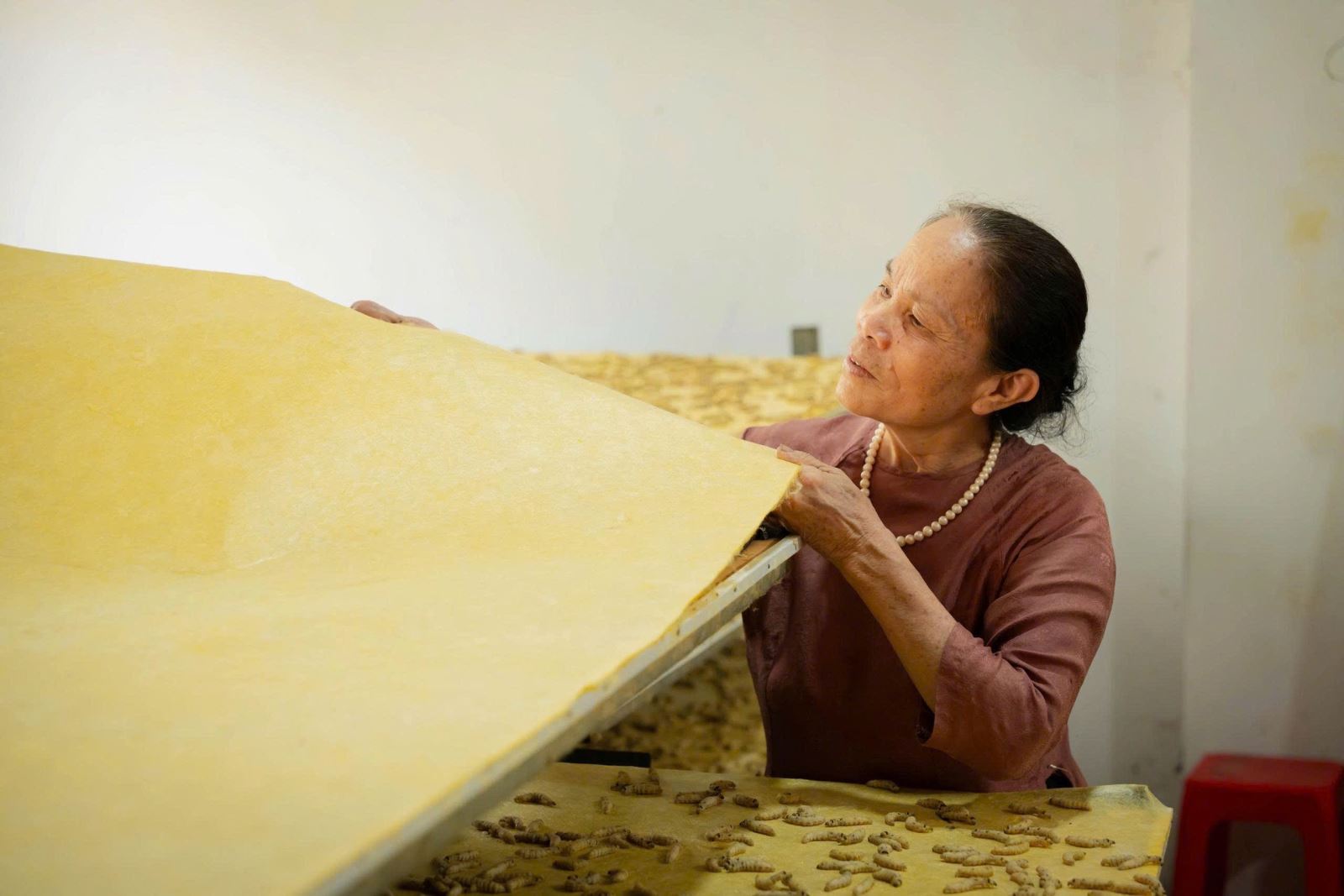
A new innovation in the silk industry involves a technique that allows silkworms to weave their own unique fabrics.
"When we've extracted all the silk, the pupae are still inside the cocoon. I felt sorry for the silkworms dying in the water while lying in their cocoons. From then on, I thought about how to change the way we do things, reducing many steps while creating new products for the craft," artisan Phan Thi Thuan confided.
According to Ms. Thuan, the material created using this method has a different structure from traditional silk. After the natural glue is dissolved with hot water, the silk fibers become lighter, more porous, and more breathable, making them suitable for use in blankets, shirts, scarves, or health-related products.
Not only did she create a new method of silkworm weaving, but the way silkworms weave on their own also helped her expand the development of the craft village in a context where handicrafts are increasingly facing pressure from industrial production.
From discarded lotus stems to silk threads with new value.
After experimenting with silk, artisan Phan Thi Thuan continued to explore another material from familiar sources in the Northern Vietnamese countryside: lotus stems.
While many people discard the lotus stem after each harvest, she noticed the tiny silk threads inside the stem. From there, she began experimenting with extracting the threads, spinning them, and weaving them onto a loom.
To create lotus silk, workers must cut the stem precisely, avoiding severing the inner core. Each delicate thread is pulled out, joined together by hand, and then spun into yarn. This work requires patience and meticulousness because even a slight misstep will cause the thread to break immediately.
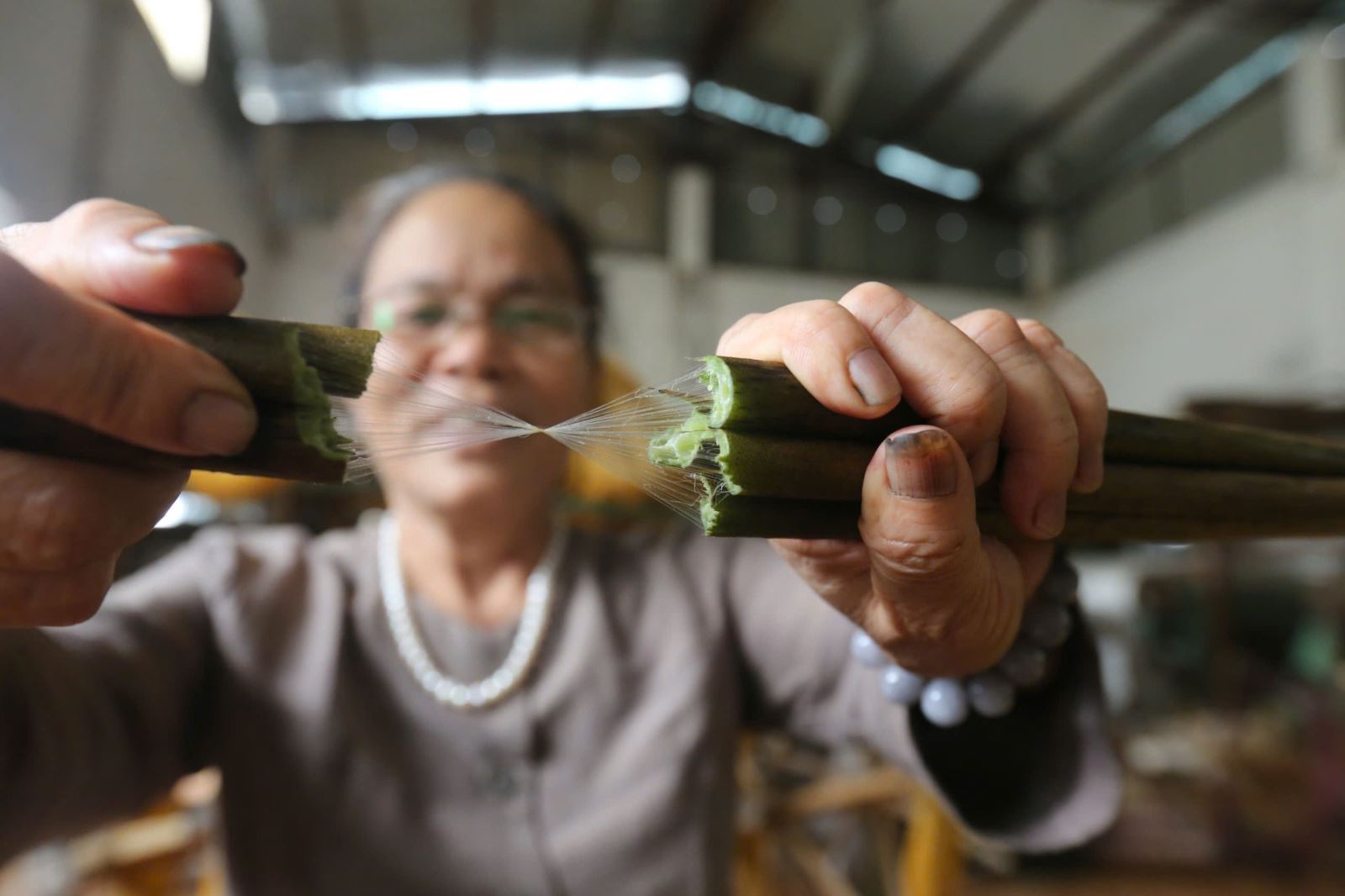
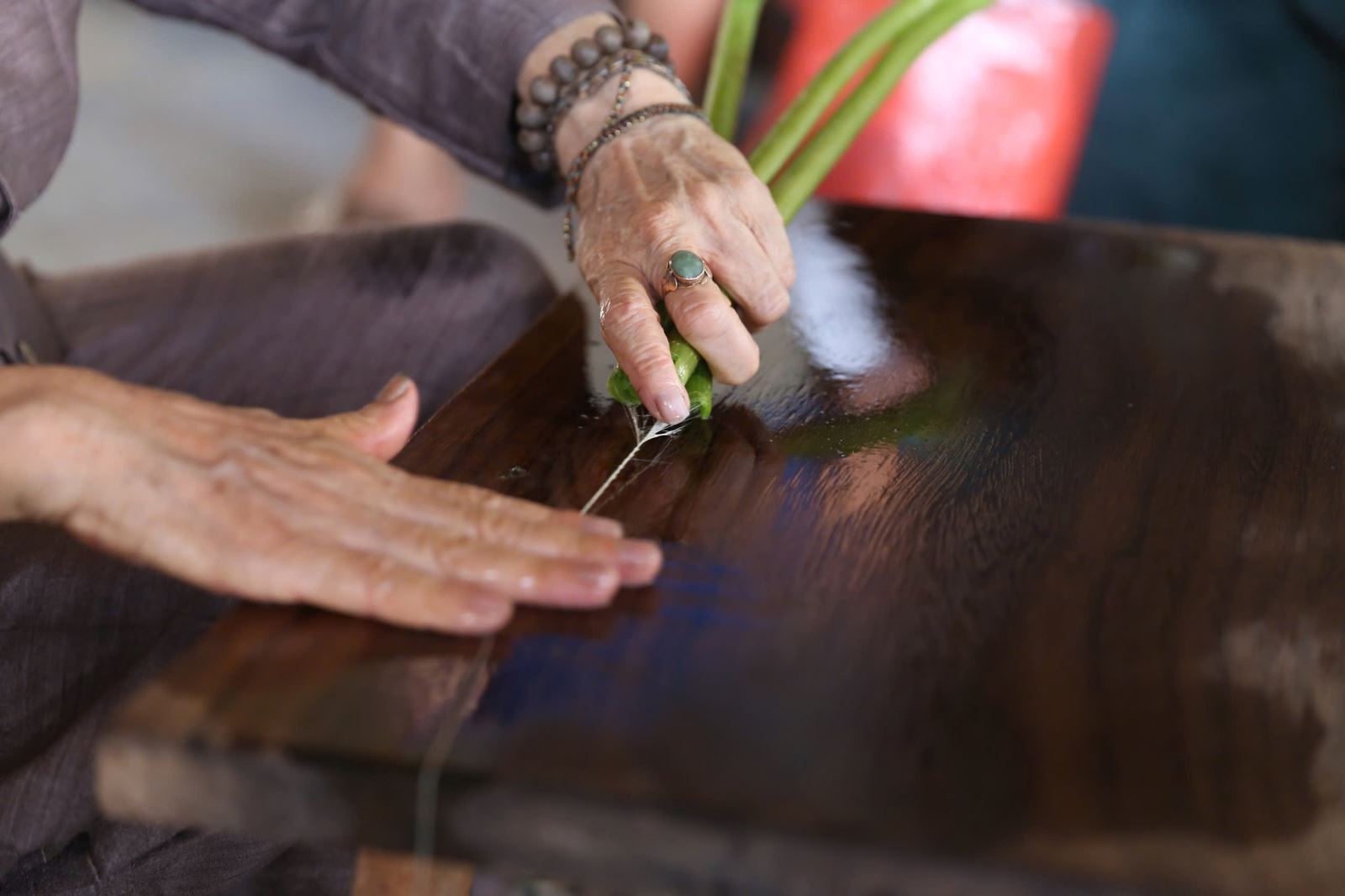
Artisan Phan Thi Thuan meticulously extracts silk threads from lotus stems for use in silk weaving.
According to artisan Phan Thi Thuan, completing a scarf measuring 25 cm wide and 1.8 m long requires approximately 4,800 lotus stems and more than a month of work. Not only is the process of extracting the threads time-consuming, but the artisans also have to select, process, dye, and weave them entirely by hand.
Unlike silk, which can be machine-spun after the yarn-making process, lotus silk relies almost entirely on manual labor. The workers must spin the threads while the lotus stems are still fresh to maintain their natural cohesion. Even a few minutes' delay will cause the fine inner fibers to dry out, making it very difficult to join them into long strands.
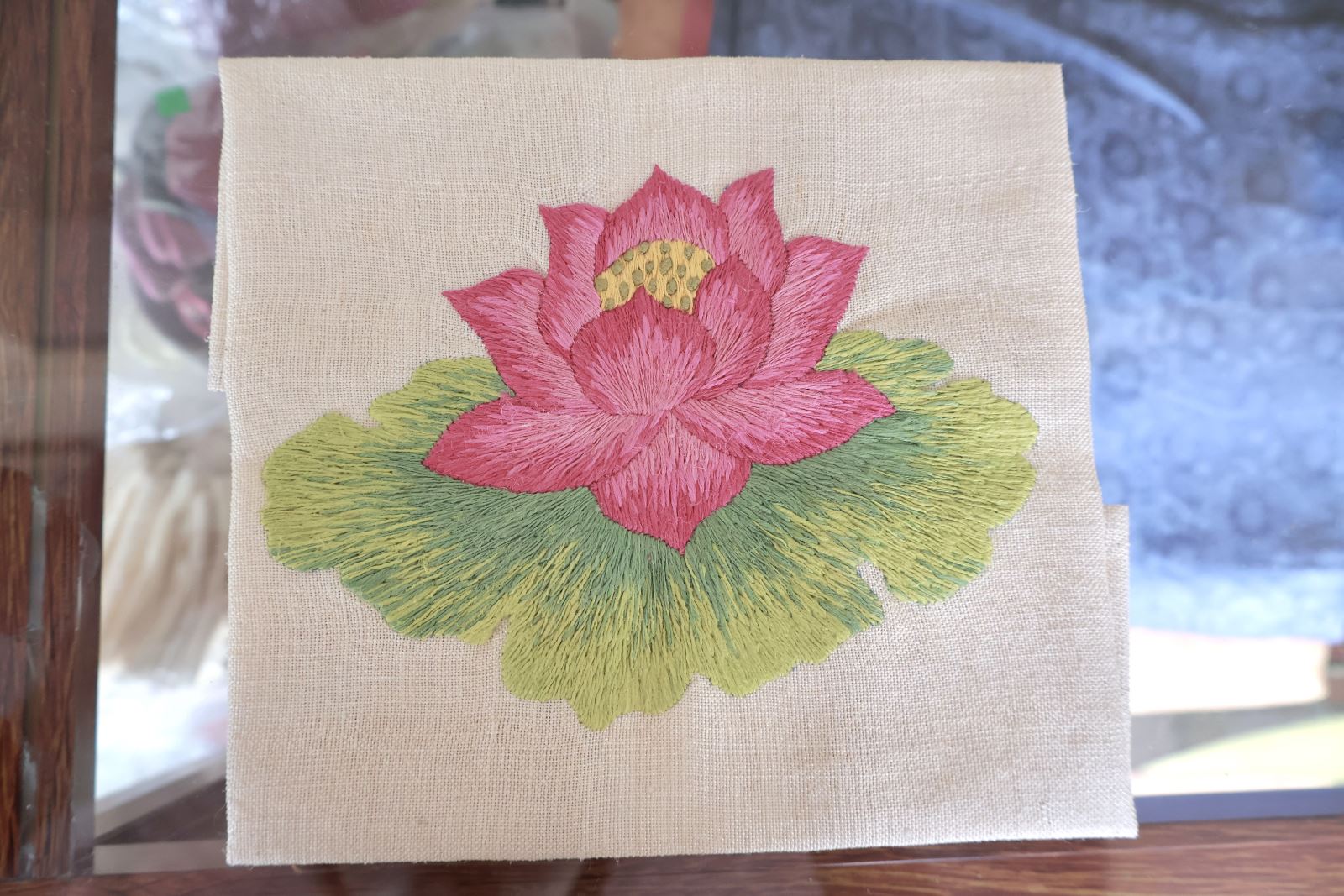
The lotus-shaped scarf is hand-woven from silk threads extracted from lotus stems.
According to artisan Phan Thi Thuan, what motivated her to pursue lotus silk weaving was not only the novelty of the material, but also its potential to create additional livelihoods for people using materials that are typically discarded after each lotus harvest.
Ms. Thuan said: "Even the smallest scarf requires thousands of lotus stems. Making lotus silk requires a great deal of patience because each step must be done carefully. But once it's done, the discarded lotus stems can be transformed into valuable products, providing people with more jobs and income."
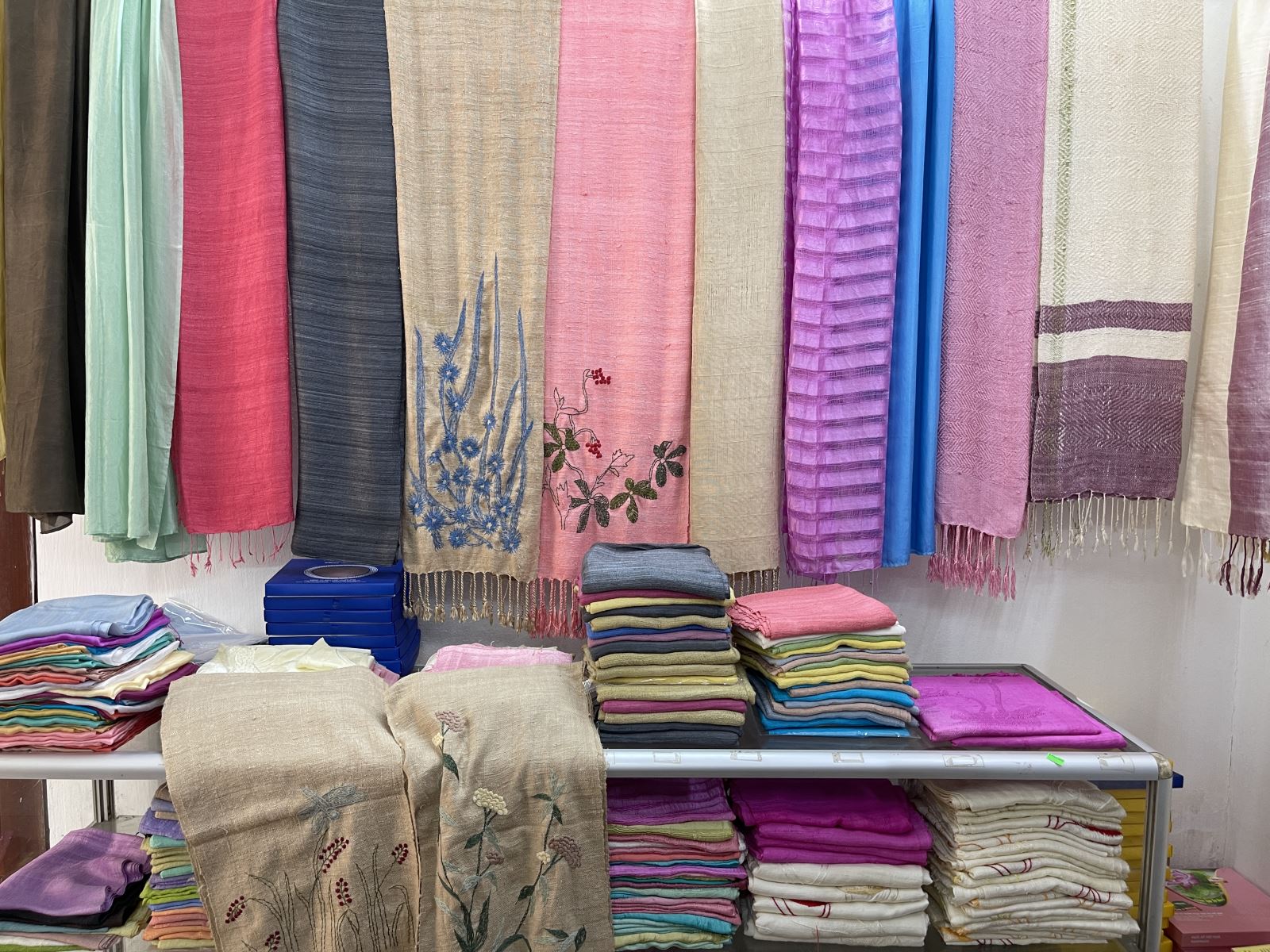
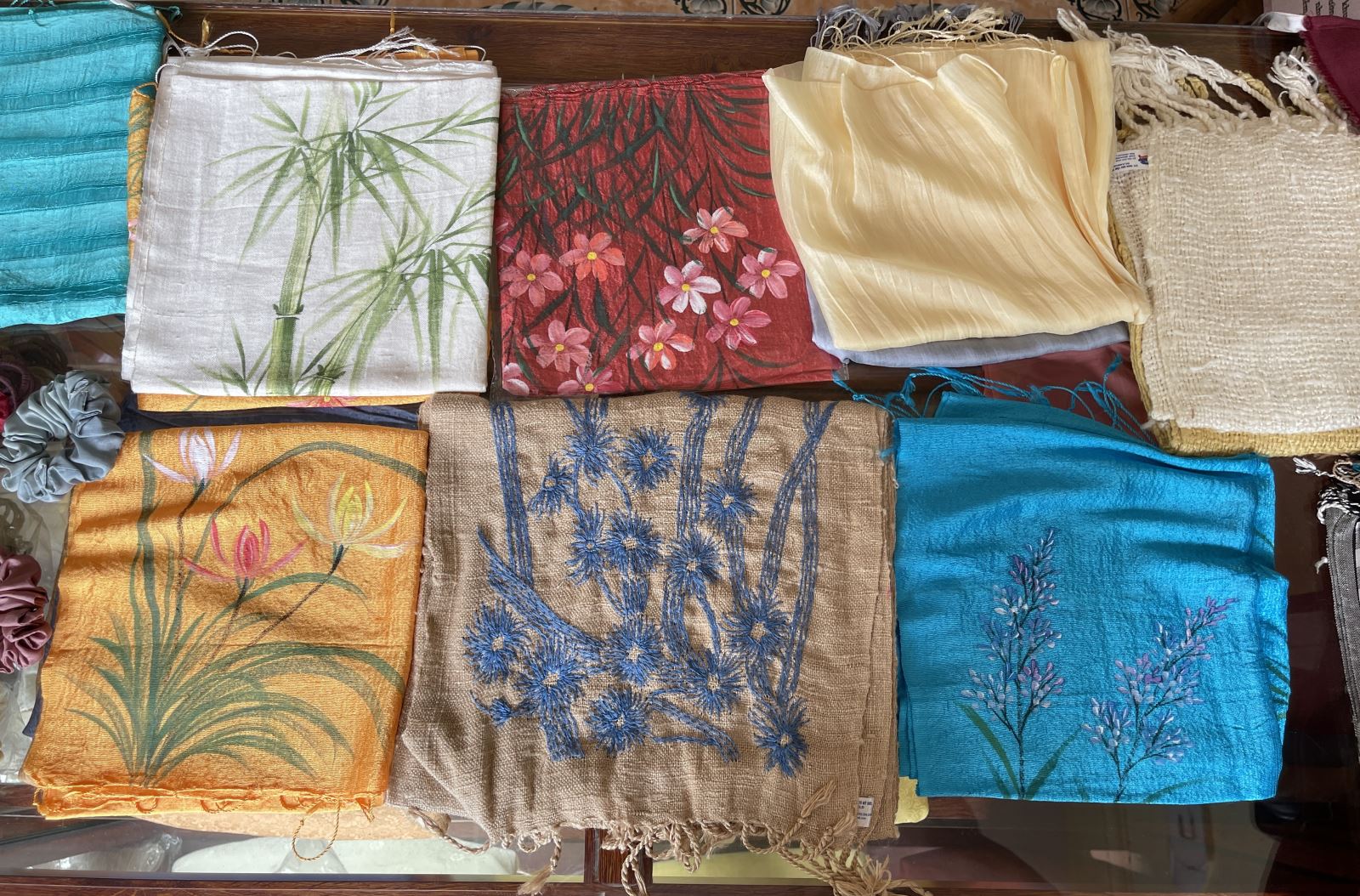
Many products made from silk and lotus silk come in a wide variety of colors and designs.
If the raw material area is cultivated cleanly and organically, the lotus stems will be softer, have more fibers, and be easier to extract. Therefore, lotus silk production is not only related to the weaving process but also to the story of sustainable agricultural production.
From lotus stems that were often left abandoned in the fields, the artisan saw the potential to create a new direction for the traditional craft.
Preserving traditional crafts by creating new value for the craft village.
The family of artisan Phan Thị Thuận has been involved in silk weaving in Phùng Xá for many generations. The craft once provided employment for many villagers, from mulberry growers and silkworm breeders to silk weavers and artisans.
However, the biggest challenge today is how to encourage young people to continue pursuing traditional crafts in the context of the rapid development of many new industries. As the market changes quickly, many young workers choose jobs with more stable incomes instead of persevering with crafts that require time and meticulous attention to detail.
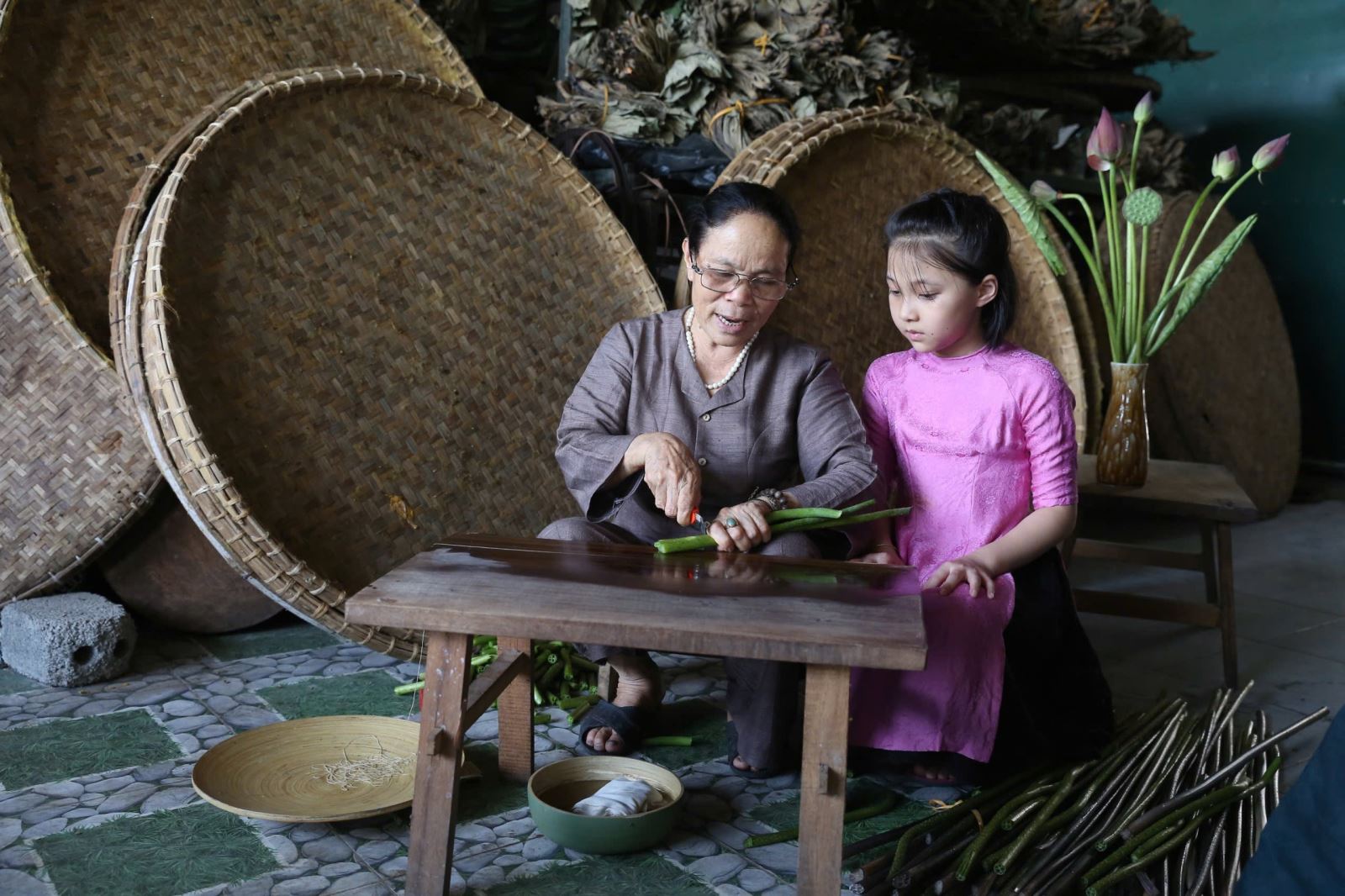
Artisan Phan Thị Thuận is passing on her silk weaving skills to the next generation.
Artisan Phan Thi Thuan said: "To preserve a craft, first and foremost, it must be able to create economic value. When products have a market, are applicable, and generate stable income, young people will have the motivation to continue pursuing the craft."
Therefore, product innovation, finding new applications, or creating added value from local materials becomes essential for the long-term survival of the craft village.
For many years, she has continued to guide local people on how to extract lotus fibers, process silkworms, and weave silk. For her, passing on a craft requires first and foremost ensuring that those practicing it understand the value of the products they create, as well as seeing the potential for development from this traditional craft.
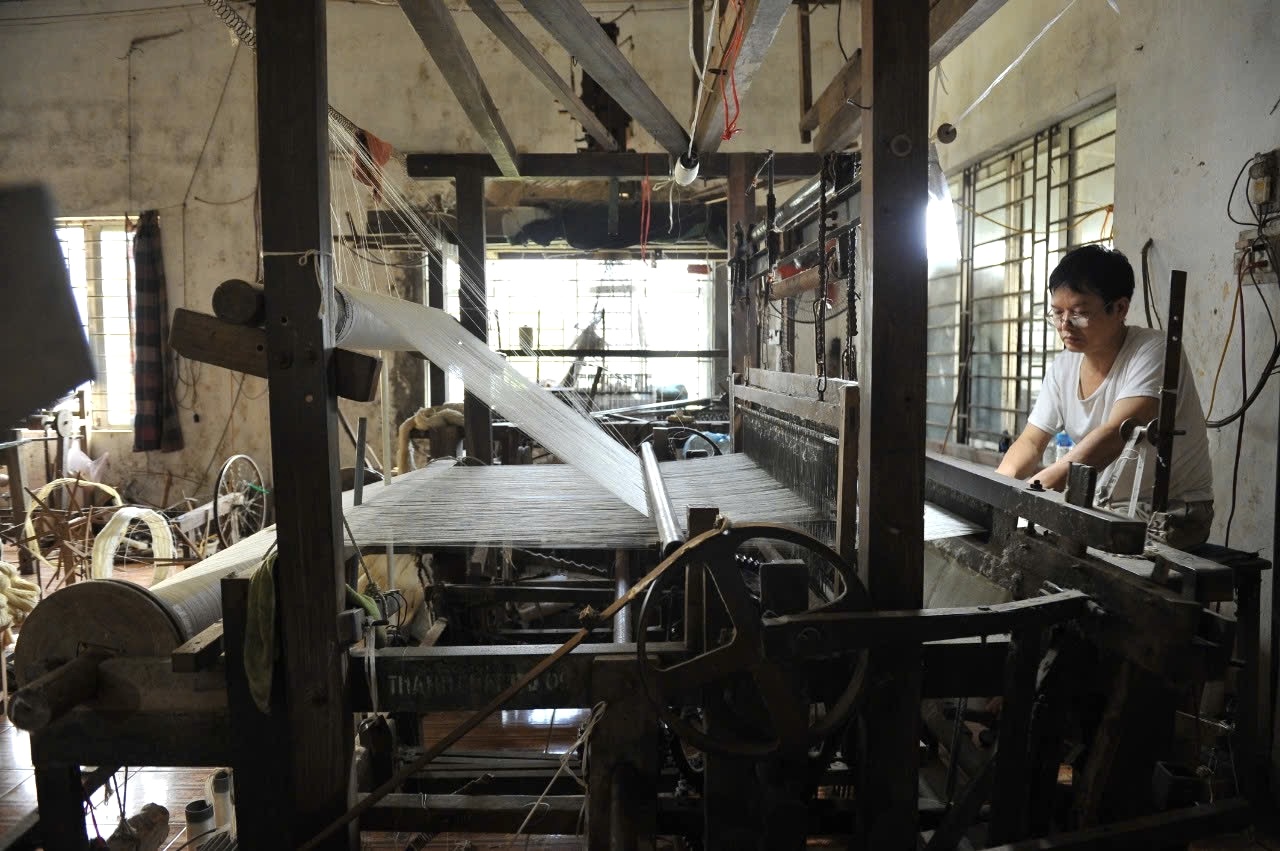
The traditional weaving craft is being preserved and developed by the descendants of the family.
"When people want to pursue a profession, they need to see if the product has value, what kind of income it can generate, and how it benefits their lives. When young people see that the profession has a future, they will want to commit to it," Ms. Thuan confided.
Beyond simply creating handcrafted products, artisan Phan Thị Thuận's experiments demonstrate an effort to find a new direction for the craft village in the modern context.
From the mats for silkworms to weave on to the silk threads pulled from lotus stems, her journey shows that for traditional crafts to survive, sometimes artisans must dare to step outside the familiar paths to create new value for their own village.
Source: https://baotintuc.vn/anh/nghe-nhan-phan-thi-thuan-sang-tao-loi-di-moi-cho-nghe-lua-20260518201726451.htm












![[Photo] Preserving the craft of making embroidered "liền hài" shoes in a highland village in Dien Bien](https://vphoto.vietnam.vn/thumb/402x226/vietnam/resource/IMAGE/2026/05/21/1779378943487_anh-giu-nghe-lam-g_7154_1779161513.jpeg)















































































Comment (0)