

The journey to find ways to upgrade tools and machinery for making earthenware pots .
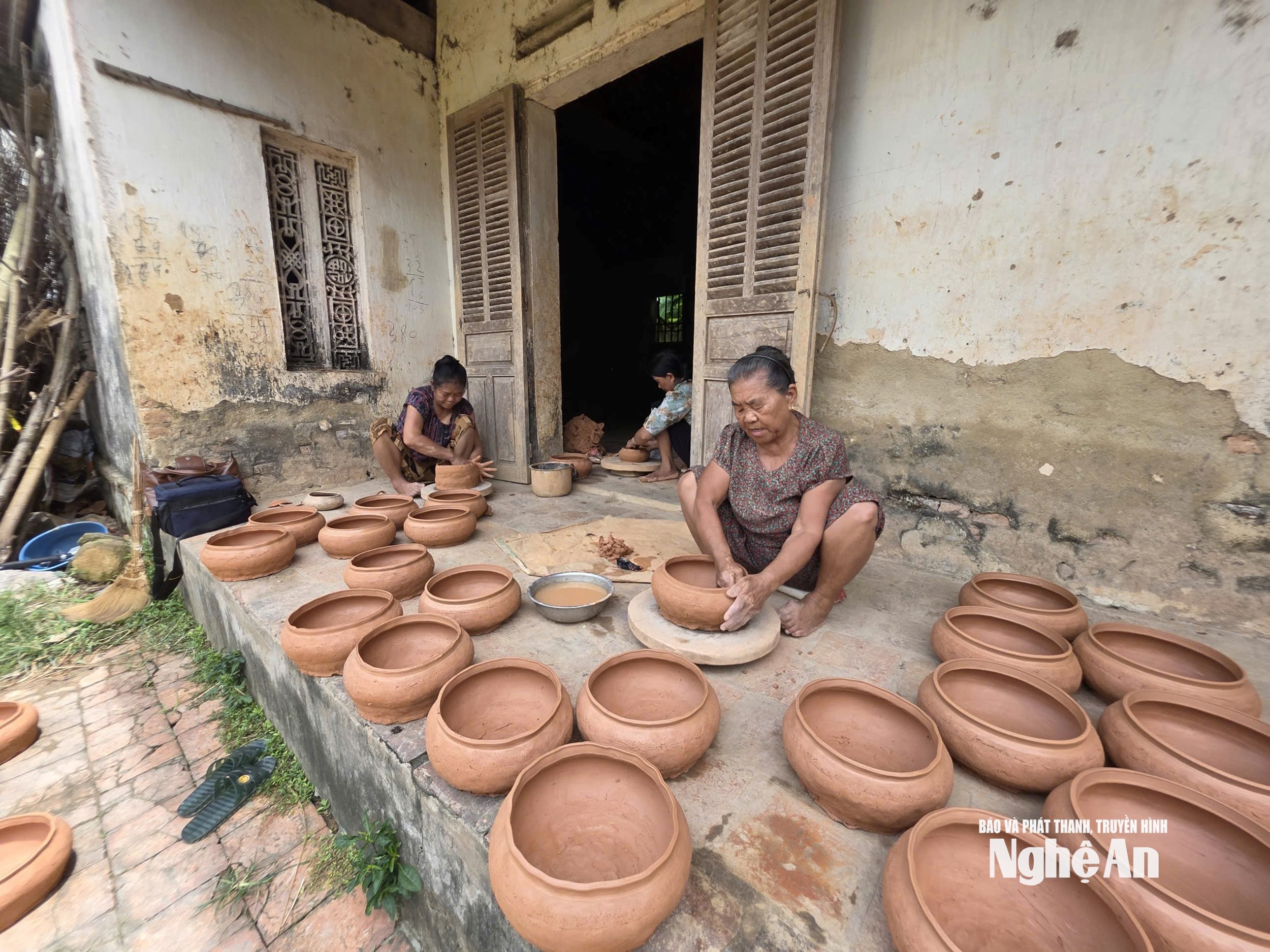
The Tru Son pottery village (formerly Tru Son commune, Do Luong district), now Bach Ha commune, once had a period where almost every household was involved in the craft. However, over time, the number of households still dedicated to the craft has dwindled.
According to Mr. Nguyen Cong Minh, Head of the Culture and Information Department of Bach Ha Commune People's Committee, currently only over 20 households in the entire locality are still engaged in the pottery making craft. In Hamlet 6, the number has decreased from hundreds of households to only about 20. In Hamlet 4, where 100% of households previously practiced the craft, only one household, that of Mr. Le Xuan Hai, continues production.
Hai's entrepreneurial story didn't begin with easy beginnings. In 2014, while nearing completion of his Japanese language course in preparation for working in Japan, Hai happened to watch the program "Born from the Village," which featured people who built their businesses using their hometown's heritage. The program inspired and motivated the young man.
In particular, the image of the dedicated artisan reviving the pottery of his hometown in the program touched the heart of the people of Tru Son, causing Hai to decide to abandon his plans to go abroad and stay in his homeland. However, determination alone is not enough.
In 2017, Hai opened his first workshop with the intention of making clay pots using traditional handcrafted methods. However, after only 10-15 days of operation, the workshop had to close down because he couldn't find enough workers.
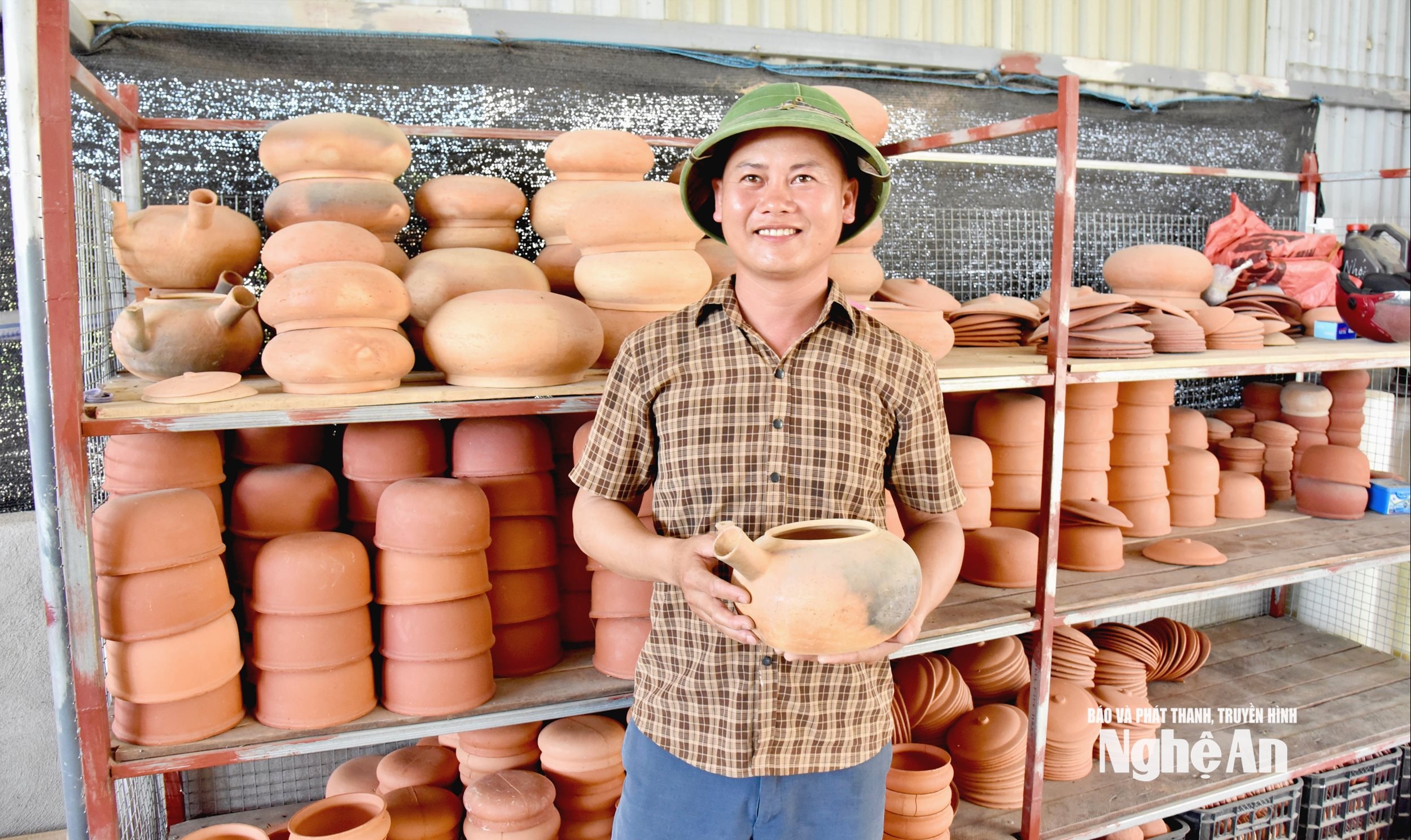
"I invested in setting up a workshop with the intention of hiring workers to make earthenware pots, but at that time, almost no one was interested in the craft anymore. The households that used to do the craft had all switched to other jobs with higher incomes," Hai shared.
After his initial failure, Hai returned to studying Japanese and worked as a truck driver to accumulate capital. However, his intention to return to the pottery making profession never faded.
In the process of searching for a new direction, Hai realized that if he continued to work entirely by hand, productivity would be low, products would be inconsistent, and it would be difficult to meet the increasingly high demands of the modern market.
For nearly 10 years (from 2014 to 2023), Hai traveled extensively to find solutions to the problem of tools and production techniques. He went to Huong Canh (Vinh Phuc), Phu Lang (Bac Ninh), Bat Trang ( Hanoi ), and even visited pottery workshops in Ho Chi Minh City to learn from their experience.
In Bat Trang, Hai brought clay from Tru Son to try casting molds and firing products. Through this practical process, he realized that the clay from his hometown was softer and more pliable than the clay from the North, so he couldn't use the existing molds.
"Some molds had to be reshaped many times, and in others, we had to add more clay to get the desired product," Hai recounted.
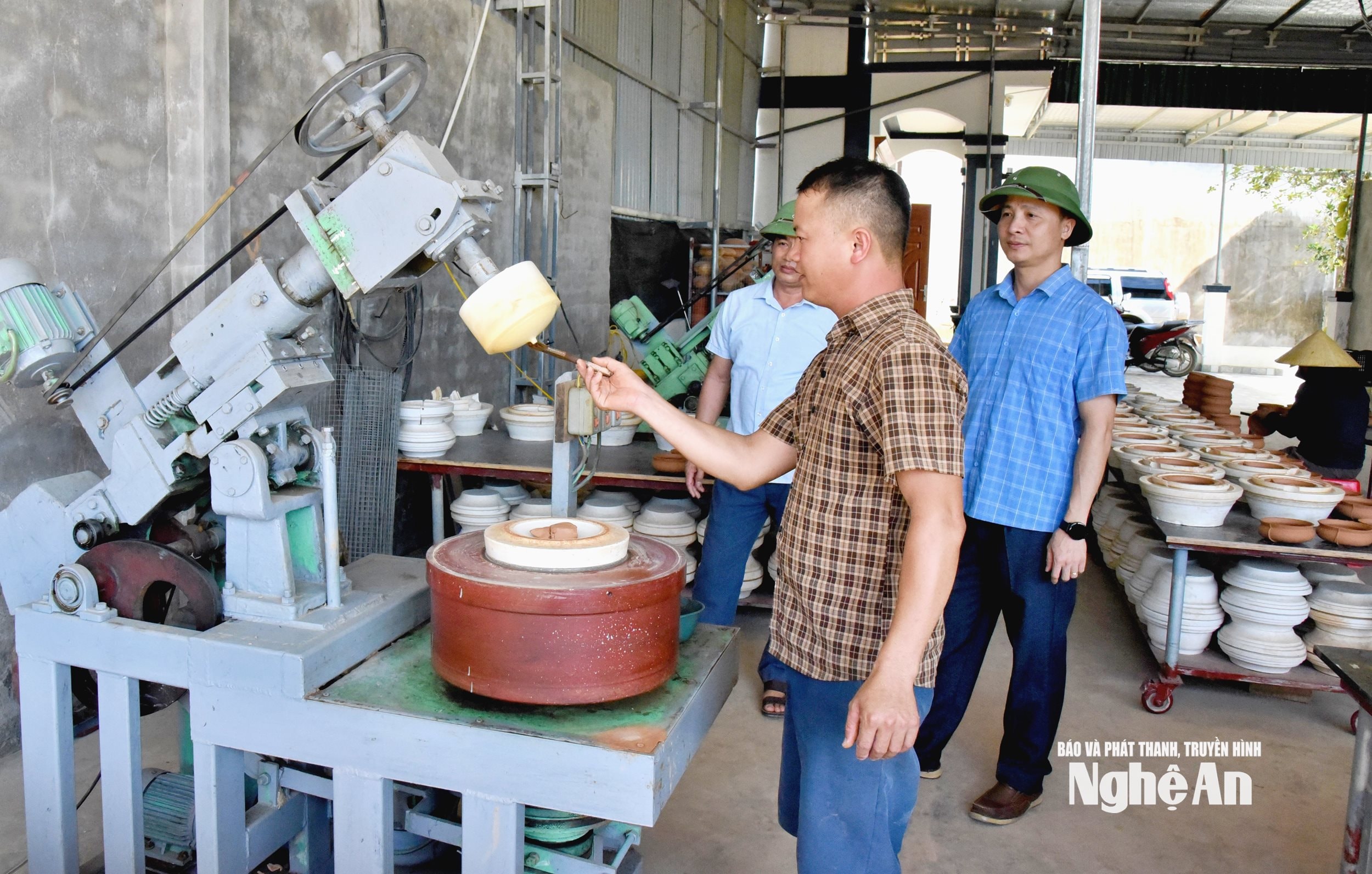
Besides studying molds, Hai also spent a lot of time researching machinery. He realized that hydraulic presses could replace manual labor while maintaining product quality. However, commercially available machines were not suitable for the size and characteristics of Tru Son clay pots.
To create a truly authentic Tru Son clay pot, Hai had to redesign many machine parts and create his own unique plaster mold system. After years of research, his mechanized clay pot production model gradually took shape.
Integrating technology into traditional crafts.
After a long period of preparation, by the end of 2023 and the beginning of 2024, Hai and his wife's workshop began operating steadily. Inside the workshop, the previously purely manual work is now replaced by a system of hydraulic presses, clay grinders, and electric kilns.
According to Mr. Hai, after the clay is finely ground and mixed into a pliable paste, it is placed into a plaster mold to be pressed and shaped. A rough product can be completed in about 30 seconds.
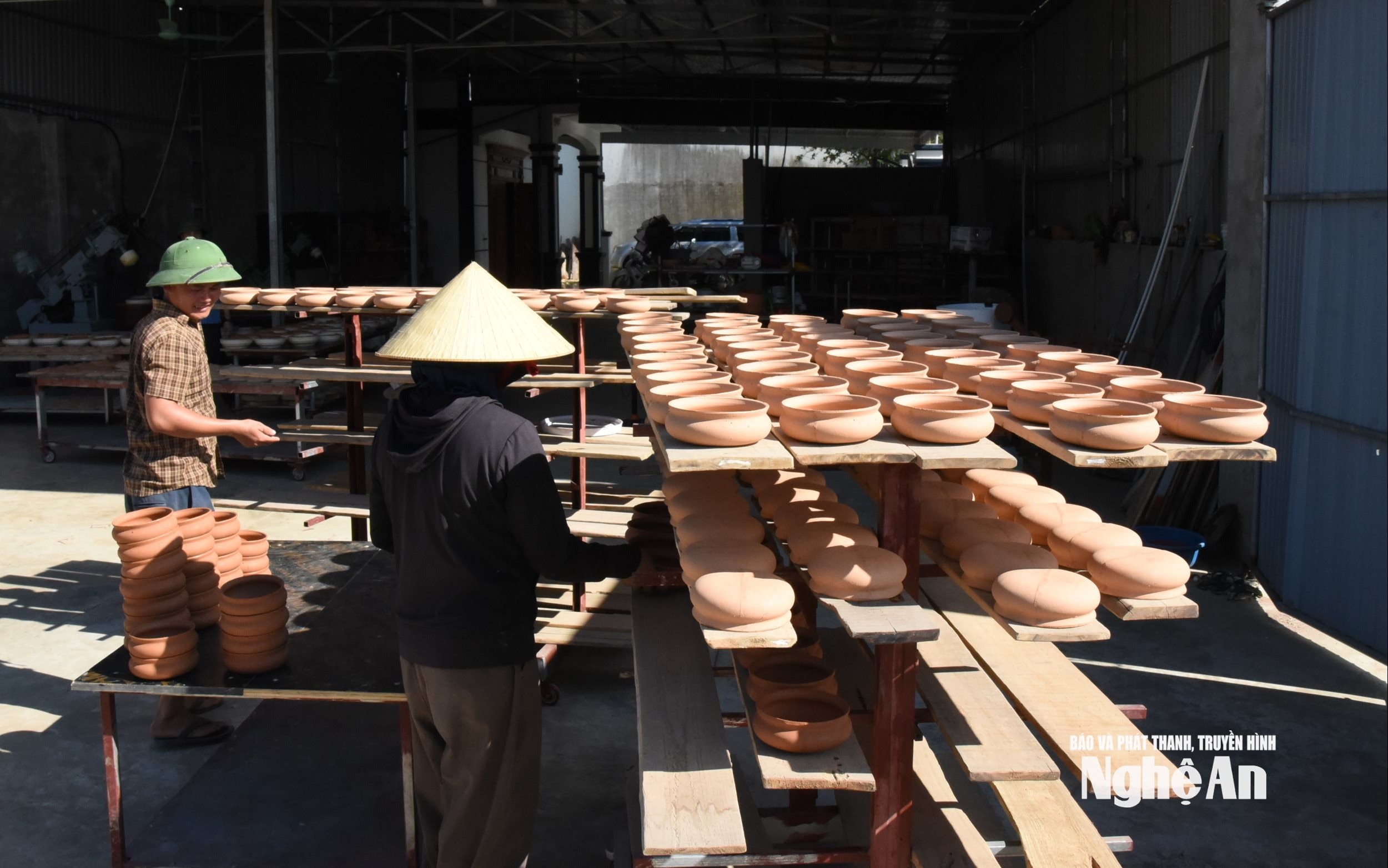
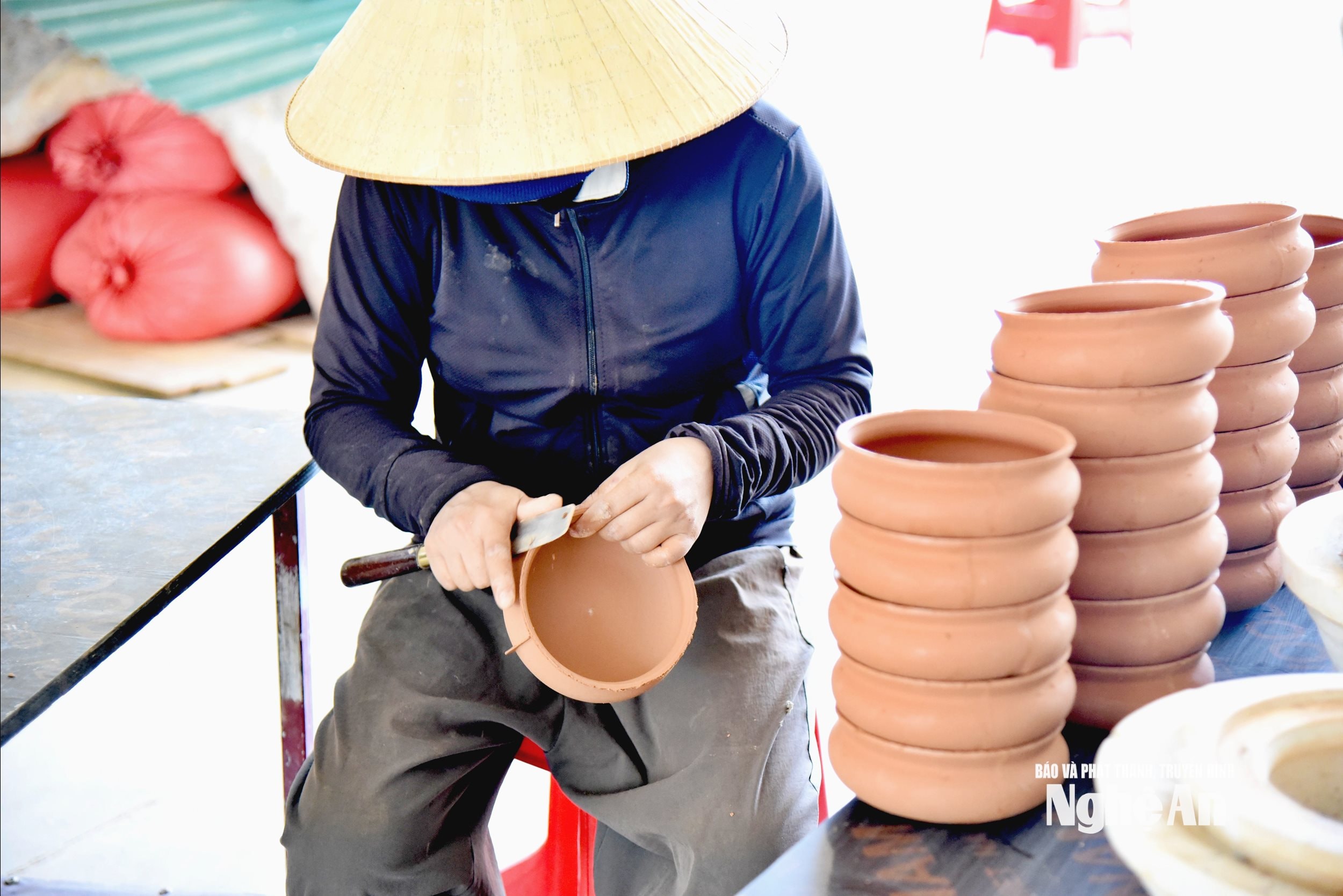
"The process remains the same as the traditional method used for generations. After grinding and fermenting the clay to the desired softness, it is put into a mold for pressing. After pressing, we have to wait about 15-30 minutes for the gypsum to absorb some of the water. At that point, the pot will shrink and easily separate from the mold, ready to be taken out to dry in the sun," Mr. Hai explained.
Thanks to the use of machinery and plaster molds, the production process is significantly shortened, the products are more uniform, and reliance on manual labor is reduced. With about 40 sets of molds currently available, on sunny days, Mr. Hai and his wife can rotate through production to make 80-100 products per day.
Currently, the factory mainly produces small pots for stewing fish, meat, and other household products.
One of the biggest changes was the switch to electric kilns instead of traditional wood-fired or gas kilns. After experimenting with gas kilns but finding the operating costs high, Mr. Hai decided to invest in an electric kiln system, despite the difficulties in bringing electricity to the production facility.
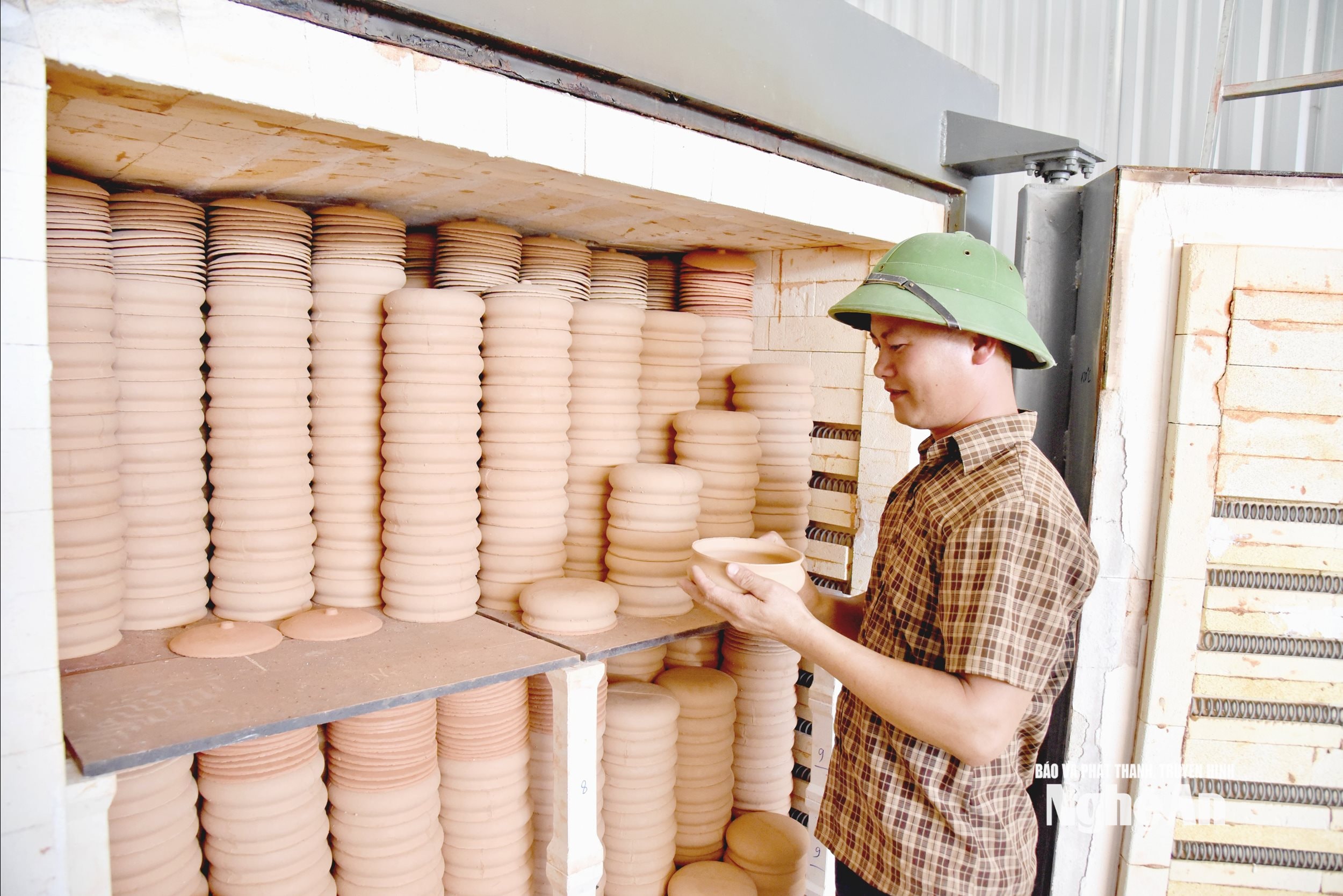
According to Mr. Hai, electric ovens help to control the temperature more stably, reducing the risk of undercooking or cracking. As a result, the finished clay pots have better sealing, durability, and water resistance.
Not only did he change the production method, but Mr. Hai also proactively sought out markets for his products. He personally brought clay pots to introduce them to restaurants and eateries in the former Vinh City area and the former Anh Son district.
Thanks to consistent quality, the workshop's products have gradually gained customer acceptance and are now mainly produced to order.
Although he modestly calls his products "ordinary household goods," Mr. Hai is gradually researching and developing more aesthetically pleasing products such as incense burners and decorative ceramics, which he learned from Bat Trang, in order to expand his market.
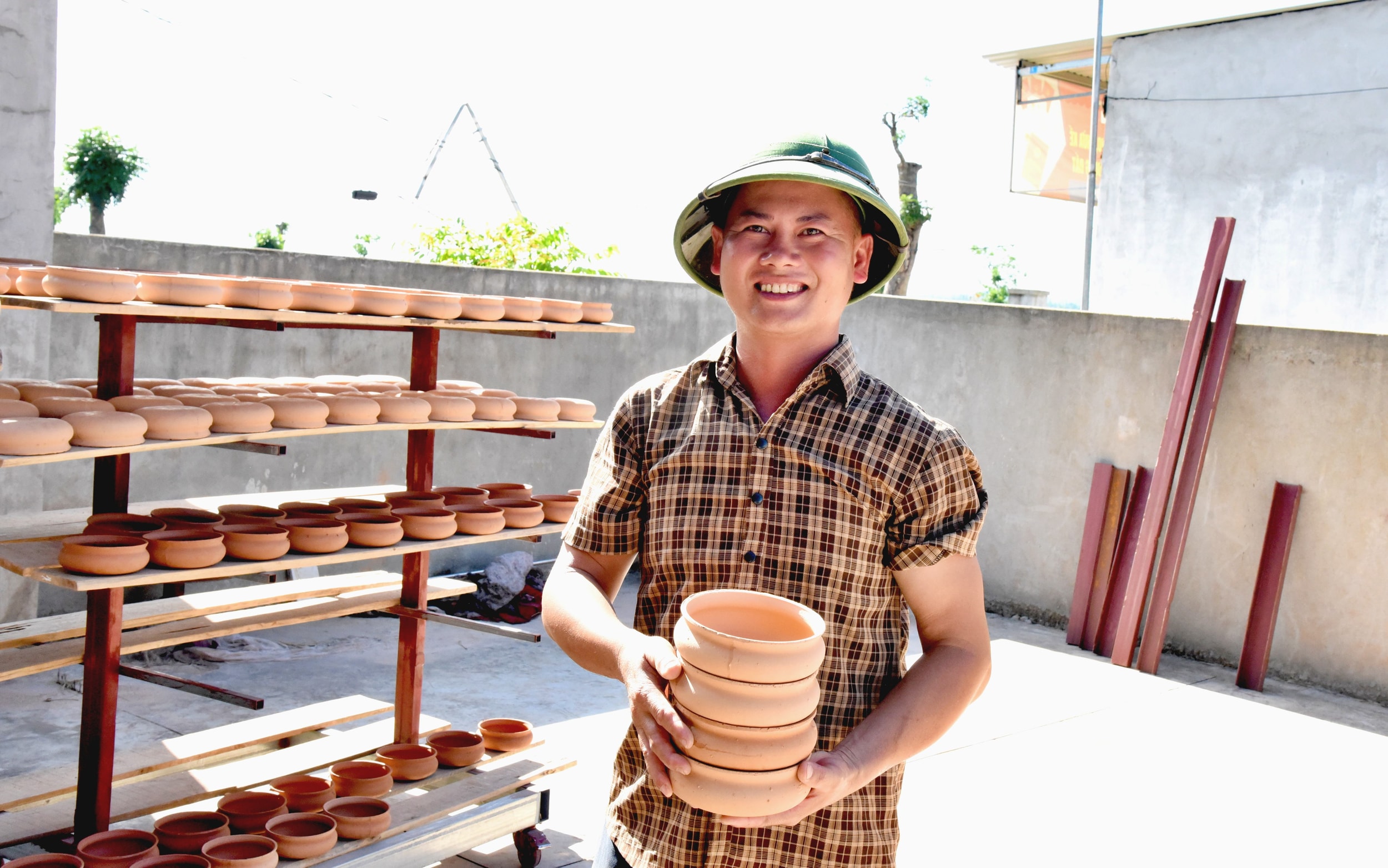
The journey of Mr. Le Xuan Hai, from a young man who once intended to work abroad to the owner of a pottery workshop, shows that traditional crafts do not necessarily have to maintain the old methods to survive. With innovative thinking and the perseverance of young people, the Tru Son pottery making craft is gradually regaining its vitality in a different way - more modern, but still preserving the essence of the village's traditional craft.
Source: https://baonghean.vn/chang-trai-9x-nghe-an-thoi-hon-moi-cho-noi-dat-tru-son-10337944.html
![[Image] Close-up view of the interchange connecting the two expressways and Long Thanh Airport.](https://vphoto.vietnam.vn/thumb/1200x675/vietnam/resource/IMAGE/2026/05/25/1779703378210_ndo_br_z7863716673926-224453a31600126cce10622af6290afd-4549-jpg.webp)

![[Image] Hanoi's urban life under the challenge of a "scorching hot" environment](https://vphoto.vietnam.vn/thumb/1200x675/vietnam/resource/IMAGE/2026/05/25/1779706979265_nang-nong-t5-2026-minh-duy-7-4636-jpg.webp)


![[Photo] Preserving the craft of making embroidered "liền hài" shoes in a highland village in Dien Bien](https://vphoto.vietnam.vn/thumb/402x226/vietnam/resource/IMAGE/2026/05/21/1779378943487_anh-giu-nghe-lam-g_7154_1779161513.jpeg)












































































Comment (0)