

Over time, President Ho Chi Minh 's ideological legacy has shone even brighter with its profound contemporary value, especially in the task of building a contingent of cadres who are both politically sound and professionally competent.
On the occasion of the 136th anniversary of President Ho Chi Minh's birth (May 19, 1890 - May 19, 2026), the Industry and Trade Newspaper interviewed Associate Professor Dr. Truong Ngoc Nam - former Director of the Academy of Journalism and Communication, and former member of the Central Theoretical Council. From the perspective of a long-time researcher and lecturer in political theory, he clearly outlined how to apply Ho Chi Minh's thought to shape the character of journalists, innovate the thinking of the younger generation, and create a culture of dedicated public service wholeheartedly serving the people.
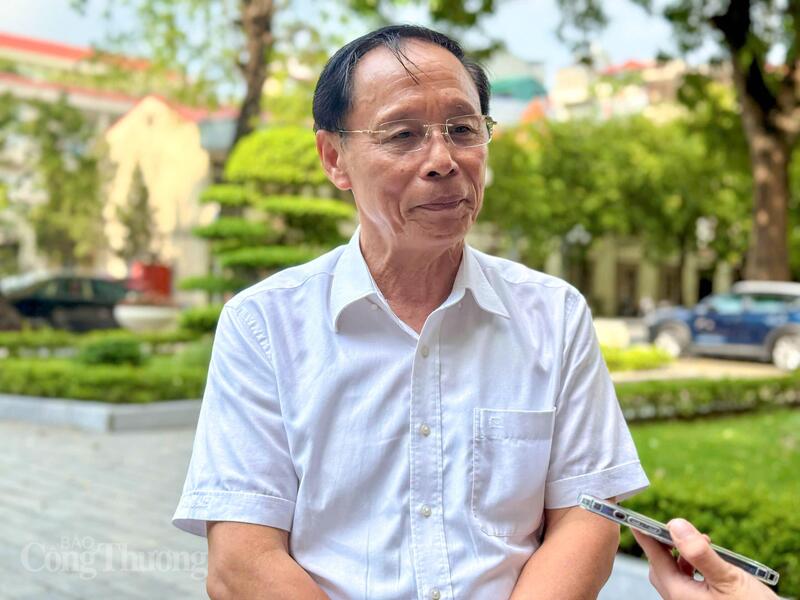
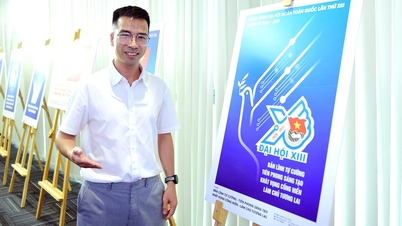
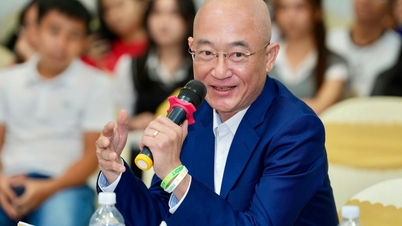
Associate Professor Dr. Truong Ngoc Nam speaks with a reporter from the Industry and Trade Newspaper. Photo: Tran Le
Journalists must maintain both a sharp pen and a pure heart.
- During his lifetime, President Ho Chi Minh always placed special emphasis on the role of those working in ideological, journalistic, and propaganda fields. In your opinion, how should journalists and media professionals apply his ideas today to enhance their political acumen, professional ethics, and social responsibility in a multi-faceted information environment?
Associate Professor Dr. Truong Ngoc Nam : It can be said that, in Ho Chi Minh's thought, the press is first and foremost a force serving ideological work, propaganda, and education . Therefore, journalists not only need professional skills but also must have firm political convictions and impeccable ethics. President Ho Chi Minh highly valued the staff, because, according to him, the quality of the staff determines the quality of the work. For revolutionary journalism, this is even more significant.
What Uncle Ho left behind was a clear requirement for journalists: they must know who they are writing for, what they are writing about, and how they are writing. These three questions, seemingly simple, are actually the fundamental principles of journalism. To write for someone means understanding the public, grasping the needs, level of understanding, and interests of each target group. To write about something means choosing the right issue, at the right time, and addressing the right societal concerns. To write in a certain way means choosing the appropriate form of expression, ensuring accuracy, clarity, appeal, and persuasiveness.
In today's multifaceted information landscape, what journalists need most is to maintain composure and integrity. Information is abundant and flows rapidly, but revolutionary journalism cannot chase sensationalism or emotional biases. In such an environment, journalists must maintain both "sharp pen and pure heart." "Pure heart" refers to a clear, honest mind dedicated to the common good. "Sharp pen" refers to professional competence, the ability to identify issues and present them persuasively.
I believe that learning from President Ho Chi Minh in journalism today means learning how to practice journalism responsibly, with depth and direction. Journalism must both truthfully reflect life and contribute to building social consensus, protecting the ideological foundations of the Party and the State, and spreading positive values within the community.
Building a culture of public service based on the spirit of serving the people.
- In the current period, the demand for building ethical qualities among cadres is increasingly higher, especially in relation to building a public service culture in agencies and units, including the Ministry of Industry and Trade. In your opinion, how should Ho Chi Minh's thoughts on revolutionary ethics and work style be applied to building a cadre that meets the requirements of the new era?
Associate Professor Dr. Truong Ngoc Nam: When discussing the development of public service culture, the first thing we must do is return to Ho Chi Minh's thoughts on the ethics of cadres. He once demanded that cadres and Party members be "diligent, thrifty, honest, upright, and selfless." These are not only general moral qualities, but also the foundation of an honest, responsible, and effective public service.
Furthermore, in Ho Chi Minh's thought, the issue of cadres was always placed in a very important position. He once affirmed: "Cadres are the root of all work" and "the success or failure of all things depends on whether the cadres are good or bad."
Public officials must truly be servants of the people. This means being close to the people, respecting the people, listening to the people, and putting the people's interests above all else. In today's public service culture, this spirit is demonstrated through exemplary work attitudes, appropriate conduct, a high sense of responsibility, and a commitment to resolving issues thoroughly.
For the Ministry of Industry and Trade, this requirement is even more evident because it is directly linked to production, business, goods circulation, markets, energy, and people's lives. A good public service culture within the sector not only helps improve the efficiency of state management but also creates a favorable environment for businesses, promotes economic development, and increases public trust in the government apparatus.
In my opinion, applying Ho Chi Minh's ideology to cadre building in the new era requires focusing on three points. First, cultivating a sense of responsibility and a spirit of service. Cadres must work with the spirit of completing tasks, not just working until the end of the shift, doing things thoroughly and without shirking or avoiding responsibility. Second, promoting the spirit of innovation and improvement in work. Uncle Ho always demanded that cadres constantly learn and always seek ways to work better and more efficiently. In the context of digital transformation, this means quickly adapting to new technologies, improving digital capabilities, and adopting modern working methods. Third, setting an example in performing duties. The more exemplary the leaders are, the more widespread the culture of public service will be.
It can be said that building a public service culture according to Ho Chi Minh's ideology begins with very specific things, such as punctuality, adherence to procedures, fulfilling responsibilities, appropriate conduct, and dedication to service. When these things become ingrained in the thinking and actions of each official, the system will operate more efficiently and the people's trust will be more firmly consolidated.
Bringing President Ho's ideology closer to young people.
- After many years of research, teaching, and management in the field of political theory, what do you think are the areas that need further innovation in the education and dissemination of Ho Chi Minh's ideology so that learning from and following him truly goes deeper, creating clear changes in the awareness and actions of the younger generation?
Associate Professor Dr. Truong Ngoc Nam: To make the study and emulation of Ho Chi Minh's ideology, ethics, and style truly effective, we must innovate both the content and methods of propaganda and education. A crucial point is that we shouldn't just present the President's ideas as general principles, but rather make them relatable, vibrant, and capable of being translated into daily actions.
First and foremost, it is necessary to emphasize the exemplary value of President Ho Chi Minh. He is a great example of the unity between words and deeds. To speak of him is to speak of a model personality, simple, humble, yet profoundly insightful. Therefore, propaganda cannot be separated from specific stories, concrete actions, and everyday details that are rich in humanistic meaning. This is a much more powerful way to inspire than simply conveying one-sided theory.
Furthermore, the dissemination of Ho Chi Minh's ideology needs to be closely linked to the practical learning, work, and contributions of the younger generation. Learning from Uncle Ho is not about memorizing slogans, but about learning a sense of responsibility, discipline, a healthy lifestyle, a spirit of service, and a desire to contribute. When these values are transformed into concrete actions, then learning from and following Uncle Ho will truly have depth.
The current reform of education on Ho Chi Minh's ideology must aim to make young people see that Uncle Ho's thoughts are very close to their lives. From there, the younger generation will understand that every right deed, every effort to improve themselves, every action for the collective and the community is the most practical way to learn from Uncle Ho.
Thank you very much, sir!
| The insights from Associate Professor Dr. Truong Ngoc Nam show that Ho Chi Minh's ideology remains the guiding principle for journalism, for political theory education, and for building a public service culture in the new era. Ultimately, learning from Uncle Ho means learning to work responsibly, live honestly, think for the people, and act for the common development of the country. |
Source: https://moit.gov.vn/tin-tuc/pgs.ts-truong-ngoc-nam-hoc-bac-de-xay-dung-nen-cong-vu-liem-chinh-vi-nhan-dan.html
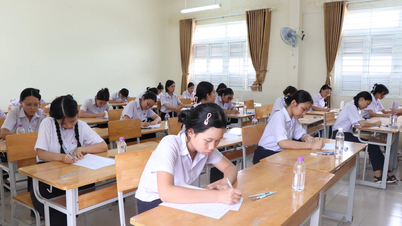
![[Image] Pleasant weather helps students enter the 10th grade entrance exam with confidence.](https://vphoto.vietnam.vn/thumb/1200x675/vietnam/resource/IMAGE/2026/05/29/1780034401612_ngay-1-thi-lop-10-minh-duy-8-5009-jpg.webp)



![[Photo] Ba Lang An Lighthouse - the "eye of the sea" amidst the "rock museum" of Quang Ngai province.](https://vphoto.vietnam.vn/thumb/1200x675/vietnam/resource/IMAGE/2026/05/29/1780038698840_anh-man-hinh-2026-05-29-luc-14-10-42.png)






















































Comment (0)