This change is not simply a technical adjustment. For Vietnamese businesses, especially in the coffee, wood, rubber, and processed agricultural product sectors, the EUDR is becoming a major test of their supply chain management capabilities, data digitization levels, and ability to meet next-generation sustainable development standards.
From paper-based control to data-driven control.
In the latest update, effective from May 4, 2026, the EU continues to emphasize the goal of reducing administrative procedures for businesses, especially small and micro-enterprises in the initial stages of production. Several new mechanisms have been introduced, such as simplifying accountability declarations and allowing businesses to form cooperatives or industry associations to fulfill compliance obligations.
The EU also expanded the scope of products to which the EUDR applies, adding instant coffee and palm oil derivatives—items assessed as posing a risk related to deforestation in many producing countries.

However, it is noteworthy that the EU has only reduced administrative procedures, not loosened control standards. On the contrary, requirements for traceability and data transparency are being tightened.
According to the new regulations, all products exported to the EU must demonstrate that they were not produced on land where deforestation occurred after December 31, 2020, and are not related to forest degradation. More importantly, the EU requires traceability down to the geolocation, meaning each shipment must accurately identify the source of the raw materials using GPS data, digitized maps, and satellite imagery.
This is considered a fundamental shift. Previously, businesses could prove their products through paper documents or certified growing areas; now, the control mechanism shifts to verification using digital data and technology. This means that traceability is no longer a encouraged requirement, but a mandatory condition for accessing the EU market.
Businesses face pressure to restructure.
The EUDR is projected to have a profound impact on many of Vietnam's key export sectors, such as coffee, wood, and rubber. The biggest pressure lies in the fact that much of Vietnam's agricultural supply chain still operates on a fragmented model, with procurement going through multiple layers of intermediaries.
For many years, the "bulk purchasing" model helped businesses optimize costs and rapidly expand their raw material sourcing areas. However, with the EUDR, this model is revealing clear limitations as the EU requires transparency throughout the entire product journey, from the production plot to the processing plant and export.

This leads to a sharp increase in compliance costs. Businesses are forced to invest in traceability systems, GPS data, electronic records, ESG management, and supply chain control tools. In particular, the pressure will fall heavily on small and medium-sized enterprises, cooperatives, and smallholder farmers, which account for a large proportion of Vietnam's agricultural supply chain.
The biggest risk is not just losing orders, but the possibility of being excluded from the EU supply chain if standardized data requirements are not met.
From a business perspective, the EUDR is also forcing exporters to change their development mindset. Competitiveness now lies not only in price or production volume, but also in the ability to control raw material sources, ensure data transparency, and manage the supply chain according to international standards.
The new competition will be in data and transparency.
It is noteworthy that the EUDR is no longer simply a technical regulation on deforestation prevention. This regulation is creating a strategic shift in the entire development model of Vietnamese export businesses.
First, businesses will be forced to restructure their supply chains towards directly controlling raw material sources instead of relying on a network of intermediaries as before. The trend of linking with cooperatives, signing long-term contracts with farmers, and establishing standardized growing areas will become more common to ensure data traceability right from the production input stage.
Secondly, data is becoming a new "competitive asset" for export businesses. In the context of EU control using GPS, digital maps, and satellite data, businesses that possess a transparent, synchronized, and real-time traceability data system for their raw material sources will have a significant advantage in retaining international customers and expanding market share.
This also means that the pressure to invest in technology will increase sharply in the coming period. ERP management systems, traceability platforms, GIS data, electronic logs, and ESG management will gradually become mandatory infrastructure rather than just upgrade options.
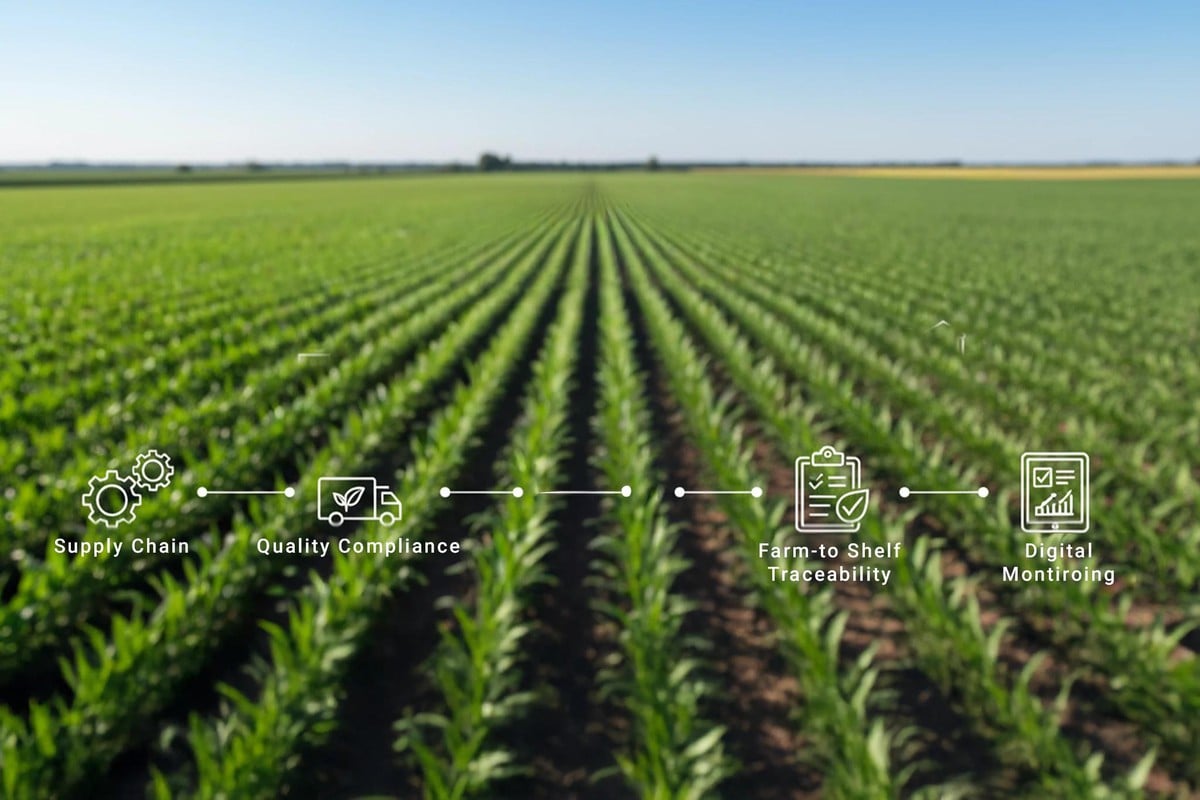
Another strategic impact is the risk of significant divergence within the export industry. Large businesses with stable raw material sources and strong management capabilities will leverage EUDRs to strengthen their position. Conversely, small businesses relying on traditional procurement models may face significant challenges regarding compliance costs and data availability.
Vietnam's classification by the EU as a country with low deforestation levels is considered a significant advantage, especially given that many other exporting countries face higher levels of regulation. However, "low risk" does not mean exemption from compliance obligations. Businesses must still fully demonstrate the legal origin of their materials and meet all EUDR requirements if they want to maintain access to the EU market.
In a context where green standards are increasingly becoming the "passport" to global trade, businesses that proactively digitize data, control raw material sources, and build transparent supply chains will maintain a long-term competitive advantage. Conversely, businesses that are slow to adapt risk being excluded from high-standard markets.
Source: https://phunuvietnam.vn/doanh-nghiep-viet-truoc-phep-thu-eudr-238260527152409905.htm


![[Photo] Standing Committee member of the Party Central Committee Tran Cam Tu working with the Central Inspection Committee](https://vphoto.vietnam.vn/thumb/1200x675/vietnam/resource/IMAGE/2026/05/28/1779969579668_ndo_br_bnd-2495-jpg.webp)

















































































Comment (0)