

The Prime Minister has just issued Decision No. 26/2026/QD-TTg on the set of criteria and procedures for evaluating and classifying One Commune One Product (OCOP) products, effective from May 22, 2026.
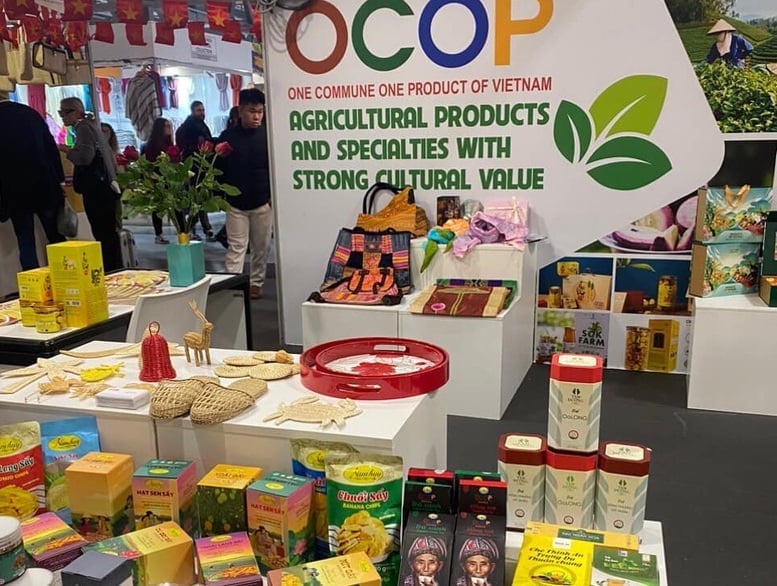
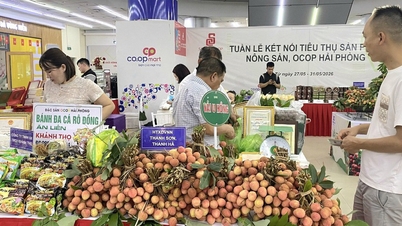
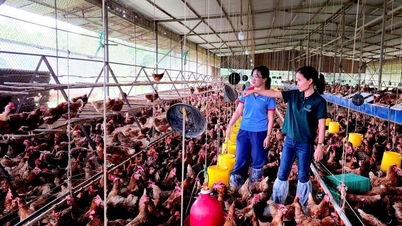
The OCOP product evaluation criteria consist of three parts with a maximum total score of 100 points, including: product and community strength criteria; marketing potential; and product quality. Photo: Do Huong.
Standardize the product evaluation process.
Accordingly, OCOP products are specialty and unique products originating from and bearing the characteristics of a locality (village, commune), produced according to standards associated with traditional cultural values, ensuring food safety, environmental protection and social responsibility, aiming for green and sustainable development, and recognized by state management agencies according to the set of criteria stipulated in this decision.
Products participating in the OCOP product evaluation and classification include six product groups: food; beverages; medicinal herbs and products derived from medicinal herbs; handicrafts; ornamental plants; community tourism services, ecotourism, and tourist destinations. The classification list of products participating in the OCOP product evaluation and classification is included in the Appendix attached to the decision.
Organizations and individuals participating in the registration for evaluation and ranking of OCOP products (OCOP entities) include: cooperatives; cooperative groups; small and medium-sized enterprises; farms, production households, and family businesses with business registration.
For community-based tourism, ecotourism, and tourist destination product and service groups, the following should be added: associations, federations, operating centers, or equivalent organizations.
The OCOP product evaluation criteria consist of three parts with a maximum total score of 100 points, including: product and community strength criteria; marketing potential; and product quality. Specifically:
Part A: Product and Community Strength Evaluation Criteria (40 points), including production organization, product development, and community strength.
Part B: Marketing capability assessment criteria (25 points), including marketing and product story.
Part C: Product Quality Assessment Criteria (35 points), including sensory indicators, nutritional value, product uniqueness, product quality declaration, product quality assurance, usage instructions, and global market opportunities.
The decision also clarifies that OCOP products are classified based on the product evaluation results according to the set of criteria for evaluating and classifying OCOP products. The total evaluation score for each product is a maximum of 100 points and is divided into 5 categories:
5-star rating (national level): Average total score of 90-100 points, representing a distinctive, branded product that meets high quality standards and is eligible for export.
4-star rating (provincial level): Average total score from 70 to under 90 points, a distinctive product, gradually building a brand, meeting quality requirements and having good market access, with the potential to be upgraded to 5 stars.
3-star rating (provincial level): Average total score from 50 to under 70 points, the product has unique characteristics, consistent quality, stable management and commercialization, and can be upgraded to 4-star rating.
2-star rating: The average score is between 30 and under 50 points, indicating that the product is in the initial stages of quality development and can be further upgraded to a 3-star rating.
1-star rating: Average score below 30 points, indicating an early, uncommercialized product; eligible for an upgrade to 2 stars.
Increase post-inspection and tighten OCOP quality control.
The decision clearly defines the responsibilities of the People's Committees at the commune and provincial levels, as well as the Ministry of Agriculture and Environment, throughout the entire process of receiving applications, evaluating, classifying, issuing certificates, and inspecting and monitoring OCOP products.
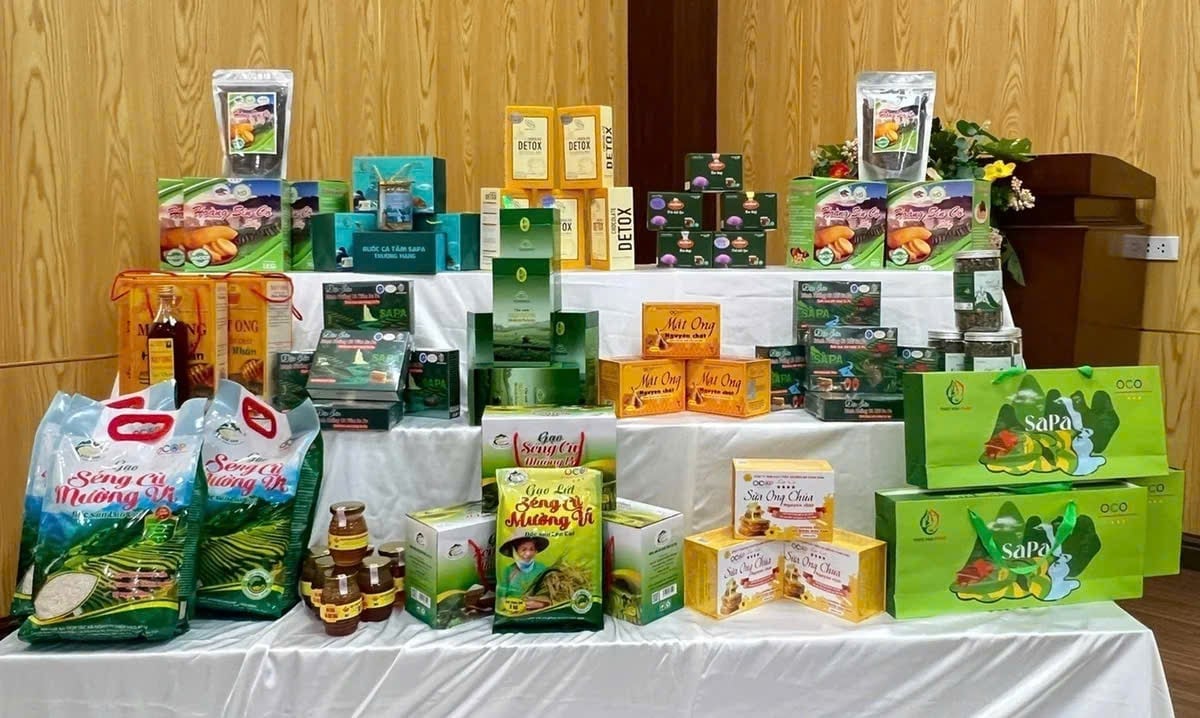
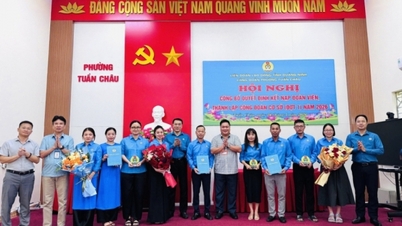
Provincial People's Committees organize at least two provincial-level OCOP product evaluations per year; the Ministry of Agriculture and Environment organizes at least two national-level 5-star OCOP product evaluations per year. Photo: Kim Thoa.
Notably, the OCOP certificate is valid for 36 months. After this period, businesses must undergo reassessment and reclassification if they wish to continue using the OCOP certification.
The decision also adds provisions for revoking certificates in cases of fraudulent documentation, violations of regulations on food quality and safety, intellectual property, or the cessation of OCOP product production.
According to the new regulations, provincial People's Committees must organize at least two provincial-level OCOP product evaluations per year; the Ministry of Agriculture and Environment must organize at least two national-level 5-star OCOP product evaluations per year.
The issuance of the new set of criteria is expected to contribute to improving the quality and brand value of OCOP products, promoting rural economic development associated with building sustainable new rural areas.
Source: https://nongnghiepmoitruong.vn/chinh-phu-ban-hanh-bo-tieu-chi-ocop-moi-d813591.html

![[Photo] Life on both banks of the river returns to its bustling pace on the day the Long Bien Bridge opens to traffic.](https://vphoto.vietnam.vn/thumb/1200x675/vietnam/resource/IMAGE/2026/05/28/1779949763708_cau-long-bien-minh-duy-7-3610-jpg.webp)
![[Photo] The heat at the fireworks display site on the opening night of the Da Nang International Fireworks Festival 2026](https://vphoto.vietnam.vn/thumb/1200x675/vietnam/resource/IMAGE/2026/05/27/1779889741485_ndo_br_z7872039145157-fecaba5112f39e8352544099d7ef4738-5140-jpg.webp)



































































































Comment (0)