

Switch from raising chickens to raising French pigeons.
In Giap Son village, Cam Ly commune, Bac Ninh province, the French pigeon farming model of Mr. Nguyen Duc Son (born in 1976) and his wife, Ms. Vu Thi Lien (born in 1983), is considered a new direction in the development of household economics in the locality. Having previously been involved in chicken farming, Mr. Son boldly switched to raising French pigeons, simultaneously applying automatic feeders, egg incubators, and modern care techniques to increase productivity and reduce labor costs.
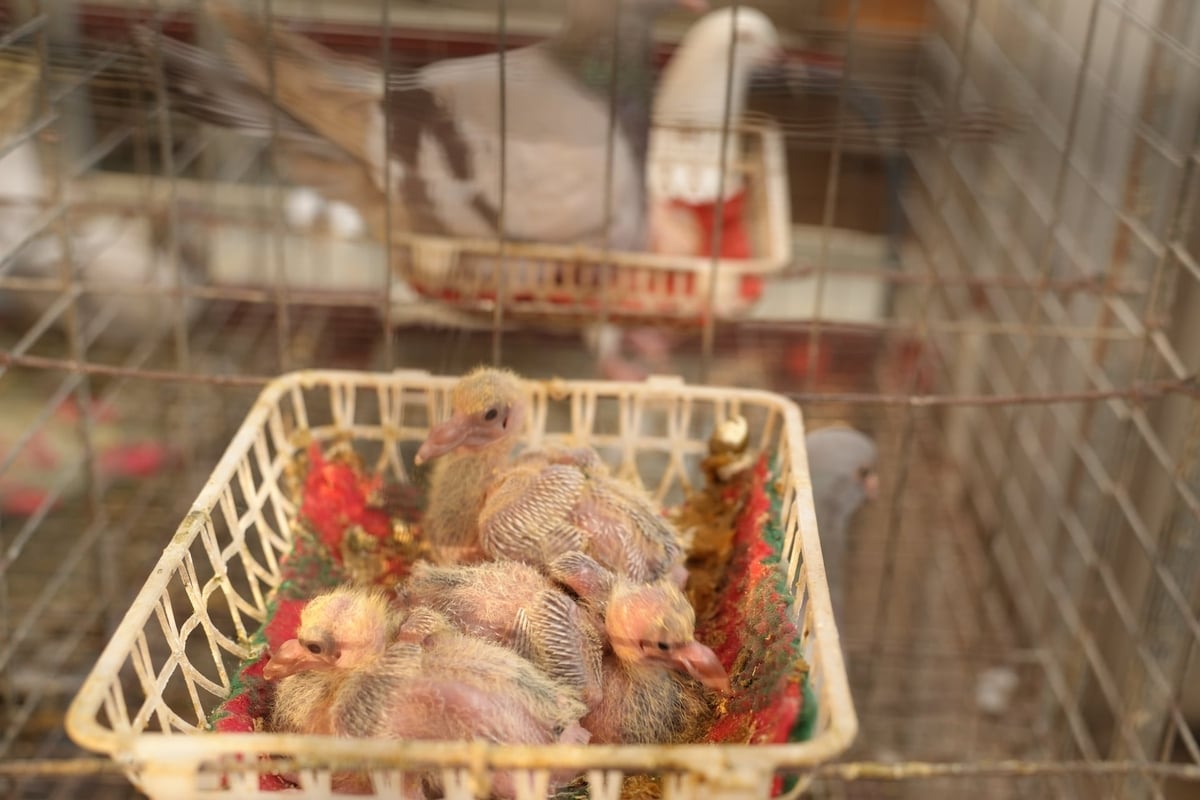
When the chicks hatch, depending on the parenting ability of each pair of birds, they can keep 3-4 chicks per pair. Photo: Pham Minh.
Mr. Son said that before starting to raise French pigeons, his family thoroughly researched the growth and reproductive characteristics of this breed. Besides learning from friends who had successfully raised French pigeons, he also participated in training courses organized by the Department of Agriculture and Rural Development of Luc Nam district (formerly Bac Giang province). From the knowledge gained through these training courses, his family gradually changed their farming mindset, shifting from traditional methods to managing the flock scientifically, becoming more proactive in breeding, disease prevention, and product marketing.
In 2019, Mr. Son started raising French pigeons with 1,000 breeding pairs. At that time, each pair of about 2-month-old breeding pigeons cost 300,000 VND. After a period of learning and gaining experience, his family's farm has now grown to about 3,000 breeding pairs. Compared to Vietnamese pigeons, French pigeons are larger, with commercial birds weighing about 450-500 grams each, suitable for market demand.
What sets Mr. Son's family's model apart is that they don't raise birds entirely manually. He invested in an automated feeding system costing approximately 60 million VND for two bird cages. This system helps distribute feed evenly, reduces waste, and significantly saves on labor costs. According to Mr. Son's calculations, if he hired laborers regularly, the labor costs could reach around 80 million VND per year. Thanks to the automation of some processes, he and his wife can manage a larger flock of birds while still maintaining good control over feed, cage hygiene, and animal health.
Besides investing in feeding machines, Mr. Son's family also uses egg incubators to improve hatching rates and shorten the breeding cycle. Instead of letting parent birds incubate eggs in the traditional way, he collects real eggs and puts them into the incubator, then places artificial eggs in the nest for the mother bird to continue incubating. When the eggs hatch in the incubator, the chicks are returned to the parent birds to raise. This method helps parent birds lay the next clutch faster; if the eggs are removed in time, the birds can lay again in about 10 days. This is a crucial factor in achieving higher yields compared to traditional or manual breeding methods.
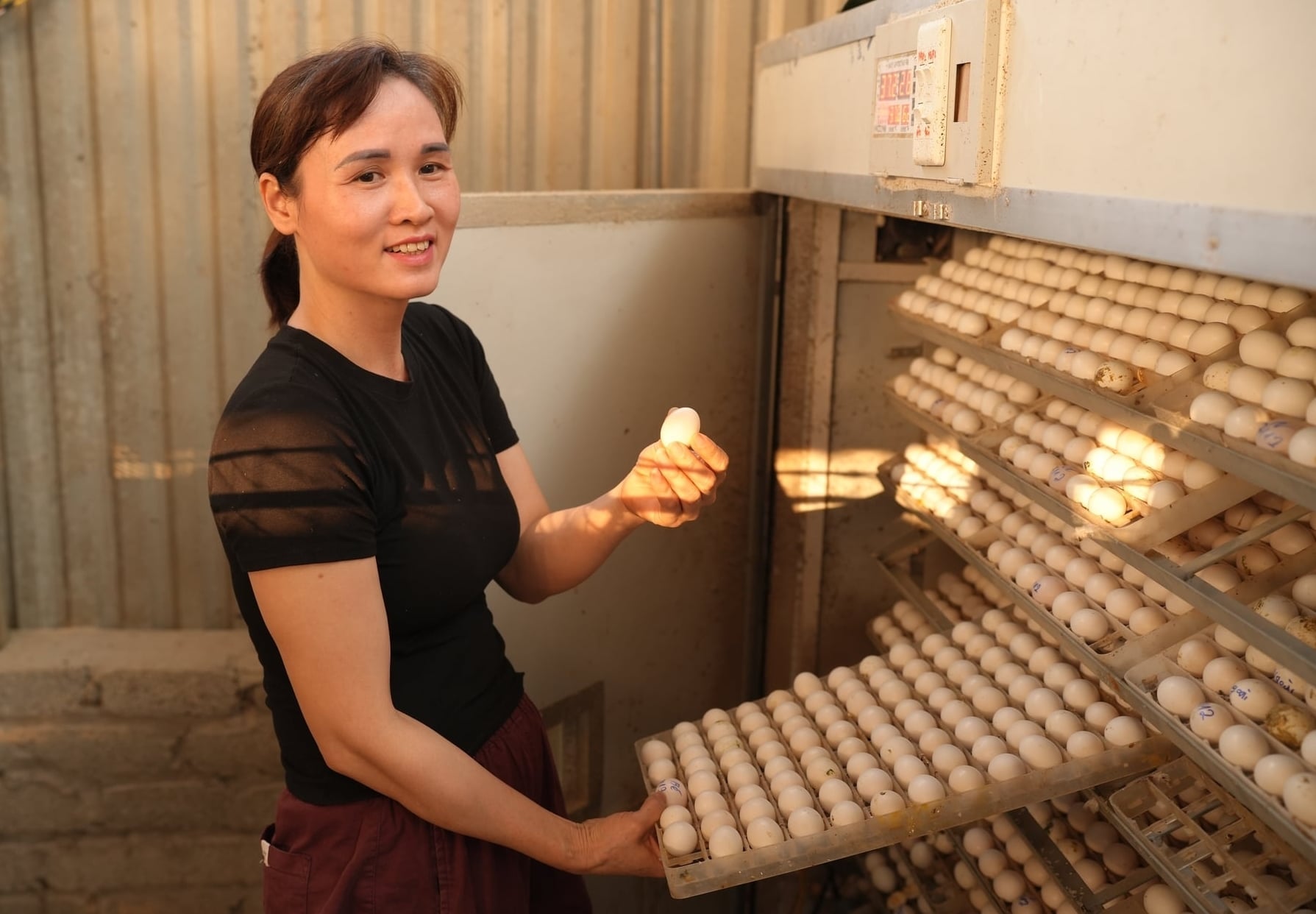
Ms. Lien checks the egg embryos after 3-4 days of being placed in the incubator. Photo: Pham Minh.
Easy to raise, but don't follow the trend.
According to Mr. Son's experience, the most meticulous technical aspects are egg candling, pairing chicks, and caring for young birds. After 3-4 days in the incubator, the eggs are candled to check the embryo. When the chicks hatch, depending on the parenting ability of each pair, 3-4 chicks can be paired. Young birds are raised for about 22-25 days before being sold commercially. The main food consists of corn and barley, with bran making up only a small portion of the diet. His family also administers monthly vaccinations to prevent diseases in the flock.
Currently, Mr. Son's farm sells over 3,000 commercial birds each month. With a selling price of approximately 70,000 VND per bird, the revenue reaches about 210 million VND per month. After deducting feed costs of over 100 million VND, the family earns a profit of about 100 million VND per month. This is a high income compared to many small-scale farming models in rural areas, especially considering the relatively small size of the farm. According to Mr. Son, about 200m² can accommodate 1,000 pairs of birds; his family currently has farm areas ranging from 250m² to over 300m².
To raise French pigeons effectively, breeders cannot simply follow trends. According to Mr. Son, this breed is quite tame and easier to care for than chickens, but breeders must be patient, observant, and have a firm grasp of the techniques. In particular, it is necessary to protect against rats and keep the chicks warm in winter, as newly hatched birds are very susceptible to death if they are not properly insulated by their parents or if the cages do not maintain the correct temperature.
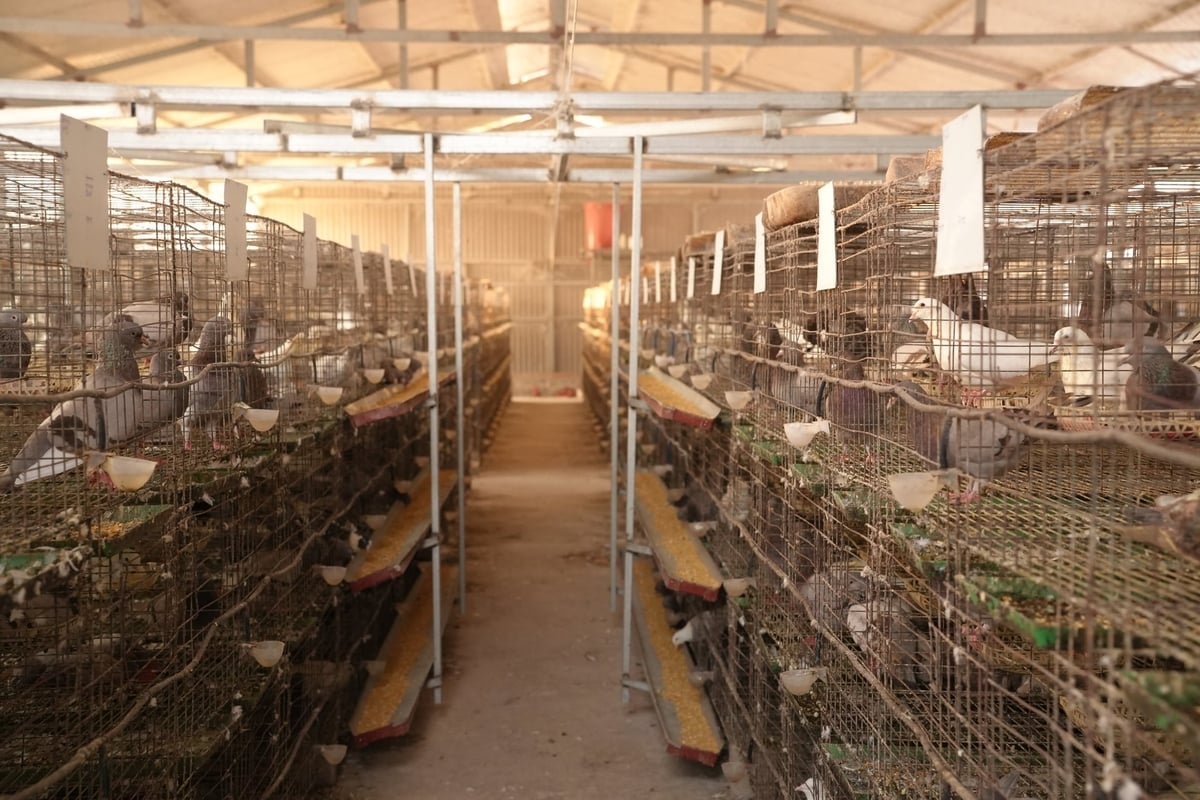
Automated feeding systems help distribute feed evenly, reduce waste, and significantly save on labor costs. Photo: Pham Minh.
Mr. Dang Dinh Tiep, Director of the Cam Ly Commune Public Service Supply Center, said that the French pigeon farming model of Mr. Nguyen Duc Son's family is a clear example of developing household economies based on learning techniques and applying science and technology to production. Based on practical results, the locality has more grounds to encourage people to innovate their livestock farming thinking, choose models suitable to their family conditions, link production with cost savings, and increase income.
The model of Mr. Son and Ms. Lien demonstrates that when farmers know how to access technology, boldly invest in technology, and organize production systematically, household-scale livestock farming can still generate significant economic value. This also provides important inspiration for localities in building effective and sustainable agricultural models.
Source: https://nongnghiepmoitruong.vn/nuoi-bo-cau-phap-thu-tram-trieu-moi-thang-d810290.html




![[Photo] Standing Committee member of the Party Central Committee Tran Cam Tu working with the Central Inspection Committee](https://vphoto.vietnam.vn/thumb/1200x675/vietnam/resource/IMAGE/2026/05/28/1779969579668_ndo_br_bnd-2495-jpg.webp)










































































Comment (0)