

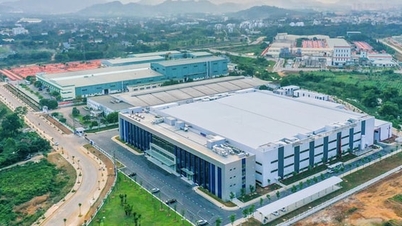
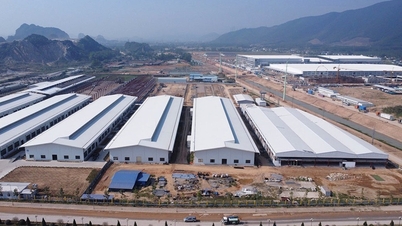
Specifically, 4,054 new projects were licensed with a registered capital of US$17.32 billion, an increase of 20.1% compared to the previous year in terms of the number of projects but a decrease of 12.2% in registered capital. The manufacturing industry had the largest number of newly licensed projects with a registered capital of US$9.80 billion, accounting for 56.5% of the total registered capital. Other sectors such as real estate accounted for US$3.67 billion, or 21.2%; and the remaining sectors accounted for US$3.85 billion, or 22.2%.
There were 1,404 projects that received registration adjustments, with an additional investment capital of US$14.07 billion. Including both newly registered capital and adjusted registered capital from projects licensed in previous years, foreign direct investment in the processing and manufacturing industry reached US$18.59 billion, accounting for 59.2% of the total newly registered and increased capital. The real estate business sector reached US$6.26 billion, accounting for 19.9%; and other sectors accounted for US$6.54 billion, or 20.9%.
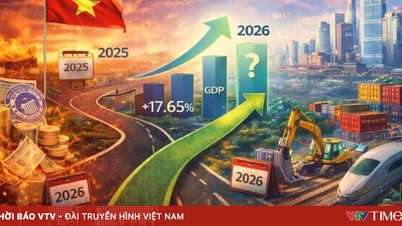
Quantitatively, these results are very encouraging; however, qualitatively, many issues remain to be addressed, most notably the situation of large exports but low retained value. To elaborate on this, an expert cited that the FDI sector contributes approximately 20% of GDP but accounts for over 71% of export turnover and only creates 10% of domestic jobs. Regarding exports, despite reaching a turnover of $500 billion, Vietnam only retains about $100 billion, or 20%. Another issue is export markets. Currently, Vietnam is heavily dependent on the US and EU markets, making its goods vulnerable to tariff barriers and policy changes.
The policy of cooperation and attracting foreign investment to secure capital, technology, management experience, and export markets to serve the cause of industrialization and modernization of the country has been defined and concretized in Party documents since the early stages of the Doi Moi (Renovation) period. However, over the past 40 years of implementation, at certain stages and times, the attraction factor has overshadowed the cooperation factor; in fact, many localities have accepted attracting FDI at all costs. The inevitable consequence is that many projects have not aligned with long-term development plans, causing structural imbalances in development, or projects that have been invested in for decades have continuously reported losses and failed to pay taxes to the state budget.
Therefore, it is time to shift the mindset regarding attracting FDI from quantity to quality in order to obtain projects with spillover effects, positive impacts, and alignment with our country's development strategy. As one expert pointed out, as an equal partner, we have the right to choose, based on our development orientation, high-quality investment projects with good technology that create stronger spillover effects.
To achieve this, the first step is thorough preparation in terms of human resources, infrastructure, and especially institutions. In addition, domestic businesses also need to undertake more significant and decisive "upgrades" because the connection between FDI and domestic businesses has been weak in recent years due to limited technology absorption capacity, low management skills, or failure to meet requirements.
Attracting FDI is a perfectly sound policy aimed at leveraging capital, technology, management expertise, and export markets to serve the country's industrialization and modernization, but not at any cost. Attracting FDI is not simply about capital; it also involves cooperation in management, environmental protection, labor, and ensuring social equity. Therefore, careful selection is necessary, rather than accepting everything an investor offers.
Source: https://daibieunhandan.vn/thay-doi-tu-duy-thu-hut-von-fdi-10405756.html

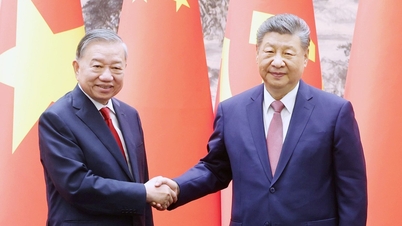
![[Photo] General Secretary and President visit the China-ASEAN AI Application Cooperation Center](https://vphoto.vietnam.vn/thumb/1200x675/vietnam/resource/IMAGE/2026/04/17/1776404277677_vna-potal-tong-bi-thu-chu-tich-nuoc-tham-trung-tam-hop-tac-ung-dung-ai-trung-quoc-asean-8706616-2286-jpg.webp)







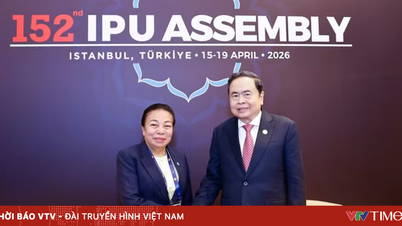






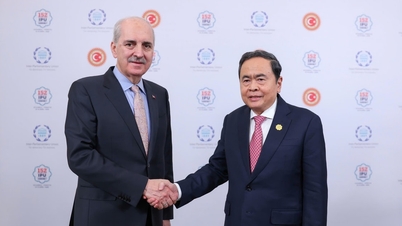
![[Photo] National Assembly Chairman Tran Thanh Man attends the policy seminar to promote Vietnam-Türkiye cooperation.](https://vphoto.vietnam.vn/thumb/1200x675/vietnam/resource/IMAGE/2026/04/16/1776351415367_vna-potal-chu-tich-quoc-hoi-tran-thanh-man-du-toa-dam-chinh-sach-thuc-day-hop-tac-viet-nam-tho-nhi-ky-8705791-jpg.webp)










































Comment (0)