

1. I asked Mr. Pham Quang Trung if he knew Colonel and poet Nguyen Huu Quy. The Chairman of the Veterans Association of Cam Lo commune nodded: "Poet Nguyen Huu Quy is closely associated with Cam Lo. It seems that his wife is from Cua region."
The reason I think of the poet Nguyen Huu Quy when I visit Cua is because he was originally from Bo Trach district, Quang Binh province (formerly); because he was a soldier in the Truong Son Mountains, deeply connected to his comrades from that time; and because he has a wife from Cua. This military poet, while courting his wife from Cua, incorporated the rain and mud of her homeland into his poetry... extremely simple and... very poetic: “If you go to Cua, remember to avoid it when it rains / Because when it rains, the land is very kind to you / Do you remember I once told you that? / So today I come to Cua / What worries are there on the white mountain pass in the rain? / People with wet clothes still wander the winding mountain passes / Looking towards your homeland, I forget my weariness / After crossing the pass, I see the green rice fields at the foot of the mountain...”.
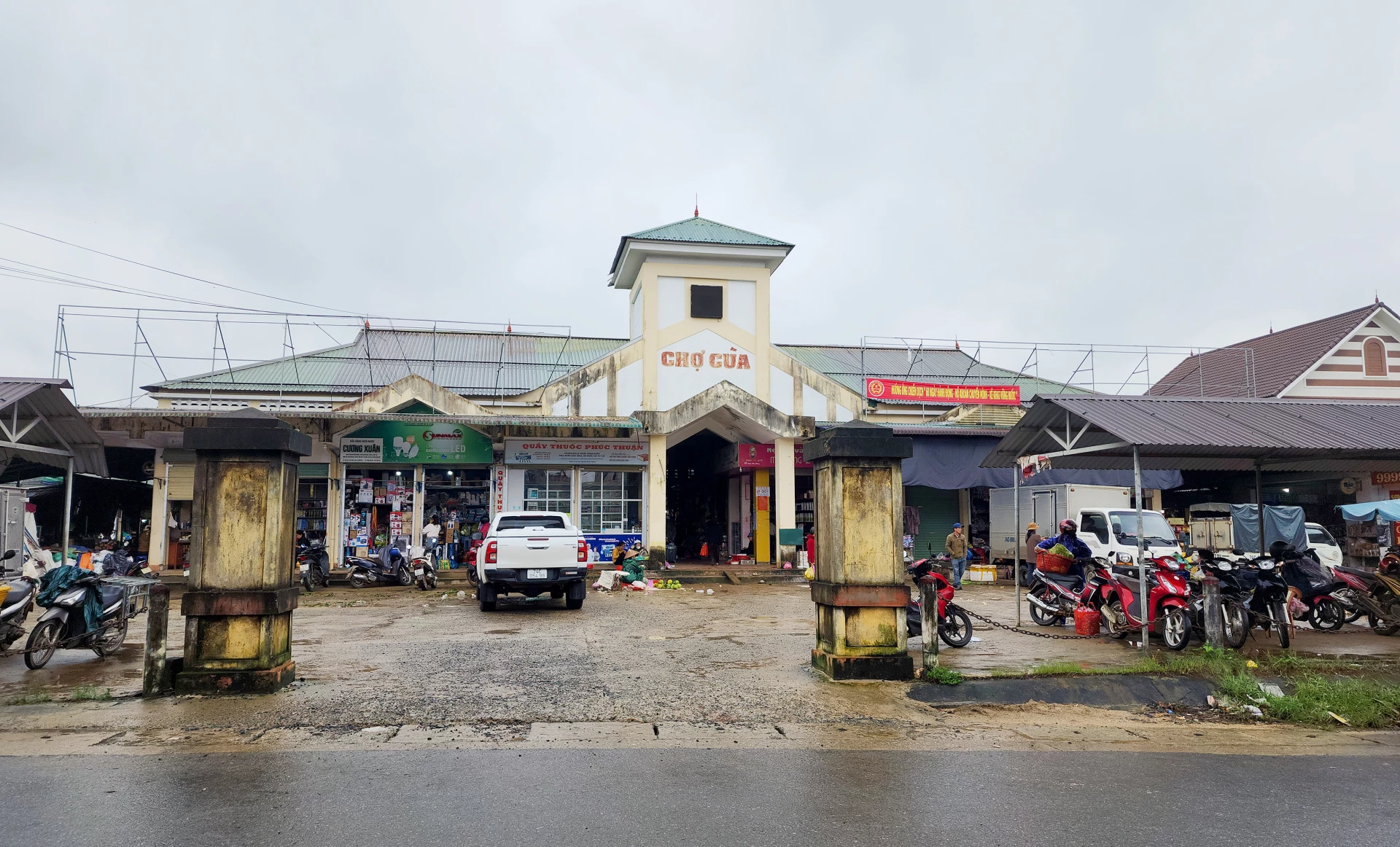 |
| Cua Market - Photo: T.Long |
After crossing the Cua Pass, a peaceful and lush green landscape stretched out before us. My colleagues kept praising how the village roads, alleyways, and inter-village and inter-communal roads in the Cua region were ablaze with colorful flowers. Then there were the vast rubber plantations and endless fields of medicinal plants. It was a feast for the eyes, and we didn't want to leave.
"Compared to 10 years ago, the Cua region has changed a lot. Now, when people from Cua meet, they can proudly say, 'It's just a little far from the town, but we don't have to worry about money.' On average, each household has 5-7 hectares of forest; 1-3 hectares planted with rubber, pepper, medicinal plants, and various livestock farming models... their economy is improving day by day. When Air Blade motorbikes were popular, people from Cua region even rented a large truck to go to Dong Ha City (formerly) to buy up all the bikes of this brand available at the dealership. The willingness of the people from Cua region to buy them left the motorbike dealership owners wide-eyed," Mr. Pham Quang Trung joked.
2. We visited the family of Mr. Le Van Thanh in Quat Xa Thuong village, Cam Thanh commune (formerly). In a conversation on a cloudy morning in the Cua region, Mr. Thanh said he was a veteran, a former soldier of the 312th Division, enlisted in 1981 and discharged in 1985. Living on fertile red basalt soil with a favorable climate similar to the Central Highlands, he believed that failing to exploit the potential and strengths, failing to "transform the land" and help people prosper, would be a disservice to the land, to nature, and to his homeland.
Owning a land area of up to 15 hectares, Mr. Thanh and his wife and children, after a process of "reclamation," have formed a fairly effective integrated economic model with 7 hectares of acacia trees, 3 hectares of rubber trees, and the rest of the area for fish ponds, pepper cultivation, and fruit trees, achieving an average income of 100 million VND per year.
What I particularly appreciated about Mr. Le Van Thanh was the courage of a soldier of Uncle Ho's army – "daring to think, daring to act." It was Mr. Thanh who introduced orange and pomelo varieties for trial planting in Cua region. With 300 orange trees and 200 pomelo trees, after 5 years of investment, they yielded their first harvest of sweet fruit, producing about 5 tons and generating a profit of over 70 million VND.
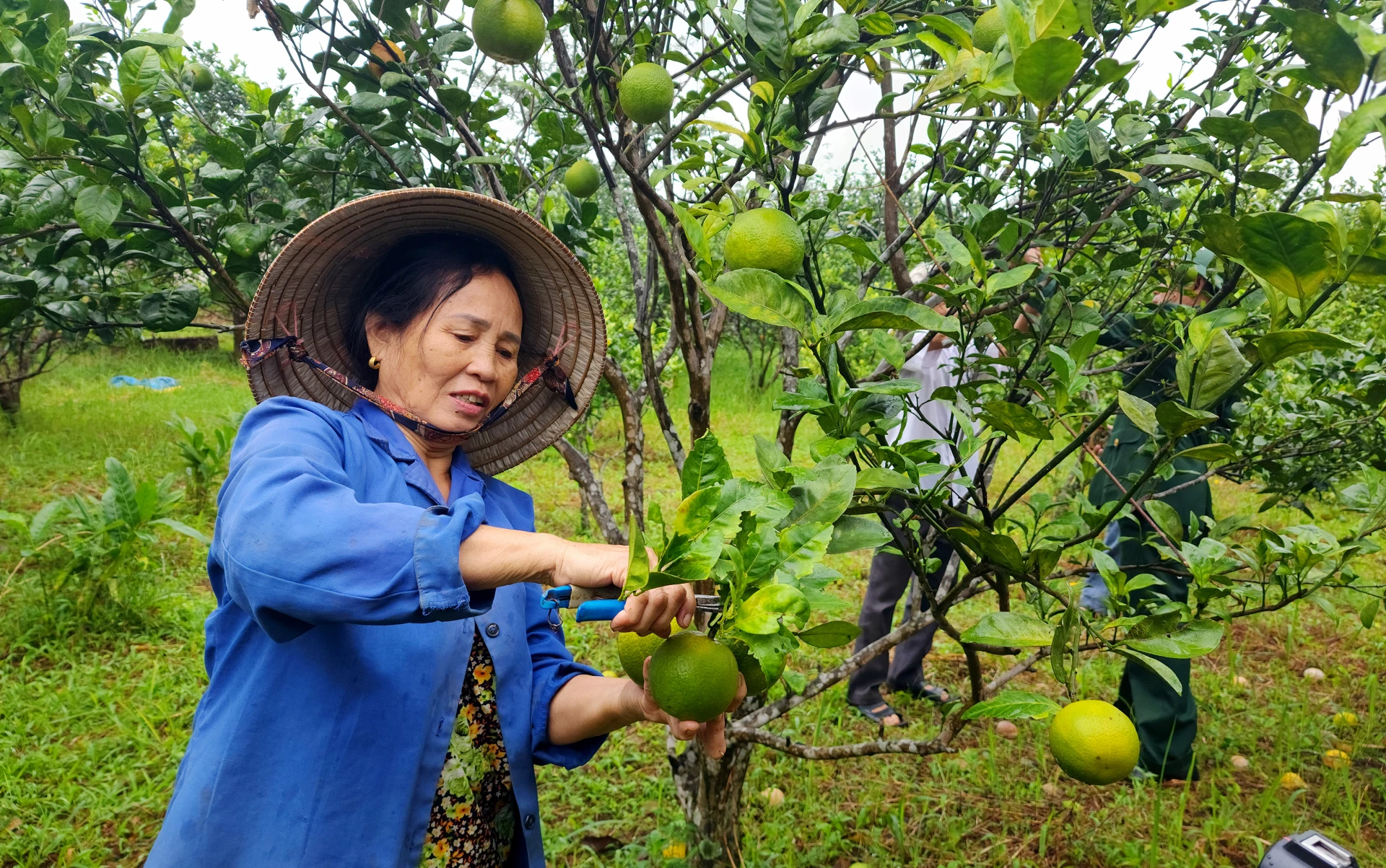 |
| The orange orchard yields its first harvest of sweet fruit for Mr. Le Van Thanh's family - Photo: T.Long |
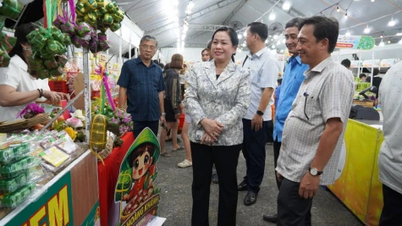
Cua Market is located right next to the main road. When visiting a new place and wanting to know what life is like for the local people, please visit the market. While traditional markets, whether large or small, in Quang Tri province are shrinking due to competition from supermarkets and online businesses, Cua Market remains bustling with buyers and sellers every day. The goods at Cua Market are incredibly diverse, sourced from the lowlands and from the highlands along National Highway 9, and include all the products of Cua region: Cua chickens, pepper, ginger, turmeric, galangal, green tea... There are also OCOP (One Commune One Product) branded products from Cua region such as: bitter tea extract, Gynostemma pentaphyllum extract, Passiflora incarnata extract, and Silybum marianum extract...
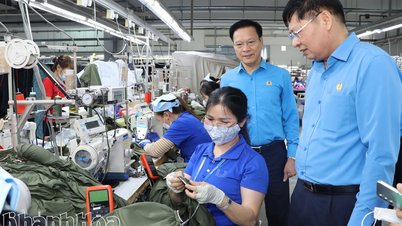
In Cua region, if you ask about Mr. Nguyen Van Canh, Director of Canh Loc Export Garment Company Limited, everyone knows him. They know him not because of his director title, but because they understand that he is a soldier of Uncle Ho's army who started his business from scratch, driven by his love for Cua region.
Meeting Mr. Nguyen Van Canh and discussing his journey to wealth, he candidly shared: “In 1984, I left the army. My hometown, Cua region, had fertile land and a mild climate, but at that time, everyone was poor. Unwilling to accept poverty, I decided to reclaim land to plant pepper and raise sows. At one point, my family raised up to 150 sows, harvesting 1.5 tons of pepper. When my hometown underwent reforms, realizing that livestock farming was affecting the environment, I shifted my focus to opening a cassava starch processing factory. After a while, seeing that I couldn't compete with larger production facilities, in 2020, I invested all my capital, about 6 billion VND, to establish Canh Loc Export Garment Company Limited.”
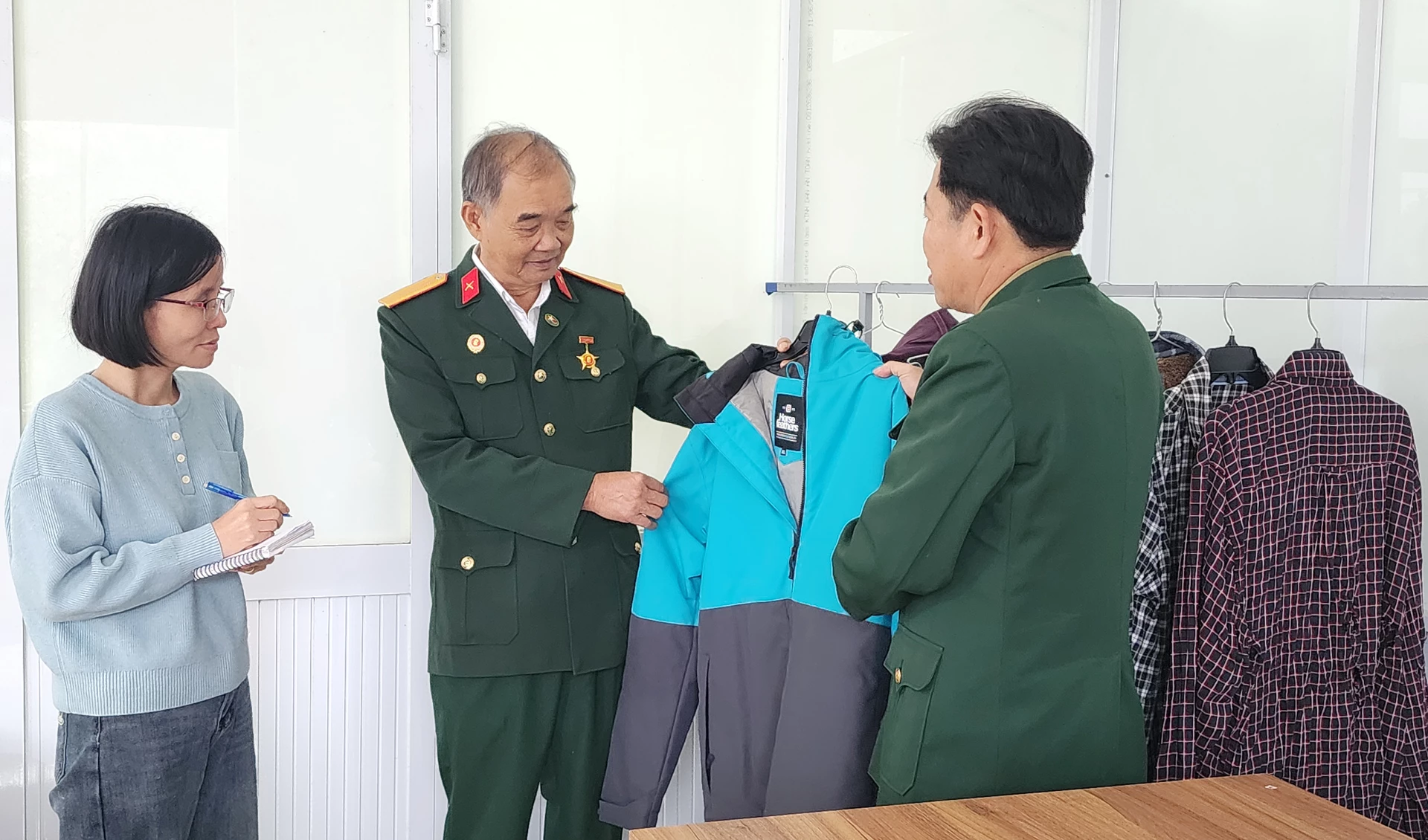 |
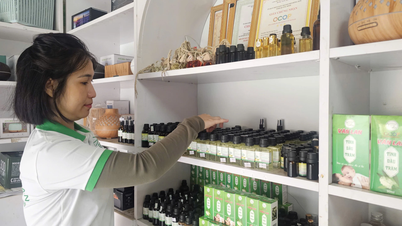
| Mr. Nguyen Van Canh and the garment products of Canh Loc Export Garment Co., Ltd. - Photo: T.Long |
Mr. Nguyen Van Canh's garment company started operating right when the Covid-19 pandemic broke out, overcoming all difficulties to achieve a stable revenue of approximately 500 million VND. While thriving and providing jobs for over 100 workers in Cua region with incomes of 7-8 million VND per month, difficulties arose again recently due to the impact of the trade war between the US and China (and Canh Loc Export Garment Company Limited's products are mainly exported to the US market - PV).
"After the worst comes the best! I will continue to try my best and dedicate myself completely to my homeland, Cua region," Mr. Nguyen Van Canh said optimistically.
3. Farewell to Cua Land, carrying with me the gratitude to the people who are working together day by day to help Cua Land develop. Deep in my heart, I feel many premonitions, like the poet-soldier Nguyen Huu Quy of yesteryear who crossed the Cua Pass to reach this beloved land: "Looking towards my homeland, I forget my weariness / After crossing the pass, I see the foot of the mountain with green rice paddies..."
Ngo Thanh Long
Source: https://baoquangtri.vn/xa-hoi/202512/thenh-thang-dao-buoc-xu-cua-ef6035c/
![[Photo] Prime Minister Pham Minh Chinh receives the Chinese Ambassador to Vietnam](https://vphoto.vietnam.vn/thumb/1200x675/vietnam/resource/IMAGE/2026/04/05/1775397481797_ndo_br_dsc-5512-jpg.webp)












































Comment (0)