This land, steeped in history and home to many outstanding people, was once a fiery stronghold, closely associated with the name of the national hero Hoang Hoa Tham (also known as De Tham) – the exceptional leader who led the Yen The peasant uprising.
Through more than a century of turbulent times, the historical relics in Yen The commune still stand tall, like slow-motion film reels telling future generations about a glorious, tragic era and an undying spirit of national pride.
At the end of the 19th century, when the French colonialists imposed their rule on our country, armed struggles broke out everywhere. Among them, the Yen The Uprising (1884-1913) is recognized as the largest, most extensive, and longest-lasting armed peasant movement in the history of our nation's resistance against foreign invaders before the Party's leadership.
Under the brilliant command of "The Tiger of Yen The" Hoang Hoa Tham, the rebel forces, initially composed of humble farmers, transformed into an elite army, utilizing the rugged terrain of the Yen The mountainous region to build a complex system of fortifications.
For nearly 30 years, the rebel army organized hundreds of battles, large and small, inflicting heavy losses on the French colonialists and forcing them to make concessions and sign truces twice.
The complex of historical sites in Yen The commune served as the capital, witnessing the most decisive and glorious moments in the life and career of the brown-robed leader and his generals.


The historical and cultural relic site of the Yen The peasant uprising has formed a complex of historical relics of immense value. With 23 relic sites, mostly fortifications, communal houses, temples, pagodas, and shrines spread across four districts (Yen The, Tan Yen, Viet Yen, and Yen Dung) (before the merger).
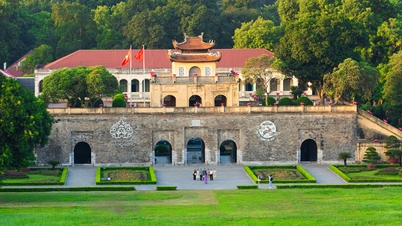
The Yen The Uprising historical site is compelling evidence of the courageous spirit and self-sacrifice of the De Tham rebels in their struggle for independence and freedom. To recognize and honor these special values and significance, on May 10, 2012, the Prime Minister signed Decision No. 548/QD-TTg classifying this site as a special national historical site. The site includes nine locations in the former Yen The district: Phon Xuong fort, Ho Chuoi fort, Leo pagoda, Dinh Thep communal house, Thong pagoda, Hom fort, Thien Thai cave, Cau Khoai temple, and The temple. The center of the uprising is the Hoang Hoa Tham historical site in Yen The commune, Bac Ninh province (formerly Phon Xuong town, Yen The district, Bac Giang province).
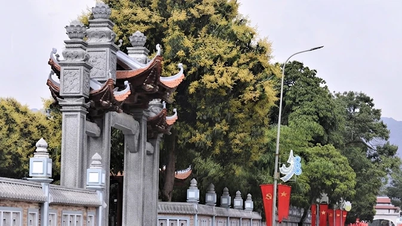
Visiting this complex, tourists will be able to admire the harmonious combination of military defense architecture and cultural and religious structures.
The Oath Temple was built in the late 19th century using thatch, bamboo, and leaves. In 1897, during the second truce between the French colonialists and the Yen The resistance fighters, De Tham had the temple renovated with the wooden architecture we see today. Fortunately, this architecture has remained intact to this day.


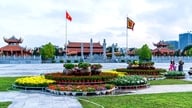
Located opposite the Phồn Xương fort across a small lake, the Temple of Oath holds profound spiritual significance and symbolizes camaraderie. This is where the rebel army held blood oath ceremonies, vowing unwavering loyalty to their country and commander before going into battle.
The Hoang Hoa Tham monument is located right behind the Oath Temple. Initially made of concrete, the statue was later changed to bronze in 2013 and was created in 1984 by Anh Vu, a member of the Bac Giang Provincial Association of Literature and Arts.

The temple dedicated to Hoang Hoa Tham and the Yen The Uprising, part of a conservation and restoration plan, was solemnly inaugurated in March 2024, coinciding with the 140th anniversary of the Yen The Uprising. The temple features a traditional wooden architectural style with a "Công" (H) shaped floor plan, comprising the Front Hall, the Central Hall, and the Rear Hall. The Front Hall stands out with its eight soaring, intricately carved curved roofs, creating a majestic and imposing worship space befitting the great contributions of this national hero.

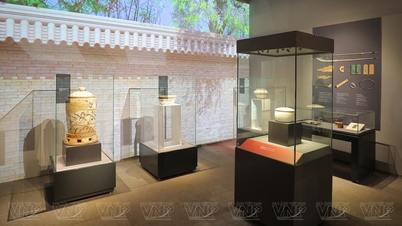
The Yen The Uprising Exhibition House, located right behind the Hoang Hoa Tham Monument, was built in 1984. Initially, it was a single-story building, but it was later rebuilt and renovated to its current two-story structure. The first floor displays an ethnographic section of the former Yen The district. The second floor showcases images and artifacts from the Yen The Uprising.


Phồn Xương Fort, also known as Gồ Fort or Cụ Fort, was built in 1894. It served as the main headquarters of the Yên Thế insurgents, the capital of the uprising, and the starting point for expanding the movement to other localities.
The fort has a rectangular architectural plan, covering more than one Northern Vietnamese acre. Its most distinctive feature is the incredibly sturdy system of rammed earth walls: the base is 2 meters thick, 3 meters high, and 1 meter wide at the top. Inside, the walls are designed with three stepped levels, allowing the rebel soldiers to stand, sit, or kneel while firing through the loopholes. Inside the fort was once a system of thatched-roof, mud-walled houses, including the residence of De Tham and Ba Ba, a guesthouse, the rebel barracks, a kitchen, and stables.
Besides preserving tangible values, Phồn Xương is also a place that strongly preserves and promotes intangible cultural heritage through the Yên Thế Festival.
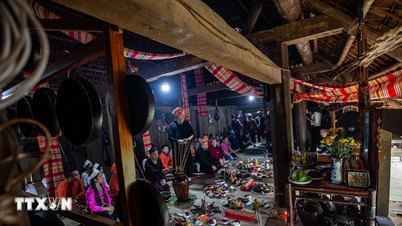
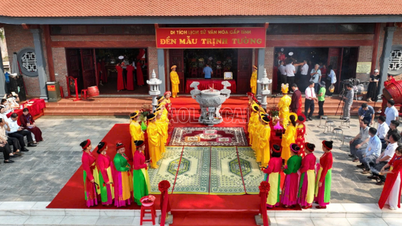
The Yen The Festival is held annually on March 15th, 16th, and 17th. It is one of the largest festivals in Bac Ninh province. The festival is an occasion for the people to express their respect and commemorate the contributions of Hoang Hoa Tham, a talented general and the supreme leader of the Yen The peasant movement and the resistance fighters who fought against the French colonialists. In 2013, the Yen The Festival was recognized by the State as a national intangible cultural heritage.
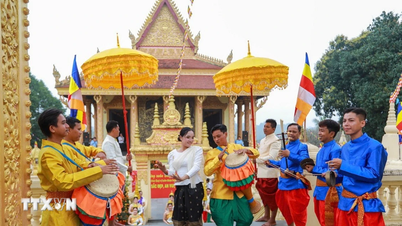
The highlight of the festival is the majestic flag-worshiping ceremony, recreating the fervent spirit of the ancient rebel army. In addition, the festival is vibrant with a series of traditional folk cultural and sporting activities such as: traditional martial arts competitions, flute-playing, lion and dragon dances, cavalry performances, and folk games (blindfolded pot smashing, throwing the ball, carrying rice in baskets, human chess). All of these create a lively cultural space, evoking national pride and the martial spirit of the Vietnamese people.



Preserving and promoting the value of the historical site not only signifies gratitude to history but also plays an important role in educating future generations about patriotic traditions.
In the future, with systematic investment in restoration and reconstruction, the Hoang Hoa Tham historical site complex is expected to become a highlight on the cultural and historical tourism map of the northern region, attracting domestic and international tourists to learn about one of the most glorious chapters in the history of the Vietnamese nation.
Source: https://baophapluat.vn/theo-dau-chan-cu-de-tham-tai-bac-ninh.html