

The content of the emulation campaign is practical and relevant to reality.
In implementing the emulation movement for innovation and digital transformation, many localities have proactively linked the movement to their specific development goals, creating widespread impact and clear effectiveness. In Hanoi, the City People's Committee has implemented an emulation movement closely linked to the goal of building a modern and smart urban government. The content of the emulation focuses on raising awareness, innovating thinking on the development of science, technology and digital transformation; developing infrastructure to support innovation; developing the digital economy , digital technology enterprises and the creative startup ecosystem...
For Thai Nguyen province, the emulation campaign is specifically linked to the goals of developing high-tech industries and building e-government. The focus is on applying digital technology in managing FDI enterprises, developing supporting industries; promoting digital transformation in education and training, and reforming administrative procedures. In Da Nang city, the emulation campaign is implemented with a focus on building a smart city; the city concentrates on innovating management methods based on real-time data, and gradually applying artificial intelligence in several service sectors.
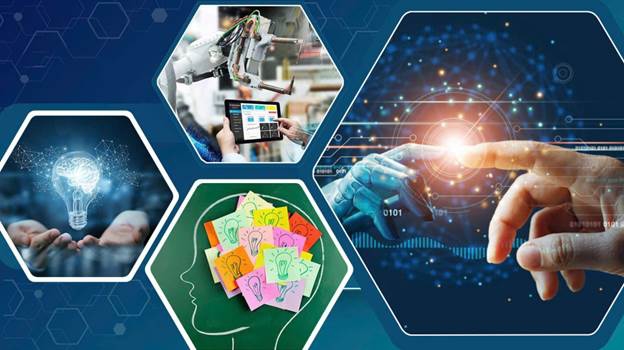
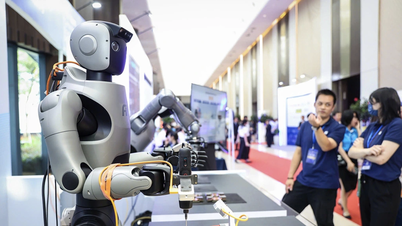
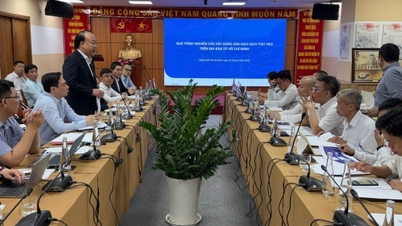
Illustration photo: chinhphu.vn
Practical surveys in many localities show that, in implementing the "Nationwide Emulation Movement for Innovation and Digital Transformation" launched by the Central Emulation and Commendation Council (April 2025), along with the implementation of Decision No. 923/QD-TTg dated May 14, 2025, of the Prime Minister promulgating the Plan for implementing the movement, ministries, sectors, localities, agencies, and units have proactively developed implementation plans suitable to their specific conditions. The content of the emulation has been concretized into clear goals, criteria, and products, focusing on practical tasks such as: improving management efficiency, innovating work processes, improving service quality, developing digital human resources, and popularizing digital skills for the entire population.
In many provinces and cities, Party committees, governments, and sectors are strictly implementing legal regulations on science, technology, investment, and public investment to remove institutional and policy bottlenecks. Many localities are boldly reforming management methods, innovating financial mechanisms, simplifying administrative procedures; issuing preferential policies to encourage businesses, especially small and medium-sized enterprises; and linking streamlining the apparatus with improving the effectiveness and efficiency of operations.
Furthermore, the content of the emulation campaign for innovation and digital transformation is closely linked by many localities with major emulation movements currently underway, such as: the nationwide effort to build new rural areas; the nationwide emulation campaign to build a learning society and promote lifelong learning; the emulation campaign among cadres, civil servants, and public employees to implement workplace culture; the digital literacy campaign; and the peak emulation campaigns to celebrate the 14th National Congress of the Party. This integration does not dilute the goals and content of the emulation, but creates an emulation ecosystem in which innovation and digital transformation become the overarching axis, influencing the organizational methods and evaluation criteria of each movement.
The results are clear and the impact is widespread.
In Ho Chi Minh City, the emulation movement is being implemented with innovation as the driving force for growth and digital transformation as the tool for governance and development. A notable highlight is that 100% of universities in the city have implemented the digital university model and developed digital learning materials, contributing to Ho Chi Minh City exceeding its digital transformation goals in education by 2025, becoming the leading locality nationwide in terms of speed and scale of digital education implementation.
In Bac Ninh, linking emulation criteria to production and business efficiency has directed emulation targets towards digital transformation in industrial, agricultural, and logistics management. As a result, Bac Ninh has become a bright spot in attracting investment, consistently ranking among the top in the country in terms of digital transformation index and local innovation index.
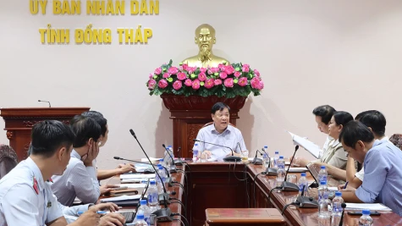
In Dong Thap province, in the agricultural sector, the province is promoting the application of digital technology in managing planting areas, tracing origins, connecting agricultural product consumption, and developing a circular economy. This has created a significant shift in farmers' production mindset, contributing to improved agricultural and rural economic efficiency and increased people's income in the last six months of 2025.
The movement for innovation and digital transformation has also spread strongly to every factory, workshop, construction site, and field. Workers are constantly exploring and proposing initiatives and technical improvements to increase productivity, ensure safety, and save costs. For example, at Vang Danh Coal Joint Stock Company - Vinacomin, despite the difficult working conditions in the underground mines, in the last months of 2025, cadres and workers proposed dozens of initiatives and technical improvements, directly resolving "bottlenecks" in production and bringing clear efficiency right from the work teams.
In Kong Chro commune (Gia Lai province), facing the reality of arid land, farmers have proactively applied water-saving irrigation systems in rice cultivation, gradually changing production practices, improving water use efficiency, and stabilizing productivity. In Hoa Tu and Gia Hoa communes (Can Tho city), the rice-shrimp farming model, combined with the application of technology to monitor water quality and manage cultivation processes, has helped many farmers reduce costs, increase income, and gradually approach smart agricultural production.
Although the implementation period has not been long, the emulation movement for innovation and digital transformation has created significant changes in the quality and effectiveness of digital transformation, the application of science and technology, and innovation in the activities of ministries, departments, localities, and units. Artificial intelligence based on big data has been applied and developed strongly in many important sectors and fields; the effective exploitation of shared databases serving population management, land, planning, transportation, health, and education is increasingly expanding. The quality of online public services and digital services for citizens and businesses has been improved; many institutional and policy bottlenecks are gradually being removed; and the legal framework for activities in the digital environment continues to be perfected.
Furthermore, from April 2025 to the present, ministries, departments, localities, units, and businesses nationwide have implemented tens of thousands of projects, initiatives, and technical improvements, yielding significant socio-economic benefits. More importantly, the movement has contributed to the formation of a new development mindset, in which innovation and digital transformation are no longer isolated tasks, but have become a continuous requirement in all activities of the political system and the entire society.
For the military, the emulation movement for innovation and digital transformation is implemented rigorously and synchronously, directly linked to the task of building a revolutionary, regular, elite, and modern army. Units are accelerating the digitization of lesson plans and training records; applying simulation technology and digital technology in training, command, control, technical support, and logistics; and developing the defense industry towards dual-use, modern, and efficient development.
The "Nationwide Emulation Movement for Innovation and Digital Transformation" has been implemented in the right direction, with the right focus, meeting practical requirements, creating new momentum and enthusiasm throughout society for the development of science, technology, innovation, and national digital transformation.
Source: https://mst.gov.vn/thi-dua-doi-moi-sang-tao-chuyen-doi-so-197251225152202286.htm





![[Image] 500 regional dishes introduced to the people of Ho Chi Minh City and tourists.](https://vphoto.vietnam.vn/thumb/1200x675/vietnam/resource/IMAGE/2026/03/27/1774576163392_001-jpg.webp)







































































Comment (0)