.jpg)
Identifying difficulties
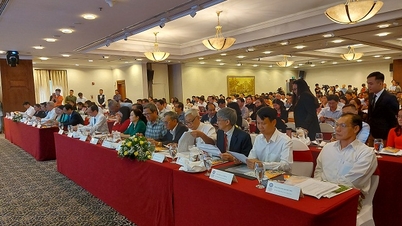
According to Tran Ngoc Thach, Deputy Director of the Department of Science and Technology, the city's policy is to have each commune and ward contract with two IT personnel. To date, 88 out of 93 communes and wards have assigned one or two IT staff members in accordance with the city's policy (44 out of 93 communes and wards have assigned one staff member), while the remaining 5 out of 93 communes and wards are currently recruiting staff to work on digital transformation and IT application.
“In the initial phase of operating a two-tiered local government system, the workload related to science and technology, innovation, and digital transformation at the local level is quite large, and the allocated personnel are still low, creating pressure on the work. Many communes and wards lack human resources or have not yet assigned personnel to be in charge of digital transformation and the application of information technology in a timely manner. In some mountainous communes, weather conditions and terrain affect the speed and stability of the internet connection,” said Mr. Tran Ngoc Thach.
Meanwhile, Pham Van Ba, Vice Chairman of the People's Committee of Dien Ban Ward, said that as soon as the two-tiered local government system came into operation, the ward only had one person working in information technology. This had a significant impact on all of the ward's activities, especially when implementing Resolution No. 57-NQ/TW on breakthroughs in the development of science, technology, innovation, and national digital transformation. The implementation of areas related to information technology, digital transformation, innovation, administrative reform, social welfare work, and updating and training for grassroots levels was almost impossible.
From June 1st, Dien Ban ward will have sufficient IT personnel after signing contracts under Government Decree No. 173/2025/ND-CP regulating contracts for civil servants. This addition will essentially overcome the limitations caused by the shortage of IT personnel.


According to the Chairman of the People's Committee of Avương Briu Quân commune, the implementation of the two-tiered local government model, in addition to its achievements, has revealed some shortcomings in personnel management after a period of operation. In particular, civil servants responsible for digital transformation within the Party and Vietnam Fatherland Front of the commune lack professional qualifications in information technology.
The level of competence and ability of some officials and civil servants in accessing and using technology lacks soft skills, management skills, and digital skills; they do not use work-related software regularly or effectively. These limitations have a chain reaction effect, leading to difficulties and obstacles in handling and implementing the local political tasks.
.jpg)
Strengthen the team as soon as possible.
According to the Chairman of the People's Committee of Hung Son commune, Zoram Buon, currently a portion of officials do not have the professional qualifications to meet the requirements of the new government; there is a shortage of specialized personnel in project management, finance, land, and information technology.
Even central wards like Thanh Khe are lacking high-quality human resources, especially in the fields of digital technology, artificial intelligence, and big data, leading to difficulties in implementation. Financial resources for science, technology, and innovation are limited, and social mobilization is not yet strong. The data system is not synchronized, and data connectivity and sharing are limited, affecting the effectiveness of digital transformation.
According to a report from the Department of Internal Affairs, the implementation of the two-tiered local government system still faces localized shortages and surpluses of officials and civil servants in some wards and communes; there is a shortage of highly specialized personnel in certain fields such as information technology, economic management, urban planning, land management, and environment. The capacity of officials and civil servants at the commune level is uneven, with some civil servants not meeting the requirements of their positions.



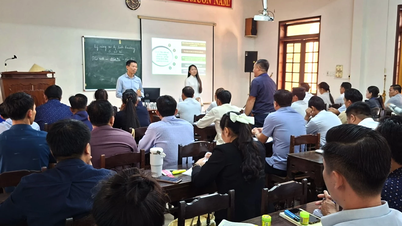
To address this situation, the City People's Committee issued Project No. 1342/DA-UBND and numerous guiding documents to implement and urge the deployment and recruitment of officials and civil servants to localities with a lower number of officials and civil servants than the prescribed quota. The city organized many training courses, both in-person and online, for officials at the commune and ward levels, thereby improving the system operation capacity and digital skills of grassroots officials. The city also organized the deployment of 138 volunteer students in information technology to support communes and wards; and directed the implementation of the policy of employing IT personnel under labor contracts in communes and wards.
According to the head of the Department of Internal Affairs, in the long term, the Standing Committee of the City Party Committee will issue a "Project and Resolution on assessing the current situation and solutions to improve the quality of cadres, civil servants, and public employees at the ward, commune, and special zone levels until 2030 and beyond." This will gradually improve the quality of grassroots-level cadres, ensuring that the two-tiered local government apparatus operates more smoothly and effectively, meeting the requirements of the new era.
Source: https://baodanang.vn/thieu-nhan-luc-cong-nghe-thong-tin-o-co-so-3339712.html


![[Photo] Strengthening character and expertise: Intense training for artillery soldiers.](https://vphoto.vietnam.vn/thumb/1200x675/vietnam/resource/IMAGE/2026/06/30/1782815602541_lu-368-1875-4571-jpg.webp)