

Advanced robots equipped with artificial intelligence (AI) are expected to become invaluable assistants to humans in modern society.
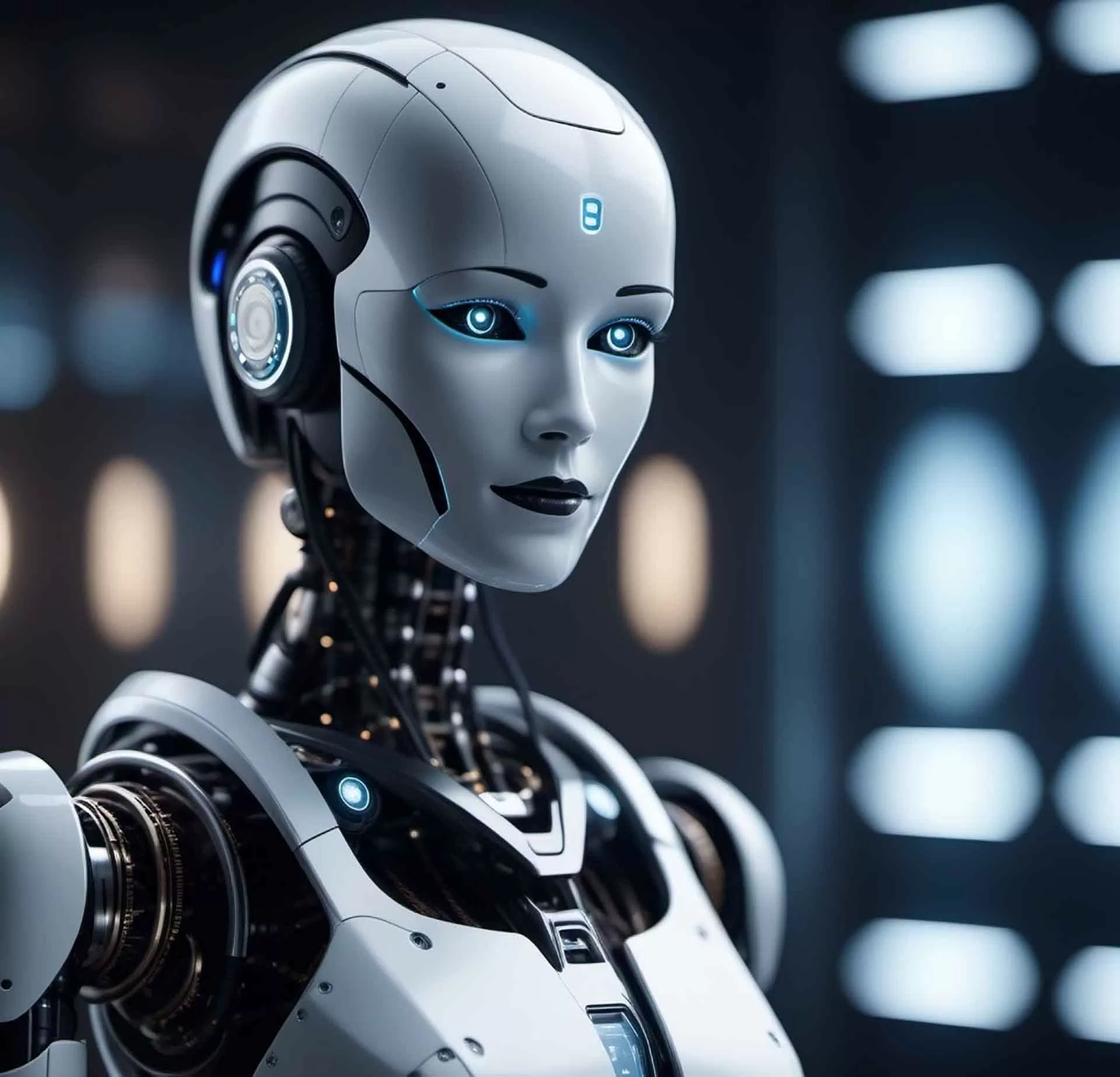 |
| Robots with artificial intelligence are becoming increasingly common in real life. (Source: Stable Diffusion Online) |
AI-integrated robots
Recently, a Norwegian-based technology company launched an AI-powered humanoid robot designed to assist with daily household chores, capable of moving, interacting, and performing tasks just like a human.
The robot, named NEO, is 1.65 meters tall, weighs nearly 30 kg, can walk at a speed of 4 km/h and run at a speed of 12 km/h. It can carry loads of nearly 20 kg and can operate for two to four hours on a single charge.
NEO incorporates AI technology to gain a deeper understanding of its surroundings, through a combination of sensory input and physical body interaction.
NEO has the ability to continuously learn and improve its features, knows how to handle fragile items, and interacts well with humans.
Those who have a positive belief in AI hope that this advanced technology will facilitate the automation of many tasks and jobs.
Building AI capabilities
However, with the emergence of AI-integrated tools in robots, many scientists fear that this technology could increase violations of human privacy. In response to the risks that AI may pose to humans, many countries are beginning to consider plans to better manage AI's access to users' personal data.
Recently, the European Union (EU) proposed regulatory measures to protect personal data and inform users about AI's use of information. The bloc is also finalizing the General Data Protection Regulation (GDPR) and plans to add a harmonized code of conduct for the use of AI, as this technology becomes increasingly prevalent among people.
The operation and management of AI will also be a major focus at the World Artificial Intelligence Conference in Shanghai, China, in July 2024.
With the theme “Managing AI for the Benefit of All,” the conference focused on three main topics: core technologies, smart terminals, and application empowerment. Mr. Seizo Onoe, Director of the Telecommunications Standards Bureau of the International Telecommunication Union, stated: “Building AI capacity is crucial. The International Telecommunication Union has reached a consensus that no one should be left behind in the AI revolution. This means we need to develop this capacity for developing countries.”
Participating businesses brought the latest AI products and solutions to the conference. More than 40 intelligent robot models were showcased, the most ever, including 25 humanoid robots that were given a special area by the organizers.
Some impressive robotic products include Tesla's Optimus Gen2 robot, and the Healthy Loong robot, which can mimic human movements and uses open-source code, allowing the robot to constantly update and learn new skills.
A potential investment destination.
In Vietnam, in 2020, scientist and AI expert Pham Thanh Nam, along with his colleague Pham Minh Toan, launched an AI robot named Tri Nhan. This is Vietnam's first AI robot, belonging to the high-end robot category with human-like characteristics.
According to expert Pham Thanh Nam, Tri Nhan brings together many typical technologies of the 4.0 industrial revolution, including AI, big data, the Internet of Things, cloud computing, 3D printing, blockchain, virtual reality, augmented reality, supercomputers, and bioinformatics.
Vietnam's launch of the AI-powered humanoid robot Tri Nhan has been a great source of inspiration and motivation, marking a new milestone in science and technology.
In March 2024, Anan Technology and Development Joint Stock Company also launched Anbi, a robot that recognizes personality through facial analysis using artificial intelligence cameras. This is part of the AI robot ecosystem that Anan's programmers have been researching for many years. Inspired by the name of the illustrious educator Chu Van An, Anbi is an intelligent tool, based on Big Data and AI, capable of interacting using natural language, understanding and responding accurately to conversations in Vietnamese - all in real time and with high flexibility. Notably, with the ability to understand over 80% of conversation content, Anan can automatically recognize and respond to user intent without relying on a fixed script.
Anan has already brought AI technology to numerous organizations and events, including: Knowledge exploration with AI teachers at Vinschool primary and secondary schools; the first Bac Giang Province Startup and Innovation Festival in 2023; the 2024 Science and Technology Mathematics Festival; and teaching and learning in the AI era at Vinschool Ocean Park High School... The positive feedback on AI robots is opening up great potential for application in this field in Vietnam.
According to Dr. Andrew Ng, a scientist ranked among the top 100 AI experts in the world, he is very optimistic about the future of Vietnam in general and the future of AI technology in Vietnam in particular. According to Dr. Andrew Ng, Vietnam is a very promising destination for AI investment.
Clearly, AI is contributing to the advancement of the Fourth Industrial Revolution and promises unlimited potential in the future. However, given the benefits and drawbacks of AI, we need to use this technology correctly and responsibly.
By applying AI strategically, we can unlock the full potential of the technology, contributing to the progress and sustainable development of human society in the future.
Source

































































![[Photo] Hue: Admire the 2.4 trillion VND sea bridge, the longest in Central Vietnam.](https://vphoto.vietnam.vn/thumb/402x226/vietnam/resource/IMAGE/2026/05/24/1779614018347_anh-man-hinh-2026-05-24-luc-16-13-29.png)
























Comment (0)