

 |
| Mo Ga Hamlet, Vo Nhai Commune - one of the first community-based tourism destinations in the area, where visitors can immerse themselves in the lives of the local people. Photo: Provided |
A foundation of diversity and inherent strength.
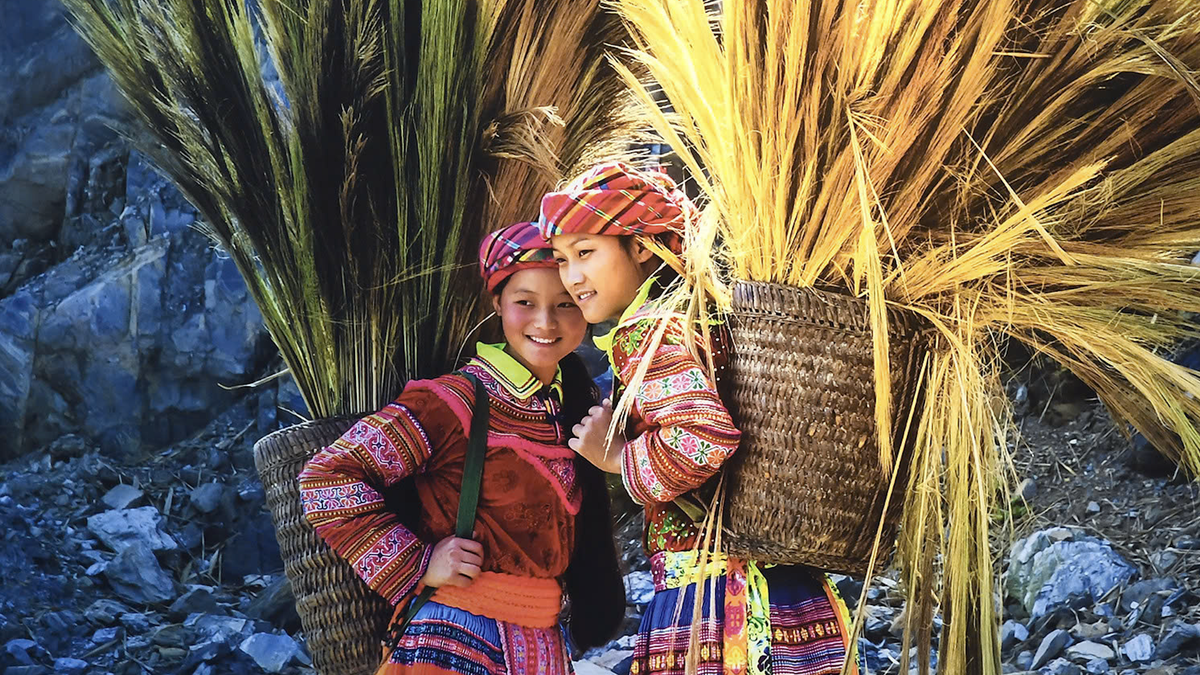
Thai Nguyen currently has nearly 1.8 million people living in 92 communes and wards, many of which are mountainous and highland areas with a large ethnic minority population. Located at the gateway to Hanoi and in the core of the Viet Bac region, it has long been a stopping point for many ethnic groups, such as the Tay, Nung, Dao, Mong, San Diu, and San Chay, on their journey to find a stable life.
Long-standing cohabitation has created a rich cultural space where ethnic groups not only live together but also interact and blend. Over time, they have developed a common language, bonded through marriage, and shared customs and traditions. Generations of children carrying the bloodlines of multiple ethnic groups are vivid evidence of the harmonious and enduring development of the community.
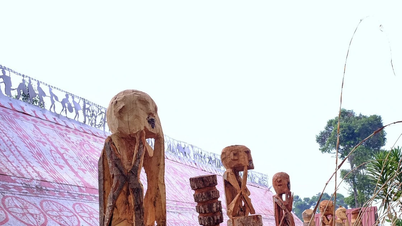
However, amidst the powerful currents of the market economy , many traditional values are facing the risk of disappearing. Numerous folk songs and traditional crafts such as weaving and brocade making are gradually vanishing from daily life. A segment of the youth is hesitant to wear traditional clothing or use their mother tongue, threatening to disrupt cultural connections.
 |
| Beyond preservation, Thai Nguyen province is focusing on "awakening" and transforming the cultural identity of ethnic minority communities into a core resource for creative products, promoting the development of cultural industries and tourism. (Photo: Provided) |
Viewing the issue from a scientific perspective, Dr. Chu Thanh Huy, Head of the Tourism Department, Faculty of Science (Thai Nguyen University), believes that decline is a harsh law of development, and at the same time, it demands a change in approach. In the context of integration and globalization, developing the cultural industry is a groundbreaking direction. This is the process of "awakening" and reviving the "essence" of traditional craft villages and local values, bringing traditional culture into the contemporary space, creating sustainable momentum for the economic and cultural tourism development of Thai Nguyen.
Faced with this reality, Thai Nguyen province has identified preserving cultural identity as a key task to strengthen its internal resilience. With the involvement of all levels and sectors, and the efforts of the community itself, many intangible cultural values that were once at risk of disappearing have been restored. A series of conservation projects have been effectively implemented, such as: the reconstruction of the Tay ethnic wedding ceremony in Lam Vy commune; the harvest prayer ceremony of the San Diu people in Vo Tranh commune; the coming-of-age ceremony of the Nung Phan Sinh people in Nam Hoa commune...
To date, Thai Nguyen possesses a vast cultural treasure trove with nearly 600 intangible cultural heritage items, including one UNESCO-listed heritage site, 45 national-level heritage sites, and a team of 3 People's Artisans and 19 Outstanding Artisans. These are the "living treasures" who are persistently passing on the cultural heritage through many generations.
Instead of letting heritage remain only in museums or documents, Thai Nguyen strives to bring culture back into contemporary life, transforming traditional rituals and festivals into unique tourism products.
In Dong Tam hamlet, Vo Tranh commune, the San Chay ethnic minority still preserves the Tac Xinh dance and Sang Co singing, recognized as national intangible cultural heritage. Associated with the harvest festival, the Tac Xinh dance, with its cheerful rhythm and depiction of agricultural activities, has become the basis for developing experiential tourism products. Welcoming tourists has helped the people change their mindset, shifting from purely agricultural production to organized tourism, proactively renovating their stilt houses to serve visitors.
 |
| Foreign tourists experience the New Rice Festival at the Thai Hai Stilt House Ecotourism Reserve. Photo: Provided. |
In addition, festivals such as the Xuan Duong Love Market, the Long Tong Festival at Na Lien Ma (Phu Thong commune), and the Mu La Festival (Cao Minh commune) have been systematically restored, meeting spiritual needs while creating highlights to attract tourists. This is an important foundation for the province to form and support the development of community tourism destinations in mountainous areas.
When indigenous knowledge becomes a creative value.
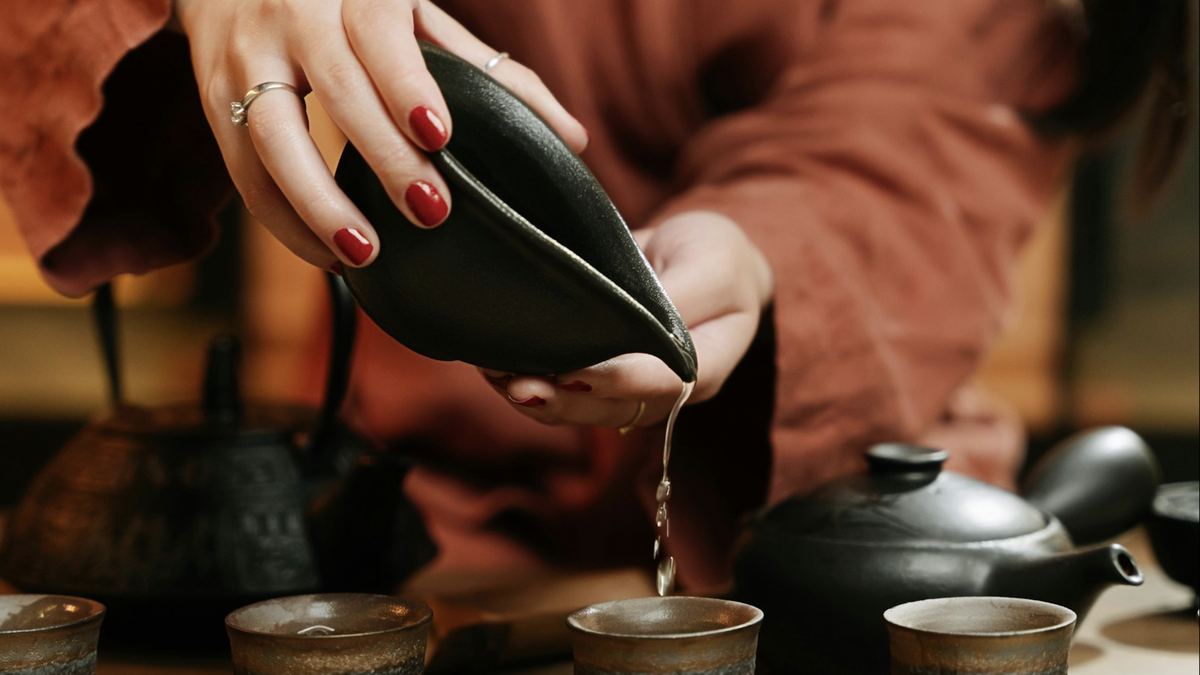
The cultural industry in Thai Nguyen is gradually taking shape through the integration of ethnic identities into creative products, most notably tea. Beyond its value as an agricultural product, Thai Nguyen tea is the culmination of indigenous folk knowledge, from soil selection techniques and weather observation to traditional processing and drying methods and flavor perception. This knowledge has elevated tea to a unique cultural product, playing a crucial role in the creative industry.
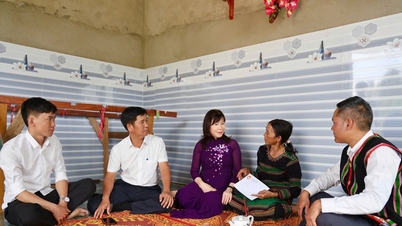
According to Ms. Vu Thi Thu Huong, Vice President of the Provincial Cooperative Union, the value of traditional craft villages and OCOP products lies not only in their material value but also in the people and the accompanying cultural stories. In the new development trend, artisans and craftspeople are considered the center of the cultural industry. They are both manual laborers and "creators" possessing valuable folk knowledge and skills. In ethnic minority areas, the elderly and respected community leaders play a key role in restoring and spreading local cultural values.
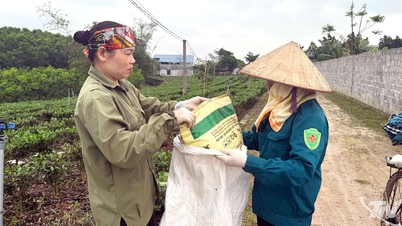
In practice, Thai Nguyen currently has 277 craft villages, of which 256 are tea production and processing villages with the large participation of people from various ethnic groups. Besides the famous Tan Cuong tea region, the province's tea culture map is expanding with new destinations rich in historical value, most notably the Shan Tuyet tea region in Dong Phuc commune.
 |
| People in Dong Phuc commune are turning the advantage of the ancient Shan Tuyet tea trees, recognized as "Vietnamese Heritage Trees," into a sustainable livelihood. Photo: Provided. |
Here, a cluster of 12 ancient Shan Tuyet tea trees has been recognized as Vietnamese Heritage Trees. Scientific investigations by the Department of Agriculture and Environment of Thai Nguyen province show that this cluster has special biological and historical value, becoming a foundation for people to develop sustainable livelihoods. A typical example is the Bang Phuc Leaf Fermented Wine Cooperative in Na Pai village, which both produces traditional wine and collaborates with 25 households to develop a 6-hectare area of ancient tea trees. The cooperative's To Hoai Shan Tuyet tea product received OCOP 3-star certification in 2024.
Ms. Trieu Thi En, a resident of Na Pai village, shared: "Previously, people mainly harvested and sold raw tea at low prices. After being guided in tourism development and brand building, people realized that tourists come not only to drink tea but also to hear stories about these centuries-old tea trees. The villagers hope to continue receiving support in promotion and market connections."
According to Mr. Trieu Quang Hung, Chairman of the People's Committee of Dong Phuc commune, expanding exhibition spaces and bringing handicraft products into cultural spaces and festivals will help traditional cultural values spread more strongly. When young people have more income and job opportunities, they will be more committed to the craft and proud to contribute to preserving national identity in the process of integration.
Therefore, traditional craft villages not only create jobs and increase income but also become vibrant cultural spaces where tourists can enjoy tea and listen to stories about the land, people, and tea-making culture, contributing to shaping the cultural brand of Thai Nguyen in the creative industry.
 |
| In Dong Tam hamlet, Vo Tranh commune, the San Chay ethnic minority still preserves the Tac Xinh dance and Sang Co singing, recognized as national intangible cultural heritage, associated with the harvest festival. Photo: Provided. |
Creating shared spaces for community tourism.
To prevent the fragmented development of creative products, Thai Nguyen is focusing on building a highly interconnected cultural tourism ecosystem. The focus is on planning and spatial connectivity to transform potential into a competitive advantage.
Mr. Vu Van Tuyen, Director of Travelogy Vietnam and former Vice President of the Vietnam Community Tourism Association, commented: “The key to this strategy lies in building a ‘happy ecosystem,’ in which the cultural identity and emotions of tourists play a central role, creating a unique and inimitable difference.”
Thai Nguyen possesses a rich resource base including its tea culture, traditional craft villages, the unique identities of the Tay, Nung, and Dao ethnic groups, and the historical heritage of the ATK (Revolutionary Base Area). Reorganizing tourism spaces has helped connect these previously fragmented values into large-scale, competitive tourism clusters, becoming a new driving force for rural development. The combination of agriculture, tourism, and culture contributes to increasing income and reducing labor migration among local youth.
 |
| Traditional folk games at the Mu La Festival have been meticulously revived, becoming a highlight that attracts tourists to Cao Minh commune. Photo: Provided. |
Regarding specific solutions, Mr. Vu Van Tuyen emphasized the importance of exploiting "original indigenous values" through exemplary models, such as: the Thai Hai Ethnic Village Ecological Stilt House Conservation Area (preserving the original character of Tay-Nung culture); the Tan Cuong tea growing area (agricultural tourism associated with tea brands); Nui Coc Lake (ecological resort); and inter-regional connectivity with the cultural and ecological space of Ba Be Lake.
"The appeal of tourism in Thai Nguyen needs to be based on three pillars: original resources, the role of the local community as the main actors, and the ability to tell emotionally rich cultural stories. Local culture is only truly sustainable when the community's mindset changes, avoiding chasing trends or excessive commercialization that causes the product to lose its depth," said Mr. Vu Van Tuyen, Director of Travelogy Vietnam and former Vice President of the Vietnam Community Tourism Association.
In recent years, Thai Nguyen province has issued numerous projects, plans, and policies to support tourism development, identifying it as a crucial economic sector. This correct approach, coupled with systematic investment, has begun to yield clear results. By 2025, the province is expected to welcome over 7.3 million visitors, with estimated revenue reaching nearly 7,450 billion VND. These figures demonstrate that integrating ethnic minority identity into the cultural industry is not merely a matter of preservation, but a journey to affirm Thai Nguyen's position, pride, and aspiration for advancement within the modern era.
Source: https://baothainguyen.vn/van-hoa/202601/thoi-hon-dan-toc-vao-cong-nghiep-van-hoa-aba4448/
















![[Photo] Tran Cam Tu, Standing Member of the Secretariat of the Central Committee, presides over the first meeting of the Central Steering Committee on the Development of Vietnamese Culture.](https://vphoto.vietnam.vn/thumb/1200x675/vietnam/resource/IMAGE/2026/03/19/1773895004549_ndo-br-bnd-1195-2-jpg.webp)



































Comment (0)