

Opening up broader opportunities for development.
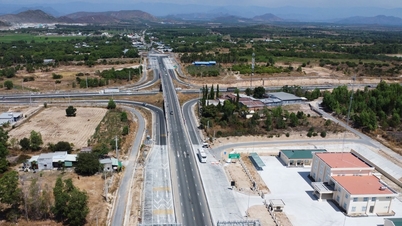
The Vinh Hao - Phan Thiet expressway is 100.8 km long, starting from Vinh Hao commune (Tuy Phong district) and passing through four districts: Tuy Phong, Bac Binh, Ham Thuan Bac, and connecting to the Phan Thiet - Dau Giay expressway at Ham Kiem commune, Ham Thuan Nam district ( Binh Thuan province ). Following the commissioning of the Phan Thiet - Dau Giay expressway, the Vinh Hao - Phan Thiet expressway creates seamless traffic flow through two expressways spanning over 154 km across Binh Thuan province.
The Nha Trang - Cam Lam expressway, over 49 km long, is invested in by Son Hai Group Co., Ltd. The project commenced in September 2021 with a total cost of over 7,600 billion VND, implemented under a public-private partnership (PPP) model, specifically a BOT (build-operate-transfer) contract. The project initially had 4 lanes, 17 meters wide; later, the road was upgraded to 32 meters wide with 6 lanes. The entire Nha Trang - Cam Lam expressway is interspersed with 18 emergency stopping points, with an emergency lane at the end of each lane. The expressway also includes 25 bridges, 10 of which are overpasses, each 5-12 meters wide depending on the connecting road.
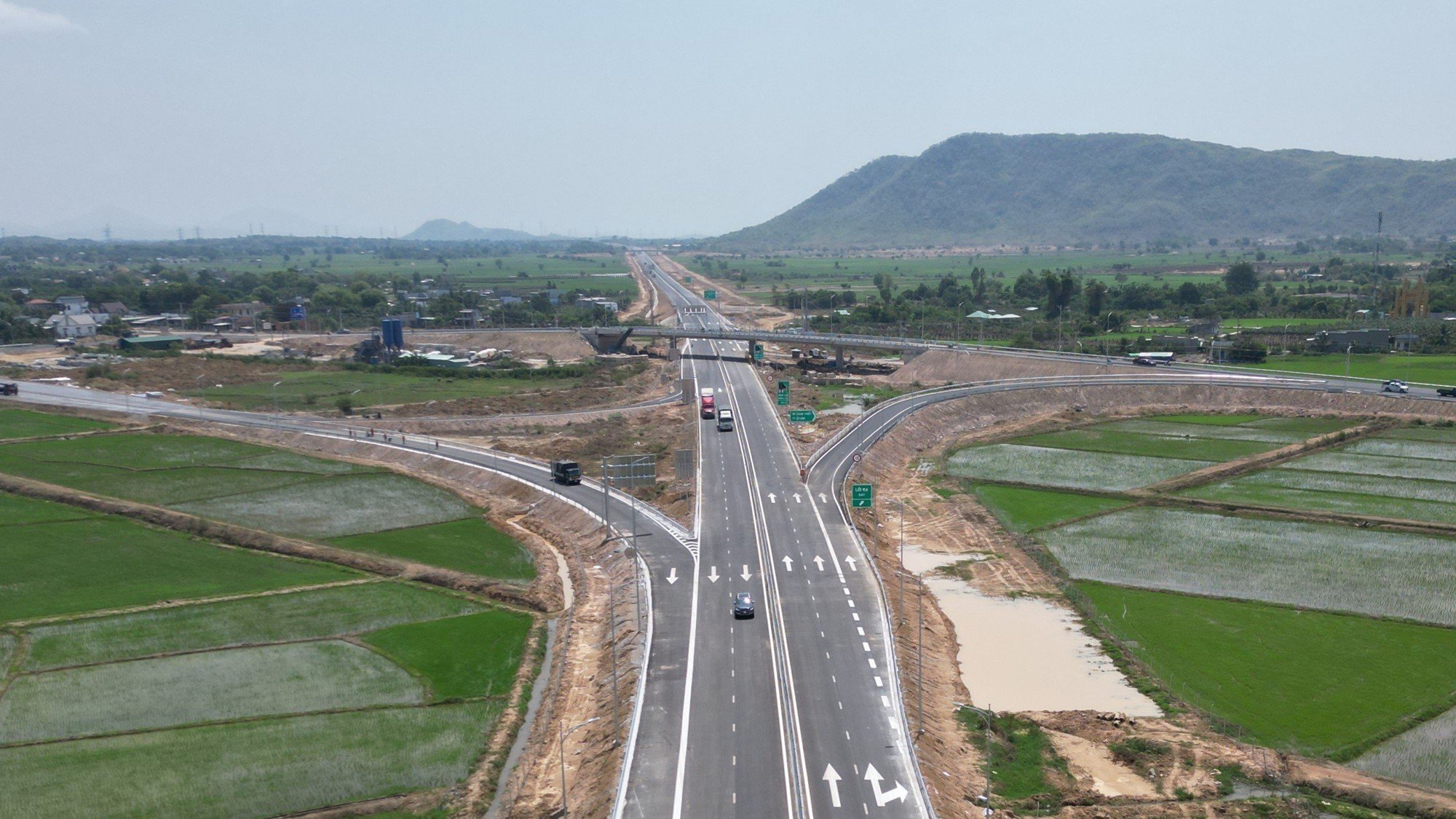
At the Ma Lam intersection with National Highway 28, vehicles can enter Phan Thiet City or travel to Di Linh - Lam Dong.
At the time the Vinh Hao - Phan Thiet expressway was put into operation, a reporter from Thanh Nien newspaper was present at the Ma Lam interchange (the exit to National Highway 28 in Ham Thuan Bac district) to record this important event. Mr. Nguyen Minh Hoang (a resident of Ham Tri commune, Ham Thuan Bac district) stopped his car on the National Highway 28 overpass to witness what he considered a "historic moment for his hometown".
Mr. Hoang said that his family are farmers and had to give up a plot of land planted with dragon fruit to make way for this expressway. Therefore, when he heard the news that the expressway was officially put into operation, he wanted to stand on the bridge and see firsthand how the traffic flows. "I think with a smooth-running expressway like this, my hometown will quickly change, not only will the economy develop, but the smooth travel of the people will contribute to improving their cultural and spiritual lives," Mr. Hoang felt.
Speaking to Thanh Nien newspaper, Chairman of Ham Thuan Bac District People's Committee Nguyen Ngoc Thach could not hide his excitement that the province now has two expressways passing through it, inaugurated at the same time, which is extremely significant.
"These two expressways will open up vast opportunities for our locality in terms of trade, economic development, and improving the lives of our people in all aspects. Besides facilitating travel to Khanh Hoa, Ho Chi Minh City, and the Central Highlands, travel time will also be significantly reduced. The inauguration of these expressways today will create favorable conditions for potential investors to come to Ham Thuan Bac," Mr. Thach expressed his expectations.
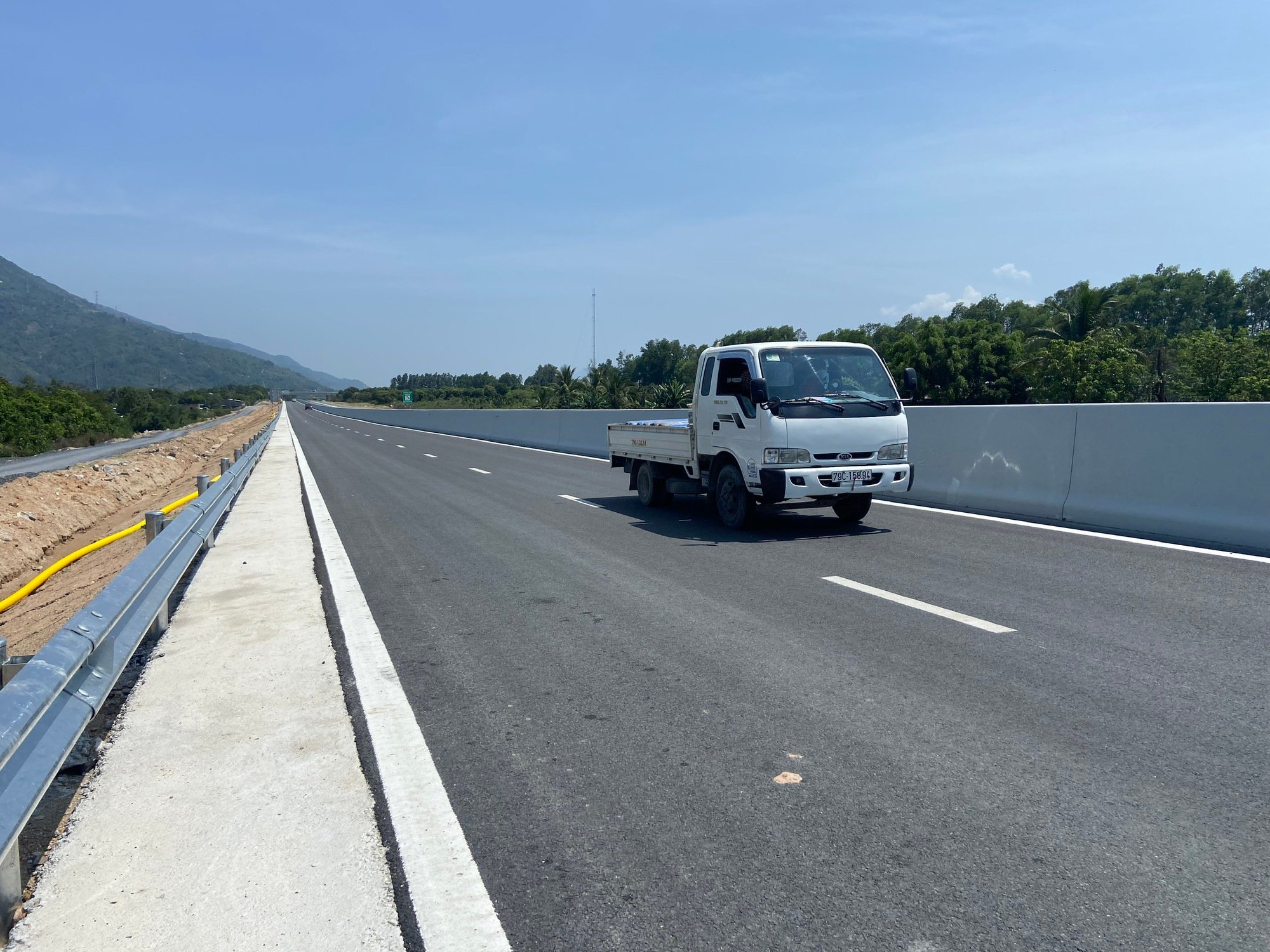
Vehicles traveling on the Nha Trang - Cam Lam expressway on the morning of May 19th.
Reduce travel time between Ho Chi Minh City and Khanh Hoa by half.
According to economic experts, the Nha Trang - Cam Lam expressway, connecting the Cam Lam - Vinh Hao, Vinh Hao - Phan Thiet, and Phan Thiet - Dau Giay expressways, forms the "backbone" for the southern provinces, shortening travel time from Ho Chi Minh City to these provinces by half. This, in turn, leads to socio-economic development throughout the region.
Transportation expert Chu Cong Minh stated that to travel, you need roads; to become wealthy, you need highways. Looking at developed countries like Japan, you'll see that their highway and subway systems are already extensive. Meanwhile, in the southern region, especially in Ho Chi Minh City, the country's economic hub, the transportation network has been very limited. There are only two highways: Ho Chi Minh City - Long Thanh - Dau Giay and Ho Chi Minh City - Trung Luong, which somewhat restricts the potential and driving force of the city and the entire southern region. Furthermore, National Highway 1A has almost ceased to function as a national highway and has become an urban road due to the excessive number of houses lining the road, low traffic speeds, and the road's condition and narrowness.
How is traffic on the new expressways?
If you're entering the Vinh Hao - Phan Thiet expressway from Ho Chi Minh City, just go straight along the Dau Giay - Phan Thiet expressway to the Ham Kiem interchange to reach Vinh Hao, then follow the Vinh Hao interchange to National Highway 1 to continue on to Ninh Thuan and Khanh Hoa.
If traveling from Ninh Thuan or Khanh Hoa provinces, you can use the Vinh Hao interchange to access this expressway. Additionally, the interchanges at Cho Lau (National Highway 1 leading into Hai Ninh commune, 3 km away), Dai Ninh interchange (from National Highway 1 via National Highway 28B into Song Binh commune, 4 km away), Ma Lam interchange (crossing National Highway 28 at Ham Tri commune, Ham Thuan Bac district), and finally the Ham Kiem interchange leading to National Highway 1, which connect to the Phan Thiet - Dau Giay expressway, have all been completed and are open to traffic.
Unlike the Phan Thiet - Dau Giay expressway, which has 4 lanes, 2 emergency lanes, a maximum speed of 120 km/h, and a minimum speed of 60 km/h, the Vinh Hao - Phan Thiet expressway only has a maximum speed of 80 km/h. This expressway also has 4 lanes, but there is only one emergency rest stop every 4-5 km (each emergency rest stop is only 270 m). According to the Ministry of Transport, land clearance is currently underway on both expressways to build rest stops along the road. Therefore, vehicles traveling on these expressways should be aware that there are no refueling stations available if they run out of fuel.
Similarly, according to the Ministry of Transport's plan, cars are allowed to travel on the Nha Trang - Cam Lam expressway at a maximum speed of 80 km/h and a minimum speed of 60 km/h. The Nha Trang - Cam Lam expressway project will become the first route to implement an intelligent transportation system (ITS), including a monitoring and control system on the route and tunnel, a non-stop toll collection system, a communication system, traffic cameras, etc.
Que Ha - The Quang
Therefore, when the Phan Thiet - Vinh Hao and Vinh Hao - Cam Lam expressways are opened, they will connect to the Nha Trang - Cam Lam and Phan Thiet - Dau Giay expressways, linking to the Ho Chi Minh City - Long Thanh - Dau Giay expressway. Travel time between Ho Chi Minh City and the southern Central provinces will be shortened by half, saving fuel, time, and costs. This will lead to lower prices for goods and increased competitiveness. Tourism and real estate will also boom. In addition, the seamless connection of expressways will help reduce congestion on National Highway 1A. "When localities connect with the economic hub of Ho Chi Minh City, it will help boost Ho Chi Minh City's development, thereby attracting surrounding provinces and regions. Therefore, to develop the economy, transportation infrastructure must come first, especially the construction of expressways," expert Chu Cong Minh assessed.
Sharing the same view, architect Khuong Van Muoi, former Chairman of the Ho Chi Minh City Architects Association, assessed that the opening of the Nha Trang - Cam Lam and Vinh Hao - Phan Thiet expressways also helps reduce pressure on National Highway 1A, the railway, and air transport. This is not only a driving force for economic development in Binh Thuan and Khanh Hoa provinces, but also for the South Central and Southeast economic regions, and even extends to the Mekong Delta region, as these expressways form the "backbone" connecting the coastal provinces of the South Central, Southeast, and Southern regions.
"Ho Chi Minh City in particular and the southern key economic region in general are making a huge contribution to the country's GDP. This region also concentrates international ports, cargo centers, transit centers, logistics centers, international airports... Khanh Hoa, Binh Thuan, and Ninh Thuan are provinces with strong potential for tourism, especially Khanh Hoa and Binh Thuan, two famous tourist destinations that will benefit greatly from improved transportation, thereby promoting the activities of the tourism industry," Mr. Muoi emphasized.
Source link

![[Image] National Assembly discusses the implementation of the socio-economic development plan.](https://vphoto.vietnam.vn/thumb/1200x675/vietnam/resource/IMAGE/2026/04/20/1776696707422_ndo_br_img-20260420-185419-jpg.webp)
![[Photo] General Secretary and President To Lam meets with National Assembly delegates from ethnic minorities.](https://vphoto.vietnam.vn/thumb/1200x675/vietnam/resource/IMAGE/2026/04/20/1776696701056_a1-bnd-8331-3342-jpg.webp)















































































Comment (0)