

The decision, issued this week, requires Thien Khanh Pharmaceutical Co., Ltd. to be responsible for recalling and destroying all infringing products currently circulating in the market, and to complete a report on the handling results and submit it to the Drug Administration of Vietnam before January 31, 2026.
 |
| The Ministry of Health has requested a concentrated campaign to inspect and strictly handle violations in the pharmaceutical and cosmetic sectors, especially on e-commerce platforms and social media. |
According to the Drug Administration, the recall stems from the results of testing product samples taken by the Quang Ngai Center for Testing Drugs, Cosmetics, and Food at two pharmacies.
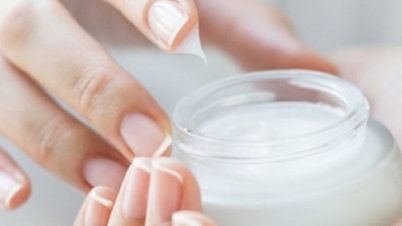
Analysis results show that Tiacortisol skin cream contains Propylparaben, a preservative commonly used in the cosmetics industry to prevent mold and bacteria. However, this ingredient was not declared in the product registration documents approved by the authorities, violating regulations on cosmetic management.
Besides the ingredient list violation, the product name "TiACortisol" on the label is considered likely to mislead users into thinking it is a medication, when in fact the product is only a cosmetic for external use.
Naming products in a way that easily evokes the active ingredient or treatment drug is considered a violation of regulations and poses a risk of consumers self-medicating with the product.
The Drug Administration of Vietnam has assigned the Ho Chi Minh City Department of Health to directly supervise the recall and destruction process of Thien Khanh Pharmaceutical Co., Ltd.
Simultaneously, the regulatory agency will conduct a comprehensive inspection of the company's compliance with the law in its production and business activities. If any signs of producing or distributing counterfeit goods are detected, the case will be transferred to the investigative agency for handling according to the law.
Simultaneously, the Departments of Health in provinces and cities are required to notify pharmacies and retail outlets to immediately cease selling Tiacortisol skin cream, recall the product, and return it to the supplier.
The authorities' drastic measures come as the pharmaceutical and cosmetic markets are being increasingly scrutinized to prevent counterfeit and substandard products and misleading advertising.
The day before, the Drug Administration also issued a decision to recall a batch of feminine hygiene solution because it contained an ingredient that was not permitted for use.
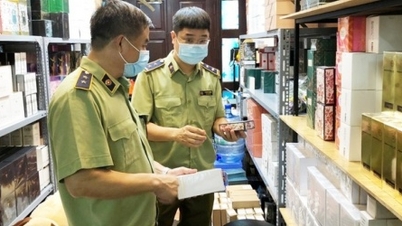
Regarding the increased risk of smuggling, trade fraud, and counterfeit goods during the year-end period, the Ministry of Health has requested a peak inspection campaign to strictly handle violations in the pharmaceutical and cosmetic sectors, especially on e-commerce platforms and social media.
The Drug Administration Department (Ministry of Health) has recently sent a document to the Departments of Health in provinces and cities requesting them to strengthen measures to combat, prevent, and curb smuggling, trade fraud, and counterfeit goods in the pharmaceutical and cosmetic sectors, especially during the peak period at the end of the year and the Lunar New Year of the Horse in 2026.
Accordingly, the Drug Administration of Vietnam requests that local Departments of Health urgently coordinate with the Steering Committee 389 of provinces and cities, along with functional forces such as Market Management, Police, and Customs, to implement a peak inspection campaign on compliance with legal regulations in the health sector for establishments registering drugs, declaring products, manufacturing and trading pharmaceuticals and cosmetics from December 15, 2025 to March 31, 2026.
The inspection focuses on the legality of the production and business establishment; business eligibility certificates and the maintenance of operating conditions; the legality of products through drug registration certificates and cosmetic product declaration forms; and the origin, quality, and labeling of products.
Regarding pharmaceuticals, authorities focus on checking business licenses, adherence to good practice standards (GPs), marketing authorization numbers or import permits, invoices and supporting documents, expiration dates, and the sale of prescription drugs.
For cosmetics, the inspection includes the certificate of eligibility for cosmetic production, product declaration activities and product information files (PIF), the conformity between the declared information and the product in circulation, labeling of ingredients, features, uses, advertising activities, as well as origin, source and import documents for imported cosmetics.
In addition, the Drug Administration of Vietnam requested increased scrutiny and inspection of drug and cosmetic business activities on e-commerce platforms and social media.
In cases where unauthorized drugs, cosmetics that have not been officially registered by the authorities, products not permitted for sale through e-commerce, products subject to recall or destruction notices, or products with advertising violations are discovered, local authorities should promptly handle the situation and report it to relevant ministries and agencies for coordinated resolution.
The Drug Administration Department emphasized the firm commitment to strictly handling violations by organizations and individuals in accordance with the law, ensuring there are no forbidden areas and no exceptions; and simultaneously transferring files to investigative agencies for criminal prosecution in cases with signs of criminal activity such as large value of goods, serious consequences, organized violations, or repeat offenses.
Furthermore, the Drug Administration of Vietnam requests that the Departments of Health in provinces and cities closely coordinate with relevant agencies in their localities to effectively implement the management of pharmaceuticals and cosmetics, contributing to protecting the health and rights of consumers. If any difficulties or obstacles arise, they should be promptly reported to the Drug Administration of Vietnam for guidance and resolution.
With the aim of improving supervision efficiency, simplifying administrative procedures, clearly defining responsibilities, and especially tightening control over cosmetic advertising – an area plagued by numerous shortcomings and inaccuracies in product communication – the Ministry of Health is seeking feedback on the draft of a new Decree on cosmetic management, replacing Decree 93/2016/ND-CP.
According to the draft, cosmetic products circulating in the market must ensure that they do not harm human health when used correctly according to the instructions, labeling information, and dosage form. Owners or manufacturers must assess the safety of each product according to the ASEAN Guidelines for Cosmetic Safety Assessment.
Furthermore, cosmetics must meet the requirements for limits on heavy metals, microorganisms, and trace impurities as stipulated in the updated annexes from the ASEAN Cosmetics Council (ACC). The Ministry of Health will also publicly release a list of banned or restricted ingredients, including their concentration, content, and scope of use, so that businesses and localities are fully aware of them.
A notable new point in the draft is that cosmetic businesses will be fully responsible for the content of their product advertisements without needing to go through the approval procedure with the regulatory agency. However, the advertising content must be consistent with the nature of the product, accurately reflect the advertised uses, and not mislead consumers into believing it is medicine or capable of treating diseases.
The Ministry of Health proposes a complete ban on exploiting the reputation of the healthcare sector, such as using images, names, articles, or uniforms of doctors, pharmacists, healthcare workers, or healthcare facilities for advertising. At the same time, it strictly prohibits the use of misleading language, exaggeration of benefits, or absolute claims.
Source: https://baodautu.vn/thu-hoi-kem-boi-da-tiacortisol-d486722.html
![[Image] National Assembly discusses the implementation of the socio-economic development plan.](https://vphoto.vietnam.vn/thumb/1200x675/vietnam/resource/IMAGE/2026/04/20/1776696707422_ndo_br_img-20260420-185419-jpg.webp)



![[Photo] General Secretary and President To Lam meets with National Assembly delegates from ethnic minorities.](https://vphoto.vietnam.vn/thumb/1200x675/vietnam/resource/IMAGE/2026/04/20/1776696701056_a1-bnd-8331-3342-jpg.webp)













































































Comment (0)