


A cooperation agreement was signed between Vietnamese and Cambodian businesses at the Border Region Trade Connection Forum in December 2025.
Photo: DUC TOAN
A bright spot in border trade economy.
An Giang possesses a dual advantage in agriculture and economy, with a coastline stretching over 200km. This potential and strength have created a comprehensive, multi-modal economic corridor directly connecting with Cambodia. The province shares a land border with Cambodia stretching over 148km, featuring three international border gates: Vinh Xuong, Tinh Bien, and Ha Tien; and two national border gates: Khanh Binh and Giang Thanh. These border gates enable An Giang to become a strategic gateway for two-way goods transit, a key trading hub for the entire Mekong Delta region with Phnom Penh (Cambodia) and the Gulf of Thailand.
According to Vice Chairman of the Provincial People's Committee Le Trung Ho, amidst the volatile regional economy, the border provinces of Vietnam and Cambodia are striving to maintain stable trade growth. In An Giang province in particular, border trade continues to be a bright spot, a strong driving force supporting the production and business activities of enterprises. From 2021 to 2025, the total value of goods exported and imported through land border gates is projected to increase by an average of 12.7% per year. Specifically, the value of goods exported across the land border from An Giang to Cambodia averages over 500 million USD per year. Conversely, the value of goods imported in the opposite direction exceeds 600 million USD per year. The structure of goods traded in both directions is mutually complementary, including: raw materials, agricultural products for production, aquatic products, rice, consumer goods, fertilizers, etc.
Trade and services have also seen development. The province's border area currently has 17 border markets, accommodating over 1,700 small traders; and 3 convenience stores. In addition, the province consistently prioritizes investment and development of warehousing facilities at border gates. Within the functional zones of the An Giang border economic zone, 8 businesses have locations for the collection, inspection, and monitoring of export and import goods. “The governments of both countries pay special attention to the development of border trade. For An Giang, trade cooperation with Cambodia not only has economic significance but also contributes to strengthening border security and enhancing the traditional solidarity and friendship between the people of the two countries,” emphasized Comrade Le Trung Ho.
Developing border trade infrastructure
However, alongside the achievements, An Giang province frankly acknowledges that border trade activities still have some limitations that need to be addressed. Currently, border gate infrastructure, warehouses, logistics, and connecting transportation are not yet synchronized and have not kept pace with the growth rate of trade. Customs clearance procedures and times are still not truly stable at certain times, especially for agricultural and aquatic products that require high preservation standards.
Furthermore, the sharing of market information, product standards, and technical regulations between businesses on both sides remains limited, leading to increased costs and reduced competitiveness of goods. On the other hand, cross-border e-commerce, cross-border digital payments, and business support services have not yet developed to their full potential, affecting the ability to expand trade in a modern and sustainable manner.
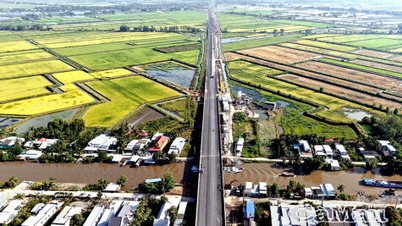
According to Nguyen Duy Linh Thao, Deputy Director of the Department of Industry and Trade, to develop border trade, the province is focusing on improving border gate infrastructure and logistics. This includes accelerating investment in infrastructure for the Tinh Bien, Khanh Binh, and Ha Tien border economic zones; constructing large-scale inland ports, bonded warehouses, and cold storage facilities; and developing a transportation system connecting border gates with national highways, expressways within and outside the province, and industrial zones.
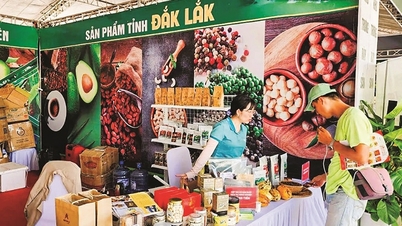
“The province will focus on promoting digital transformation in border trade; supporting businesses in expanding into the Cambodian market; and developing border trade and services. In addition, we will upgrade border markets; develop new types of trade such as duty-free shopping centers, logistics services, and international transportation. At the same time, we will strengthen bilateral cooperation with Kandal and Takeo provinces; and organize annual Vietnam-Cambodia border fairs in Tinh Bien and Long Binh,” Ms. Nguyen Duy Linh Thao emphasized. (DUC TOAN)
| According to the development orientation for Vietnam-Cambodia border trade infrastructure until 2030, with a vision to 2035, the Ministry of Industry and Trade prioritizes the completion and upgrading of the trade infrastructure system in border gate areas. The focus is on developing logistics centers, bonded warehouses, and cold storage facilities at important international border gates such as: Binh Hiep, Moc Bai (Tay Ninh); Ha Tien - Giang Thanh, Tinh Bien - Vinh Xuong (An Giang); Thuong Phuoc - Dinh Ba (Dong Thap); Hoa Lu (Binh Phuoc); Le Thanh (Gia Lai)... to meet the increasing demand for goods movement. By 2030, a border trade fair and exhibition center will be established in areas with great trade and tourism potential in An Giang, including Chau Doc and Tinh Bien. This will be a key element in promoting trade, advertising goods, and connecting businesses along the production-distribution-logistics chain. |
Source: https://baoangiang.com.vn/thuc-day-giao-thuong-vung-bien-a471552.html













































































Comment (0)