

No one remembers exactly when Mão Điền rice rolls originated. Villagers only recount that, from their ancestors' time, fragrant rice flour was soaked from the evening before, then steamed into thin, soft, and smooth sheets early in the morning. Thus, the craft was passed down through mothers and sisters, becoming a part of the memories of every afternoon in the Kinh Bắc countryside.
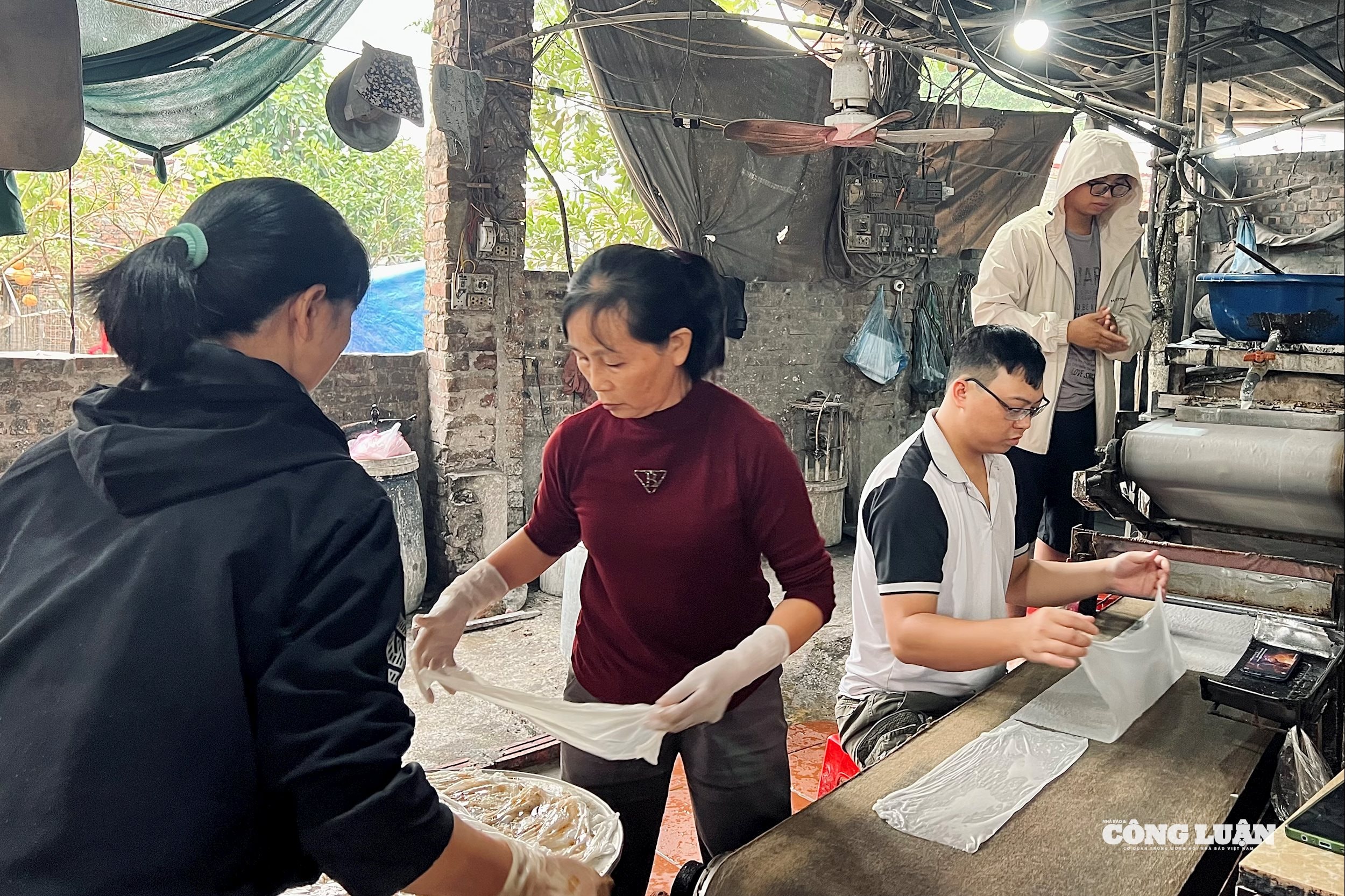
In the past, rice rolls were only made by hand. The whole family would gather around a pot of boiling water, the person making the rolls skillfully spreading the batter thinly and evenly, lifting the hot rolls onto a tray without tearing a corner. Making about 20kg a day was considered a strenuous effort. By 2000, to meet the growing demand, some households in the village began switching to machines. Mrs. Vu Thi Quyen's family, who have preserved the craft for over twenty years, did the same. From hands accustomed to making each roll by hand, her family can now produce up to 1 ton of rice rolls a day, supplying many markets and provinces.
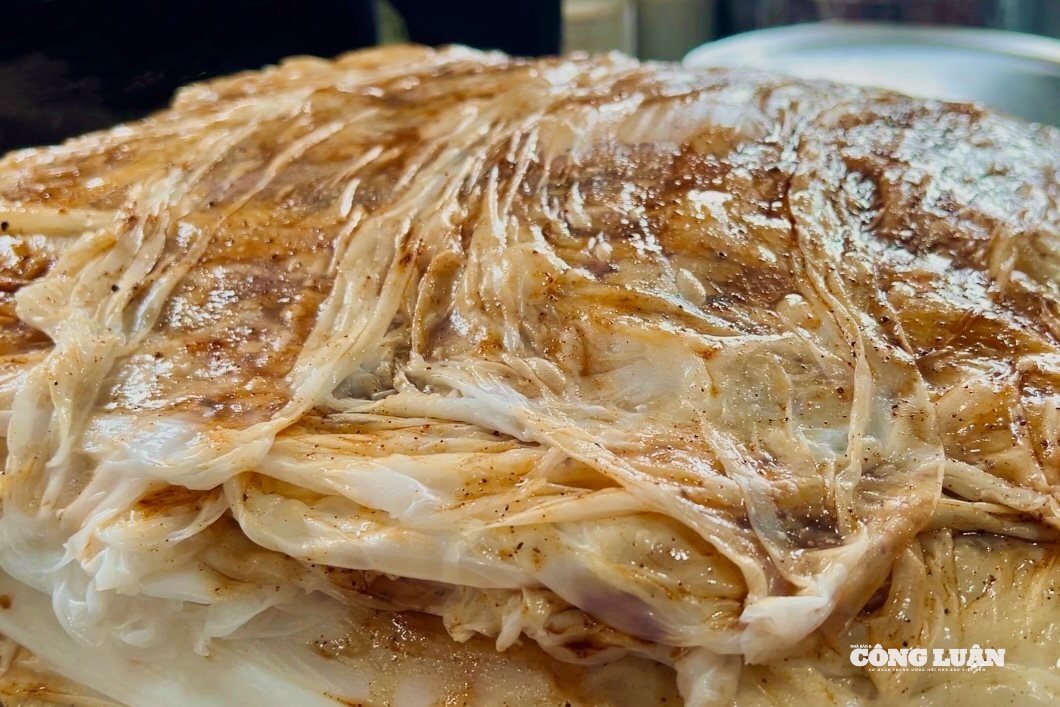
Currently, Mão Điền offers three types of rice rolls: red, white, and meat-filled. Of these, the most distinctive is the red rice roll – a thin rice paper wrapper topped with a golden, fragrant layer of fried onions and rendered fat. In the past, it was eaten with just the rice roll and dipping sauce. Nowadays, regular customers often add a piece of pork sausage to enhance the rich, sweet flavor, making it a truly authentic afternoon snack from Bắc Ninh .
Word of mouth spread, and Mão Điền rice rolls were sold everywhere. For over three months now, Quang has been driving from Hanoi every day to get rolls from Mrs. Quyên's house to sell in the city. He smiled and said, "My regular customers are addicted to the taste of these red rolls. Every day there are customers buying them; many days I've sold out but still have customers asking for them."
Mão Điền rice rolls have thus become a popular snack. They are no longer just an afternoon treat for the people of Kinh Bắc region. Now, they travel by vehicle into the city, reaching markets, small eateries, and even those who have never set foot in Mão Điền.
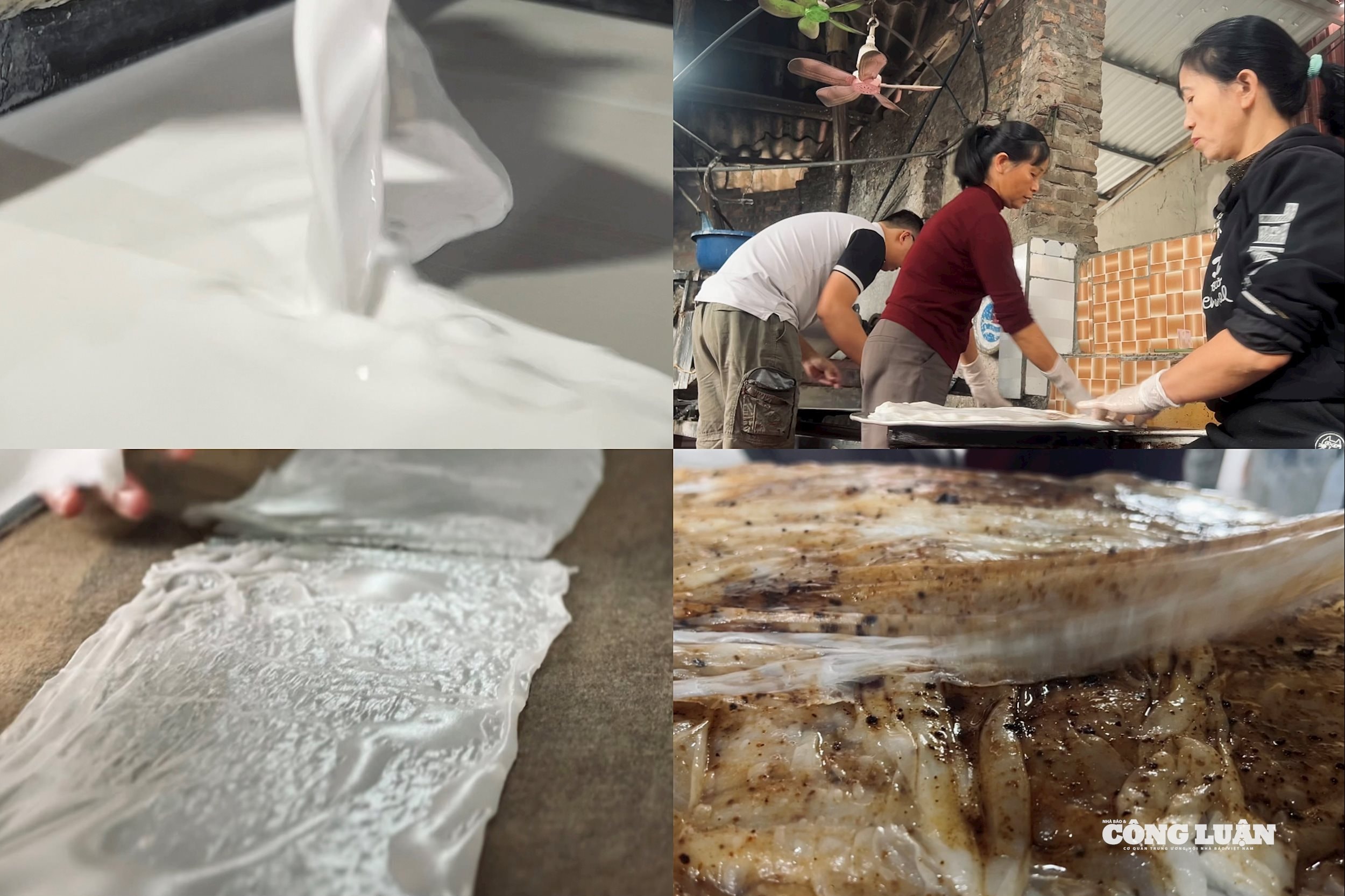
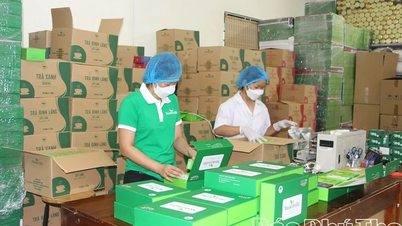
To make a delicious batch of rice paper rolls, the baker must go through many steps: selecting fragrant rice, washing it thoroughly, soaking it for the right amount of time, grinding it finely, and then filtering the flour. After resting, the flour is put into a steaming machine, and each hot layer of rice paper is separated and brushed with scallion oil to enhance the aroma. Of all these steps, the most important are choosing the right type of rice – the "soul" of the rice paper roll – and the stability of the steaming machine.
Amidst the rhythmic hum of the machinery, Mrs. Quyen confided, "Now, only about five households in the village still practice this trade. It's very hard work; even with the machines, we still have to work non-stop. We steam the rice at night to sell in the morning, and steam it at noon to sell in the afternoon. The income isn't high, so many families have abandoned the trade..."
In the late afternoon, the rice roll stall becomes a familiar meeting place for the locals. Eating rice rolls in the afternoon is not just a quick snack, but a long-standing habit, an afternoon treat intertwined with the rhythm of life for generations. No matter how busy they are, the people here still maintain the tradition of "buying a little afternoon treat to take home for the whole family." As a result, the rice roll stall is never without customers. Some days, the tray of rice rolls is already empty by just after the afternoon.
.jpeg)
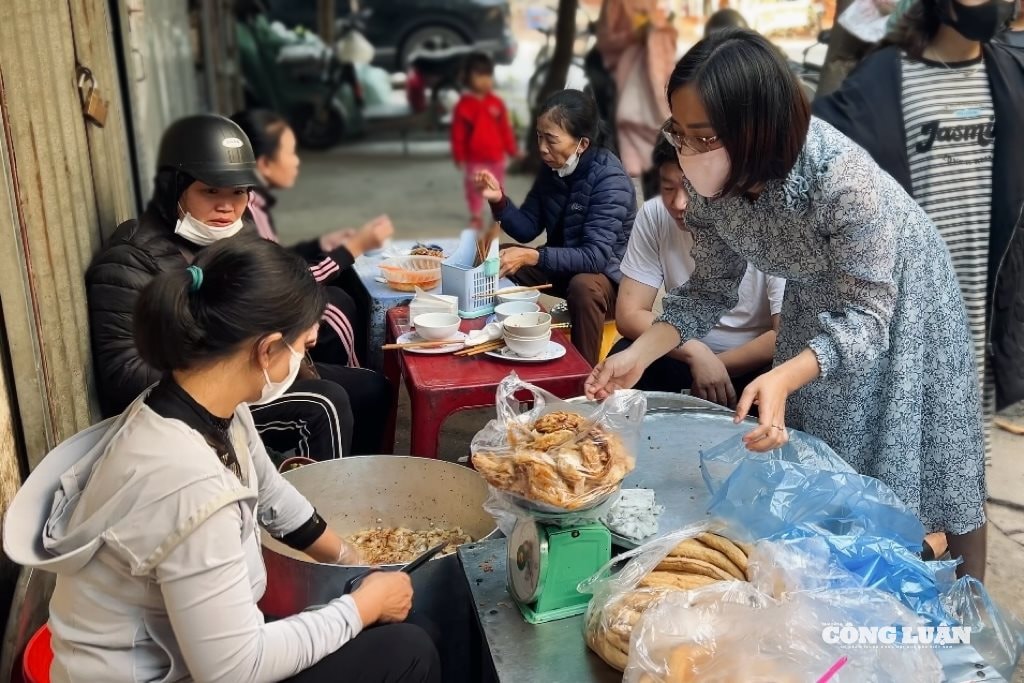
Among the daily customers, there are diners who have considered Mão Điền rice rolls a familiar taste for over a decade: "I've been eating Mão Điền rice rolls since I was in elementary school. The taste has remained the same since the old days; if I pass by and see any left, I have to buy some. I've eaten them so often that I've become accustomed to them and miss them. Missing a rice roll in the afternoon feels like an incomplete day," shared Ms. Diễm Quỳnh.
Young people love it because it's delicious. Those far from home love it because it brings back memories. And locals cherish the craft as if it were a part of their childhood. Because this craft, though as fragile as a sheet of cake, clings firmly to people's hearts like the warmth of the stove permeates their clothes each morning. And indeed, this cake endures not because of any fanfare, but because it carries within it the story of a patient and quiet craft village, where the hot steam has forged skillful hands, people deeply devoted to rice, and an unmistakable taste of home.
In an era where everything can be done faster and more conveniently, Mão Điền rice rolls still maintain a slow pace – the pace of those who don't want to lose the soul of their craft. Just one roll, dipped into a bowl of clear fish sauce with the sizzling fried onions, and one can feel the sounds of the Kinh Bắc countryside falling in the evening, light as a breeze but deep as a memory.
Source: https://congluan.vn/thuc-qua-lam-nen-nep-chieu-xu-kinh-bac-10321679.html




















































































Comment (0)