

What is a 1-month term deposit?
Time deposits are a form of savings where customers choose to deposit their money for a specific period and receive a fixed interest rate.
On the maturity date, customers will receive the full interest rate on their deposit. If they withdraw before the maturity date, they will only receive the interest rate equivalent to the non-term deposit rate. Conversely, if the customer does not complete the settlement procedure on the maturity date, the interest will be added to the principal and rolled over for another term. The interest rate for the renewal period will be equal to the current interest rate for the original deposit period.
A 1-month term deposit is considered the first term in the interest rate schedule for term deposits at all banks. 1-month deposits typically offer higher interest rates compared to demand deposits and current account deposits. This is also considered a popular deposit option for salaried employees today.
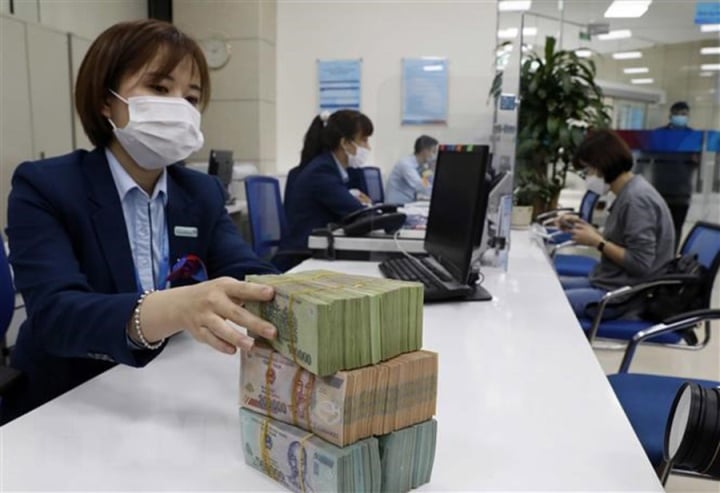
Illustrative image
Advantages of a 1-month term deposit
To participate, customers simply need to open a savings account at the bank or own an ATM card from that bank.
The procedure is very simple and quick; customers only need to provide their identity card or passport.
With short terms, customers can quickly recover both principal and interest.
Customers can deposit money regularly on a monthly basis or withdraw funds whenever needed within a month without worrying about being charged interest at the non-term rate. A 1-month savings term is suitable for customers who frequently use working capital, especially business customers, salaried employees, and enterprises.
When employee payroll funds are idle for short periods, this timeframe is ideal for generating additional revenue.
Depositing money into the account is easy and diverse; customers can deposit directly at the bank counter or make savings deposits via Internet Banking. Additionally, if you already have an ATM card, you can also choose to deposit savings for a 1-month term using the card without a passbook. The interest rate earned is the same as the interest rate for a savings passbook.
Minh Huong (compiled)
Source


![[Photo] General Secretary and President To Lam meets with National Assembly delegates from ethnic minorities.](https://vphoto.vietnam.vn/thumb/1200x675/vietnam/resource/IMAGE/2026/04/20/1776696701056_a1-bnd-8331-3342-jpg.webp)
![[Image] National Assembly discusses the implementation of the socio-economic development plan.](https://vphoto.vietnam.vn/thumb/1200x675/vietnam/resource/IMAGE/2026/04/20/1776696707422_ndo_br_img-20260420-185419-jpg.webp)



































































































Comment (0)