


 |
| Presenting a citizen ID card from a mobile phone with the VNeID application installed at medical facilities helps people have their procedures processed quickly and accurately. |
Students are interested, and the school is easier to manage.
At Tran Phu Secondary School (Thuan Hoa District), an English lesson for the 7th graders in class 7/6 became more lively and engaging thanks to the application of technology in teaching. On a large TV screen, lessons were illustrated with images, videos , and interactive games. Student Nguyen Minh Anh said: "Learning through visual images and videos helps me understand and remember vocabulary and grammar faster. We also feel more confident because we learn while playing, and it's very effective."
Not only Tran Phu Secondary School but most schools in the area have applied technology and software such as PowerPoint, Canva, online learning software like Google Meet, Zoom, and automated assessment tools to teaching. Teachers of subjects such as literature, history, geography, etc., have incorporated visual images and videos relevant to the lesson topics, created games with multiple-choice questions, and digital mind maps to help students enthusiastically absorb knowledge faster and remember lessons longer.
Mr. Tran Huu Thang, Principal of Tran Phu Secondary School, said that since around 2020, the school has been promoting the application of information technology and utilizing digital platforms in teaching and management, thereby facilitating and improving the quality of teaching and learning. Students not only acquire knowledge better but also develop their creative abilities, creating video clips to participate in several competitions.
At the management level, the city's education sector has digitized management data, building a comprehensive database of students and teachers from preschool to high school. This has provided numerous benefits to teachers, administrators, students, and parents. These are the foundations for implementing public education services such as school registration, school transfers, and grade transitions, saving students and parents time and travel. To date, over 590 schools, with more than 273,000 students and 22,000 administrators, teachers, and staff, have been digitally identified, opening up a flexible, interactive education model to serve digital citizens in the future.
Another highlight is that the Hue-S application helps to closely connect schools, teachers, and parents. Notifications, grades, leave requests, and other student-related matters are all processed quickly and efficiently on the digital platform.
As someone who closely follows the digital transformation process in the province, Mr. Nguyen Xuan Son, Director of the Department of Science and Technology, believes that the education sector is considered one of the sectors that has made the most breakthroughs in applying digital technology and implementing digital transformation. Hue has also been selected by the Ministry of Education and Training as one of the five pilot localities leading the digital transformation of the entire education sector.
To date, the education sector has shifted 100% of its activities connecting parents, students, teachers, and schools to the digital space through Hue-S, contributing to changes and increased interaction among all parties. "Clearly, digital transformation in the education sector has made positive strides, contributing not only to the development of digital government but also to promoting the development of the digital economy and digital society," Mr. Nguyen Xuan Son assessed.
 |
| Applying digital technology to lectures helps students understand more easily, learn faster, and increase interaction. |
It benefits doctors and patients.
When visiting Hue Eye Hospital for an examination, after simply presenting her health insurance card number on the VNeID (national identification) application on her smartphone, in less than 3 minutes, Ms. NTT had her information updated by medical staff and was transferred to the treatment department without having to fill out any paperwork manually as before.
Ms. Nguyen Thi Nhu Y, Head of the Planning - Operations - Nursing Department of Hue Eye Hospital, said that since the end of 2023, the unit has implemented a comprehensive system for receiving patients via updated citizen identification numbers (CCCD) or VNeID with health insurance codes; cashless payment; registration of stay on the ASM software; and sending medical examination and treatment data of health insurance patients to the electronic health record system (ESR) to complete the data and integrate the electronic health record with VNeID.
Thanks to the application of convenient technology platforms, many medical facilities have been able to receive and process procedures for people quickly and conveniently. The diversification of payment methods for hospital fees also facilitates both medical staff and patients. Hospitals have also digitized all test orders and results, delivering results through software systems; and effectively managed pharmaceutical, medical supply, and chemical inventory using digital technology software.
Thanks to the application of management software and electronic health records (E-records), hospitals in Hue have digitized most processes from admission and treatment to payment, helping patients save time and reduce inconvenience.
According to representatives from the Department of Health, the sector is focusing on digital transformation in three key areas: smart medical examination and treatment; smart healthcare; and smart hospital management. Simultaneously, the entire sector is also aiming for two target groups of activities: a digital transformation group to reduce inconvenience and complaints from the public, and a group to build smart healthcare to create more convenience and increase public satisfaction.
Currently, hospitals in the area are connecting, sharing, and integrating relevant medical data with the electronic health record system integrated into the VNeID application. Through the electronic health record system and VNeID, patients, doctors, and their relatives can easily look up the process of examination, treatment, prescriptions, and healthcare to receive timely and effective treatment. This data also helps doctors make more accurate diagnoses and manage medical records scientifically and securely.
One of the achievements in digitalization for public healthcare is the implementation of telemedicine through the "Doctor for Every Home" software. Currently, 743 healthcare professionals have been granted accounts, over 185,900 citizen accounts have been created, and nearly 6,000 people have used the service. This model has great potential in providing faster and better access to healthcare for the people, especially in remote and rural areas.
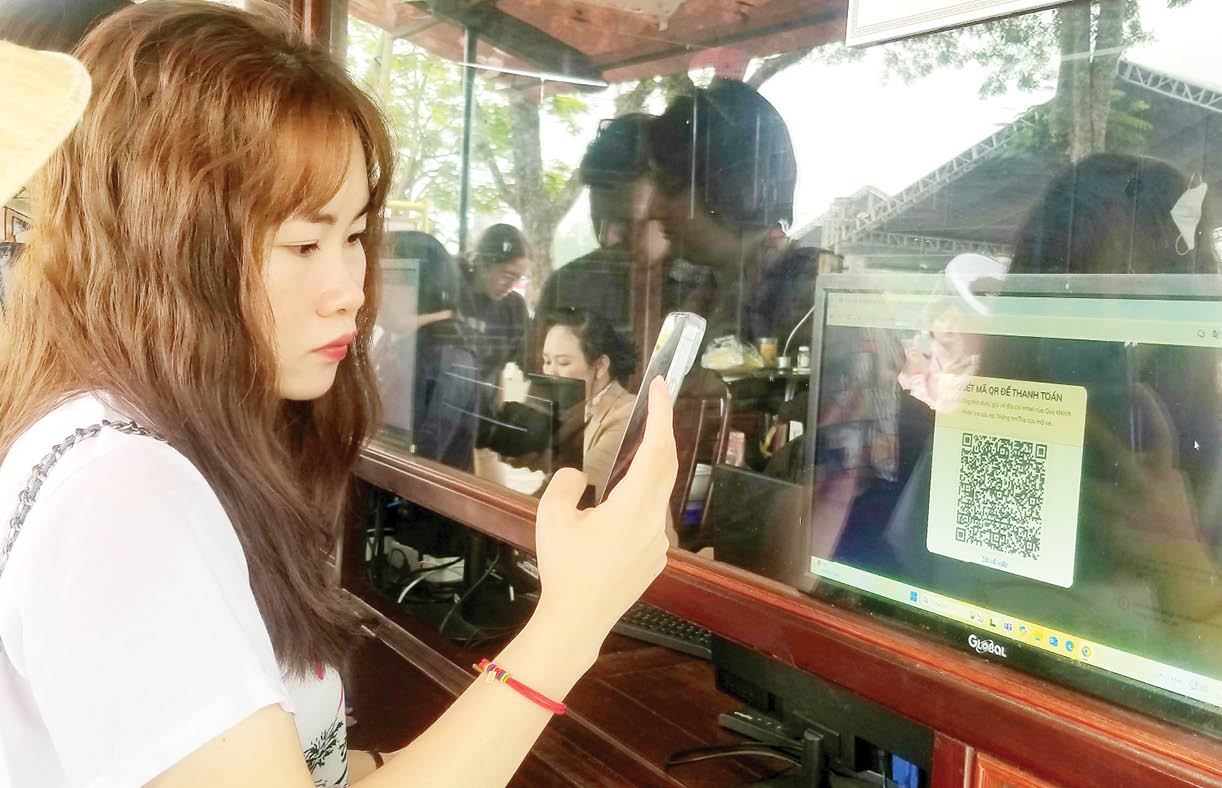 |
| Public services and utilities provide convenience and safety for citizens. |
Building a transparent and people-oriented workplace.
Digital transformation continues to be a topic of particular interest and extensive discussion at the ongoing 9th Session of the 15th National Assembly. In Hue, digital transformation is evident, permeating many sectors and daily life, changing the face of government offices, and paving the way for the development of digital government and smart cities. No longer just a slogan, the digitization of administrative activities has been creating practical changes in the relationship between the government, citizens, and businesses.
Mr. Giap Van Hoa, representing a transportation business in the city, said that previously, each time they applied for a business license or submitted tax documents, the company had to travel back and forth many times, wasting a lot of time and effort. Now, with online public services and the Hue-S platform, he can submit documents, check results, and receive feedback from anywhere via the application installed on his mobile phone. Everything is handled transparently, quickly, and saves time and costs for the business.
Ms. Nguyen Thi Phuong (Phuong Duc Ward, Thuan Hoa District) no longer hesitates when she needs to complete administrative paperwork. "Now everything is updated on the VNeID application, so no matter where I am, I can still perform some administrative procedures such as 'notifying residence,' 'registering a vehicle for the first time,' submitting complaints about incidents... with just a few quick steps," Ms. Phuong shared.
Digital platforms such as Hue-S, VNeID, administrative procedure information systems, open data, digital maps, online learning platforms, digital reporting, virtual assistants, etc., are not just technical tools, but have become "soft infrastructure" that helps citizens and businesses interact conveniently with the government, enabling administrative agencies to operate more efficiently and transparently.
According to Mr. Nguyen Xuan Son, Director of the Department of Science and Technology, 100% of the city's departments and agencies have now implemented digital platforms in handling work, from documents, work schedules, and reports to receiving and responding to on-site feedback. In particular, the city is preparing to move all state administrative management activities to the digital space starting in July 2025.
"With synchronized technical infrastructure and efforts to create and establish a transparent and efficient digital government where citizens and the business community are the beneficiaries and the central focus, Hue has all the conditions to participate in the digital era and confidently keep up with the new times," Mr. Son said.
Source: https://huengaynay.vn/chinh-polit-xa-hoi/tien-ich-lan-toa-tu-chuyen-doi-so-153894.html



































































































Comment (0)