Today, when foreign languages, especially English, have become almost mandatory for education and employment, the Vietnamese language is facing the risk of being neglected in our daily communication and behavior.
Reflects cultural level
It's not uncommon to encounter in daily life instances of haphazard mixing of Vietnamese and foreign languages in speech and writing. Young people tend to use slang, disregarding basic Vietnamese spelling and grammar rules. Over time, this has diminished the beauty and purity of their mother tongue, leading to increasingly impoverished Vietnamese language expression skills.
At the "100 Years of the Vietnamese National Script" conference organized by the Da Nang Historical Science Association, researcher Chau Yen Loan pointed out that the Vietnamese national script is the culmination of history, culture, and national identity. According to her, the careless, hybrid, or fad-style use of Vietnamese inadvertently weakens the foundation of our own culture. Sustainable integration requires first and foremost a firm foothold on the linguistic "land" of our nation.
In reality, international integration does not mean losing one's mother tongue. Many countries around the world still use foreign languages proficiently but always place their national language at the center of education , communication, and social life. In Vietnam, English and other foreign languages are necessary tools for expanding knowledge and accessing modern science and technology, but Vietnamese remains the "root," the means of thinking and expressing Vietnamese cultural identity.
According to researcher Chau Yen Loan, preserving the purity of the Vietnamese language is not about denying or rejecting foreign languages, but rather about using language consciously, thoughtfully, and responsibly. Every word chosen, every sentence uttered, reflects the cultural level and national consciousness of the user. When the Vietnamese language is misused, distorted, or misinterpreted, not only is the language damaged, but the depth of human thought and emotion is also affected.


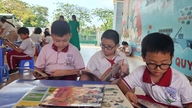
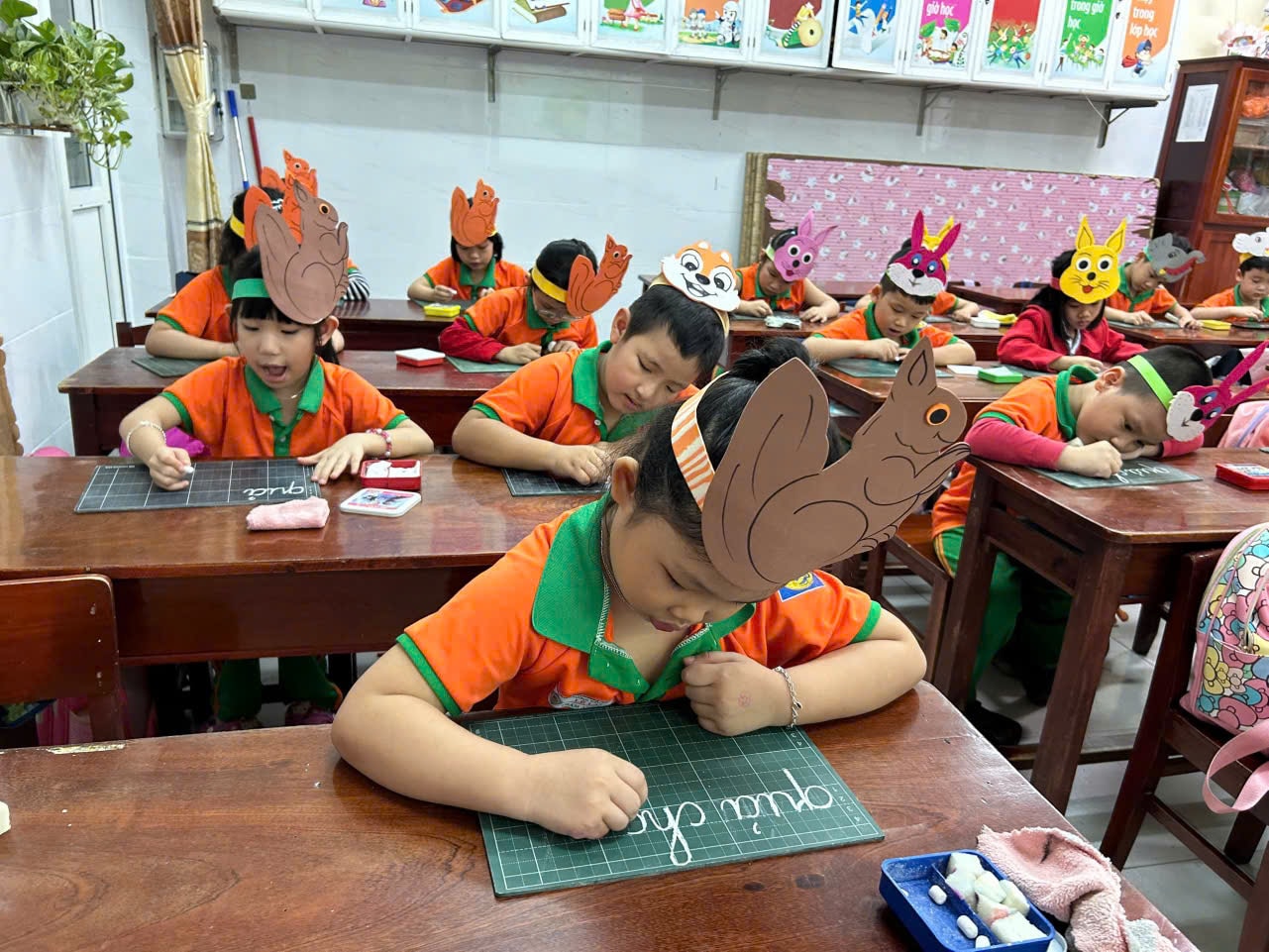
She also emphasized the important role of education in fostering a love for and proficiency in the Vietnamese language among young generations. Schools need to inspire students to appreciate the beauty, richness, and subtlety of the Vietnamese language through literature, journalism, and communication activities and seminars.
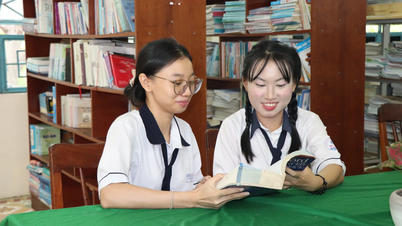
Sharing this view, Dr. Ho Tran Ngoc Oanh, from the Faculty of Literature and Communication, University of Education ( Da Nang University), believes that practicing Vietnamese language skills needs to be done regularly and systematically, not only in Literature courses but also in other modules. Students should be encouraged to read books, write, discuss, and debate in Vietnamese seriously, thereby forming a habit of using diverse, standardized, academically rich language that is still close to everyday life.
Choose the appropriate approach.
From the above analysis, it can be seen that the problem lies not in learning a foreign language early or late, but in the chosen model and philosophy of language education. In many young families today, English is seen as a guaranteed ticket to the future, while Vietnamese is assumed to be something that will naturally develop without investment. This way of thinking, according to educators, has many long-term negative consequences.
A preschool teacher in Hai Chau ward shared that many parents request the school to communicate with their children entirely in English, even in daily activities. Some children speak English quite fluently, but when they need to express their emotions in Vietnamese, they struggle, their vocabulary is limited, and they have difficulty telling a complete story. According to her, if Vietnamese is not adequately nurtured in the early stages of life, children will lack the foundation for the comprehensive development of their thinking and emotions.
Some studies also indicate that the mother tongue is the first language of thought for humans. When this foundation is weak, learning a foreign language easily falls into rote memorization and imitation, lacking depth. According to Dr. Ho Tran Ngoc Oanh, children can absolutely learn bilingualism effectively if Vietnamese plays a central role in communication. And, foreign languages should be seen as tools for expanding knowledge, not as a replacement for the mother tongue.
From a linguistics perspective, the mother tongue is not merely a means of initial communication, but the foundation for the formation of abstract thinking, reasoning ability, and social emotions. When children lack sufficient Vietnamese vocabulary to name emotions, express thoughts, or recount experiences, transitioning to learning a foreign language easily becomes a process of "naming concepts in another language" that they don't fully understand. The consequence is that children may speak a lot of the foreign language, but their understanding is not deep, and their critical thinking and personal expression abilities are limited.



Meanwhile, studies at some bilingual schools show that students with a strong foundation in Vietnamese tend to learn a foreign language quickly. Besides learning vocabulary and sentence structures, they know how to compare, relate, and transfer ideas between the two languages. Conversely, those with weak native language skills often struggle with writing essays and presenting opinions, even if their English communication skills are not inferior.
Ms. Vo Thi Thuy Ngan, a teacher at the Singapore International School in Da Nang, stated that maintaining the central role of the Vietnamese language is a decisive factor in the quality of bilingual education. According to her, bilingualism is not about being "half Vietnamese, half English," but rather two parallel language systems, with the mother tongue playing a fundamental role in thinking. From an insider's perspective, Ms. Ngan believes parents need to adjust their expectations when enrolling their children in early foreign language classes. While children may become proficient in English very early, the more important question is whether they can easily tell a story with full emotion in Vietnamese.
Source: https://baodanang.vn/tieng-viet-trong-moi-truong-hoi-nhap-3320535.html