

 |
| The ancient bronze bell of Sung Khanh Pagoda was cast in 1707. |
Stone steles and bronze bells resound across the land.
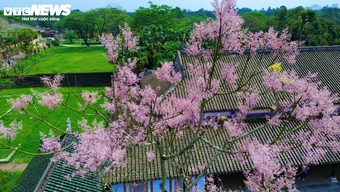
According to historical records, Sung Khanh Pagoda was founded in the year Binh Than 1356, during the Thieu Phong era, under King Tran Du Tong. The small pagoda is situated on a high hill, its back against the mountain and its front facing the Lo River. Eleven years later, in 1367, a monolithic blue stone stele was erected in the pagoda, measuring 90 cm high, 47 cm wide, and 11 cm thick, placed on the back of a turtle. The stele is inscribed with solemn Chinese characters, acknowledging the merits of the Nguyen family's patron and the devotees in establishing the pagoda, donating land, and providing people to serve the pagoda.
The stele is not only a record of achievements but also a valuable original document for comparison with texts from the Tran Dynasty. In particular, it is one of the very few 14th-century steles still existing in the northern mountainous region, helping researchers study place names, history, and writing systems, including the early Nôm script. According to cultural researchers, the stele reflects the philosophy of life of the ancients: respect for Buddhism, valuing virtue, respecting etiquette, and especially a sense of community and the preservation of the national borders. Furthermore, the inscription on the stele helps to understand more about the Tran Dynasty's administrative system, reflecting the presence of the central government in the border region.
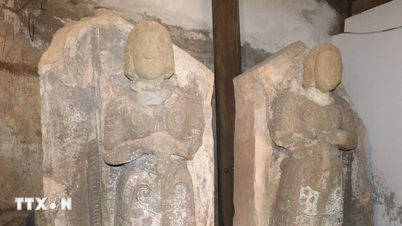
Over 300 years later, in 1707, during the reign of King Le Du Tong, the temple was restored and renovated. A bronze bell, 90 cm high and 67 cm in diameter, was cast at the temple. The bell's body is engraved with images of dragons, lotus flowers, swirling patterns, and four figures standing guard in the four directions. The inscription on the bell reads: “The world is peaceful , the nation is prosperous… people from all four corners of the world live in harmony, virtuous and moral… When the bell is struck, its resounding sound echoes, reaching the nine spirits above and the people on earth below; the whole world is in spiritual harmony, and its fragrance is passed down…” The inscription also records the names of those who contributed to casting the bell, from court officials to people from all directions, and women, reflecting a peaceful, prosperous society rich in faith, valuing community spirit and unity in building the temple and preserving the religion.
Having endured countless vicissitudes and upheavals throughout the nation's history, Sung Khanh Pagoda has suffered damage and ruin many times. However, the stone stele and bronze bell remain almost intact, serving as two silent "witnesses" of time, connecting the past with the present.
Ms. Nguyen Thi Danh, a Buddhist living at the foot of the temple, shared: "Building a temple is to preserve the faith, casting a bell is to awaken people's hearts. In this borderland, with Buddha, the people do not fear the enemy. The sound of the temple bell each morning is an echo from history, the heartfelt prayer for peace of the people in this border region."
With its exceptional historical and cultural value, Sung Khanh Pagoda was recognized as a national historical monument by the Ministry of Culture, Sports and Tourism in 1999. In 2013, the stone stele of Sung Khanh Pagoda was officially recognized as a national treasure.
 |
| Sung Khanh Pagoda, Lang Nung village, Vi Xuyen commune. |
Spiritual tourist destinations attract many visitors.
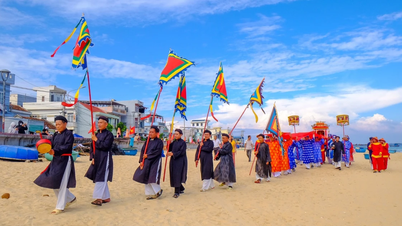
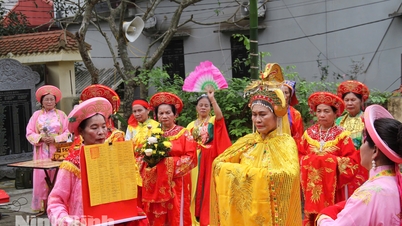
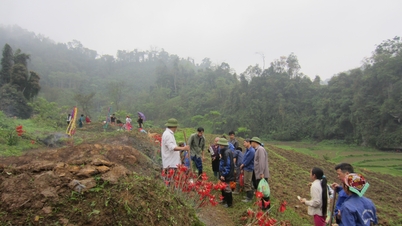
The presence of Sung Khanh Pagoda is closely associated with the traditional Long Tong Festival (the rice planting festival) of the Tay people in Vi Xuyen commune. Every year on the 15th day of the first lunar month, local people and Buddhists from all over flock to the festival. The ceremony includes offerings to Buddha and thanksgiving to the deities, praying for favorable weather, a bountiful harvest, and prosperity for the village. The festival is lively with many folk games such as throwing the ball, stilt walking, tug-of-war, blindfolded goat catching, ethnic food competitions, and especially a rice planting competition held right in the rice field in front of the pagoda.
Along with the festival, Sung Khanh Pagoda has become an important destination in the province's spiritual tourism route. Ms. Nguyen Thi Hang, a tourist from Hanoi, shared: "This small, tranquil pagoda nestled amidst the mountains and forests, containing historical and cultural values, has given me profound experiences about the nation's history, as well as moments of serenity amidst the hustle and bustle of modern life." Ms. Hang is not alone; many groups of visitors express their emotion upon arriving at the pagoda. With its ancient atmosphere, tranquil forest, and the resonant sound of bells echoing through the mountains, Sung Khanh is a precious haven in the journey of reconnecting with one's roots.
In recent years, the province's tourism industry has actively integrated spiritual and historical sites into a chain of cultural, heritage, and identity-based experiential tourism. Many experiential tours have been developed in the direction of green and sustainable tourism, linked to the culture of the highlands, with Sung Khanh Pagoda being an important historical highlight.
Amidst the relentless flow of time, Sung Khanh Pagoda remains serene, a testament from our ancestors to a sacred land deeply connected to national sovereignty and identity. And to ensure that this legacy resonates far and wide, Sung Khanh Pagoda needs continued attention, restoration, preservation, and sustainable development, becoming a vibrant destination in the journey of preserving memories, igniting culture, and fostering patriotism at the northernmost point of the country.
An Giang
Source: https://baotuyenquang.com.vn/van-hoa/202508/tieng-vongo-chua-sung-khanh-bfd76ca/













![[Photo] Prime Minister Pham Minh Chinh receives the Chinese Ambassador to Vietnam](https://vphoto.vietnam.vn/thumb/1200x675/vietnam/resource/IMAGE/2026/04/05/1775397481797_ndo_br_dsc-5512-jpg.webp)




































Comment (0)