

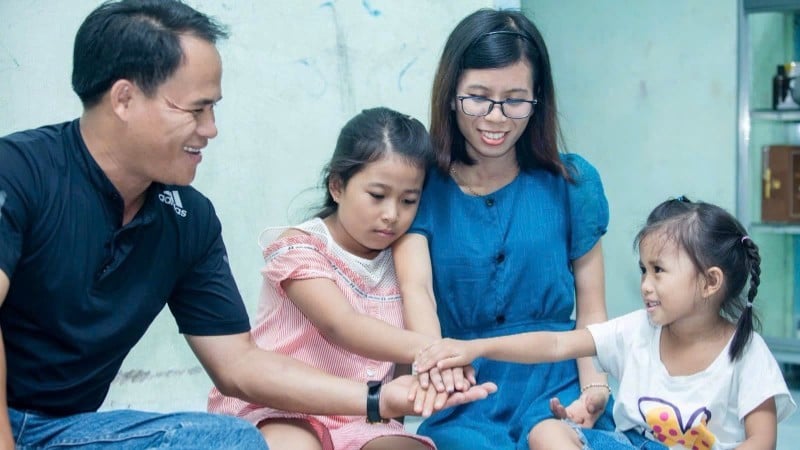
The opinion of the National Assembly 's Committee on Culture and Social Affairs, as well as many National Assembly deputies, is that the measures to maintain the replacement fertility rate outlined in the draft Population Law are essentially only short-term support measures. Therefore, it is necessary to study comprehensive, fundamental, and sustainable support measures.
Besides housing issues, there are also issues related to support in education (tuition exemption, learning cost support), healthcare (health insurance for children from 6 to 18 years old) to create a truly favorable environment for people to confidently get married and have two children, thereby achieving replacement fertility; further research is needed to supplement employment policies, subsidies, and support for workers who give birth and raise young children…
Some delegates suggested that the draft law should take a universal approach, providing regulations to ensure equal benefits among different groups of women, between formal and informal sector workers (currently the majority); instead of supporting women who give birth, it should focus on supporting the children (such as policies supporting tuition fees; subsidies for raising young children up to a certain age)...
It is necessary to integrate policies promoting childbirth with policies on labor, employment, child welfare, and early childhood education to create a favorable and stable environment for couples to confidently have and raise children. Some opinions suggest further specifying measures to encourage having two children in localities with low birth rates, thereby creating a clearer differentiation of policies between regions and different target groups…
According to Le Thanh Dung, Director of the Population Department ( Ministry of Health ): The drafting committee has incorporated feedback and added regulations to establish a comprehensive and fundamental policy framework aimed at increasing the birth rate to achieve sustainable replacement level fertility, based on Resolution No. 21-NQ/TW of the Sixth Plenum of the Central Committee of the 12th Party Congress on population work in the new situation, as well as Resolution No. 72-NQ/TW and Conclusion No. 149-KL/TW.
The development of the Population Law project aims to institutionalize the Party's views on population work. The draft law focuses on core, non-overlapping policies, including: maintaining replacement fertility rates; reducing gender imbalance at birth; adapting to population aging; improving population quality; and ensuring the conditions for implementing population work...
The policy of maintaining replacement fertility is one of the four major policy groups stipulated in the draft law. It continues to inherit the provisions on the rights and obligations of each couple and individual in having children as stipulated in the Population Ordinance, while also specifying measures and policies to encourage and support couples and individuals in having and raising children.
The purpose of drafting the Population Law is to institutionalize the Party's views on population work.
Based on socio-economic conditions in each period and budget balancing capabilities, local authorities supplement regulations on measures to maintain replacement fertility rates; expand the scope of those eligible for these measures; and regulate increased maternity leave for the second child and prioritize the purchase or rental of social housing for individuals and couples who have two children, as stipulated by law. These are two major policies that directly affect the people.
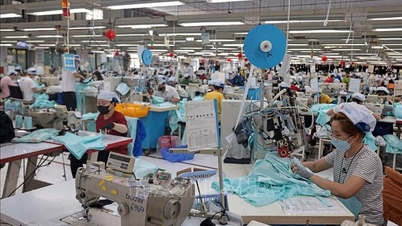
Policies aimed at maintaining replacement fertility levels can be considered an immediate solution to curb the widespread decline in birth rates nationwide and address the issue of late marriages, low birth rates, or no births. According to studies, assessments, and international experience, economic pressure related to childbirth and child-rearing, along with policies and measures supporting families with young children, especially in economically disadvantaged areas and industrial zones, as well as the desire for career development, higher income, and personal experiences, are factors influencing the trend of late marriages, late births, low birth rates, or no births.
Source: https://nhandan.vn/tim-giai-phap-duy-tri-muc-sinh-thay-the-post928898.html





![[Photo] Prime Minister Pham Minh Chinh receives the Chinese Ambassador to Vietnam](https://vphoto.vietnam.vn/thumb/1200x675/vietnam/resource/IMAGE/2026/04/05/1775397481797_ndo_br_dsc-5512-jpg.webp)


























































![[INFOGRAPHICS] Exploiting children's personal images for profit can result in fines of up to 50 million VND.](https://vphoto.vietnam.vn/thumb/402x226/vietnam/resource/IMAGE/2026/04/06/1775442200854_1775442148.webp)























Comment (0)