

In February 2024, IDECAF Theatre will stage the historical play "General Le Van Duyet" (author: Pham Van Quy, director: Hoang Duan), in addition to other Vietnamese historical plays such as "Tran Thu Do - Hero and Villain" (author: Le Chi Trung, director: Meritorious Artist Le Nguyen Dat) and "The Great Empress of Me Linh" in the Cai Luong and Southern Vietnamese folk opera genres by authors Vu Minh and Bach Long.
Finding a star for historical drama
Besides the aforementioned Vietnamese historical plays, IDECAF Theatre has also collaborated with Bach Long Children's Theatre to stage the Vietnamese historical play "Spring Comes to Thang Long," which is regularly performed at the Non La Theatre (Ho Chi Minh City Labor Culture Palace).
According to theater manager Huynh Anh Tuan of IDECAF Theatre, in addition to investing thoroughly in all aspects of artistic creation, IDECAF also focuses on creating opportunities for young actors to shine. "We aim for plays on Vietnamese history themes to be performed by talented young actors, some of whom will become future star actors. To achieve this, we must invest now," said Mr. Huynh Anh Tuan.
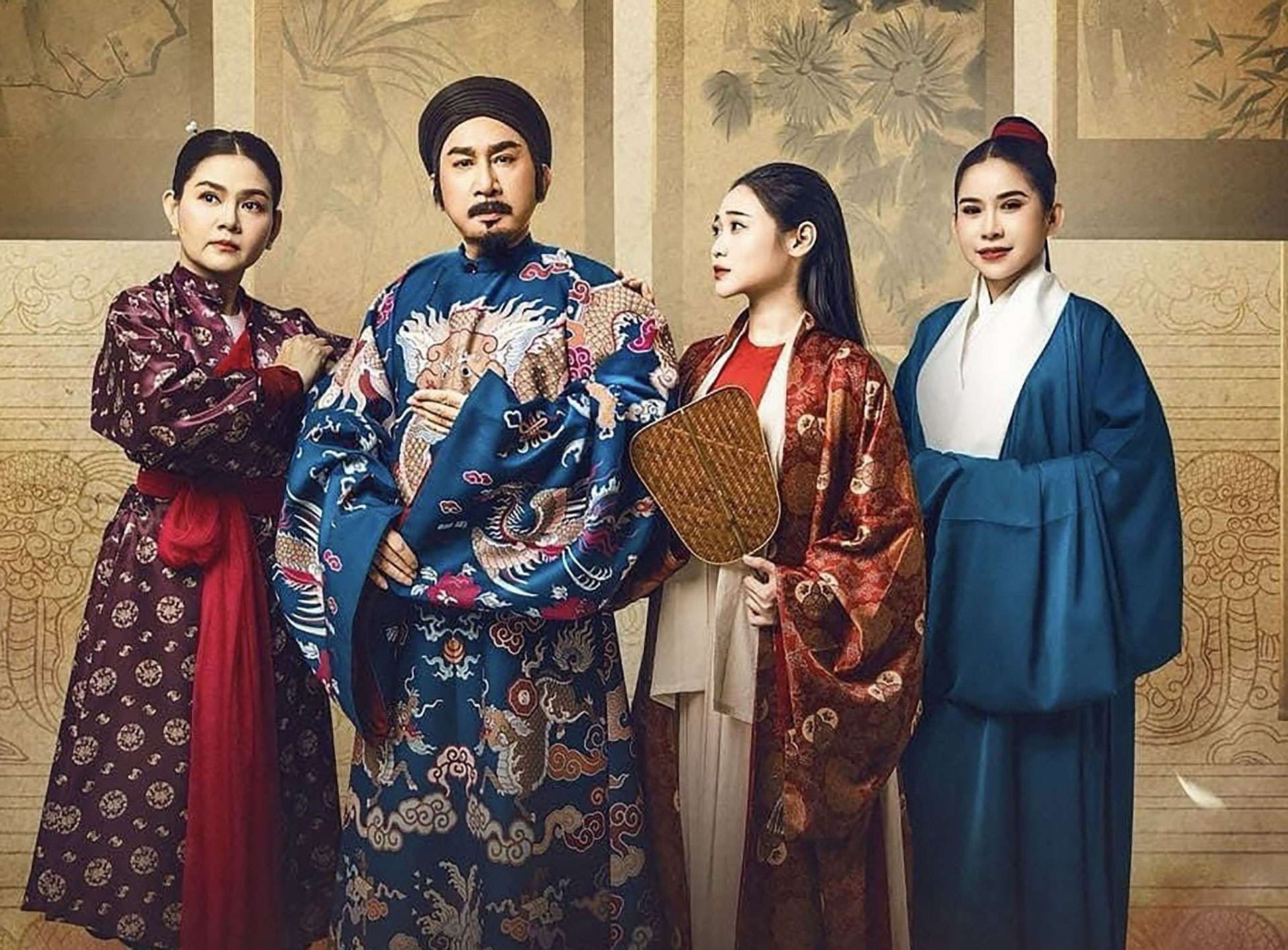
The Vietnamese historical musical "The Love Story of Thang Long" by Hong Van Theatre (Photo: HONG VAN THEATRE)
According to experts, the character of Tran Thu Do has already been portrayed by many outstanding artists across various theatrical genres such as cheo, cai luong, and folk opera, so choosing a play about this character is a bold decision by the IDECAF Theatre. "I chose the play 'Tran Thu Do - Hero and Villain' to create a new perspective on this historical figure through a youthful approach, and at the same time, to provide a platform for the young actors of the IDECAF brand to develop their creativity, such as Dinh Toan, Dai Nghia, Quang Thao, Phi Nga… The play 'The Great Empress of Me Linh,' a cai luong and folk opera of Southern Vietnam by authors Vu Minh and Bach Long, is also an opportunity for young actors to portray the Trung Sisters," the IDECAF manager stated.
People's Artist Hong Van stated that at Hong Van Theatre, when staging Vietnamese historical plays, there is always a strong supporting cast of actors assisting younger colleagues. "Young actors like Hoang Yen, Hoang Khoi, Kha Uy, Trung Anh, Tieu Minh Phung, Khoi Nguyen… have become increasingly more proficient through this foundation in their roles in Vietnamese historical plays at Hong Van Theatre," People's Artist Hong Van emphasized.
The role must have vitality.
For Meritorious Artist Kim Tu Long, accepting the role of artistic consultant and playing a part in the play "The Love Story of Thang Long" was his way of dedicating himself, along with People's Artist Hong Van and artist Hoang Son, to training a generation of future actors. "Vietnamese historical scripts are very difficult to write, and the acting requires a deep understanding of subtlety. It's not about acting like a slice-of-life play; the role must have vitality and a high degree of historical significance within the flow of the past," shared Meritorious Artist Kim Tu Long.
Experts believe that nowadays, a theatrical performance needs not only a strong cast but also beautiful scenery, music , costumes, and technological support to enhance the acting. Beautiful costumes are a key element in attracting audiences, but for Vietnamese historical plays, actors must be careful when choosing costumes, as these must be appropriate for the historical period depicted in the play.
"The Ho Chi Minh City Theatre Association needs to organize training courses for current privately run theatres so that historians, directors, and writers can have an accurate understanding of the characters in Vietnamese historical dramas, especially regarding their costumes," suggested People's Artist Tran Minh Ngoc.
Director Le Quy Duong believes that the most difficult thing when staging Vietnamese historical plays is having a contemporary perspective. Fiction must not distort, fabricate, or misrepresent history. More importantly, the actors' performances must clearly convey profound and relevant modern lessons from the historical story so that the audience can understand and appreciate them.
Insiders argue that staging Vietnamese historical plays requires significant funding for scriptwriting, stage design, costumes, music, and more. Therefore, a special mechanism is needed to help theaters reduce rental costs and subsidize ticket prices, enabling them to reach a wider audience, especially those with low or no income (students, workers, etc.).
Source: https://nld.com.vn/tin-hieu-vui-tu-kich-su-viet-196240123214020658.htm


![[Photo] Prime Minister Pham Minh Chinh receives the Chinese Ambassador to Vietnam](https://vphoto.vietnam.vn/thumb/1200x675/vietnam/resource/IMAGE/2026/04/05/1775397481797_ndo_br_dsc-5512-jpg.webp)




















































Comment (0)