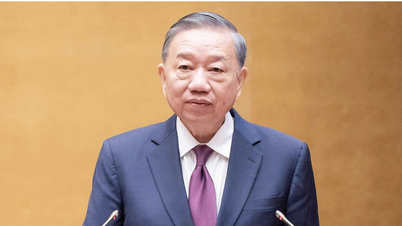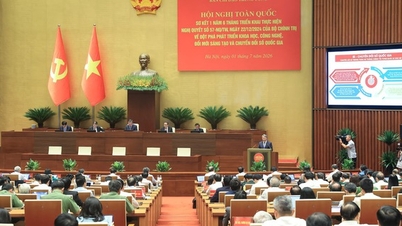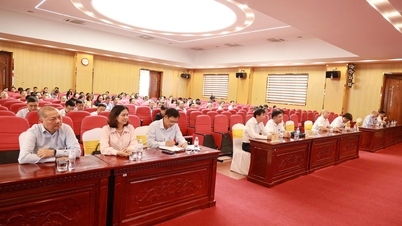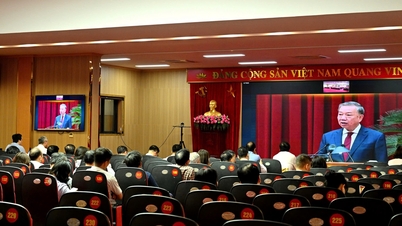
At a meeting with the Central Steering Committee on the first year of operation of the overall organizational model of the political system and the three-tiered government model, General Secretary and President To Lam assessed that the entire political system had completed a very large volume of work and successfully restructured the apparatus in a short period of time.
This was no simple achievement because this reform took place simultaneously in many areas: reorganizing the administrative apparatus, restructuring administrative units, and changing the model of local government.
Looking at the figures, the scale of the restructuring is clear. The government's organizational structure has been reduced from 22 ministries and ministerial-level agencies to 17. The number of government agencies has decreased from 8 to 5. The general department model in ministries and sectors has been abolished. Many intermediate agencies have been eliminated. From July 1, 2025, the entire country will switch to a two-tiered local government model with 34 provincial-level administrative units and 3,321 commune-level administrative units, while simultaneously ending the operation of all 696 district-level administrative units.
Reducing intermediate levels has facilitated decentralization and delegation of power. Many tasks that previously had to go through the district level are now transferred directly to the commune or provincial level for resolution. This is a significant change because the ultimate goal is to ensure that work is handled faster, more directly with the people, and with clearer accountability.
Along with the reorganization of the administrative apparatus, the restructuring of the workforce of officials, civil servants, and public employees has been carried out. From January 1st to December 31st, 2025, the whole country has settled the benefits and policies for 209,598 people who left their jobs due to the reorganization of the administrative apparatus, the implementation of the two-tiered local government model, and the downsizing of the workforce. The workforce of non-specialized personnel at the commune level has also been significantly reorganized, from over 106,901 people down to over 48,000 people during the transitional period before ceasing operations according to the roadmap.
This streamlining effort is not simply aimed at reducing the number of employees. The Central Committee's policy is shifting from managing staffing levels based on numbers to managing human resources based on job positions. Regulation No. 183-QĐ/TW and Conclusion No. 40-KL/TW of the Politburo clearly demonstrate this thinking. Staffing levels are no longer viewed as merely a number, but are linked to the functions, tasks, job positions, workload, digital transformation requirements, decentralization, delegation of authority, and output results of each agency and unit.

This is a very important shift. While previously every department requested additional staff, now the requirement is to effectively utilize existing human resources, assign the right people to the right jobs, and evaluate performance based on results.



However, the Central Committee also clearly recognizes the limitations after a year of operating the new model. General Secretary and President To Lam pointed out: The apparatus has been reorganized, but the quality of operation is not uniform. The number of organizational units has decreased, but the effectiveness of governance has not met the requirements. Authority has been decentralized, but the resources, capacity, and tools for implementation have not met the practical requirements and tasks in the new phase.
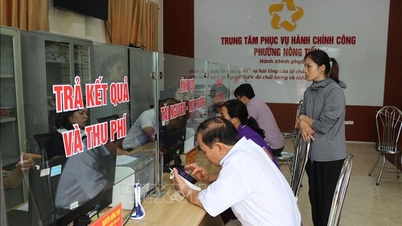
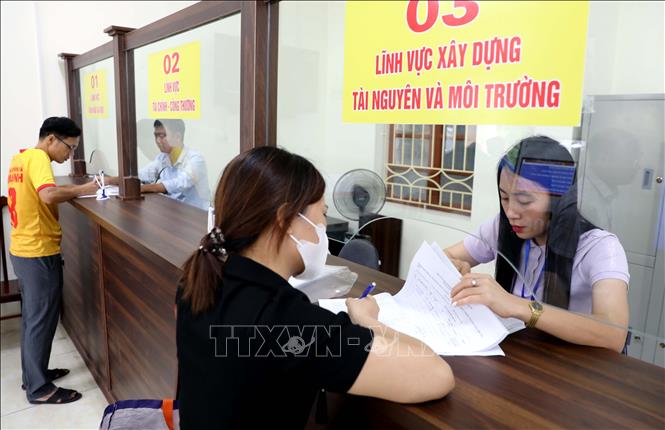
The reality at the grassroots level also shows that communes are now undertaking a much larger workload than before. Many areas such as land, construction, finance, justice, agriculture, environment, and socio-cultural affairs have been assigned additional tasks. Meanwhile, the capacity of officials, infrastructure conditions, and development levels vary greatly among localities.
In many places, digital infrastructure is not yet synchronized. Data is still scattered. Specialized software is not yet interconnected. Remote, mountainous, and border areas still face difficulties in telecommunications and information technology. In some places, local officials are under great pressure, having to handle a rapidly increasing workload while there is a shortage of personnel and insufficient training.
The Central Committee also warned of risks that need to be identified early. These include the fact that the reform of the political system's organizational structure has only reached the stage of "reducing the number of administrative units" and not "ensuring improved service capacity." There is a disparity in the quality of public services between large cities and remote areas, and between areas with good digital capabilities and those with weaker ones. Local officials are overloaded and under great pressure, easily leading to a fear of making mistakes and avoiding work. The new administrative boundaries are not truly aligned with the economic space, urban space, industrial zones, tourist areas, ecological zones, and development corridors. Citizens have to travel further, access public services more difficultly, and spend more time and money on procedures due to the illogical organization of service points.
In fact, many localities have also proactively sought ways to improve the operational quality of the new model.
In Hung Yen province, 316 civil servants and officials have been deployed to the commune level to ensure the smooth operation of the administrative apparatus. The Provincial Party Standing Committee requested that priority be given to sending experienced and capable officials to difficult areas with a large workload. The province is also developing mechanisms to encourage young and capable officials to work at the grassroots level and preparing a plan to improve the quality of commune-level officials in the new phase.
In Can Tho, the city has received 949 decentralized tasks and delegated powers from the central government; issued 22 decentralization decisions and 42 authorization decisions in various fields. The city has completed the reorganization of its administrative apparatus, transferring 103 health stations to commune-level management and establishing 103 commune-level comprehensive service centers. Simultaneously, it has been required to review and assign personnel according to their capabilities, accelerate digital transformation, and resolutely pursue economic growth targets.
Ninh Binh is another example. After merging the three former provinces of Ha Nam, Nam Dinh, and Ninh Binh, this locality operates a new model on a much larger scale. Over the past year, the province has issued 119 documents on decentralization and delegation of authority, transferring 79 tasks from the provincial level to the commune level. All 2,026 administrative procedures have been integrated into the National Public Service Portal. Its administrative reform index for 2025 ranks 4th nationwide; its digital transformation index in state agencies ranks first nationwide.




But even in localities that have achieved many positive results like Ninh Binh, difficulties are still frankly acknowledged. These include uneven quality of grassroots officials, inadequate digital infrastructure and shared data, some specialized legal regulations not keeping pace with the two-tiered local government model, and decentralization sometimes not being accompanied by sufficient resources and legal frameworks.
These issues are also common in many localities today. However, both the central and local governments have recognized and agreed to continue improving the institutional framework; reviewing decentralization and delegation of power; strengthening resources for grassroots levels; promoting digital transformation; building a workforce based on job positions; identifying, training, and utilizing capable individuals; and simultaneously enhancing accountability and power control.
The past year has only marked the beginning of a major reform process. Difficulties and obstacles are gradually becoming clearer, and solutions are being implemented more comprehensively. As institutions continue to be improved, resources are allocated more appropriately, officials are assigned according to their capabilities, and digital transformation is accelerated, the two-tiered local government model will become increasingly effective.
Source: https://baotintuc.vn/thoi-su/tinh-gon-bo-may-tu-sap-xep-den-van-hanh-20260628090752625.htm
![[Image] National conference summarizing one year of operation of the overall organizational model of the political system, the three-tiered government model.](https://vphoto.vietnam.vn/thumb/1200x675/vietnam/resource/IMAGE/2026/07/01/1782882811691_ndo_br_1-jpg.webp)