Ahead of this particularly important deadline, Gia Lai , along with the rest of the country, is striving to complete the remediation of the issues pointed out by the EC.
Complete key, urgent tasks.
On February 8th, the Government Office issued Notice No. 71/TB-VPCP, announcing the conclusions of Deputy Prime Minister Tran Hong Ha at the meeting of the Special Task Force on combating IUU fishing. The notice clearly stated the requirement: The working method must be changed, using the results of addressing the issues of concern to the EC as a measure of success. Each issue must be clearly identified, and each solution must have concrete evidence.
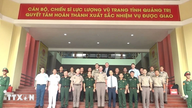
Deputy Prime Minister Tran Hong Ha emphasized that we don't have much time left and requested localities to focus on inspecting key areas and groups of vessels before the Lunar New Year 2026; subsequently, before March 9th, they should intensify thematic inspections, complete legal documents, and be ready to work with the EC inspection team.
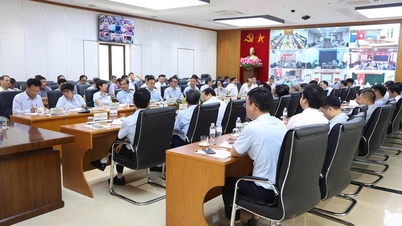
In line with this spirit, Vice Chairman of the Provincial People's Committee Duong Mah Tiep requested the heads of departments, agencies, and chairmen of the People's Committees of coastal communes and wards to seriously and fully implement the contents of Notice No. 71/TB-VPCP, identifying this as a key, urgent, and decisive task in the preparation phase for working with the EC inspection team.
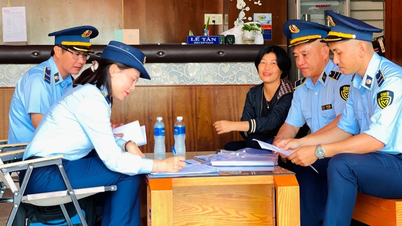
According to the Fisheries Sub-Department (Department of Agriculture and Environment), from the beginning of 2026 to the present, IUU teams have intensified inspections and closely monitored the activities of fishing vessels entering and leaving ports, with 667 vessels departing and 488 vessels arriving at ports having all procedures fully checked.
The unit maintains a 24/7 on-call system at the shore station to continuously monitor the movements of fishing vessels at sea, promptly detecting and handling cases of violations of regulations on the management and use of vessel tracking devices.
Over the past two months, the Sub-Department issued 6 sets of documents confirming the origin of seafood raw materials, with 90,155 kg of raw materials used in processing, resulting in 54,027 kg of finished products.
At the same time, data is regularly updated on the Electronic Seafood Traceability System (eCDT) and electronic fishing logs, contributing to the transparency of the fishing chain and meeting the requirements for combating IUU fishing.

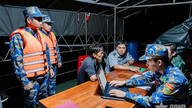

The provincial Border Guard force is strengthening control over port entry and exit with the principle of "not allowing fishing vessels that do not meet the requirements to leave the port, even if they have made full logistical preparations."
The provincial police are focusing on investigating and handling cases with signs of criminal activity. The Department of Industry and Trade is tightening management of certificates of origin to prevent trade fraud.
According to Mr. Cao Thanh Thuong, Director of the Department of Agriculture and Environment, a review and statistical analysis revealed that Gia Lai province has 74 fishing vessels that do not meet operating requirements and are currently anchored outside the province.
The Department has advised the Provincial People's Committee to request the cooperation of 9 relevant provinces and cities with Gia Lai to strictly inspect these vessels and absolutely not allow them to leave port; at the same time, it has requested the functional forces of neighboring provinces to assist in providing images, coordinates, and weekly docking times of the vessels to serve the compilation process and as evidence when working with the EC inspection team.
Manage each fishing vessel and each vessel owner.
The intensified efforts to combat IUU fishing are being concretized by localities through strict management solutions down to each fishing vessel and each vessel owner, especially in areas with large fishing fleets.
In Phu My Dong commune, there are currently 571 fishing vessels 6 meters or longer, of which 67 do not meet the requirements for operation. The commune authorities have organized a review, classification, required vessel owners to sign commitments, and placed the group of vessels that do not meet the operating requirements under "closed" management.
According to Tran Minh Thong, Chairman of the People's Committee of the commune, vessels that do not meet the operating requirements must anchor in designated areas, be publicly posted, have surveillance cameras installed, and commit to not secretly going out to sea.
“Specifically, 38 fishing vessels anchored within the province have been gathered into 3 clusters at De Gi lagoon, with notices posted on their hulls stating ‘Fishing vessels not eligible for fishing operations.’ For the 28 vessels anchored outside the province, the commune has established 7 working groups to directly work with each vessel owner, requiring them to dismantle fishing gear and sign commitments not to leave port until all legal procedures are completed,” Mr. Thong said.
In addition, the commune also recorded and processed 59 cases of loss of connection to vessel tracking devices (VMS) and instructed 242 vessels 12 meters or longer to use electronic fishing logbooks.
Local authorities also implement policies to support vocational retraining and decommissioning for fishing vessels that do not meet the operating requirements in the area and wish to be decommissioned.


In Hoai Nhon Bac ward, there are 1,298 fishing vessels in operation, and management responsibilities are assigned to individual Party members and neighborhood groups. The list of vessels that do not meet the requirements is publicly displayed in residential areas for residents to monitor.
Currently, 39 vessels have been impounded; 4 vessels lacking the necessary permits and registrations have been moored ashore and decommissioned; and 32 vessels with expired licenses and inspection certificates are being urged to complete the necessary procedures. Authorities are actively coordinating with local governments to resolutely prevent unqualified vessels from secretly departing.
The province's overall determination during this period is to prevent new IUU violations from occurring. According to Mr. Cao Thanh Thuong, all efforts by the industry and the province are not only aimed at meeting inspection requirements or lifting the EC's "yellow card," but more importantly, at fundamentally changing the method of fisheries management.
Closely monitoring the operations of each fishing vessel and ensuring clear data traceability for each trip will contribute to creating a foundation for responsible, transparent, and sustainable development of the fisheries industry.
Source: https://baogialai.com.vn/toan-luc-go-the-vang-thuy-san-post580745.html