In the first five months, seafood exports reached $4.67 billion.
According to the Vietnam Association of Seafood Processing and Export (VASEP), seafood exports reached US$1.02 billion in May 2026, a slight increase of 0.6%. For the first five months of the year, the total export value reached US$4.67 billion, an 11% increase compared to the same period in 2025. Within this overall picture, shrimp and pangasius continue to be the two main drivers, while the Chinese market plays a crucial role in boosting growth.
Shrimp continued to be the largest export item with a value of US$1.9 billion, an increase of 11.5%, accounting for approximately 40.4% of the total value of seafood exports. The growth of this item was driven by the recovery of demand in some Asian markets, processed products, and the export of lobster to China.
Meanwhile, pangasius exports reached $905 million, an increase of 12.6%. This product group has an advantage due to its relatively stable supply, competitive price, and suitability for the increasingly popular trend of frugal consumption in many markets.
Notably, a 30% drop in global pollock production, coupled with rising fuel costs, has led to a sharp increase in the price of whitefish raw materials. In this context, some importers are shifting towards more stable-supply farmed fish species such as pangasius and tilapia, opening up more opportunities for Vietnamese products.
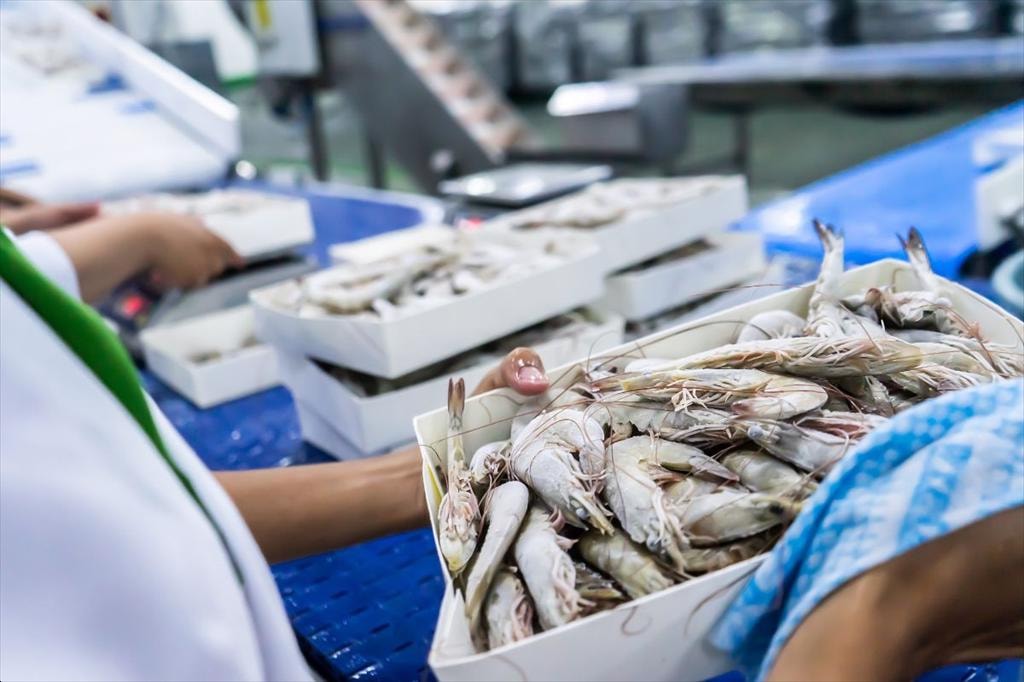
The growth of shrimp and pangasius exports is also linked to positive developments in the Chinese and Hong Kong markets – currently Vietnam's largest seafood import regions. In the first five months of the year, seafood exports to China and Hong Kong reached US$1.2 billion, a 40.5% increase compared to the same period last year. Increased demand for shrimp, pangasius, crab, mollusks, and many other high-value seafood products has significantly supported the overall export growth of the industry.



However, along with the opportunities, the Chinese market is also shifting strongly towards official imports, strengthening quality control, biosafety, business registration, farming area codes, and traceability. The fact that Order 280, effective from June 1, 2026, replaces Order 248 shows that the standardization requirements for exporting businesses are becoming increasingly stringent.
Market fragmentation, increased compliance requirements.
Not all product groups maintained their growth momentum, such as shrimp and pangasius. Tuna exports in the first five months of the year decreased by 6%, to $372 million. The main reasons were the shortage of domestic raw materials and increasingly stringent requirements for traceability.
In addition, US regulations on the protection of marine mammals, seafood import control programs, and the European Union's (EU) anti-illegal fishing regulations are increasing compliance costs, prolonging documentation time, and affecting the ability to secure orders.
Many other seafood groups continued to record positive growth. Exports of squid and octopus reached US$304 million, up 18%; crabs and other crustaceans reached US$160 million, up 19%; and shellfish reached US$122 million, up 22.8%. These items continue to have opportunities in Japan, South Korea , China, the United States, and the EU, especially in the processed and value-added product segments. However, growth still heavily depends on the availability of legally sourced and imported raw materials. Fuel costs, logistics, and increasingly stringent origin certification requirements are directly impacting production volume, raw material prices, and delivery schedules.
Looking at the markets, the export picture also shows a clear divergence. While China and Hong Kong experienced strong growth, exports to the United States decreased by 10% to $689 million; exports to the EU decreased by 2.2% to $435.6 million. These two markets continue to exert significant pressure regarding tariffs, trade protection measures, traceability, food safety, combating illegal fishing, and sustainable development standards. Conversely, Japan increased by 0.4%, South Korea by 4%, and ASEAN by 16.8%, continuing to play a crucial role in helping businesses diversify their output and reduce dependence on a few large markets.
Despite positive signs, both the shrimp and pangasius industries still face many pressures. For shrimp, businesses are facing increasing competition from Ecuador, India, and Indonesia. In many localities, the trend of raising large-sized shrimp to increase value is also creating a certain mismatch with the demand for smaller-sized shrimp in some markets.



Meanwhile, the pangasius industry faces persistently high prices for fingerlings, along with rising costs of feed, transportation, and other production inputs. Exports to the United States also continue to be impacted by trade protection measures and stringent traceability requirements.
Based on the results of the first five months of the year, VASEP Deputy Secretary General Le Hang predicted that seafood exports in 2026 could increase by about 8-10%, with a turnover exceeding 12 billion USD if China continues to maintain positive demand, pangasius fish retains its competitive advantage in price, shrimp improves its competitiveness, and seafood groups resolve obstacles related to IUU fishing, raw material certification, and traceability.
Source: https://daibieunhandan.vn/tom-ca-tra-tiep-tuc-dan-dat-xuat-khau-thuy-san-10420034.html