

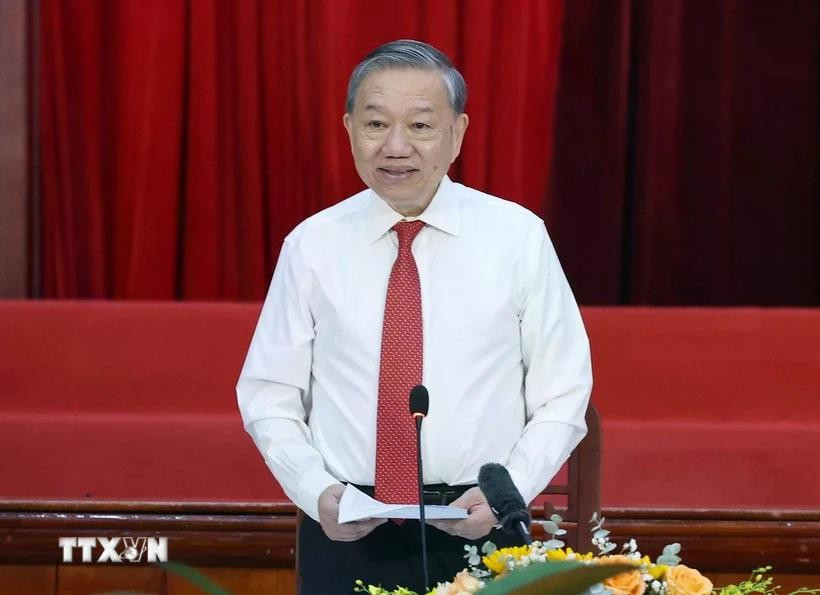
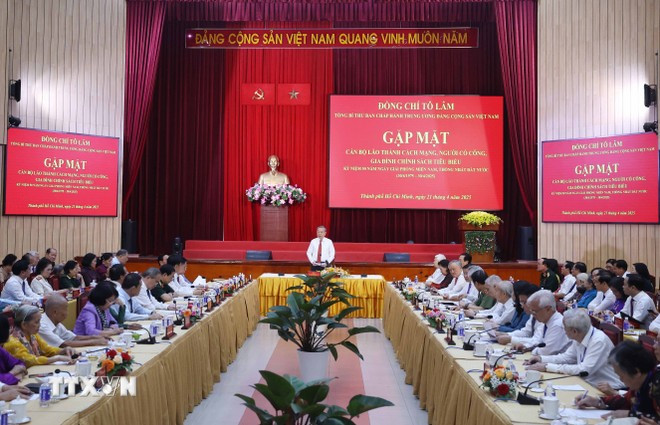
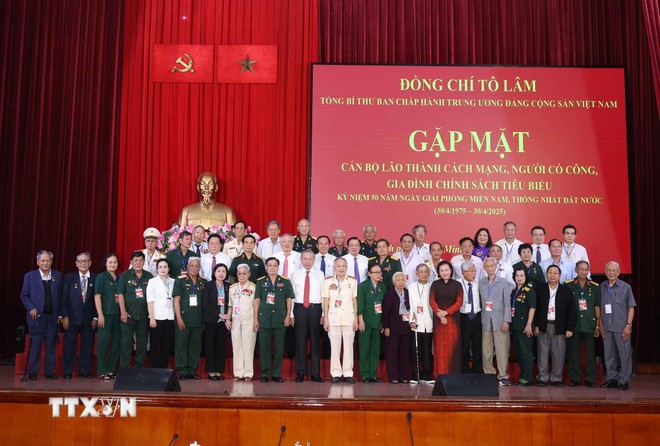
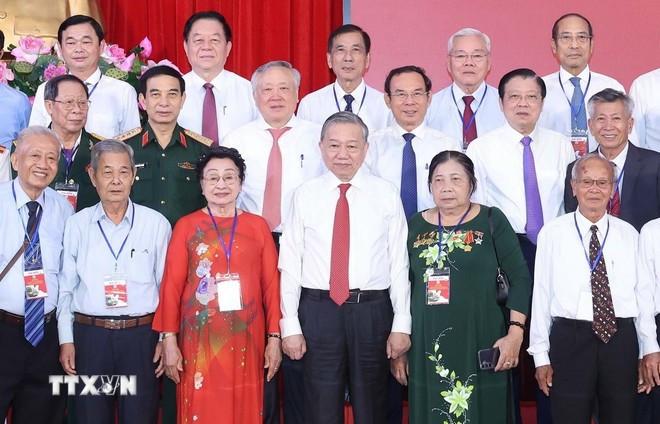
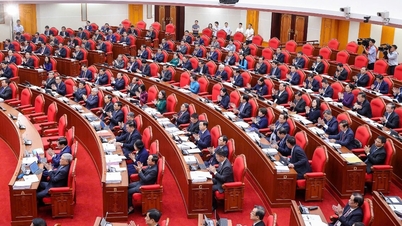
To commemorate the 50th anniversary of the Liberation of Southern Vietnam and the Reunification of the Country (April 30, 1975 - April 30, 2025), on the morning of April 21, in Ho Chi Minh City, General Secretary To Lam chaired a meeting with veteran revolutionary cadres, meritorious individuals, and exemplary policy beneficiary families in the Southern region.
Attending the meeting were former members of the Politburo : former President Nguyen Minh Triet, former President Truong Tan Sang, former Prime Minister Nguyen Tan Dung, former Chairwoman of the National Assembly Nguyen Thi Kim Ngan, and former Standing Member of the Secretariat Le Hong Anh.
Comrades attending include: Members of the Politburo, former Members of the Politburo, Secretaries of the Central Committee, former Secretaries of the Central Committee, Members of the Central Committee, former Members of the Central Committee, leaders and former leaders of the Party, State, and Vietnam Fatherland Front; representatives of central committees, ministries, and branches; leaders and former leaders of provincial and city Party committees from various periods in the southern provinces; veteran revolutionary cadres, Vietnamese Heroic Mothers, Heroes of the People's Armed Forces, Labor Heroes, veterans, wounded and sick soldiers, families of martyrs, people with meritorious contributions to the revolution, and exemplary policy beneficiary families in the southern region.
Maximize the unique advantages of each locality.
In the atmosphere of nationwide excitement, pride, and joy as we look forward to the 50th anniversary of the liberation of Southern Vietnam and the reunification of the country, as well as other important events of 2025, at this meeting, veteran cadres and those who have contributed to the revolution shared their heartfelt, responsible, and insightful opinions on the glorious revolutionary cause of our Party, our people, and the localities where they reside.
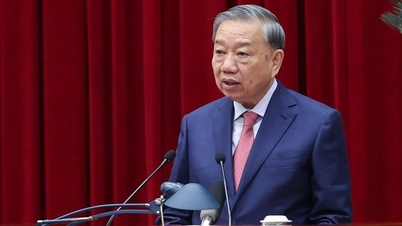
Speaking at the meeting, General Secretary To Lam emphasized that the comrades, the soldiers of Uncle Ho, had overcome countless hardships, difficulties, and dangers to write golden pages of history about the protracted resistance war, creating the "Vietnamese image" in the flow of the times.
Throughout the arduous years of war, our comrades, with their fervent patriotism, courage, and unwavering determination, overcame all losses and sacrifices to contribute to the victory of the Vietnamese revolution. Many comrades fell, forever resting in the embrace of their motherland on fierce battlefields from North to South, from high mountains to vast seas, from the Central Highlands to the coastal plains.
Our comrades' footsteps have traversed every beloved corner of our homeland, from North to South, and from South to North. Some returned with wounds and illnesses, with war memories deeply etched in their minds. Others continued to silently contribute to the country in peacetime, from social work and economic development to building new rural areas and educating the younger generation.
The General Secretary stated that the historical journey of the revolutionary army is an epic in the history of the struggle for national liberation, defense of the country, and protection of the people. The Party and State have decided to invest in the construction of the Vietnam Military Museum to permanently preserve hundreds of thousands of artifacts and documents related to the history of the birth, battles, victories, and growth of the Vietnam People's Army. The Politburo has also decided to build the Museum of the History of the Communist Party of Vietnam, scheduled to be inaugurated on the occasion of the Party's 100th anniversary (February 3, 2030), which will house historical artifacts of the Communist Party of Vietnam.
The General Secretary also provided information on a number of issues of great concern to the people, especially policies related to "national development and people's livelihood" and urgent priorities for 2025, as well as preparations for the 14th Party Congress and the following years.
Regarding the policy of rearranging and reorganizing administrative units and building a two-tiered local government, the General Secretary stated that the Central Committee of the Party, the Politburo, and the Secretariat had thoroughly discussed and evaluated the policy, considering many aspects and reaching a high level of consensus on its implementation. The people nationwide wholeheartedly support it and consider it a true revolution.
The General Secretary emphasized that after the reorganization and merger of the Southern provinces (from Binh Thuan southward, including Lam Dong and Dak Nong), the number of provinces and cities decreased from 22 to 9. This created a diverse development space in terms of nature, economy, and culture. In particular, it maximized the use of the coastal space to activate the interconnectedness of mountains, forests, plains, and islands, complementing, interacting with, and supporting each other's development while preserving regional and local cultural identities; creating new impetus for some provinces to potentially become centrally-governed cities.
The General Secretary pointed out that the merger of provinces aims to create new dynamics, new potential, and new spaces for development. It's not simply a matter of "two plus two equals four," but rather "two plus two is greater than four." Can Tho-Hau Giang-Soc Trang; Ben Tre-Tra Vinh-Vinh Long will become new provinces with a solid "three-legged stool" foundation, entering an era of development, prosperity, and wealth. This new strength will undoubtedly multiply many times over. The people of the new provinces of Binh Duong, Dong Thap, Vinh Long, Can Tho, and Hau Giang will become people with both sea and mountains. Tay Ninh will have a large river mouth connecting to the open sea. The "highland people" of Gia Lai, Dak Lak, and Lam Dong, and the "lowland people" of Dong Thap, Dong Nai, and Vinh Long will become "people with the sea."
The General Secretary suggested that in order for "Ho Chi Minh City to shine brightly with its golden name," the Party Committee, government, and people of the city must make even greater, faster, more decisive, and stronger efforts.
The city needs even greater unity and cohesion; stronger political determination; greater dynamism and creativity; proactively seizing opportunities and overcoming challenges; maintaining socio-political stability; building and developing the city rapidly and sustainably with higher quality and speed than the national average; creating a healthy cultural environment; continuously improving the material and spiritual lives of the people; and ensuring national security and defense. The goal is to build Ho Chi Minh City into a civilized and modern city, playing a special role as a leader in industrialization and modernization, making increasingly significant contributions to the region and the country.
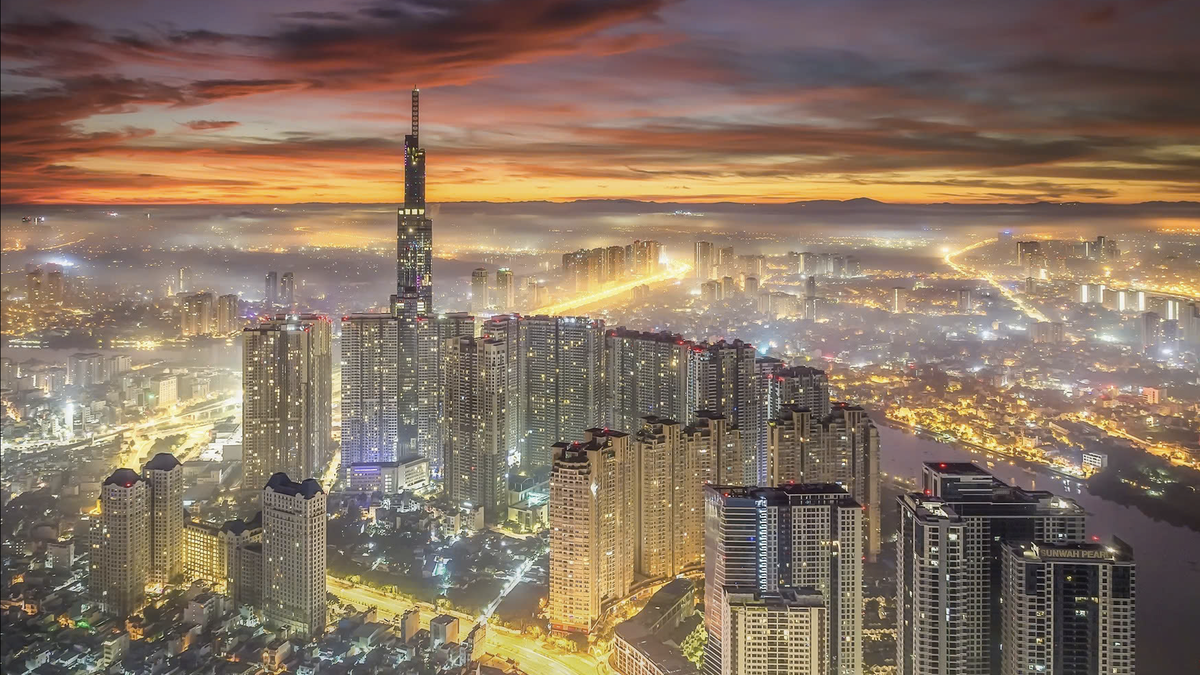
In this new development space, localities will complement, support, link, and move forward together. The expanded Ho Chi Minh City will not only include the current Ho Chi Minh City along with Binh Duong and Ba Ria-Vung Tau, but will also be more deeply connected with all the provinces and cities such as Dong Nai, Tay Ninh, Dong Thap, Vinh Long, Can Tho, An Giang... to "redesign the regional development strategy," aiming to maximize the unique advantages of each locality to create a new whole that is superior to the sum of its parts.
The new Ho Chi Minh City will become the leading engine, a powerful driving force for the development of the entire Southeast, Southwest, Central Highlands, and South Central regions; it will become an international megacity leading the region, and also a center for comprehensive development linkages between the city and the region, in which the southern provinces will not only "accompany" but also proactively play the role of strategic partners, jointly creating a common economic, cultural, and social space. The new Ho Chi Minh City will succeed if the entire region develops together, and the region will flourish when Ho Chi Minh City leads, cooperates, shares, and moves forward together.
The expanded Ho Chi Minh City will play a pivotal role, acting as a driving force for the comprehensive development of the Southeast, Southwest, and even broader Central Highlands and South Central regions. The city's development is closely linked and mutually supportive of the development of the provinces and cities in the region; not only "leading," but also closely linking and maximizing complementary advantages, building an inter-regional economic and cultural space, and creating a new growth pole of regional and international significance.
Priority should be given to addressing and narrowing the development gap between different regions.
During the provincial merger process, the General Secretary emphasized the need to ensure the utilization of high-quality human resources from all relevant localities. He stressed that the selection of personnel must prioritize competent individuals, ensuring balance, harmony, and unity, maximizing the talents and management experience from various localities; and that these individuals should be capable of thinking, speaking, acting, taking responsibility, and making sacrifices for the common good. He also stressed the importance of synchronizing spatial development planning and building a modern, integrated, and interconnected infrastructure system, including transportation, telecommunications, urban, and industrial infrastructure, not only within the new administrative unit but also effectively connecting with other provinces in the region, forming a synchronized infrastructure network for the entire area.
The General Secretary emphasized the unification of the legal system and administrative procedures: Building a common set of standards for the new administrative unit based on harmony, inheritance, and upgrading from the practical experiences of each locality. Simultaneously, reviewing all current regulations to ensure transparency, convenience, and the best possible support for citizens and businesses both within and outside the new administrative unit. Managing land and public assets in an open, transparent, and professional manner. Particular attention should be paid to areas with great development potential to avoid losses, waste, and vested interests; listening to, explaining, engaging in dialogue with, and working alongside citizens, businesses, and localities in the region; ensuring that people understand, trust, are proud, and actively participate in the restructuring of the new administrative unit as a shared task and a shared opportunity for everyone.
The General Secretary requested that after the merger, a closely linked and synchronized development space be formed between the new and old areas in terms of spatial planning, finance, technical infrastructure, social infrastructure, and urban management; and that regional coordination mechanisms be established to ensure sustainable, stable, and long-term development for the entire Southeast and Southwest regions. Budget and investment resources should be adjusted and optimized, with the principle of rational and efficient allocation for the development of inter-regional transport infrastructure and high-quality public services; while encouraging the participation of resources among southern provinces and cities through regional investment linkage mechanisms.
Comprehensive social welfare must be ensured, guaranteeing that no one is left behind in the development process; priority must be given to narrowing the development gap between regions, especially newly merged areas and disadvantaged regions. Natural resources and the ecological environment must be strictly protected, especially in merged provinces that have both forests and coastlines; development must be sustainable and harmonious, balancing economic, social, and environmental aspects for present and future generations.
The General Secretary emphasized the need to improve the quality of education, healthcare, culture, and sports, gradually narrowing the gap in the quality of public services between merged regions and units; build a civilized, modern lifestyle rich in national cultural identity; better ensure social security and safety so that every citizen has the right to be proud, responsible for contributing to and enjoying the fruits of development; firmly consolidate national defense, security, and order, ensuring political and social stability in all situations, especially in the context of a large-scale locality with high regional linkages and deep international integration; continuously innovate leadership methods, enhance the capacity and fighting strength of Party committees at all levels; expand and build a truly clean and strong political system; organize a streamlined, efficient, effective, and modern government apparatus, imbued with the motto "of the people, by the people, for the people," meeting the increasingly high demands of the people in the new development context.
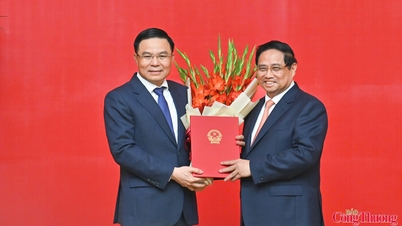
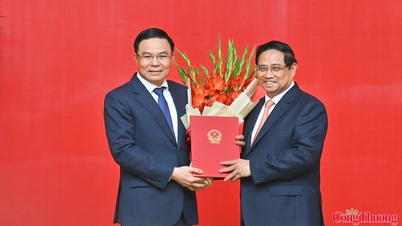
On this occasion, on behalf of the Party and State leaders, Comrade Nguyen Trong Nghia, Member of the Political Bureau, Secretary of the Central Committee of the Party, and Head of the Central Propaganda and Mass Mobilization Department, presented the 45-year Party Membership Badge to three comrades: Tran Tri Dung, former Member of the Central Committee of the Party and former Secretary of the Tra Vinh Provincial Party Committee; Lieutenant General Tran Don, former Member of the Central Committee of the Party and former Deputy Minister of National Defense; and Nguyen Nam Viet, Secretary of the Long An Provincial Party Committee.
According to VNA/Vietnam+
Source: https://baogialai.com.vn/tong-bi-thu-sap-nhap-tinh-khong-phai-2-cong-2-bang-4-ma-2-cong-2-lon-hon-4-post319787.html













































Comment (0)