

EMPTY LAND, SUFFERING PEOPLE
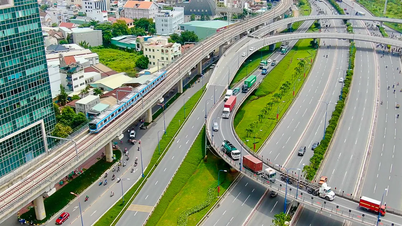
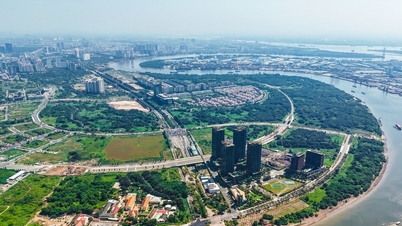
The issue of abandoned vacant land and spontaneously developed residential areas is not new; it has actually existed for many years. It has been repeatedly reported by the public and the media, especially the situation of stalled projects and planning that have been suspended for 20-30 years. In the central area of Ho Chi Minh City, examples include the Binh Quoi - Thanh Da urban area (Binh Thanh District), which has been stalled for 31 years; the Thu Thiem new urban area (Thu Duc City), after more than 20 years, still has only a few scattered constructions; further out, the Sing-Viet urban area (Binh Chanh District) has also been stalled for over 25 years; the northwest in Hoc Mon and Cu Chi Districts; and the southern part of Ho Chi Minh City also has numerous long-standing stalled projects…
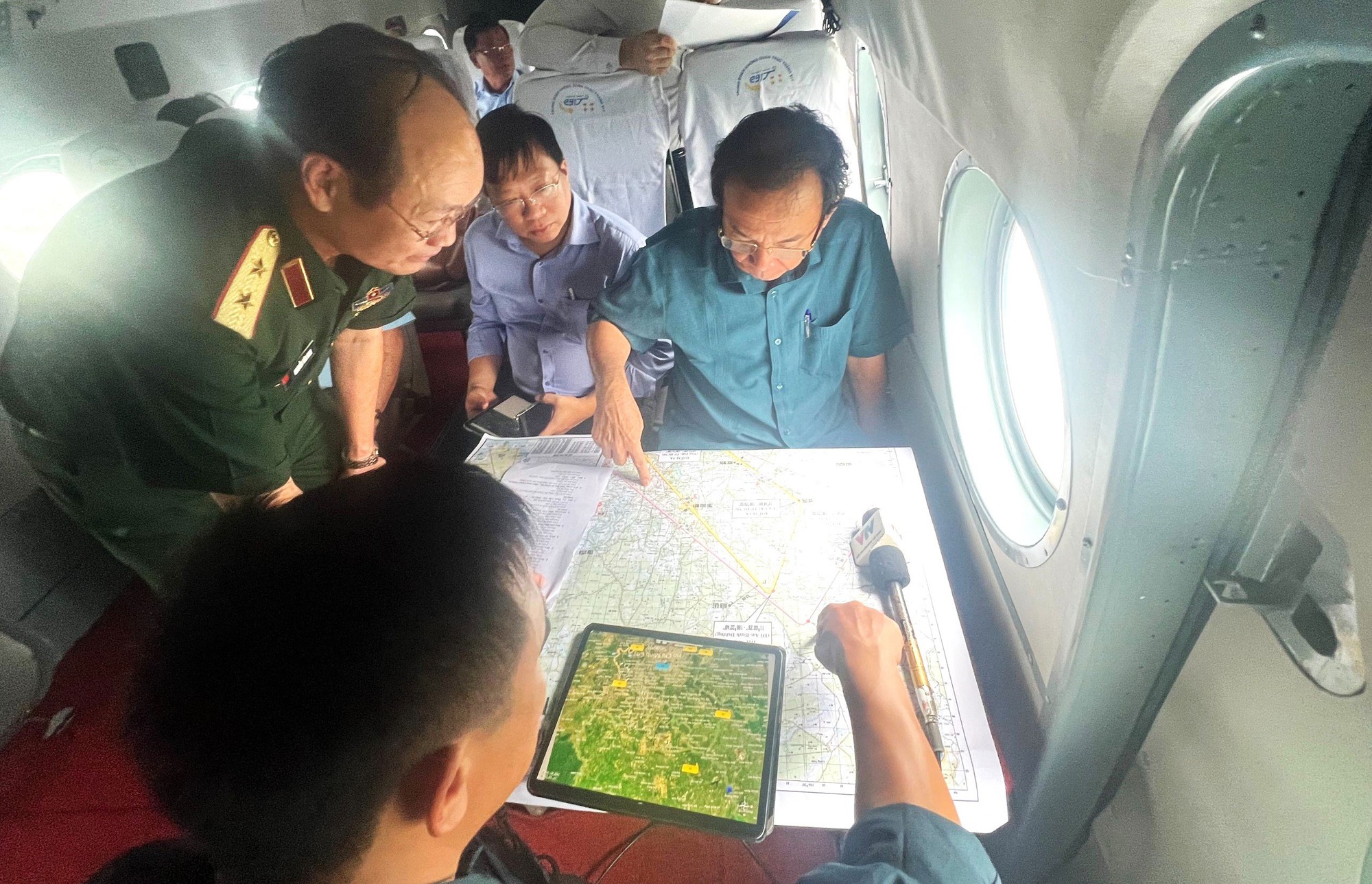
Ho Chi Minh City Party Secretary Nguyen Van Nen is pictured surveying the area by helicopter. Photo taken on August 26.
According to statistics from the People's Committee of Binh Chanh District, there are 323 projects for housing, social infrastructure, parks, etc., in the district. As of May 2022, 92 projects were delayed, with some even "stalled" for 20-30 years. Therefore, the district has sent letters to investors requesting them to accelerate progress, otherwise, they will propose revoking the projects. Revoking projects is a strong measure and a desire of the locality, but its implementation is a lengthy process, largely dependent on the assessment and specific advice of relevant departments and agencies.
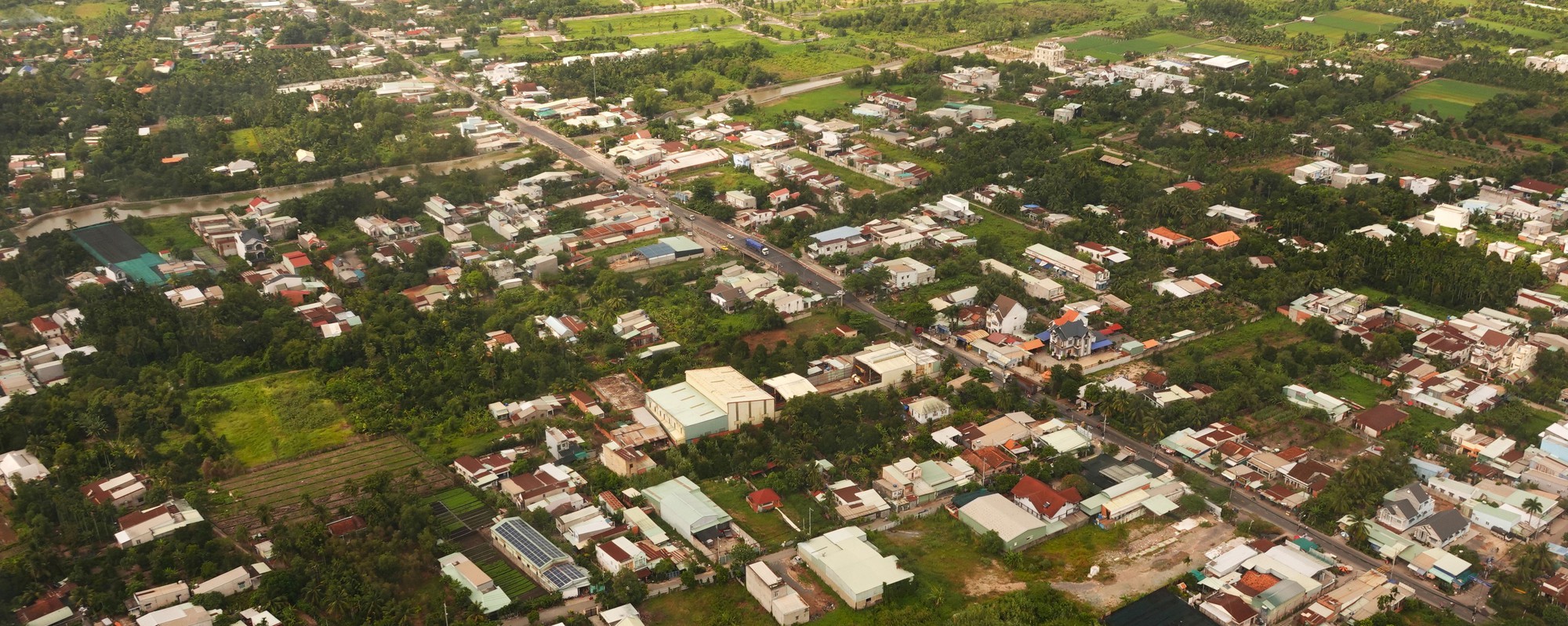
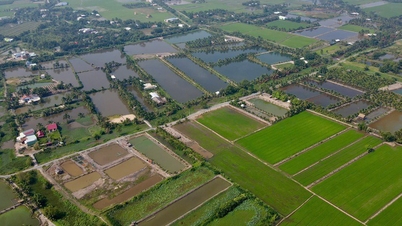
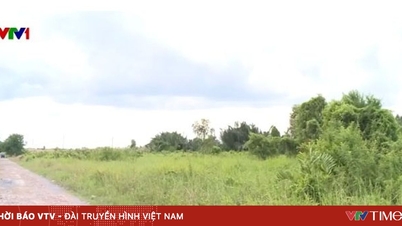
In the suburban areas of Ho Chi Minh City, there is still a lot of vacant land, and residential areas are developing spontaneously.
Adjacent to Binh Chanh District is Hoc Mon District. Hoc Mon District Party Secretary Tran Van Khuyen once shared at the Ho Chi Minh City People's Council forum that he felt disheartened when looking across at Thuan An City in Binh Duong Province from Nhi Binh Commune (Hoc Mon District), seeing the city brightly lit, while Hoc Mon itself remained underdeveloped, with a large amount of vacant land. Hoc Mon is also one of the localities with many stalled projects, overlapping planning, and a land use ratio of up to 50%. These inconsistencies in land use planning compared to individual needs have caused frustration among residents, who cannot build houses on their land, and cannot subdivide large plots for their children to live separately. In mid-2022, the district proposed that Ho Chi Minh City consider taking action to reclaim over 700 hectares of land belonging to stalled projects and long-planned projects that have not been implemented.
Vacant land is not only delayed due to the incompetence of private investors, but many projects funded by the state budget are also slow. One example is the project to build a green buffer zone around the Da Phuoc (Binh Chanh District) and Tay Bac (Cu Chi District) waste treatment complexes. Because the project has been stalled year after year, residents are in a difficult situation, unable to leave or stay, and their properties are being sold at low prices...
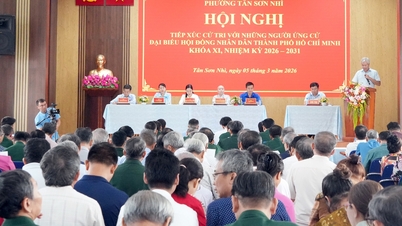
Urban developments that exist only on paper, such as Binh Quoi - Thanh Da and Sing - Viet, are just some of the hundreds of stalled projects in Ho Chi Minh City. During each meeting with constituents by National Assembly and City People's Council representatives, people express frustration and ask when these projects will be implemented, and if not, when the land will be reclaimed to restore the legitimate rights of citizens to their land and housing. These are also fragmented pieces that make up the picture of "abundant vacant land," which Ho Chi Minh City leaders have seen more clearly through aerial surveys.
According to research by the Ho Chi Minh City Institute for Development Research, the rate of land use conversion from agricultural land to non-agricultural land in Ho Chi Minh City during the period 2011-2020 was quite slow. Specifically, the conversion rate reached only 11.2% in the 2011-2015 period and only 13.18% in the 2016-2020 period compared to the approved plan.
This situation stems from inadequacies and conflicts in regulations regarding land use planning and its integration with other plans, as well as legal aspects of investment and construction projects. Furthermore, land data is incomplete, inaccurate, inconsistent, and inconsistent, affecting the accuracy of land use planning forecasts. The statistics and assessment of land resources (especially regarding fragmentation, dispersion, and exploitation efficiency) are insufficient and inaccurate, resulting in low-quality land use planning forecasts.
Regarding the implementation of land use planning, other contributing factors include obstacles in agricultural land acquisition, lack of resources for investing in basic technical infrastructure and projects on the land, etc.
SLOW PROGRESS IN CONVERTING AGRICULTURAL LAND
The fact that there is still a lot of vacant land also stems from the fact that agricultural land still accounts for a large proportion in Ho Chi Minh City's land use structure. In 2010, agricultural land in Ho Chi Minh City was 118,052 hectares, accounting for 56.3%. By June 2018, the Government issued Resolution 80 on adjusting the land use planning until 2020 and the final land use plan (2016-2020). Accordingly, the Government allowed Ho Chi Minh City to convert more than 26,000 hectares of agricultural land to non-agricultural land so that by 2020, the proportion of agricultural land would decrease to 42.1%.
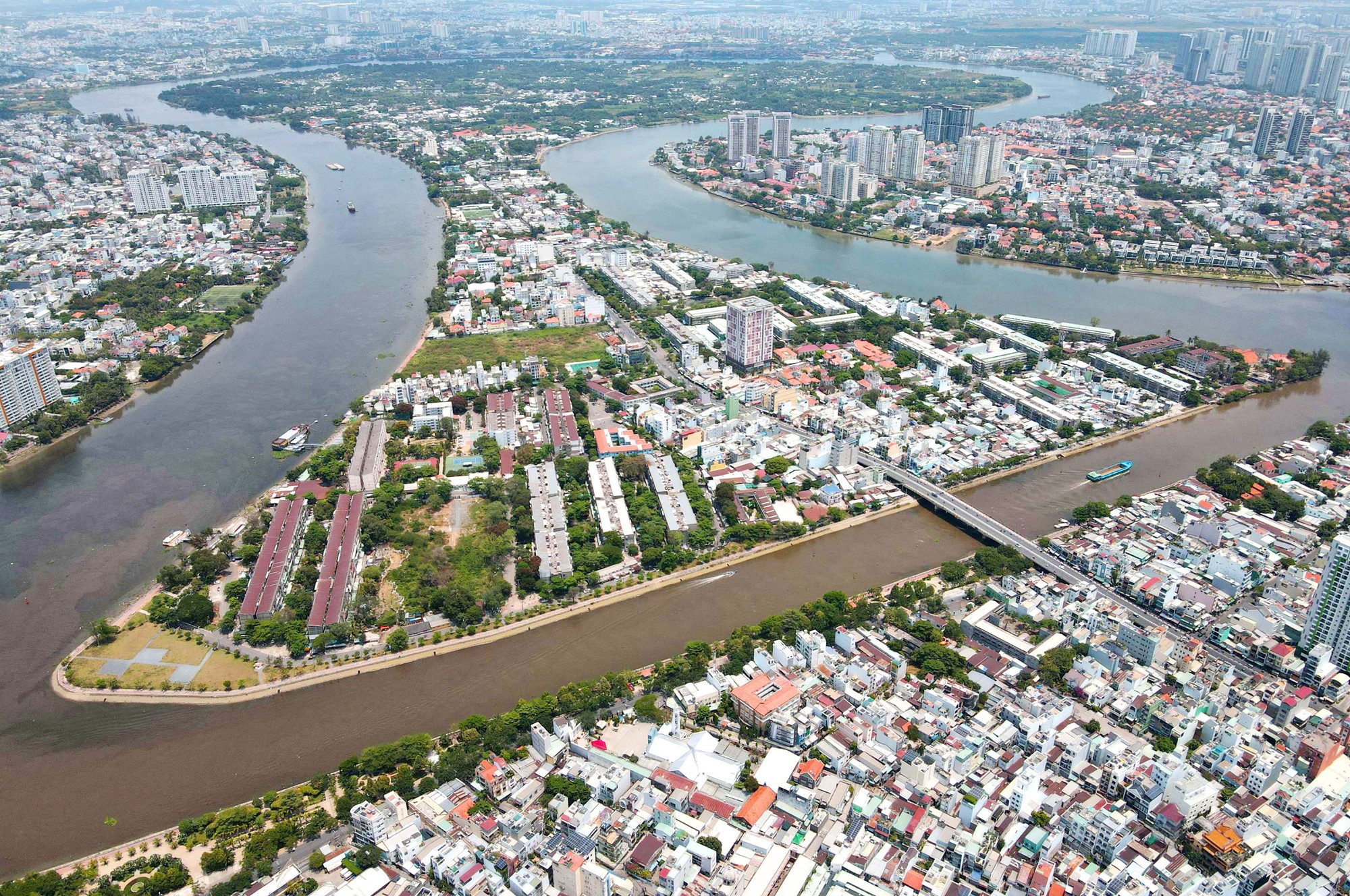
The Binh Quoi - Thanh Da urban area (Binh Thanh District) is one of the areas with stalled planning and long-standing suspended projects.
However, the land-use conversion rate in Ho Chi Minh City is quite slow, reaching only over 13%, according to research by the Ho Chi Minh City Institute for Development Research. The survey also indicates that 6.5% of agricultural land is scattered across several districts such as District 12, Binh Thanh, Binh Tan, and Thu Duc City, but in reality, some areas are no longer used for agricultural production and only exist as agricultural land on paper. These small, infertile, and scattered agricultural land plots in the suburbs are also difficult to utilize effectively for agricultural purposes, and are mostly left vacant or used for non-agricultural purposes.
During a meeting with the Standing Committee of the Ho Chi Minh City Party Committee in October 2022, Deputy Prime Minister Tran Hong Ha (then Minister of Natural Resources and Environment) commented that the proportion of agricultural land in Ho Chi Minh City, exceeding 50%, was excessively high. He also suggested that a plan for multi-purpose agricultural land use should be considered to increase land efficiency and help land users exploit it more rationally. "Agricultural land should not simply be viewed as agricultural economy, but as an environmental space, combining commerce, services, tourism, forestry, and medicinal plant production," Mr. Ha stated.
Architect Khuong Van Muoi, former Vice President of the Vietnam Association of Architects, who has spent decades involved in urban planning in Ho Chi Minh City, explains that a limitation of urban planning in previous terms was that land used for planting trees was simply classified as agricultural land. Land used for growing reeds was also included as agricultural land, even though in reality, rice or other crops grown on that land could not survive or yielded low productivity. Furthermore, when Ho Chi Minh City wanted to change the land use purpose to create more development space, it was hampered by regulations requiring central government approval. This has significantly limited the city's development.
HOW IS THE POPULATION OF HO CHI MINH CITY CHANGING ?
According to the Department of Planning and Architecture, from 2004 to the present, Ho Chi Minh City's population has increased rapidly in the newly developed inner city area and suburban districts (except Can Gio District), mostly due to immigration. Areas with particularly rapid growth include District 7, District 12, Binh Tan District, Binh Chanh District, Hoc Mon District, Nha Be District, and Thu Duc City.
The population in this area is increasing rapidly due to factors such as land prices, new infrastructure projects, and the labor force in factories and enterprises. The rapid urbanization and high population concentration in this area form a belt surrounding the existing inner city, putting significant pressure on investment policies for the development of technical and social infrastructure. Conversely, the existing inner city areas such as Districts 1, 3, 5, 10, and Phu Nhuan have been almost completely urbanized, with little population fluctuation; in fact, many districts have seen a decrease in population compared to 2004.
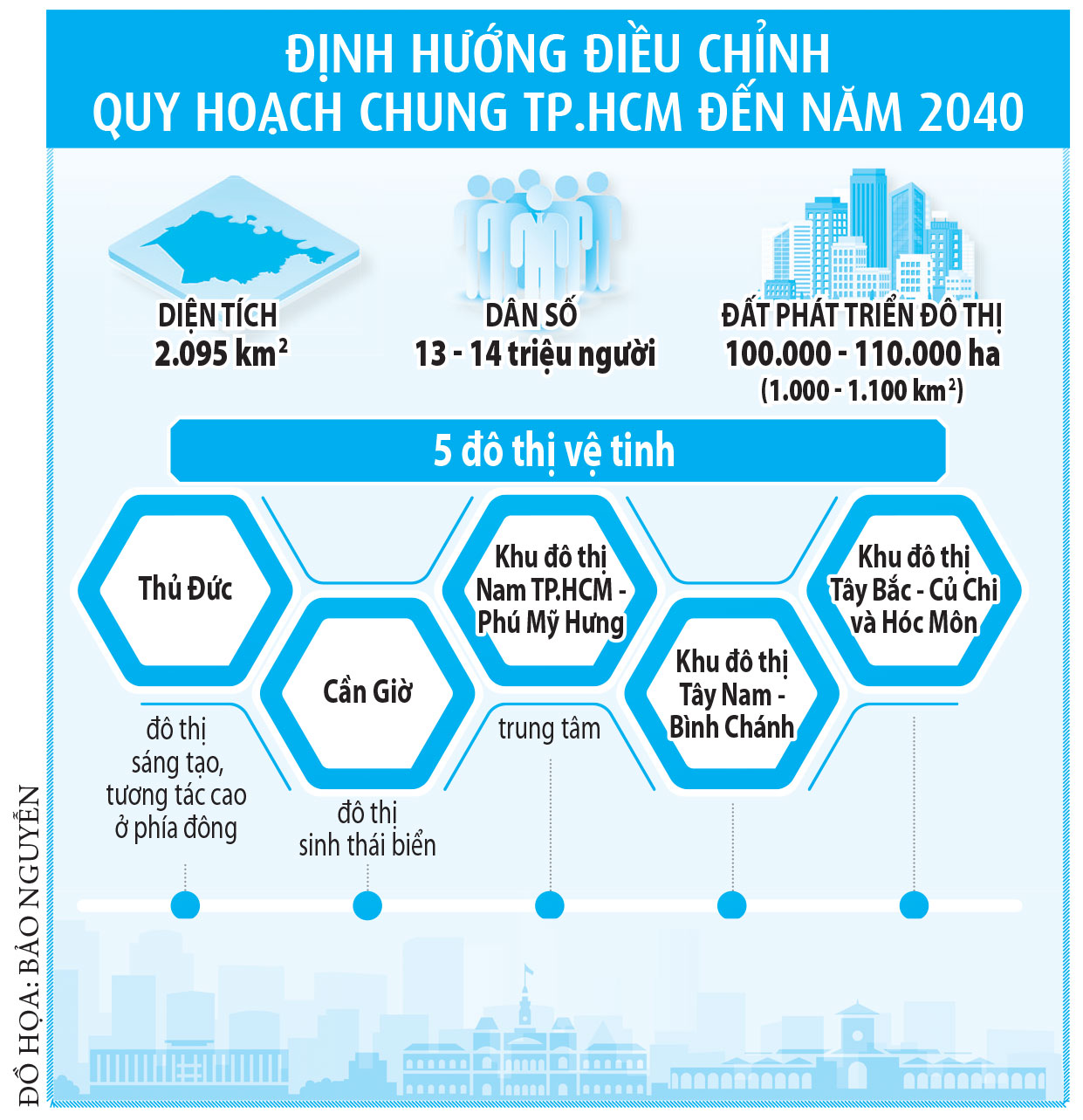
As of the end of 2022, the total population of Ho Chi Minh City was approximately 9.4 million people. Regarding development needs until 2040, districts and communes proposed an increase to over 16.8 million people. Meanwhile, the Prime Minister's decision approving the task of adjusting the general planning of Ho Chi Minh City until 2040 with a vision to 2060 projects a total population of approximately 14 million people.
BREAKTHROUGH IN PLANNING
The helicopter survey of the entire urban landscape of Ho Chi Minh City, along with the previous survey on the Saigon River, has given Ho Chi Minh City leaders a broader perspective on the current state of the city's planning, which, as noted by the Chairman of the People's Committee of Ho Chi Minh City, Phan Van Mai, is characterized by many areas being patchy and uneven. Mr. Mai believes that a more innovative and groundbreaking approach is needed in urban planning to reorganize and rearrange urban spaces, production areas, common living spaces, and green spaces.
Currently, Ho Chi Minh City is preparing two planning documents: the Ho Chi Minh City master plan for the period 2021-2030, with a vision to 2050, and the revised master plan for Ho Chi Minh City up to 2040, with a vision to 2060. The consulting unit is currently working with departments, districts, and communes to gather information and address 72 task groups, including 50 tasks for departments and 22 tasks for districts and communes.
Mr. Mai stated that they are closely coordinating with ministries, agencies, and experts to shorten the timeframe and ensure the correct procedures and quality. It is expected that the dossier for the Ho Chi Minh City planning for the period 2021-2030 with a vision to 2050 will be submitted to the competent authority for approval in the first quarter of 2024. The dossier for adjusting the general planning will be submitted to the Ho Chi Minh City People's Council at the end of 2023 before being submitted to the Ministry of Construction for appraisal.
From a local perspective, the leaders of the Hoc Mon District People's Committee stated that they are awaiting the Ho Chi Minh City master plan to guide the exploitation of the district's land resources. However, even with a master plan in place, mechanisms are still needed to attract investors to implement specific projects. In recent years, many investors have inquired about projects, but without the necessary mechanisms and available land, their interest has only progressed to the point of inquiry.
The idea of establishing a municipal government and developing satellite cities has been nurtured by Ho Chi Minh City for decades, and was expected to solve the problem of population distribution and efficient land use in suburban districts. However, Ho Chi Minh City has not yet achieved this, and suburban areas continue to develop haphazardly and spontaneously. The Transport-Oriented Development (TOD) model, which the National Assembly allowed to be piloted in Resolution 98/2023, will be the "key" for Ho Chi Minh City to achieve this, linked to the plan to transform suburban districts into urban districts or "cities within cities," according to architect Khuong Van Muoi.
"The districts have their own urban development goals and depend on the support of Ho Chi Minh City. Urban development must create jobs for the people, boost the economy, and enable local people to utilize the available land resources for mutual development," the expert added.
According to Mr. Phan Van Mai, along metro line 1 (Ben Thanh - Suoi Tien), metro line 2 (Ben Thanh - Tham Luong), Ring Roads 2, 3, and 4, and the Ho Chi Minh City - Moc Bai expressway (currently under construction), there are approximately 10,000 hectares that could be developed into urban areas using the TOD (Transit-Oriented Development) model. Regarding the Ring Road 3 project, the leaders of Hoc Mon District People's Committee also stated that, after reviewing the area, approximately 2,000 hectares have been identified, and the Department of Natural Resources and Environment is proposing to the Ho Chi Minh City People's Committee to conduct a pilot project in the locality.
In reality, land resources contribute significantly to the state budget. According to the plan to focus on resolving obstacles in several real estate projects to increase revenue from land, it is projected that Ho Chi Minh City will collect nearly 19,000 billion VND more for the budget from now until the end of 2023.
Policies and plans must be consistent.
Ho Chi Minh City's current urban planning fails to meet requirements; there is a significant gap between planning and reality. While the planning and theory are sound, it lacks concrete results. Businesses also complain frequently about administrative procedures and the lack of transparency and flexibility in planning, leading to a lengthy process from initial investment exploration to completion. The government wants to attract investment, but the mechanisms and policies are restrictive and change based on short-term thinking. This issue has been raised for a long time, but a decisive solution remains elusive.
Therefore, the upcoming adjustments to Ho Chi Minh City's planning must address these shortcomings. The government needs to commit to investors the stability of policies and planning so that, regardless of the leadership changes over the years, the commitment remains consistent and only improves, not deteriorates. Policies need to be stable, not inconsistent, where one term performs exceptionally well while the next is sluggish.
The city government must be decisive, clearly defining the responsibilities of each department and individual. When businesses perceive stability, they will automatically seek to invest. Only in this way can Ho Chi Minh City enhance its competitiveness, not only among localities nationwide but also among major cities in the region.
Some major development directions of Ho Chi Minh City, such as developing satellite cities in suburban districts and implementing the land reclamation urban area project in Can Gio, have received strong support from the people. However, the government needs to quickly implement exemplary projects to build trust, especially key transportation projects such as ring roads, expressways, and overpasses…
Dr. Tran Quang Thang , Director of the Institute of Economics and Management of Ho Chi Minh City, Member of the Ho Chi Minh City People's Council
Specific accountability needs to be assigned.
During the process of formulating, adjusting planning, and implementing the project to transform districts into urban districts (or cities within Ho Chi Minh City) in the 2021-2030 period, it is necessary to build and manage land data that is real-time and open at different levels for different stakeholders. Based on land data analysis, authorities can accurately assess the agricultural land fund, especially regarding the fragmentation and division of agricultural land, as well as the actual efficiency in exploiting it for agricultural, forestry, and fisheries production.
When making decisions to convert agricultural land in districts to non-agricultural land, careful consideration and assessment are necessary. This is because these areas are sensitive to the environment and climate change, with the risk of negative impacts such as flooding due to the loss of temporary water storage space and obstruction of water flow. Furthermore, there is the risk of environmental pollution due to the inadequate capacity of the technical infrastructure system.
Many stalled planning projects in Ho Chi Minh City are causing public frustration, partly due to weak investor capacity and partly because the government has not yet implemented attractive mechanisms for investors. To attract investors during the planning implementation process, it is necessary to provide real-time land data and open it to businesses at appropriate levels.
Furthermore, the land auction and bidding process for selecting investors for construction projects on the land should be open, transparent, reasonable, and timely. Ho Chi Minh City also needs to set targets related to the implementation of the planning to assign specific and clear responsibilities to each state management agency; considering this as an important basis in planning and appointing leading officials.
Mr. Pham Tran Hai, Deputy Head of the Urban Management Research Department, Ho Chi Minh City Development Research Institute
Sỹ Đông (recorded)
Source link

![[Photo] Conference announcing the Politburo's Decision on organizational and personnel matters](https://vphoto.vietnam.vn/thumb/1200x675/vietnam/resource/IMAGE/2026/04/01/1775017881825_bnd-2410-1472-jpg.webp)
![[Photo] Conference on the transfer and reception of Party organizations and Party members between the Party Committee of the Government and the Party Committees of the Central Party Agencies](https://vphoto.vietnam.vn/thumb/1200x675/vietnam/resource/IMAGE/2026/04/01/1775036784472_ndo_br_bnd-2620-jpg.webp)









































































Comment (0)