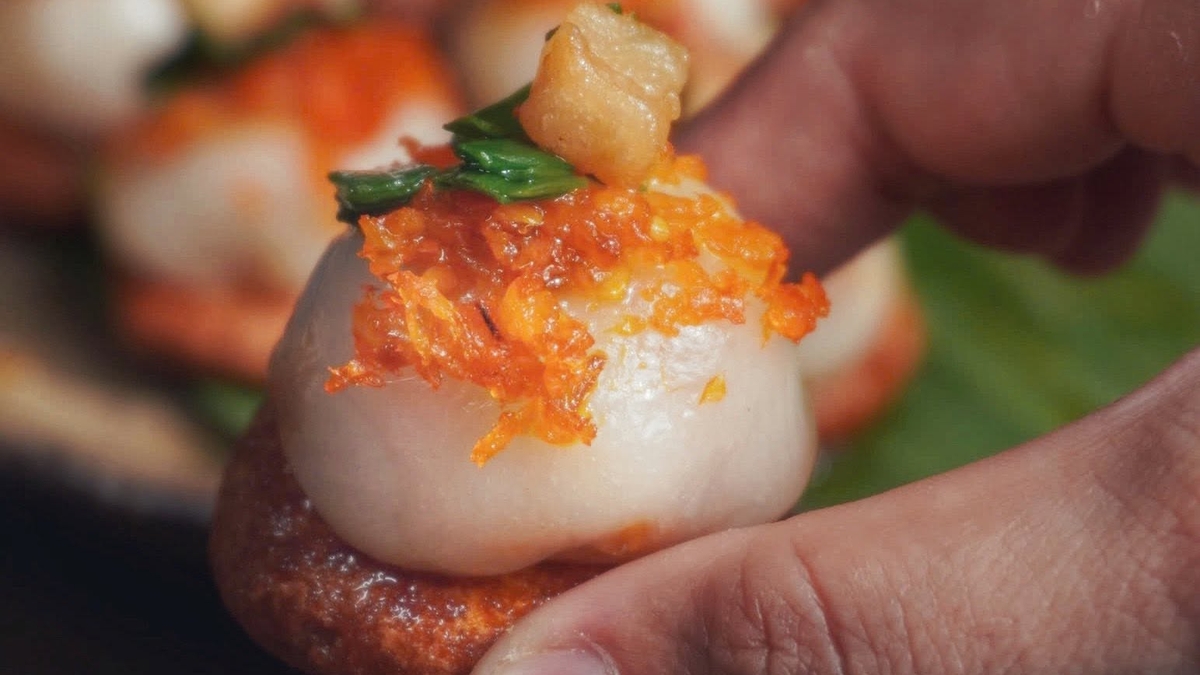
A photo of someone eating omakase costs 10,000 dong. A video of someone playing golf costs a few tens of thousands of dong. Photos of people having afternoon tea at luxurious hotels are also openly advertised on social media.
In early June, many accounts on Threads attracted attention for selling "background" photos and videos for buyers to post on Facebook and Instagram. The most popular topics included playing golf, flying in business class, luxury vacations, eating omakase (a type of Vietnamese snack), and enjoying afternoon tea at luxury hotels.
One seller said they sold nearly 500 photos in just a few days, earning over 10 million VND. Among them, photo sets related to omakase and high-end service spaces received the most inquiries.
Why "live virtually" with omakase?
The magazine Bon Appétit tells the story of Jonathan Wigser, a New York real estate investor who at one point ate omakase three times a week. After the grilled orange sea urchin was served, the businessman immediately took a picture and posted it on Instagram, just like many other omakase enthusiasts in the US.
That phenomenon is not accidental.
Omakase is designed as a performance-based experience. In Japanese, "omakase" means completely entrusting the entire menu to the chef. Diners don't choose their dishes; they trust the person behind the counter to decide everything. From ingredient selection and preparation to serving, everything happens right in front of the customer.
This very structure makes omakase almost "designed" for today's social networks.
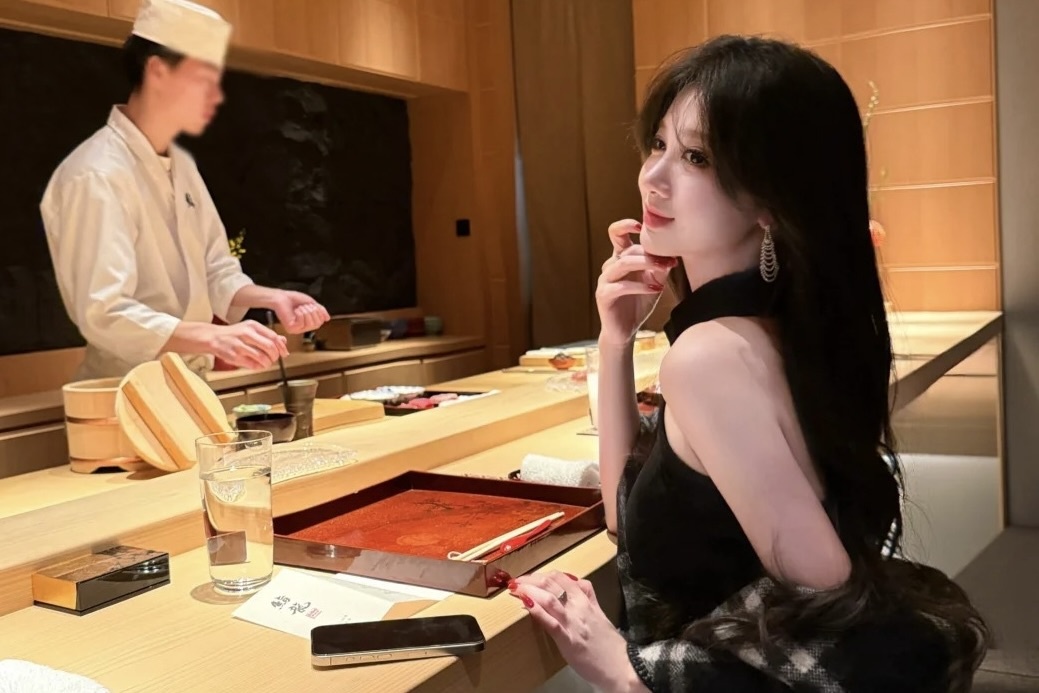 |
Photos of Omakase, a 5-star resort, have become a commodity on social media. (Illustrative image: Rednote) |
The space typically has only a few seats. The lighting is focused on the kitchen counter. Each dish is served individually within a few minutes. Slices of otoro tuna, sea urchin, abalone, or hairy crab are placed in front of you like works of art. Before diners even have a chance to eat, phones are already being raised to take photos or videos.
Many diners say they enjoy the feeling of watching the chef prepare the dish, explaining the ingredients, and eagerly anticipating the next course. That experience creates a special feeling that a regular meal can hardly provide.
That's also why omakase quickly transcended the realm of cuisine to become a lifestyle icon.

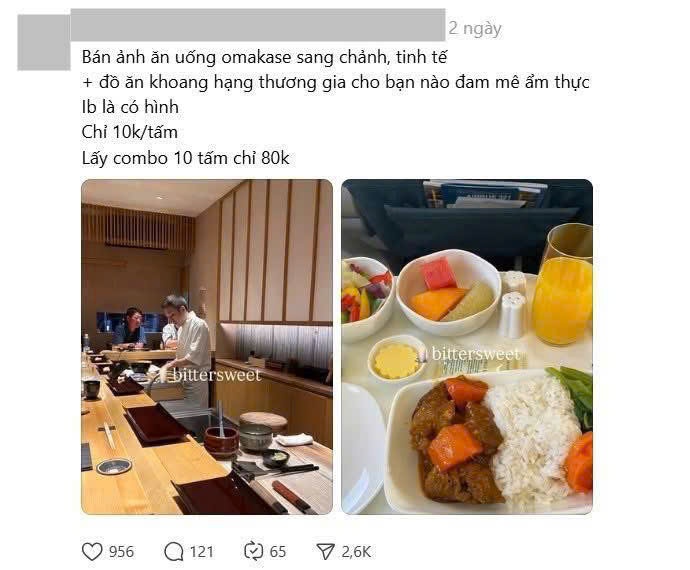 |
A social media user posted an ad selling photos of their omakase experience for 10,000 VND per photo. Photo: Bittersweet/Threads. |
In recent years, images of people sitting in front of a sushi counter, holding a nigiri in their hands, or videos of chefs torching fish have become commonplace on TikTok and Instagram. Many restaurants have even added visual effects such as smoke effects, gold leafing, or cooking demonstrations to enhance the customer experience.
Interestingly, during the recent craze for selling photos with "tarpaulin backdrops," omakase (a type of food-related visual effects) was also among the most sought-after content. A photo seller in Ho Chi Minh City shared with Tri Thuc - Znews that videos showing food being sprayed with gold leaf or smoked at omakase restaurants were particularly popular. The seller admitted that the quality of the food wasn't the most important factor for buyers, but rather the visual effects.
In other words, the value of omakase today lies not only in what happens at the table, but also in its ability to transform that experience into shareable content.
Afternoon tea should be as beautiful as Pinterest.
While omakase thrives on interaction and personalization, afternoon tea draws its appeal from its ambiance and visual elements.
According to Forbes , Pinterest's 2022 annual trends report called afternoon tea the "new happy hour." The platform noted an increase in searches related to "tea party aesthetic" and "drinking tea pose."
According to its 2024 trends report, Pinterest continues to see a 165% increase in searches for the phrase "afternoon tea party ideas".
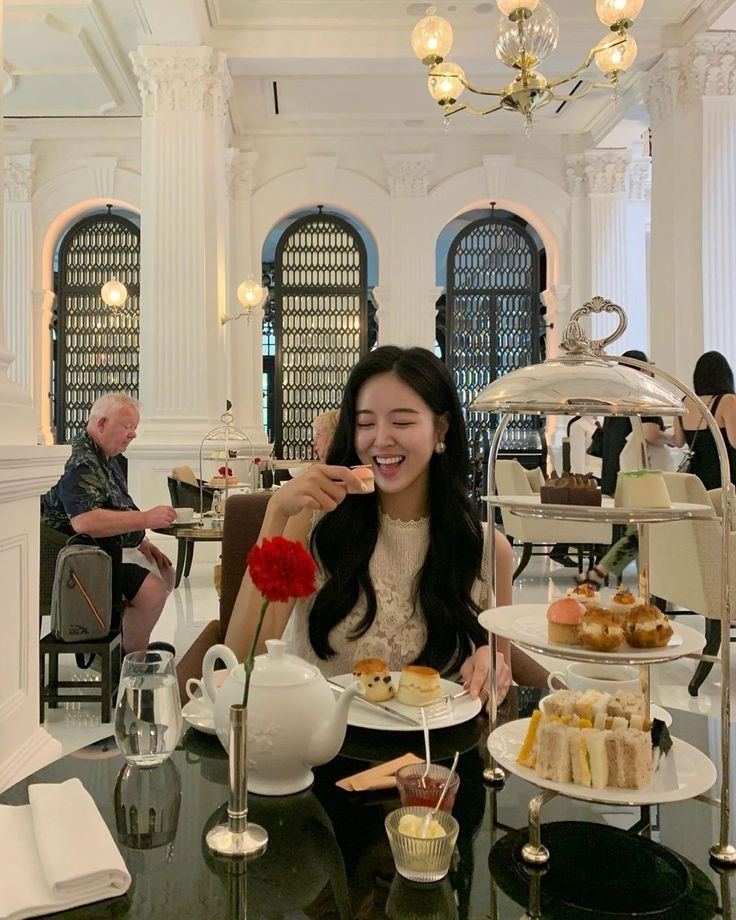 |
Images of enjoying afternoon tea with the iconic cake tower are frequently seen on social media platforms like Pinterest and Instagram. Photo: Minnie/Pinterest. |
Forbes suggests that the popularity of afternoon tea stems from several factors, including luxurious hotel settings, food presentation, and the ability to create visually appealing images for social media. Currently, the hashtag #AfternoonTea on Instagram has millions of posts.
The link between afternoon tea and social media sharing behavior was also noted in a 2025 study published in the Journal of Tea Culture & Industry Studies.
The study surveyed 200 people who had used afternoon tea services within the past six months. The results showed that three factors—food presentation, table setting, and space design—all positively impacted customer satisfaction.


Of these factors, food design had the greatest influence. Notably, the study also indicated that the higher the level of satisfaction, the greater the intention to share the experience on social media.
The authors argue that afternoon tea is no longer simply an activity of enjoying tea and pastries. Instead, it is a form of experiential consumption, in which visual elements play a crucial role in customer decisions.
This trend is also reflected in how hotels develop their products. Many international brands and luxury resorts regularly introduce afternoon tea sets themed around fashion , film, or popular culture to create a visual highlight.
Source: https://znews.vn/tra-chieu-omakase-co-gi-de-mua-anh-phong-bat-post1658000.html

![[Image] National conference summarizing one year of operation of the overall organizational model of the political system, the three-tiered government model.](https://vphoto.vietnam.vn/thumb/1200x675/vietnam/resource/IMAGE/2026/07/01/1782882811691_ndo_br_1-jpg.webp)