

|
After restoration, the Temple of Literature is expected to create a meaningful cultural and educational space. |

With a total investment of VND 132.139 billion, the project for the restoration, preservation, and adaptive rehabilitation of the Temple of Literature (Phase 1) will be implemented from now until the end of 2028.
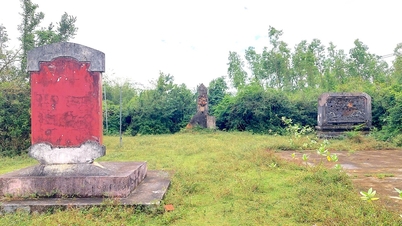
The Temple of Literature – a place of worship for Confucius, the Four Disciples, the Twelve Sages, and other ancient sages and Confucian scholars – was built by King Gia Long in 1808. Over two centuries, through numerous renovations, wars, natural disasters, and inappropriate use, the site is now approximately 70% damaged. Many structures are reduced to foundations, and some parts have completely disappeared from view. The commencement of this project is considered a long-term, "emergency" step aimed at preserving a crucial link in the Hue Imperial City World Heritage site. The entire process, from preparing the investment proposal report to approving the construction design drawings, involved consultation with the Scientific Council of the Hue Imperial City Relics Conservation Center and soliciting feedback from the local community in accordance with regulations.
Phase 1 of the project focuses on the restoration, renovation, and adaptive rehabilitation of the main components. Specifically, the Dai Thanh Dien – the centerpiece of the Temple of Literature – will be completely restored over an area of 830m², with a main wooden frame structure combined with brick walls, a yellow glazed tile roof, restoration of the decorative systems and interior, and the addition of solutions for moisture control, termite prevention, and fire prevention and control.
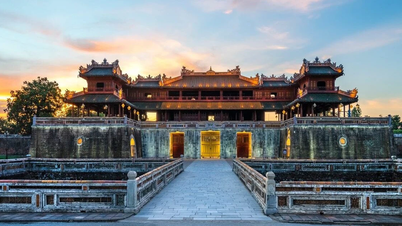
The temple grounds were reorganized to enhance the sacred axis using Thanh stone, combined with Bat Trang bricks, while retaining the grass and trees in appropriate areas. Important gates such as Dai Thanh Mon, Van Mieu Mon, Kim Thanh Mon, and Ngoc Chan Mon were restored, with wooden doors, tiled roofs, and decorative elements reassembled, returning them to their original majestic appearance.
Notably, the semicircular boat dock area, an architectural landmark associated with the Perfume River, will be restored and adapted, incorporating stone embankments, platforms, steps, and riverside landscaping. This is expected to become a scenic highlight, connecting land and waterway tour routes in the future.
In addition, the project also invests in facilities to serve tourists such as ticket booths and information centers, restrooms, and technical infrastructure including lighting, security cameras, wifi, and irrigation systems… but with the requirement that the design be harmonious and not overshadow the historical site.
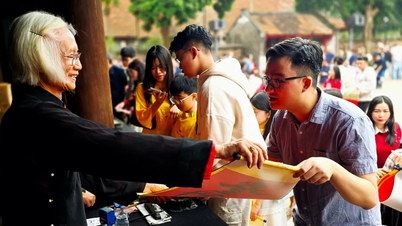
Over 200 years ago, the Hue Temple of Literature was a place that marked the educational journey of countless generations. Along with the restoration of the Imperial Academy (Quoc Tu Giam) at the same time, this opened up an opportunity for the Temple of Literature to regain its role as a cultural and educational space in the contemporary life of the ancient capital. After completion, the Temple of Literature will not only be a tourist attraction but also a vibrant cultural and educational space. It can host ceremonies honoring Confucius, celebrating talented individuals, promoting education, expressing gratitude, and praying for good luck before exams…
Minh Quan
Source: https://huengaynay.vn/van-hoa-nghe-thuat/thong-tin-van-hoa/tra-lai-dien-mao-xua-cho-van-mieu-162007.html
































































Comment (0)