The Mekong Delta is struggling to find a way to repay the "previous debt" from the Mekong River.
Late in June, the boat carrying the reconnaissance team from the Environmental Crime Prevention Police Department of Ben Tre province glided smoothly along the river in Long Thoi commune, Cho Lach district. The scouts chose a discreet location to "lie low," turning off all any lighting equipment. The night was pitch black and silent. The entire team remained silent, waiting.
At 1 AM, three wooden boats and two iron ships carrying over 120 cubic meters of sand appeared in the distance. The scouts started their boats and launched a surprise attack. Seeing the police, the group of sand thieves shouted to each other and jumped into the river, disappearing into the darkness. In an instant, only the 51-year-old man remained in the three wooden boats.
"Those who recklessly jump into the river have likely been previously subjected to administrative penalties. A second violation would result in criminal prosecution, so they take the risk. Sand thieves even have specialized boats dedicated to rescuing these groups," a detective recounted the "hunt" for illegal sand miners.

For many years, sand has been the most sought-after commodity in the Mekong Delta, with demand far exceeding supply. The nationwide demand for construction sand is approximately 130 million cubic meters, while the amount licensed for extraction is only 62 million cubic meters per year – equivalent to 50% of the demand, according to calculations by the Institute of Building Materials, Ministry of Construction .
The figures above do not include the amount of sand illegally extracted. Sand extraction downstream of the Mekong remains a "blind spot" for authorities. For example, on August 15th, the Ministry of Public Security prosecuted 10 officials and business representatives in An Giang province on charges of colluding to extract sand exceeding their permits three times – permitted for 1.5 million cubic meters but actually extracted 4.7 million cubic meters.
Faced with rampant sand mining and dwindling alluvial deposits, in 2009 Vietnam banned the export of construction sand for the first time, only allowing the sale of saline sand dredged from river mouths and seaports. By 2017, the government decided to ban the export of all types of sand.
However, these actions are still not enough to repay the accumulated debt that humanity has "borrowed" from the river over the years.
The Mekong Delta is sinking deeper into debt.
Sand bank
"Think of sand as money and the river as the bank. Humans are the borrowers, and right now we are deeply in debt, meaning we have exploited far more than the river's natural supply," said Marc Goichot, Freshwater Program Manager for WWF Asia Pacific.
Comparing the river to a sand bank, this expert explains that the input comes from the sand deposited over thousands of years at the bottom of the river (sediment) and silt flowing in from upstream (about 15% is sand). This is called the existing reserve.
The regular expenditure of this bank, usually very small, is the amount of sand pushed out to sea by currents, deposited into sand dunes along the shore, creating a "wall" that protects the coastline and mangrove forests from underwater waves. The majority of the remaining sand is exploited by humans for development, as it is the best raw material for construction.
When this bank account is positive or zero, meaning that revenue is greater than or equal to expenditure, the bank reaches equilibrium, indicating sustainable sand mining. Conversely, a "hollow" riverbed, meaning a shortage of funds in the bank, will create many deep holes causing landslides.
In reality, the Mekong Delta's account is in deficit and this trend is likely to continue. A huge amount of sand has become trapped behind hydroelectric dams upstream in China, Laos, and Thailand, so the more sand is extracted from the Mekong Delta, the less it will have.
"Currently, the reserve account only has 10 years left before the delta runs out of sand. If we don't do anything to increase input revenue and reduce output expenditure, the Mekong Delta will disappear," Mr. Goichot warned.

"One of the reasons the Mekong Delta is burdened with this debt is the inability to accurately calculate how much money the sand bank actually has," explained Dr. Nguyen Nghia Hung, Deputy Director of the Southern Institute of Water Resources Science (SIWRR).
Having advised provinces in the Mekong Delta for many years, he said that the basic techniques currently used by these localities involve using depth gauges and geological drilling to collect riverbed samples and estimate existing reserves. This is often the input for provinces to develop sand mining plans. However, this method does not account for the amount of sand flowing in from upstream annually.
According to experts, measuring the movement of sand under riverbeds (including bottom sediment, suspended sand, and silt) is "extremely difficult," requiring very high technical skills and significant financial resources, "beyond the capabilities" of local authorities. The world has hundreds of different formulas and calculation methods, and there is no common denominator for all. Each river has its own unique calculation method.



To address this problem, the World Wide Fund for Nature (WWF) Vietnam is developing a sand management tool for the Mekong Delta based on the concept of a "sand bank," the first of its kind in the world. The project surveys 550 km of the Tien and Hau rivers to determine existing sand reserves at the riverbed and estimates the average annual sand extraction volume for the period 2017-2022 using satellite imagery analysis. The results of this calculation will provide a scientific basis for local authorities to consider appropriate extraction levels and make more accurate decisions in river sand management.
"This tool will help prevent the Mekong Delta's sand bank from becoming even more severely depleted, and partially repay the river's debt," said Mr. Ha Huy Anh, National Manager of the Mekong Delta Sustainable Sand Management Project (WWF - Vietnam), expressing his hope to mitigate riverbank and coastal erosion, saltwater intrusion, and tidal surges – man-made disasters that humanity is currently facing.
Building "castles" on the sand.
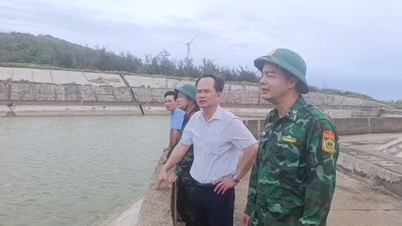
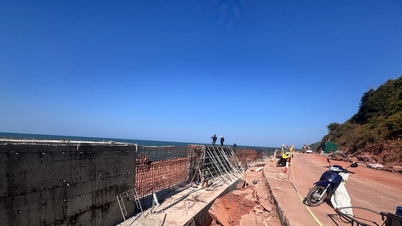
To protect this delta region, from 2016 to the present, the Government has spent nearly 11,500 billion VND to build 190 anti-erosion projects along 246 km of the Mekong Delta. Another 4,770 billion VND is being prepared to invest in an additional 28 riverbank and coastal embankments.
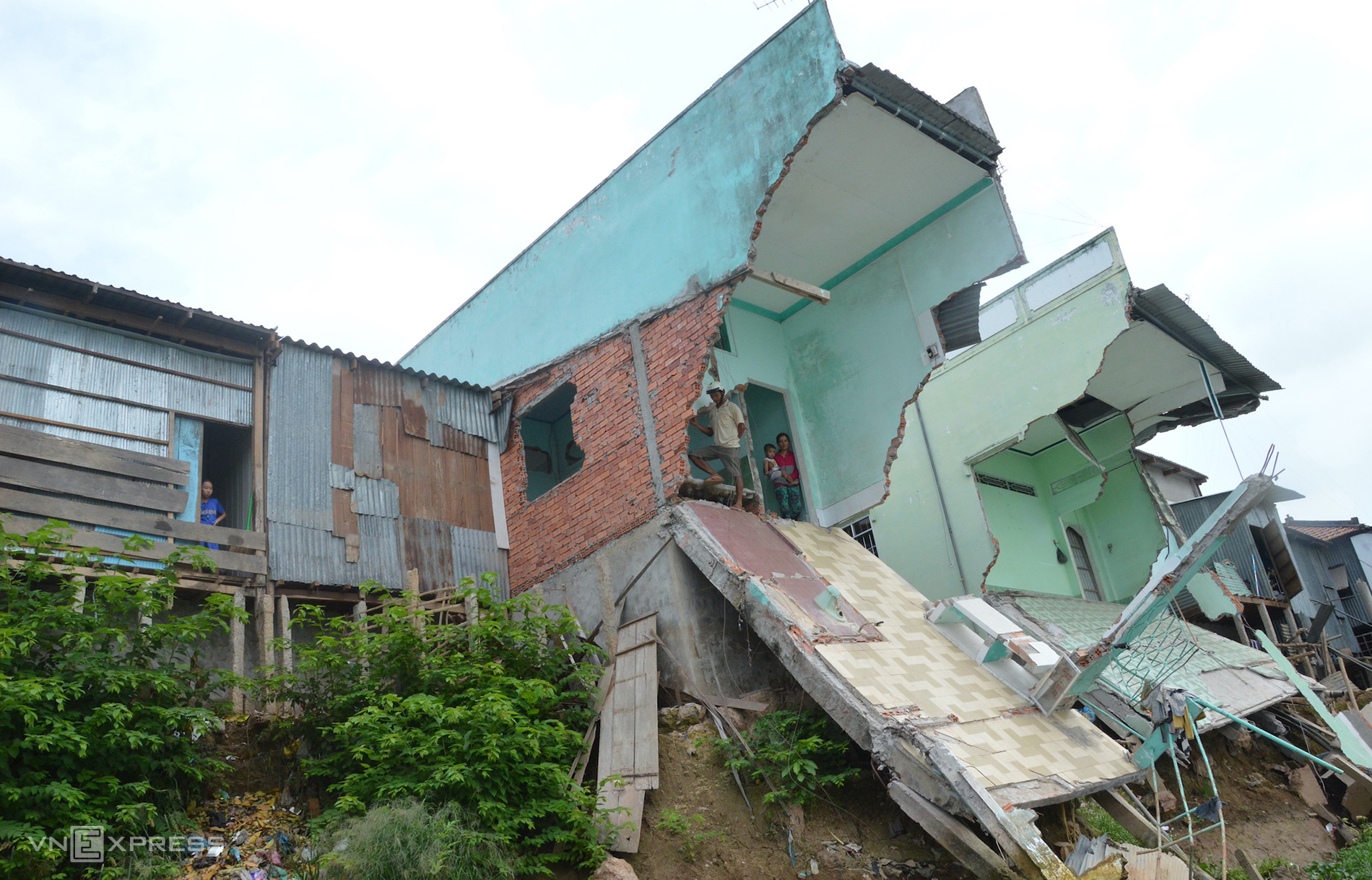
However, proportionally to the number of new embankments built, the number of landslides has increased. In the first seven months of this year, this delta region witnessed as many landslides as in all of 2022.

In just over three years of use, the 3 km embankment protecting the Tien River (Binh Thanh Market, Thanh Binh District, Dong Thap Province) has collapsed four times, resulting in the loss of 1.3 km. This is evidence of the ineffective embankment construction in the Mekong Delta, according to Dr. Duong Van Ni, lecturer at the Faculty of Environment and Natural Resources - Can Tho University.
"Provinces are overusing embankment construction, like throwing money into rivers and seas, because investment in these projects will never stop, especially as the delta continues to erode," he said, calling the embankment construction projects to protect against coastal erosion "highly unscientific."
According to him, the embankment is like a "castle" on sand. In a short time, these massive structures will collapse en masse again.
Further explaining, Master's degree holder Nguyen Huu Thien, an independent expert in the Mekong Delta, argued that engineering solutions such as building embankments are very expensive and not always effective. Because the riverbed has natural deep holes, intervention through engineering would be contrary to the natural order.
"The more money we pour in, the more the structures collapse. We will never have enough money to keep up with landslides," he said. Engineering solutions like building embankments should only be implemented in critical areas that must be protected at all costs, such as urban areas or densely populated areas.
With 20 years of research experience on deltas, Marc Goichot also believes that the most economical and effective way is to utilize sand to protect the river in a way that is in harmony with nature.
"Many delta regions around the world have tried and failed with dike construction solutions. The Mekong Delta should not repeat this mistake," he said.
Experts cite the example of the Rhine Delta (Netherlands), where dikes were built 50-70 years ago but are now being dismantled to allow water to flow into the fields. The silt will follow the water flow into the inland areas, building up and restoring the river's resilience.
Similarly, in the Mississippi River Delta (USA) – where erosion and subsidence are occurring faster than in the Mekong Delta – the government is rushing to dismantle dikes so that sediment can move into the delta. He emphasized that man-made infrastructure is costly, offers little protection, and reduces the biodiversity of the river.
"Our advantage is that we knew this sooner," he said, recommending that Vietnam should adopt a nature-friendly approach to allow riverbanks to recover naturally, rather than using man-made interventions.

Migration dilemma
While engineering solutions are expensive and cannot completely protect against all risks, experts believe that the top priority should be relocating, resettling, and stabilizing the livelihoods of people in landslide-prone areas to minimize damage.
However, this solution is proving to be a difficult problem for the Mekong Delta. According to the Department of Dike Management and Disaster Prevention and Control, there are currently about 20,000 households living along high-risk riverbanks that urgently need to be relocated in the provinces of Dong Thap, An Giang, Vinh Long, Ca Mau, and Can Tho City – the areas most severely affected by erosion. All are awaiting support from the central government, as the required funding of tens of trillions of dong is "beyond the means" of the local authorities.
Meanwhile, Dr. Duong Van Ni argues that a lack of funds is not the only reason; the government has not been decisive enough.
"The delta has no shortage of land for people to build houses and settle down, so why let them build along the riverbanks and then complain every year about landslides and the loss of their homes?" he questioned.
Experts believe that the continued development of houses along rivers and canals by local residents shows a lack of determination, a failure to view erosion as a pressing issue, and a lack of effective public awareness campaigns to ensure people understand and comply with regulations.
"People still think the riverbank belongs to the temple, and the authorities are lax in their management," the doctor wondered.


According to him, the most fundamental solution currently is to ban the construction of houses along rivers, canals, and streams, and gradually relocate all residents to safe areas. If the riverbanks are clear, the government can also reduce the cost of building expensive and ineffective embankments. This recommendation was made by scientists 10 years ago – when measurements showed that the Mekong Delta was experiencing an imbalance in sediment, inevitably leading to increasingly severe erosion.
Master's degree holder Nguyen Huu Thien further suggested that localities should have survey teams using motorboats along critical river routes, equipped with sonar to measure the riverbed. Monthly data updates would help specialized agencies detect anomalies or "undercuts" and landslide risks, enabling proactive relocation of residents.
"Landslides cannot be stopped as long as the causes remain," he warned.
The shortage of sand for transportation infrastructure projects, especially highways, is a common concern for the southern provinces. However, with the increasing number of landslides and the continued sand shortage for infrastructure projects, the Mekong Delta will have to balance the needs of economic development with the protection of the increasingly shrinking delta region.
After two decades of observing the Mekong, Marc Goichot predicts that at the current rate of exploitation, the Mekong Delta will run out of sand by the end of 2040. If the delta runs out of sand, the economy will no longer have the "raw materials" for development. Vietnam only has about 20 years to prepare for this process.
"At that point, the concept of a negative sand bank will no longer be abstract. The budgets of the western provinces will also be in deficit by trillions of dong each year as they struggle with landslides, and there will be no significant revenue source left to repay that debt," Goichot warned.
Ngoc Tai - Hoang Nam - Thu Hang
Correction:
When the article was published, it incorrectly quoted the opinion of expert Nguyen Huu Thien. Upon receiving feedback, VnExpress corrected the article at 6:40 AM.
I apologize to the readers and Mr. Nguyen Huu Thien.
Source link



![[Photo] General Secretary and President To Lam working with the Technical and Professional Center, Ministry of Public Security](https://vphoto.vietnam.vn/thumb/1200x675/vietnam/resource/IMAGE/2026/07/06/1783318005842_a1-bnd-1129-2263-jpg.webp)